Wagyu Sous Vide: The Complete Guide to Precision-Cooked Wagyu Beef
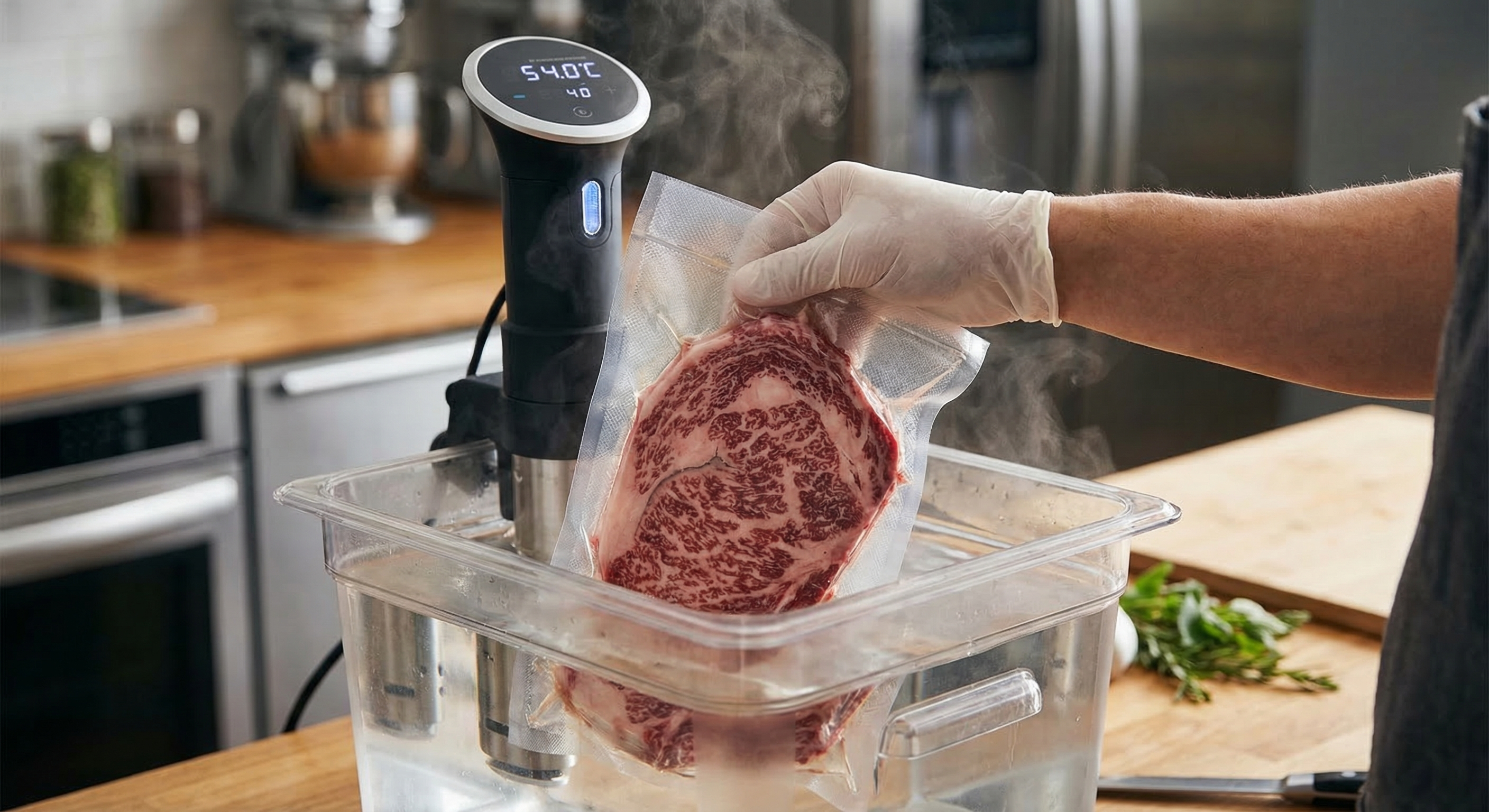
Sous vide is the most forgiving way to cook wagyu beef, and in many ways the most logical. When you're working with a steak that costs $80 to $200 per pound, the margin for error narrows considerably—overcook it by thirty seconds in a screaming hot pan and you've just incinerated a small fortune. Sous vide eliminates that risk entirely. You set a precise temperature, seal the beef in a vacuum bag, and let physics do the work. The result is edge-to-edge doneness at exactly the temperature you chose, with zero gradient from crust to center. Having cooked wagyu across every method from teppanyaki to tataki, I keep coming back to sous vide when precision matters more than spectacle—when I want to guarantee perfection rather than chase it.
Why Sous Vide Works Exceptionally Well for Wagyu
Wagyu's defining characteristic—its extraordinary intramuscular marbling—is both its greatest asset and its biggest cooking challenge. That fat begins to render and soften at around 130°F (54°C), becoming the liquid, buttery richness that makes wagyu transcendent. But push past 145°F (63°C) and you start losing that fat to the pan, drying out the very thing you paid a premium for. The window between "marbling not yet rendered" and "marbling dripping away" is narrow, and traditional high-heat cooking crosses it in seconds.
Sous vide parks the entire steak at a single, precise temperature within that optimal window. Every strand of intramuscular fat renders to exactly the same degree. There's no overcooked outer ring, no cool center, no gradient at all. When you slice a sous vide wagyu steak, the color is perfectly uniform from edge to edge—a consistent blush pink (or whatever doneness you chose) throughout. This uniformity matters more for wagyu than for conventional beef because you're optimizing fat rendering, not just protein doneness.
The second advantage is gentleness. Wagyu's fine-grained, heavily marbled muscle fibers are more delicate than those of commodity beef. The low, steady heat of a water bath treats those fibers with kid gloves, breaking down connective tissue without contracting the muscle violently the way a grill or pan does. The result is meat that's almost impossibly tender—softer even than the same cut cooked traditionally to the same internal temperature.
Finally, sous vide gives you time flexibility. A wagyu steak cooked in a pan has a window of about 20 seconds between perfect and overdone. A wagyu steak in a 131°F water bath can sit there for an extra hour without meaningful change in quality. That breathing room means you can prep your sides, set the table, pour the wine, and sear the steak when you're actually ready to eat—not when the meat timer demands it.
Ideal Temperatures for Wagyu Sous Vide
Temperature selection for wagyu sous vide differs from conventional beef because of the fat content. The marbling means you can—and should—cook wagyu slightly lower than you'd cook a USDA Choice steak of the same cut. The rendered fat provides richness and mouthfeel that compensates for the more rare texture, and the lower temperature preserves more of that precious intramuscular fat within the meat instead of letting it escape into the bag.
Rare: 125–128°F (52–53°C). Cool red center. The marbling is softened but not fully rendered. This temperature works for A5 Japanese wagyu where the fat content is so extreme that even minimal rendering produces abundant richness. Not recommended for American wagyu or lower-BMS cuts, where you need more rendering to unlock the flavor.
Medium-rare: 129–133°F (54–56°C). This is the sweet spot for most wagyu. The intramuscular fat is fully softened and beginning to render, creating that signature buttery texture, while the protein remains tender and juicy with a warm pink center. I use 131°F (55°C) as my default for everything from wagyu ribeye to wagyu filet mignon. For BMS 6–9 wagyu, this temperature produces the most balanced result—rich but not greasy, tender but with enough structure to feel like steak rather than butter.
Medium: 135–140°F (57–60°C). Pink center fading to light pink. More fat renders out of the meat, which can actually be beneficial for extremely high-marbling cuts (BMS 10–12) where the richness at lower temperatures can be overwhelming. If you find A5 wagyu too fatty at 131°F, try 137°F—it renders more fat while keeping the steak juicy and tender. This is also the right zone for wagyu burgers cooked sous vide.
Avoid above 145°F (63°C) for wagyu steaks. At this point, fat renders rapidly and escapes the muscle, proteins tighten significantly, and you lose the very qualities that make wagyu worth the price. If someone prefers well-done beef, conventional cuts are a better (and much more economical) choice.
Timing Chart by Cut
Sous vide timing depends on thickness and desired texture. Unlike temperature, which is exact, time has a wider acceptable range. Here are my tested recommendations for common wagyu cuts:
Ribeye (1–1.5 inches): 131°F for 1.5 to 3 hours. The generous marbling in a wagyu ribeye needs time for the fat to soften fully through the center. Don't rush this one—90 minutes is the minimum for a thick ribeye, and 2 hours is better. Beyond 4 hours, the texture starts to become mushy.
Filet Mignon / Tenderloin (1.5–2 inches): 131°F for 1.5 to 2.5 hours. Tenderloin is already tender, so you don't need extended time to break down connective tissue. The goal is simply to bring the center to temperature and soften the marbling. Wagyu tenderloin becomes almost mousse-like at 2+ hours, which some people love and others find too soft.
New York Strip (1–1.5 inches): 131°F for 2 to 3 hours. The strip has a firmer texture than ribeye, and the slightly longer cook helps soften it. The fat cap on a strip also benefits from extended time in the bath.
Tomahawk / Bone-In Ribeye (2+ inches): 131°F for 3 to 4 hours. The bone acts as a heat sink, slowing temperature equalization. Thick tomahawk steaks need the extra time to ensure the center reaches target temperature. Don't go shorter than 3 hours for anything over 2 inches thick.
Short Ribs (boneless): 135°F for 24 to 48 hours. This is where sous vide truly shines—transforming a traditionally braised cut into something steak-like while keeping the rich, beefy flavor of wagyu short ribs. At 135°F for 48 hours, the collagen converts to gelatin completely, yielding a texture that's simultaneously tender and structured. Some chefs go as high as 155°F for 24 hours for a more traditional braised texture.
Brisket: 155°F for 24 to 36 hours. Wagyu brisket sous vide produces incredibly moist, tender results without the bark you'd get from smoking. Many competition pitmasters use sous vide as a pre-cook before a shorter smoke to get the best of both worlds—precise tenderness plus smoky crust. The wagyu fat keeps the brisket extraordinarily juicy even at higher temperatures.
Picanha (2+ inches): 131°F for 2.5 to 3.5 hours. The thick fat cap on wagyu picanha renders beautifully in the bag, basting the meat throughout cooking. Finish with a fat-cap-down sear for crackling results.
Vacuum Sealing Tips for Wagyu
Proper sealing is essential for sous vide, and wagyu's high fat content introduces a few considerations that don't apply to leaner cuts.
Use a chamber vacuum sealer if possible. Edge sealers (like FoodSaver) work but struggle with the moisture and fat that wagyu releases during sealing. Chamber sealers create a stronger, more reliable seal and are worth the investment if you cook sous vide regularly. If using an edge sealer, freeze the steak for 30 minutes first—this firms up the surface fat and reduces the chance of grease contaminating the seal.
Season simply before sealing. Salt, pepper, and perhaps a sprig of thyme or rosemary is all you need. Wagyu's flavor is nuanced and complex—heavy seasoning or marinades mask exactly what you're paying for. Do not add butter (a common sous vide myth). Adding butter to a bag with wagyu is like adding water to the ocean. The beef has more intramuscular fat than any external fat could contribute, and the butter actually dilutes the wagyu's flavor by washing away water-soluble taste compounds. Save the butter for conventional steaks.
One steak per bag. Multiple steaks in one bag create cold spots where the surfaces press together, leading to uneven cooking. If cooking multiple steaks, use separate bags and ensure they're not stacked in the water bath.
Don't over-season with garlic. Raw garlic in a sous vide bag at low temperatures can develop an unpleasant, acrid flavor that's nothing like roasted garlic. If you want garlic flavor, use garlic powder (which has already been heat-treated) or add fresh garlic only during the finishing sear.
The Finishing Sear: Making or Breaking the Dish
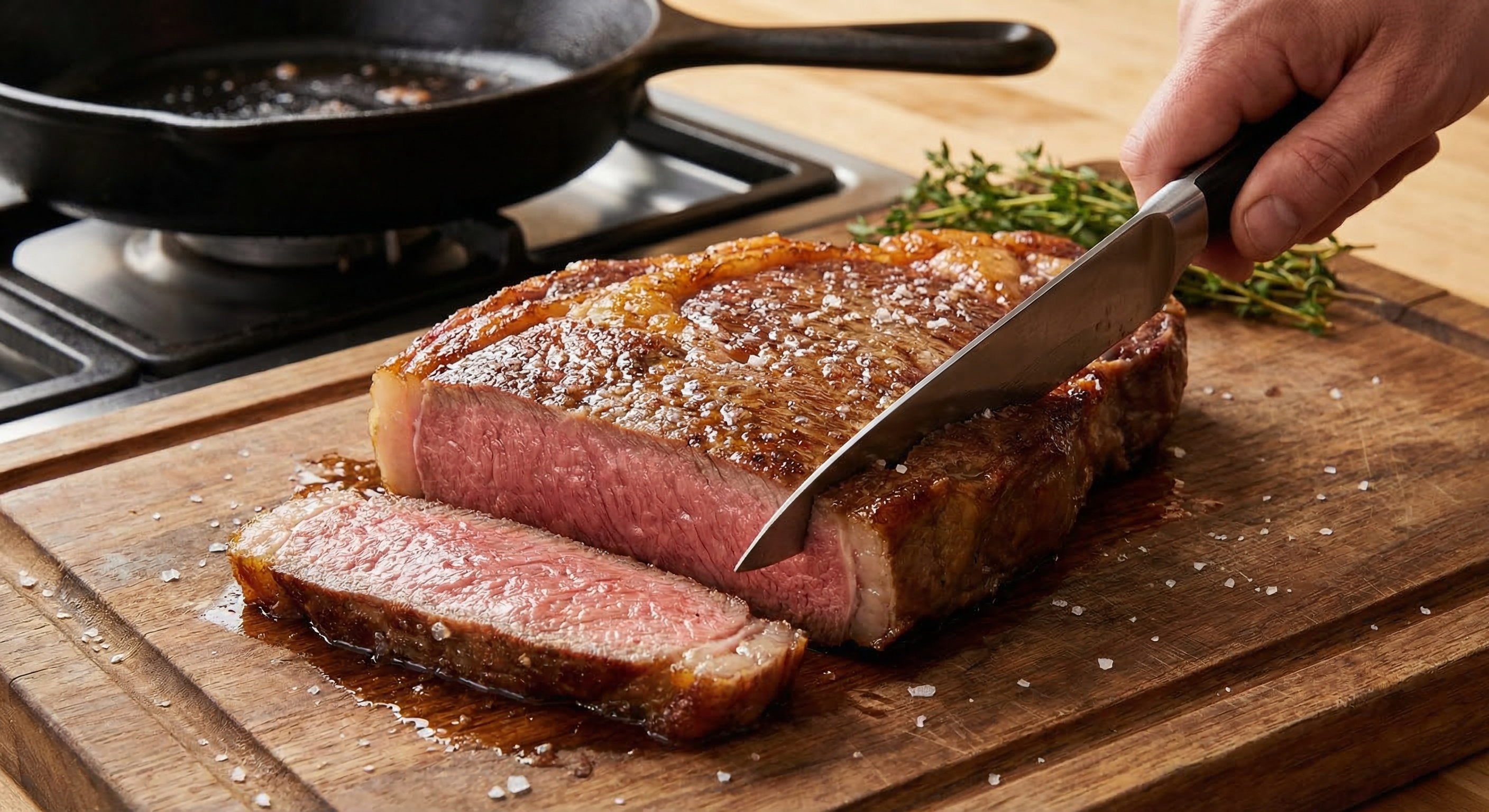
Sous vide produces perfect interior doneness but zero crust. The finishing sear is what transforms your bag of perfectly cooked beef into an actual steak. This step takes 60 to 90 seconds total, and getting it right is the difference between a good sous vide steak and a transcendent one.
Method 1: Cast Iron (Recommended). Heat a cast iron skillet over the highest heat your stove can produce for 3 to 4 minutes. Add a thin film of avocado oil or beef tallow—both have smoke points above 500°F. Remove the wagyu from the bag, pat it bone-dry with paper towels (this is critical—any moisture creates steam instead of sear), and place it in the screaming-hot pan. Sear 30 to 45 seconds per side. Do not move the steak during searing. Flip once. The goal is a deep golden-brown crust that's no thicker than a millimeter. For thick cuts, use tongs to sear the edges for 10 to 15 seconds each.
Method 2: Torch. A culinary torch or even a Bernzomatic TS8000 produces an intensely concentrated flame that can build crust without heating the interior at all. This is the gentlest finishing method—ideal for filet mignon or thin cuts where even 30 seconds of pan contact might overcook the edges. Hold the torch 2 to 3 inches from the surface and move steadily across the beef until golden brown. Combine with a light baste of wagyu tallow for flavor depth.
Method 3: Charcoal chimney. Place a wire rack over a fully lit charcoal chimney and sear the steak directly over the coals. This produces the most intensely flavored crust—charcoal smoke plus extreme radiant heat—but requires outdoor space and careful attention. Thirty seconds per side is enough. This is spectacular for tomahawk steaks where the long bone acts as a handle.
The cardinal rule: Speed. Every second of searing drives heat deeper into the interior, creating the gray band of overcooked meat that sous vide was supposed to eliminate. Faster is always better. If your crust isn't developing in 30 seconds, your heat source isn't hot enough—stop and reheat rather than extending the sear time.
Resting after sear: Unlike traditional steak cooking, sous vide steaks don't need a long rest after searing. The moisture is already evenly distributed from the water bath. A 60-second rest is plenty—just enough for the surface temperature to drop from searing heat to eating temperature. Slice and serve immediately.
Common Mistakes to Avoid
Cooking too hot. The most common mistake is using conventional beef temperatures (135°F+ for medium-rare) for wagyu. Because wagyu has so much more fat, those temperatures render out too much marbling and leave you with a steak that's drier and less rich than the same cut cooked at 129–131°F. Drop your temperature 3 to 5 degrees below what you'd use for USDA Choice.
Cooking too long. While sous vide is forgiving, it's not infinite. Wagyu steaks held in the bath for more than 4 to 5 hours start to develop a mushy, paté-like texture as the abundant fat breaks down the muscle fibers excessively. This is different from tougher cuts like short ribs, which benefit from extended cooking. For steaks, stay under 4 hours.
Skipping the pat-dry step. This destroys more sous vide steaks than any other mistake. The bag juices—a mixture of rendered fat, purged myoglobin, and dissolved proteins—must be completely removed before searing. If you don't pat the steak truly dry, those liquids create a steam barrier between meat and pan, preventing Maillard browning. Dry the steak aggressively with multiple paper towels until the surface feels tacky, not wet.
Adding butter to the bag. Already mentioned above, but worth repeating because it's so widely recommended (incorrectly). Butter washes away the water-soluble flavor compounds that make wagyu taste like wagyu. Use butter for basting during the sear if you want, but keep it out of the bag.
Searing too long. If your sear takes more than 45 seconds per side, your heat is too low. A 2-minute sear per side will overcook the outer quarter-inch of your steak—negating the entire point of sous vide. Prioritize heat intensity over sear duration.
Wagyu Grade Considerations for Sous Vide
Not all wagyu sous vides equally. The BMS score and origin affect both temperature selection and expectations.
Japanese A5 (BMS 8–12): These ultra-premium steaks have so much intramuscular fat that they can feel almost too rich at lower temperatures. I recommend 131–133°F for A5 to render enough fat that the texture stays steak-like rather than butter-like. Keep portions small (4 to 6 ounces) and slice thin for serving—A5 wagyu is best eaten in small, intensely flavored bites. The sous vide bag will contain a significant amount of rendered wagyu tallow; save this for cooking—it's liquid gold.
Japanese A3–A4 (BMS 3–7): The sweet spot for sous vide steaks. These cuts have enough marbling to produce extraordinary tenderness and flavor without the overwhelming richness of A5. Cook at 129–131°F for the most balanced result. Full 8-ounce portions work well here.
American Wagyu (BMS 4–9 typically): American wagyu crosses (often Angus x Wagyu) have slightly coarser marbling than Japanese wagyu, distributed differently within the muscle. They respond beautifully to sous vide at 131°F and can handle slightly longer cook times (up to 4 hours) without becoming mushy. American wagyu at 131°F for 2.5 hours is one of the best steak experiences available at any price point.
Australian Wagyu (BMS 4–9+): Australian fullblood wagyu rivals Japanese production at the high end. Treat BMS 7+ Australian wagyu like Japanese A4—131°F for 2 to 3 hours. Lower-BMS Australian wagyu (4–6) can go to 133°F without losing quality.
Serving and Presentation
The beauty of sous vide wagyu is the uniformity—every slice looks identical, with a consistent pink center and thin seared crust. Lean into that visual appeal when plating.
Slice against the grain in half-inch medallions and fan them across the plate. The uniform color of each slice is the visual proof that sous vide delivered—let your guests see it. A finishing drizzle of flaky sea salt (Maldon or fleur de sel) and a crack of fresh black pepper is all the seasoning most wagyu needs after its time in the bath.
Sauce pairings: Keep sauces light to avoid masking wagyu's natural flavor. A wasabi-soy reduction, yuzu kosho, or simple compound butter with fresh herbs all work well. Ponzu is excellent if you want a Japanese-leaning presentation (similar to tataki). For Western-style plating, a red wine reduction or truffle oil (used sparingly) complements the beef without overwhelming it.
Side dishes: Choose sides that provide textural and flavor contrast to the rich, buttery beef. Peppery arugula salad, charred broccolini, roasted fingerling potatoes, or a simple miso soup all balance wagyu's richness. Avoid heavy, creamy sides like mashed potatoes loaded with butter—that's richness on richness, and it diminishes the beef's impact.
Equipment Recommendations
You don't need expensive equipment to sous vide wagyu successfully, but a few upgrades make a meaningful difference.
Immersion circulator: Any reputable model works—Anova, Joule, Breville, or ChefSteps. Temperature accuracy within ±0.1°F is standard across modern circulators. The Joule is my personal favorite for its compact size and app control, but they all do the same job. Avoid older models that fluctuate by more than ±0.5°F—that inconsistency matters when you're cooking $150 steaks.
Container: A polycarbonate Cambro container (12-quart) is better than a stockpot because the flat sides allow steaks to sit vertically without overlapping. A lid (or even plastic wrap stretched over the top) prevents evaporation during longer cooks.
Vacuum sealer: A chamber sealer is ideal, but a good edge sealer with a wet-food mode works for steaks. Avoid generic sealer bags—use bags rated for sous vide cooking (BPA-free, rated for 212°F). In a pinch, the water displacement method with a zipper-lock freezer bag works surprisingly well: slowly lower the open bag into the water bath, letting the water pressure push air out, then seal the zipper just above the water line.
Cast iron skillet: For the finishing sear, nothing beats a heavy cast iron pan that's been preheated for a full 4 to 5 minutes over high heat. Carbon steel is equally good. Avoid stainless steel—it doesn't retain heat well enough for the brief, intense sear you need.
Frequently Asked Questions
Can I sous vide frozen wagyu? Yes, and it's actually a great option. Add 30 to 60 minutes to the cook time for frozen steaks. The gradual thawing in the water bath is very gentle and produces results nearly identical to cooking from fresh. This is especially convenient for wagyu, which is often sold frozen.
Should I season before or after sealing? Season with salt and pepper before sealing. Contrary to the myth that salt "draws moisture out" during sous vide, pre-salting actually improves flavor penetration and seasoning distribution. The moisture that salt draws out gets reabsorbed during the cook, carrying the salt flavor deeper into the meat.
What do I do with the bag juices? The liquid in the bag after cooking is rich with dissolved proteins, rendered wagyu fat, and concentrated beef flavor. Strain it, reduce it in a saucepan by half, and you have an incredibly flavorful jus. Alternatively, save the rendered fat (refrigerate to separate it from the liquid) for cooking—wagyu tallow from sous vide is exceptionally clean and flavorful.
Is sous vide worth it for wagyu specifically? Absolutely. The precision of sous vide is most valuable when the stakes (and steaks) are highest. Overcooking a $12 grocery store ribeye is disappointing; overcooking a $180 A5 strip is devastating. Sous vide virtually guarantees that won't happen, making it the safest investment in consistent results when cooking premium wagyu at home.
How does sous vide wagyu compare to pan-seared wagyu? Pan-seared wagyu can be exceptional in skilled hands, but it always produces a doneness gradient—more done on the outside, less done in the center. Sous vide eliminates that gradient. The trade-off is that pan-seared wagyu develops its crust during the primary cook, so the Maillard flavors have more time to develop and integrate. The sous vide finishing sear is briefer, producing a crust that's excellent but slightly less complex. For most home cooks, sous vide's consistency advantage outweighs the slight crust difference.
More Expert Guides
What Is Wagyu Beef? The Complete Guide to Grades, Origins & Quality
Discover wagyu beef origins, the difference between Japanese A5 and American wagyu, how BMS grading works, why marbling matters, proper cooking techniques, and what you should pay in 2026.
12 min readA5 Wagyu: Your Complete Buying & Authentication Guide (2026)
A5 wagyu represents the pinnacle of beef quality, but not all A5 is created equal. Learn how to authenticate real Japanese A5, decode BMS scores, find fair prices, and cook it perfectly at home.
14 min readA5 Wagyu Prefectures: Regional Guide to Japan's Best Beef
Discover the regional differences in Japanese A5 wagyu across 12 key prefectures. Learn which prefecture produces the flavor profile you'll love most.