Wagyu Ribeye Steak: The Complete Guide to Buying, Cooking, and Enjoying
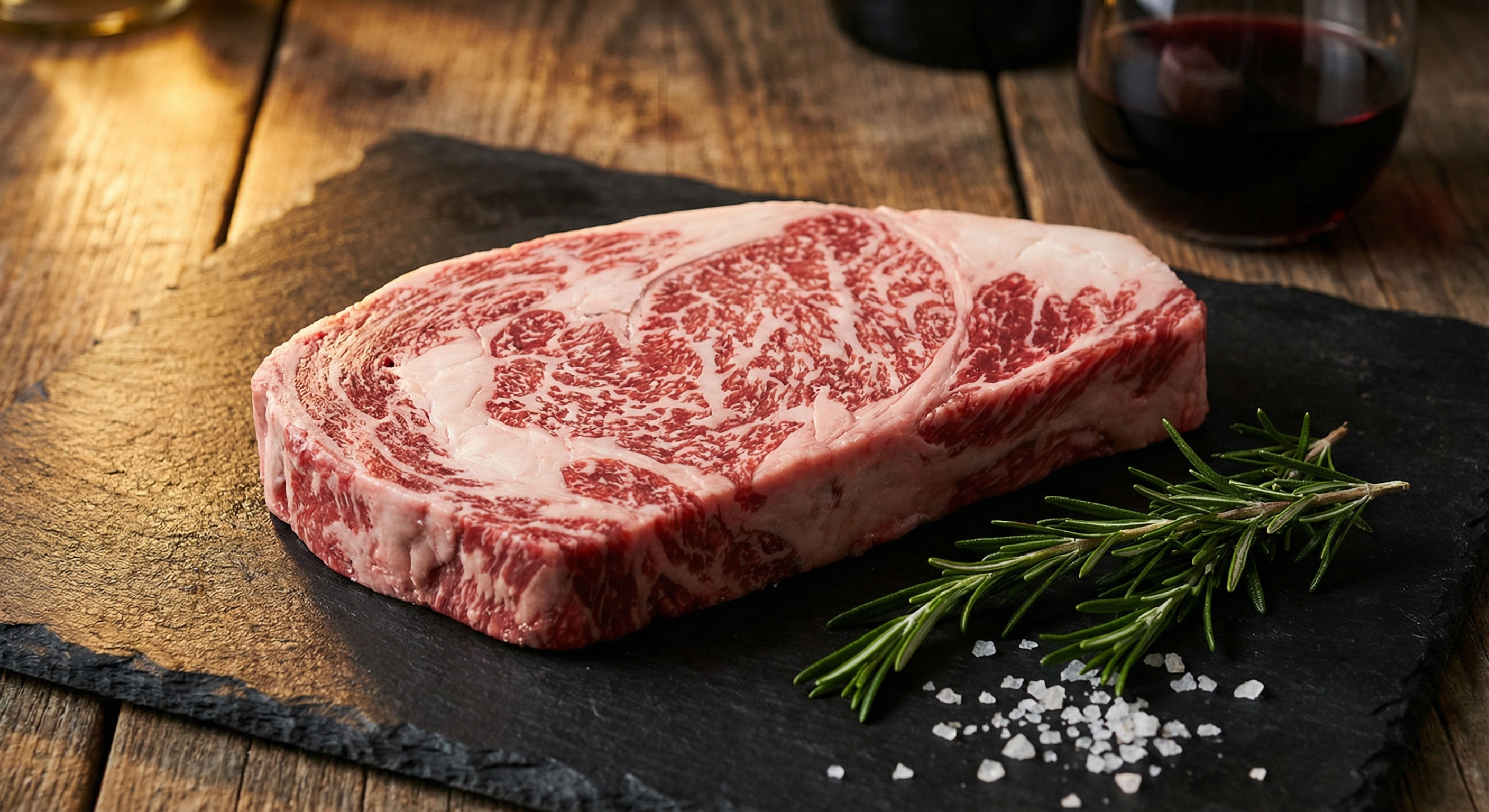
The ribeye is already the most flavorful steak cut on any animal. When that ribeye comes from wagyu cattle — bred for generations to produce extraordinary intramuscular fat — the result is something that redefines what steak can be.
But wagyu ribeye isn't one product. It spans a massive range from affordable American crossbreeds to eye-wateringly expensive Japanese A5 full-blood specimens. Choosing the right grade, cooking it correctly, and understanding what you're actually buying makes the difference between a transcendent meal and an expensive disappointment.
What Makes Wagyu Ribeye Different
The ribeye comes from the longissimus dorsi muscle that runs along the spine — a relatively inactive muscle that naturally accumulates more intramuscular fat (marbling) than hardworking muscles like the round or flank. In wagyu cattle, this natural tendency is amplified dramatically.
A USDA Prime ribeye — already the top 3–5% of American beef — might score BMS 4–5 on Japan's 12-point marbling scale. An American wagyu ribeye typically falls in the BMS 6–9 range, while a Japanese A5 wagyu ribeye hits BMS 10–12, meaning the meat contains more fat than lean tissue by visual assessment.
This difference isn't just visual. Wagyu marbling has a fundamentally different composition than conventional beef fat. Wagyu intramuscular fat contains a higher percentage of monounsaturated fatty acids — particularly oleic acid, the same heart-healthy fat found in olive oil. This gives wagyu fat a lower melting point (roughly 77°F versus 104°F for conventional beef fat), which is why it literally begins melting on your tongue.
The ribeye amplifies these qualities because it contains three distinct muscles, each contributing different textures and fat distribution:
- Spinalis dorsi (ribeye cap): The thin outer crescent that many consider the single best-tasting muscle on the animal. In wagyu, the cap's already-generous marbling becomes almost absurdly rich.
- Longissimus dorsi (eye): The large center section that provides the classic "ribeye" experience. In wagyu, this section shows the most dramatic webbing of white fat through deep red meat.
- Complexus: A smaller muscle present in rib positions closer to the chuck. Adds textural variety but is less consistent in marbling.
Understanding Wagyu Ribeye Grades
Not all wagyu ribeye is created equal. The grading system tells you exactly what you're getting, but you need to understand what the grades actually mean in practical terms.
Japanese Grading (JMGA)
Japan's grading system uses a letter (A, B, or C for yield) and a number (1–5 for quality). The quality score is determined by the lowest of four factors: marbling (BMS), meat color and brightness, firmness and texture, and fat color and quality. Practically, marbling drives everything.
- A5 (BMS 8–12): The highest grade. Ribeye at this level is so marbled it appears more white than red. Best enjoyed in thin slices, yakiniku style, or as a small tasting portion. A full 12-ounce A5 ribeye steak is genuinely too rich for most people to finish.
- A4 (BMS 6–7): Outstanding marbling that's more approachable. You can eat a full steak portion without the palate fatigue that A5 sometimes causes. Many experienced wagyu enthusiasts actually prefer A4 for everyday enjoyment.
- A3 (BMS 3–5): The entry point for Japanese wagyu. Still noticeably superior to USDA Prime but approachable enough to cook and eat like a conventional steak.
American Wagyu Grading
American wagyu uses the standard USDA grading system, but many producers also reference the Japanese BMS scale for clarity. Most American wagyu is crossbred — typically 50% Japanese Black (Kuroge Washu) genetics crossed with Angus — though full-blood American-raised wagyu exists and commands premium prices.
- American Wagyu, BMS 6–9: The sweet spot for most buyers. Significantly more marbled than USDA Prime, with enough intramuscular fat to deliver that signature wagyu richness while still feeling like a steak you'd want to eat a full portion of.
- American Full-Blood Wagyu, BMS 9+: Approaches Japanese quality levels. These animals are 100% Japanese genetics raised in the US, and their ribeyes can rival A4–A5 Japanese beef.
Australian Wagyu Grading
Australia uses both the AUS-MEAT system and a modified BMS scale that goes to 9+. Australian wagyu ribeye in the BMS 7–9+ range competes directly with good Japanese A4–A5 at often significantly lower prices, making it an outstanding value choice for wagyu ribeye.
How to Buy Wagyu Ribeye
Buying wagyu ribeye requires more attention than picking up a conventional steak. Here's what matters:
Source transparency
Legitimate wagyu retailers should tell you the specific breed percentage (for American wagyu), the farm or region of origin (for Japanese wagyu), and the BMS score. If a seller just says "wagyu ribeye" without these details, you're likely getting the lowest possible wagyu crossbreed — barely distinguishable from good USDA Prime.
Bone-in vs boneless
Bone-in wagyu ribeye (also called a cowboy steak when frenched) looks dramatic and the bone acts as an insulator during cooking, creating a gradient of doneness. Boneless is easier to sear evenly and portion. For Japanese A5, always buy boneless — you want maximum surface contact with the pan for that thin, hot sear.
Thickness matters
For American wagyu, request 1.25–1.5 inch cuts. Anything thinner and you'll overcook it before developing a proper crust. For Japanese A5, 0.5–0.75 inches is ideal — the extreme fat content means you want quick, high-heat cooking with maximum crust relative to interior.
Where to buy
Specialty online butchers like TheMeatery.com offer curated selections with clear provenance, proper grading information, and overnight shipping. Japanese A5 is also available from importers who work directly with specific Japanese prefectures. Avoid generic "wagyu" at supermarkets — it's almost always the lowest possible crossbreed percentage with minimal quality control.
How to Cook Wagyu Ribeye
The cooking method should match the grade. Using A5 techniques on American wagyu produces an underwhelming steak, and using conventional steak methods on A5 produces a greasy disaster.
American Wagyu Ribeye (BMS 4–9)
Cook American wagyu ribeye almost exactly like a great USDA Prime steak, with one adjustment: use less added fat.
- Temper: Remove from refrigerator 45–60 minutes before cooking. Pat completely dry with paper towels — moisture is the enemy of crust formation.
- Season simply: Coarse salt and freshly cracked black pepper. The meat's natural flavor is extraordinary and doesn't need compound butters, marinades, or rubs.
- Get the pan screaming hot: Cast iron skillet over high heat for 5+ minutes. Add just a thin film of high-smoke-point oil (avocado or refined grapeseed). The steak will render its own fat almost immediately.
- Sear 3–4 minutes per side: Don't move the steak once it hits the pan. Flip once. For thicker cuts (1.5"+), finish in a 400°F oven until internal temperature reaches 128–130°F for medium-rare.
- Rest 8–10 minutes: Critical. The juices need to redistribute. Tent loosely with foil.
Japanese A5 Wagyu Ribeye (BMS 10–12)
A5 wagyu ribeye requires a completely different approach. This is not a steak you eat in the conventional sense — it's a luxury ingredient consumed in small quantities.
- Slice before cooking: Cut the ribeye into strips roughly 0.5 inches thick and 3–4 inches long. Remove any large exterior fat — there's more than enough intramuscular fat to carry the flavor.
- Season with salt only: Fine sea salt or flaky Maldon salt. Nothing else.
- Sear in a dry pan: Heat a carbon steel or cast iron pan over high heat. No oil — the fat from the first slice renders enough to cook everything that follows. Sear each piece 20–30 seconds per side.
- Eat immediately: Each slice should be consumed within seconds of leaving the pan. A5 wagyu tastes best at the moment the fat is just rendered and the surface is just caramelized. It becomes waxy and less pleasant as it cools.
- Portion control: 3–4 ounces per person is a full serving. Yes, really. The fat content is so extreme that more than this becomes genuinely unpleasant for most people.
Reverse Sear Method (BMS 6–9)
For wagyu ribeye in the middle range, reverse searing produces exceptional results:
- Place seasoned steak on a wire rack over a sheet pan in a 250°F oven.
- Cook until internal temperature reaches 115–120°F (roughly 40–50 minutes for a 1.5-inch steak).
- Remove and let rest 5 minutes while you heat a cast iron skillet until smoking.
- Sear 60–90 seconds per side for an aggressive crust.
- Rest another 5 minutes before serving.
This method gives you edge-to-edge medium-rare with a deeply caramelized crust — the ideal combination for showcasing wagyu marbling.
Wagyu Ribeye vs Other Premium Cuts
How does wagyu ribeye stack up against other wagyu steak cuts? Each has its place.
Wagyu ribeye vs wagyu New York strip: Ribeye has more marbling, more fat, and more complexity from the three-muscle structure. Strip is leaner (relatively), firmer, and lets the beef flavor speak more clearly. Ribeye wins on richness; strip wins on clean, beefy character.
Wagyu ribeye vs wagyu filet mignon: Completely different experiences. Filet is about tenderness — butter-knife soft with subtle flavor. Ribeye is about flavor intensity and the interplay of fat and lean. For most steak lovers, wagyu ribeye delivers more total enjoyment because the marbling enhances what's already the most flavorful cut.
Wagyu ribeye vs wagyu tomahawk: A tomahawk is literally a bone-in ribeye with an extended, frenched rib bone. The meat is identical — you're paying extra for presentation. For a dinner party, the tomahawk is a showstopper. For Tuesday dinner, save the money and buy a boneless ribeye.
Storing and Handling Wagyu Ribeye
Wagyu ribeye demands careful handling to protect your investment.
Fresh: Keep vacuum-sealed in the coldest part of your refrigerator (usually the back of the bottom shelf). Use within 5–7 days of delivery for optimal quality. Don't open the vacuum seal until you're ready to cook.
Frozen: Quality wagyu flash-frozen at the source retains excellent quality for 6–12 months. Thaw slowly in the refrigerator over 24–36 hours. Never microwave-thaw wagyu — the uneven heating begins rendering the precious intramuscular fat before you can cook it.
Brought to temp: Always temper wagyu ribeye before cooking. A cold steak hitting a hot pan cooks unevenly — the exterior overcooks before the center warms through. For American wagyu, 45–60 minutes at room temperature. For thin-sliced A5, 20–30 minutes is sufficient.
Common Mistakes to Avoid
Even experienced steak cooks make these errors with wagyu ribeye:
- Overcooking: Wagyu's abundant fat means it goes from medium-rare to medium faster than conventional beef. Pull it 5°F below your target temperature — carryover heat does the rest.
- Too much butter: Adding butter to a wagyu ribeye is like adding cream to crème brûlée. The meat provides all the richness it needs. If you want butter on your steak, save your money and buy USDA Prime.
- Wrong portion size for A5: Serving someone a 12-ounce A5 wagyu ribeye is not generous — it's cruel. The extreme fat content makes more than 3–4 ounces per person genuinely uncomfortable.
- Neglecting the cap: The spinalis (cap) on a wagyu ribeye is arguably the best single bite of steak that exists. If your ribeye has a defined cap section, make sure it gets properly seared. Some cooks separate the cap and cook it independently for maximum crust.
- Buying on grade alone: A BMS 12 steak from an unknown source isn't necessarily better than a BMS 8 from a reputable farm with transparent practices. Provenance matters as much as grade.
Serving Suggestions
Let wagyu ribeye be the star. Heavy sauces, aggressive marinades, and complex sides compete with the meat's natural qualities.
Best accompaniments: Simple green salad with acid-forward vinaigrette (the acidity cuts the richness), steamed rice (the Japanese serve A5 with rice for good reason — the neutral starch balances the fat), roasted vegetables with minimal seasoning, and a light red wine like Pinot Noir or a crisp, dry white. Avoid heavy Cabernets — tannin plus extreme fat creates palate fatigue.
Japanese serving styles: Wagyu ribeye is outstanding prepared yakiniku-style (thin slices grilled tableside), as the centerpiece of a shabu-shabu hot pot, or simply seared and served over a bowl of hot rice with a drizzle of good soy sauce and a touch of wasabi.
The golden rule: the higher the grade, the simpler the preparation. An A5 wagyu ribeye needs salt and heat. Nothing more.
Frequently Asked Questions
How much does a wagyu ribeye steak cost?
Prices vary dramatically by grade and origin. American wagyu ribeye typically runs $40–$80 per pound, while Japanese A5 wagyu ribeye ranges from $120–$250+ per pound. A single 12-ounce American wagyu ribeye steak costs roughly $30–$60, whereas a comparable Japanese A5 portion might be $90–$190. Buying direct from specialty butchers like TheMeatery.com often offers better value than restaurant markup.
What is the best way to cook wagyu ribeye?
For American wagyu ribeye (BMS 4–9), pan-sear in a ripping-hot cast iron skillet with minimal oil — the marbling renders its own fat. Cook to medium-rare (130°F internal). For Japanese A5 wagyu ribeye (BMS 10–12), slice thin and sear briefly on each side — no more than 45–60 seconds total. A5 is so rich that thick-cut preparations can be overwhelming.
What grade of wagyu ribeye should I buy for grilling?
American wagyu in the BMS 6–8 range is ideal for grilling. It has enough marbling to stay juicy over high heat without so much fat that it causes constant flare-ups. Japanese A5 wagyu is generally too fatty for direct grilling — the extreme fat content drips and flames aggressively. If you want to grill A5, use indirect heat or a plancha/flat-top.
Is wagyu ribeye better than wagyu New York strip?
Wagyu ribeye has more intramuscular fat than New York strip thanks to the spinalis (cap) and the ribeye's naturally higher marbling distribution. This makes ribeye richer and more forgiving to cook. New York strip offers a cleaner, slightly firmer bite with a beefy flavor that isn't as fat-forward. Ribeye is better for people who love richness; strip is better for those who want balance.
How thick should wagyu ribeye be cut?
For American wagyu, 1.25–1.5 inches thick is ideal — thick enough to develop a proper crust while keeping the center medium-rare. For Japanese A5 wagyu, thinner is better: 0.5–0.75 inches allows quick searing with maximum crust-to-interior ratio. A5 cut too thick becomes overwhelmingly fatty because you can't eat enough surface area relative to the ultra-rich interior.
More Expert Guides
Wagyu Fat Melting Point: Why It Melts at Lower Temperatures Than Regular Beef
Wagyu beef fat melts at significantly lower temperatures than conventional beef — sometimes as low as 77°F. This guide explains the science behind it and why it transforms everything from flavor to cooking technique.
12 min readHalal Wagyu Beef: Everything You Need to Know Before You Buy
Halal wagyu combines the extraordinary marbling of wagyu genetics with Islamic slaughter standards. Here is how to find it, verify certification, and choose the right cuts.
12 min readWagyu Teppanyaki: The Complete Guide to Japan's Theatrical Steak Experience
Teppanyaki transformed wagyu from an ingredient into a performance. This guide covers the best cuts, iron griddle technique, essential sauces, and how to recreate the full experience at home.