Wagyu Striploin vs Ribeye: Which Cut Is Better?
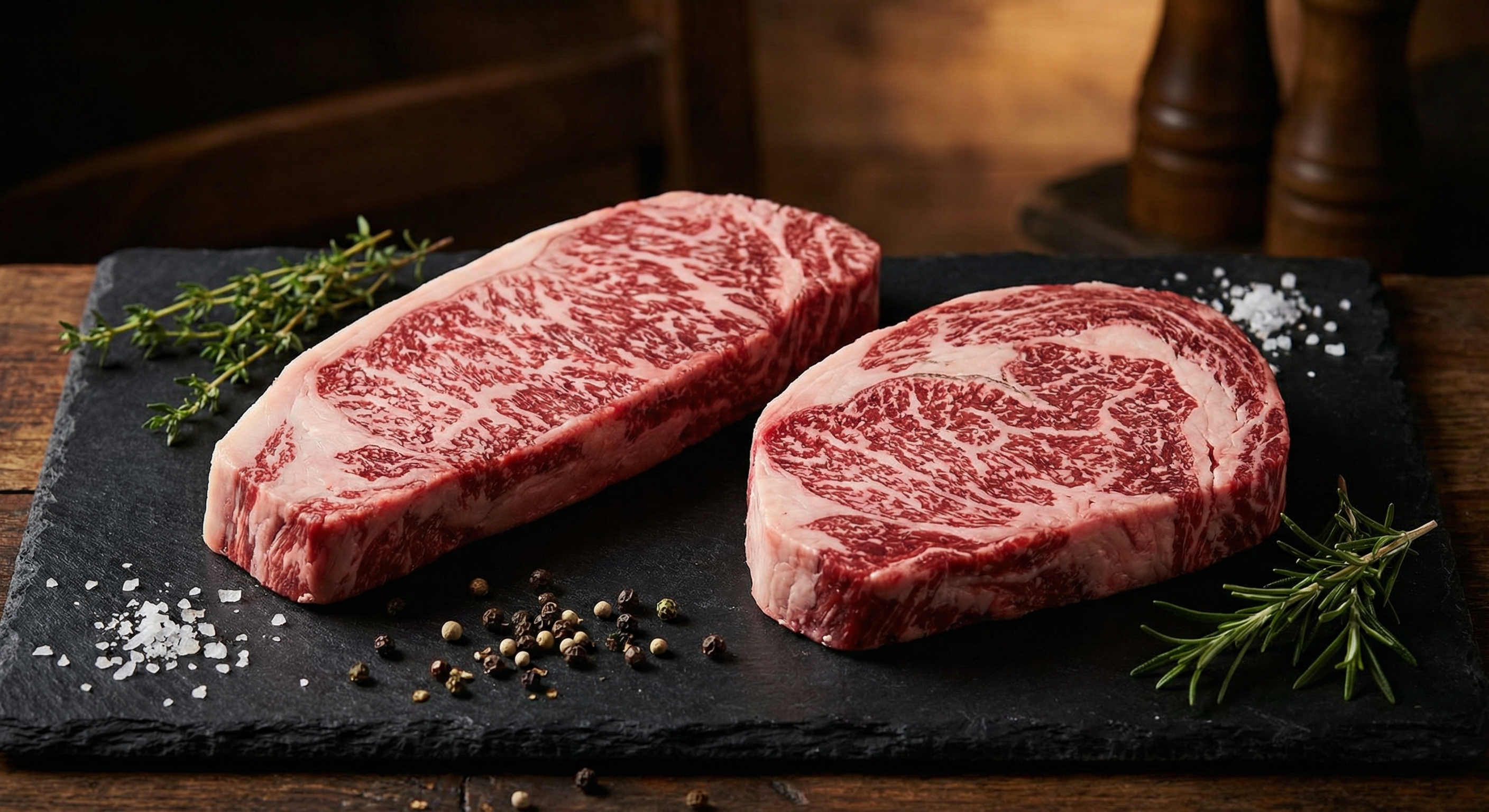
When you're spending premium dollars on wagyu beef, choosing between a striploin and a ribeye matters more than it does with conventional beef. The marbling differences between these two cuts are amplified in wagyu cattle, creating distinctly different eating experiences that justify understanding both cuts before you buy.
I've cooked hundreds of wagyu striploins and ribeyes across Japanese A5, Australian fullblood, and American wagyu grades. Here's an honest comparison to help you pick the right cut for your next meal.
Understanding the Two Cuts
Wagyu Striploin (New York Strip)
The striploin comes from the short loin section of the cattle, sitting just behind the ribs. It's a single, relatively uniform muscle (the longissimus dorsi) with a strip of fat running along one edge. In wagyu cattle, the intramuscular marbling through the striploin is intense but tends to be more evenly distributed in fine, delicate lines.
Key characteristics of wagyu striploin:
- Firmer texture: The striploin has a tighter grain and more defined "bite" than the ribeye, even in heavily marbled wagyu
- Cleaner beef flavor: Less intermuscular fat means the beefy flavor comes through more clearly
- Consistent doneness: The uniform shape makes it easier to cook evenly from edge to edge
- Fat cap on one side: A strip of external fat adds flavor when rendered during cooking
Wagyu Ribeye
The ribeye comes from the rib section (ribs 6–12) and is actually composed of multiple muscles — the longissimus dorsi (the eye), the spinalis dorsi (the cap or deckle), and the complexus. These muscles are separated by seams of intermuscular fat that make the ribeye richer and more complex.
Key characteristics of wagyu ribeye:
- More total fat: Both intramuscular marbling and intermuscular fat seams contribute to overall richness
- Buttery, melt-in-mouth texture: The spinalis cap on a wagyu ribeye is often cited as the single best bite of beef you can eat
- Complex flavor: Different muscles and fat deposits create varying textures and flavors across the steak
- Less uniform cooking: The different muscles and fat pockets cook at slightly different rates
Marbling Comparison
In the Japanese BMS (Beef Marbling Standard) system, both cuts from the same animal receive the same carcass grade. An A5 BMS 12 animal produces both A5 BMS 12 striploin and A5 BMS 12 ribeye. But the marbling looks and feels different in each cut.
Striploin Marbling
Wagyu striploin marbling tends to appear as fine, web-like patterns evenly distributed throughout the single muscle. At higher BMS scores (10–12), the marbling becomes so dense that the steak looks almost pink-white rather than red. The fat distribution is predictable — you know what you're getting with each bite.
Ribeye Marbling
Wagyu ribeye marbling is more dramatic and varied. The eye of the ribeye shows similar fine marbling to the striploin, but the spinalis cap often has even more intense marbling. The fat seams between muscles add large pockets of rendered fat during cooking. The visual presentation is typically more impressive, which is why ribeye photos dominate wagyu marketing.
Flavor and Texture Breakdown
| Factor | Wagyu Striploin | Wagyu Ribeye |
|---|---|---|
| Primary flavor | Clean, concentrated beef | Rich, buttery, complex |
| Texture | Tender with defined bite | Melt-in-mouth, varied |
| Fat intensity | Moderate to high | High to very high |
| Best bite | Consistent throughout | The spinalis cap |
| Richness fatigue | Less likely | More likely with A5 |
| Portion comfort | Can eat larger portions | Best in smaller portions |
The "richness fatigue" factor is real and often underestimated. With Japanese A5 wagyu, many first-time eaters find that 3–4 ounces of ribeye is their limit before the richness becomes overwhelming. The striploin's firmer texture and leaner profile (relative to the ribeye — it's still incredibly marbled) allows most people to enjoy a larger portion comfortably.
Price Comparison
Wagyu ribeye typically commands a premium over striploin across all grades:
- Japanese A5: Ribeye runs $120–$180/lb vs striploin at $100–$150/lb
- Australian fullblood wagyu: Ribeye at $80–$120/lb vs striploin at $60–$100/lb
- American wagyu (F1 cross): Ribeye at $40–$70/lb vs striploin at $30–$55/lb
The price premium for ribeye exists because of higher demand, more dramatic visual marbling, and the presence of the prized spinalis cap. However, many wagyu enthusiasts — particularly in Japan — actually prefer the striploin for its balance and versatility.
Best Cooking Methods
Cooking Wagyu Striploin
The striploin's uniform shape makes it forgiving to cook:
- Hot sear (recommended): Get a cast iron or carbon steel pan screaming hot. Sear 60–90 seconds per side for A5. The fat cap should face down first to render.
- Yakiniku style: Slice thin (3–5mm) and grill briefly over high heat. This is how striploin is most commonly served in Japan.
- Sous vide + sear: 130°F for 1–2 hours, then a hard 45-second sear. Works exceptionally well for thicker cuts.
- Target temperature: Medium-rare (130°F) for American and Australian wagyu. For A5, rare to medium-rare (120–130°F) lets the fat render without overcooking.
Cooking Wagyu Ribeye
The ribeye's multiple muscles and fat seams require more attention:
- Hot sear (recommended): Same approach as striploin, but watch for flare-ups from the higher fat content. The fat seams will render and can cause smoking.
- Reverse sear: Start in a 250°F oven until internal temp hits 115°F, then finish with a hard sear. This gives you more control over the different muscle temperatures.
- Yakiniku style: Excellent for ribeye — thin slicing exposes the marbling and creates fast caramelization.
- Target temperature: Medium-rare to medium (130–140°F). The higher fat content means the ribeye benefits from slightly more rendering than the striploin.
Which Cut Should You Choose?
Your choice depends on what you value most in a steak experience:
Choose Wagyu Striploin If:
- You prefer a steak with more defined beef flavor and texture
- You want to eat a larger portion (6+ ounces) without richness fatigue
- You're new to high-grade wagyu and want a less overwhelming introduction
- Budget matters — striploin delivers exceptional wagyu experience at a lower price point
- You're cooking for guests who might find pure A5 ribeye too rich
Choose Wagyu Ribeye If:
- You want the most luxurious, melt-in-mouth experience possible
- You're sharing small portions at a dinner party (the wow factor is unmatched)
- You specifically want the spinalis cap — the single richest, most marbled section
- Visual presentation matters (ribeye photographs better and impresses at the table)
- You enjoy rich, buttery flavors and aren't concerned about portion size
The Expert's Take
Most experienced wagyu eaters I know (including many Japanese beef professionals) lean toward striploin as their everyday preference. The ribeye is undeniably more impressive as a showpiece, but the striploin's balance of flavor, texture, and eatability makes it the more versatile cut. When I'm buying wagyu for myself, I reach for striploin about 70% of the time. When I'm buying to impress guests, I go ribeye.
How to Buy Quality Wagyu Striploin and Ribeye
Regardless of which cut you choose, these buying tips apply:
- Verify the grade: For Japanese wagyu, look for the official JMGA certificate or stamp. For Australian, look for marbling scores (MS 7+ for significant marbling).
- Check the origin: "Wagyu" without a country of origin is a red flag. Legitimate sellers specify Japanese, Australian, or American wagyu.
- Examine the marbling: Fine, evenly distributed marbling is better than large chunks of fat. The fat should look like white lace woven through red meat.
- Buy from specialists: General butcher shops rarely carry authentic high-grade wagyu. Specialized online retailers with verifiable sourcing are your best bet.
- Consider thickness: For searing, 1–1.5 inches is ideal. For yakiniku, ask for thin slicing (3–5mm).
Frequently Asked Questions
Frequently Asked Questions
Is wagyu ribeye or striploin more marbled?
Both cuts from the same animal receive the same BMS grade, but ribeye typically appears more marbled due to intermuscular fat seams between its multiple muscles. The striploin has fine, evenly distributed intramuscular marbling through a single muscle.
Why is wagyu ribeye more expensive than striploin?
Wagyu ribeye commands a 15–25% premium over striploin due to higher demand, more dramatic visual marbling, and the presence of the prized spinalis (ribeye cap) muscle. However, striploin offers excellent value as it delivers comparable marbling at a lower price.
How much wagyu striploin or ribeye should I serve per person?
For Japanese A5 wagyu, 3–5 ounces per person is typically plenty due to the extreme richness. For American or Australian wagyu, 6–8 ounces is comfortable. Ribeye portions should be on the smaller end of these ranges due to higher fat content.
Can I substitute wagyu striploin for ribeye in recipes?
Yes, they can be used interchangeably in most recipes. Adjust cooking times slightly — striploin cooks a bit faster due to less fat content. The flavor profile will differ (striploin is cleaner, ribeye is richer), but both deliver an exceptional wagyu experience.
Which wagyu cut is best for beginners?
Wagyu striploin is generally the better entry point. Its firmer texture and more balanced fat content make it less overwhelming than ribeye, especially at higher grades like A5. Many people find their first A5 ribeye too rich, while striploin provides a more approachable introduction.
More Expert Guides
What Is Wagyu Beef? The Complete Guide to Grades, Origins & Quality
Discover wagyu beef origins, the difference between Japanese A5 and American wagyu, how BMS grading works, why marbling matters, proper cooking techniques, and what you should pay in 2026.
12 min readA5 Wagyu: Your Complete Buying & Authentication Guide (2026)
A5 wagyu represents the pinnacle of beef quality, but not all A5 is created equal. Learn how to authenticate real Japanese A5, decode BMS scores, find fair prices, and cook it perfectly at home.
14 min readA5 Wagyu Prefectures: Regional Guide to Japan's Best Beef
Discover the regional differences in Japanese A5 wagyu across 12 key prefectures. Learn which prefecture produces the flavor profile you'll love most.