Wagyu Brisket: The Complete Guide to Buying, Smoking, and Serving
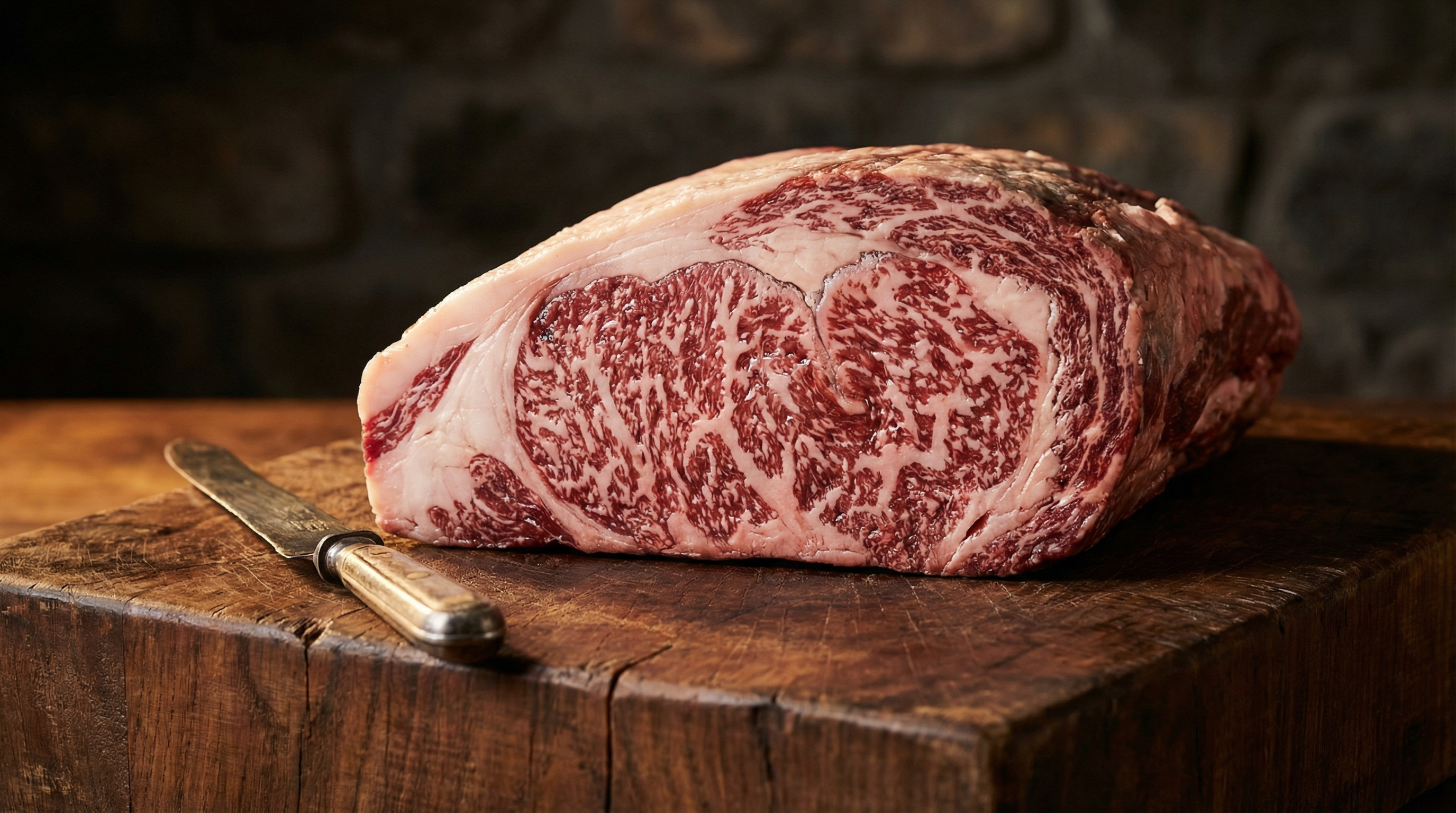
Wagyu brisket occupies a unique space in barbecue. It takes the cut that pitmasters have spent decades perfecting — the demanding, unforgiving brisket — and adds a level of intramuscular fat that changes everything about how it cooks, how it tastes, and how you should approach it.
The result, when done right, is the most flavorful, tender brisket you'll ever eat. But wagyu brisket isn't just expensive regular brisket. The higher fat content affects trimming, temperature targets, cook times, and even how you slice it. Treat it like a standard brisket and you'll waste both the meat and your money.
I've smoked wagyu briskets ranging from crossbred American wagyu to full-blood Japanese A5, and each teaches you something different about what fat does to low-and-slow cooking. Here's everything I've learned.
What Makes Wagyu Brisket Different
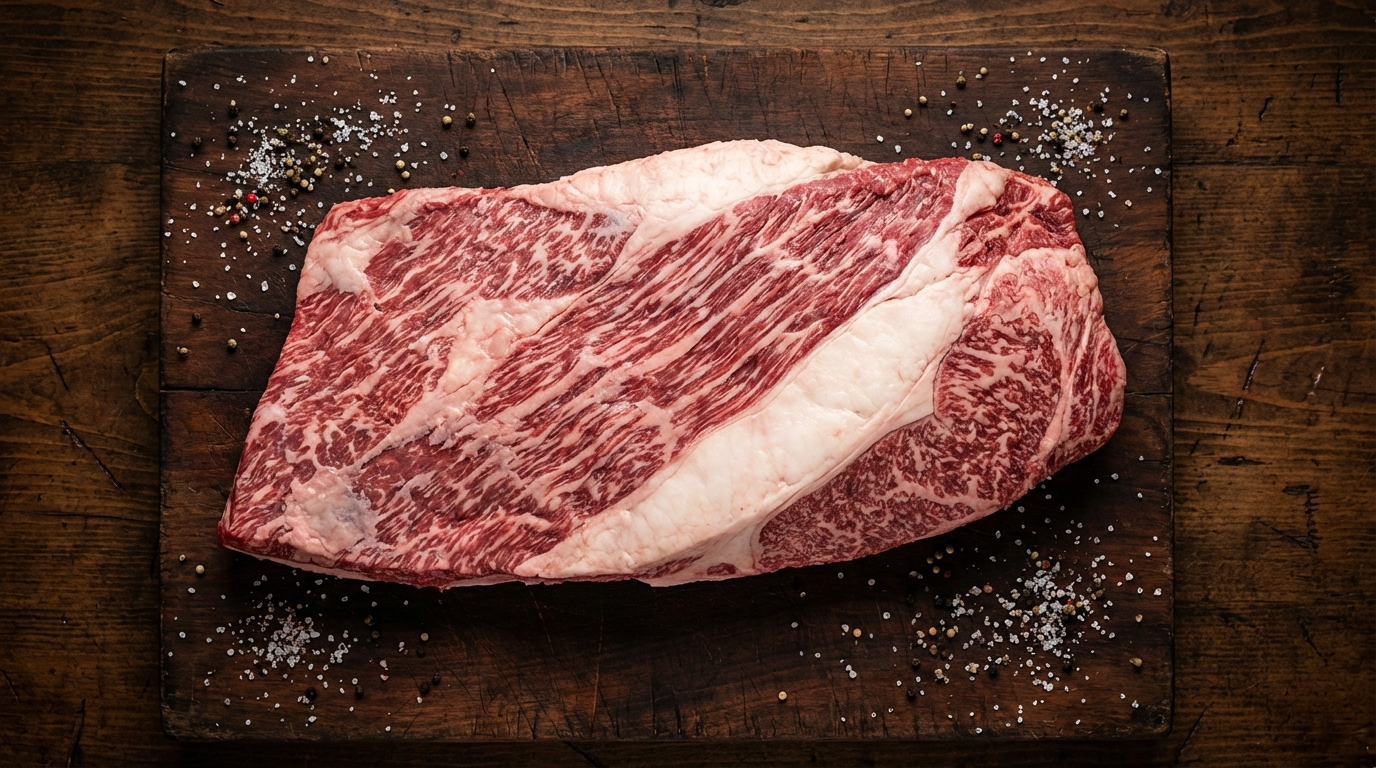
A brisket is two muscles — the flat (pectoralis profundus) and the point (pectoralis superficialis) — joined by a thick layer of fat called the deckle. Every brisket has this structure. What changes with wagyu is the density of intramuscular fat woven throughout both muscles.
In a USDA Choice brisket, the flat is relatively lean with most fat concentrated in the exterior cap and the deckle between the muscles. The point has more marbling naturally, which is why burnt ends are so popular — they're the fattier, more forgiving half.
In a wagyu brisket, the flat looks like what a Choice point looks like. And the point looks like something else entirely — dense white marbling threading through every fiber. This difference has cascading effects:
- Heat transfer: Fat conducts heat differently than lean muscle. Wagyu brisket cooks 15–25% faster than conventional brisket at the same temperature because the intramuscular fat transfers heat more efficiently through the meat.
- Moisture retention: All that rendering intramuscular fat bastes the meat from the inside. Wagyu brisket is far more forgiving of temperature spikes and has a much wider window between "done" and "dried out."
- Bark formation: The higher surface fat can inhibit bark development. Wagyu briskets need more aggressive trimming and sometimes slightly higher cooking temperatures to develop that crunchy, peppery crust.
- Flavor intensity: The rendered wagyu fat carries an almost buttery, umami-rich flavor that conventional brisket simply cannot match. It's a fundamentally different eating experience.
- Richness saturation: This is the trade-off. Wagyu brisket is so rich that portions need to be smaller. Where you might eat four slices of Choice brisket, two slices of wagyu brisket will leave you fully satisfied.
Understanding Wagyu Brisket Grades
Not all wagyu brisket is created equal. The term "wagyu" covers an enormous quality range, and knowing what you're buying is essential — especially at brisket prices.
American Wagyu (Crossbred)
Most wagyu brisket sold in the United States is American wagyu — cattle that are crosses between Japanese Wagyu genetics (typically Japanese Black) and American breeds (usually Angus). The crossbreeding produces beef with significantly more marbling than USDA Prime but less than full-blood Japanese wagyu.
American wagyu brisket typically grades at BMS 4–9 (the Japanese Beef Marbling Standard). For context, USDA Prime starts at roughly BMS 5. The best American wagyu briskets match or exceed the marbling of the highest Prime briskets while offering that distinctive wagyu flavor profile.
Price range: $8–$15 per pound for whole packers (roughly $100–$200 for a full brisket).
Best for: Smoking. American wagyu hits the sweet spot where you get exceptional marbling and flavor while still maintaining the traditional brisket character that barbecue lovers expect. This is the grade most competition pitmasters use when they cook wagyu.
Full-Blood (Purebred) Wagyu
Full-blood wagyu brisket comes from cattle with 100% verified Japanese genetics, often raised in the US or Australia under programs that aim to replicate Japanese feeding and management practices. These briskets typically grade BMS 8–12.
Price range: $15–$25+ per pound ($200–$350+ for a full brisket).
Best for: Special occasions and experienced cooks who understand the extreme richness. Full-blood wagyu brisket produces a dramatically different result — almost melt-in-your-mouth tender with an overwhelming buttery richness. Some pitmasters love it. Others find it too rich for traditional barbecue.
Japanese A5 Brisket
Japanese A5 wagyu brisket is the top tier — BMS 10–12 marbling from cattle raised in Japan under strict JMGA standards. A5 brisket is rarely smoked whole in the traditional American barbecue style because the fat content is so extreme that the result barely resembles conventional brisket.
Price range: $25–$50+ per pound (when available, which is rare for whole briskets).
Best for: Thin-sliced preparations like yakiniku, shabu-shabu, or hot pot. If you do smoke an A5 brisket, plan for much smaller portions and expect a completely different experience than barbecue brisket.
How to Buy Wagyu Brisket
Sourcing wagyu brisket requires more diligence than picking up a packer from your warehouse club. The quality range is enormous, and marketing claims often outrun reality.
Buy whole packers when possible. A whole packer brisket (flat + point, untrimmed) gives you maximum control over trimming and cooking. Some retailers sell wagyu flats separately — these work fine for smoking but you lose the point, which is the most spectacular part of a wagyu brisket.
Ask about genetics. "Wagyu" is not a regulated term in the US. Some producers cross wagyu genetics with dairy cattle and still label it wagyu. Look for specific breed information — F1 crosses (50% wagyu) are the minimum for noticeable marbling improvement, but F2 or higher (75%+) is where wagyu brisket really differentiates itself.
Check the marbling score. Reputable wagyu producers provide a BMS or marbling score. For smoking, BMS 6–9 is the sweet spot. Below BMS 5, you're essentially buying regular Prime brisket at a wagyu premium. Above BMS 9, the fat content may be more than you want for traditional barbecue.
Consider the feeding program. Wagyu cattle are typically grain-finished for extended periods — 300 to 500+ days for American wagyu, versus 120–180 days for conventional beef. Longer feeding programs generally produce better marbling and more developed beef flavor. Ask how long the cattle were finished.
Trusted sources: Snake River Farms, Mishima Reserve, Crowd Cow, and Holy Grail Steak Co. all offer wagyu briskets with transparent grading. Local wagyu ranchers are another excellent option if you can find them — many sell direct at farmers' markets or through ranch websites.
Trimming Wagyu Brisket
Trimming is where most people make their first wagyu brisket mistake. The instinct is to leave more fat because you paid more for the meat. The opposite is true.
Trim the fat cap to ¼ inch. Conventional wisdom says ½ inch for regular brisket. Wagyu brisket already has abundant internal fat — you don't need the external fat cap for moisture protection. A thinner cap means better smoke penetration, better bark formation, and better seasoning adhesion.
Remove hard fat deposits aggressively. Wagyu briskets sometimes have thick, hard fat deposits along the edges and in the deckle area. This hard fat doesn't render at smoking temperatures and creates chewy, waxy spots in the finished product. Trim it away.
Clean the point-flat seam. The fat between the flat and point (the deckle) is thicker in wagyu briskets. You don't need to separate the muscles, but trim the exposed deckle fat where it's accessible. Some pitmasters separate the flat and point entirely for wagyu cooks — this gives you more surface area for bark and allows better temperature monitoring of each muscle independently.
Shape for airflow. After trimming, the brisket should have clean, rounded edges with no thin flaps or peninsulas that will overcook. Wagyu is more forgiving than Choice, but thin edges still dry out. Aerodynamic trimming matters.
Smoking Wagyu Brisket
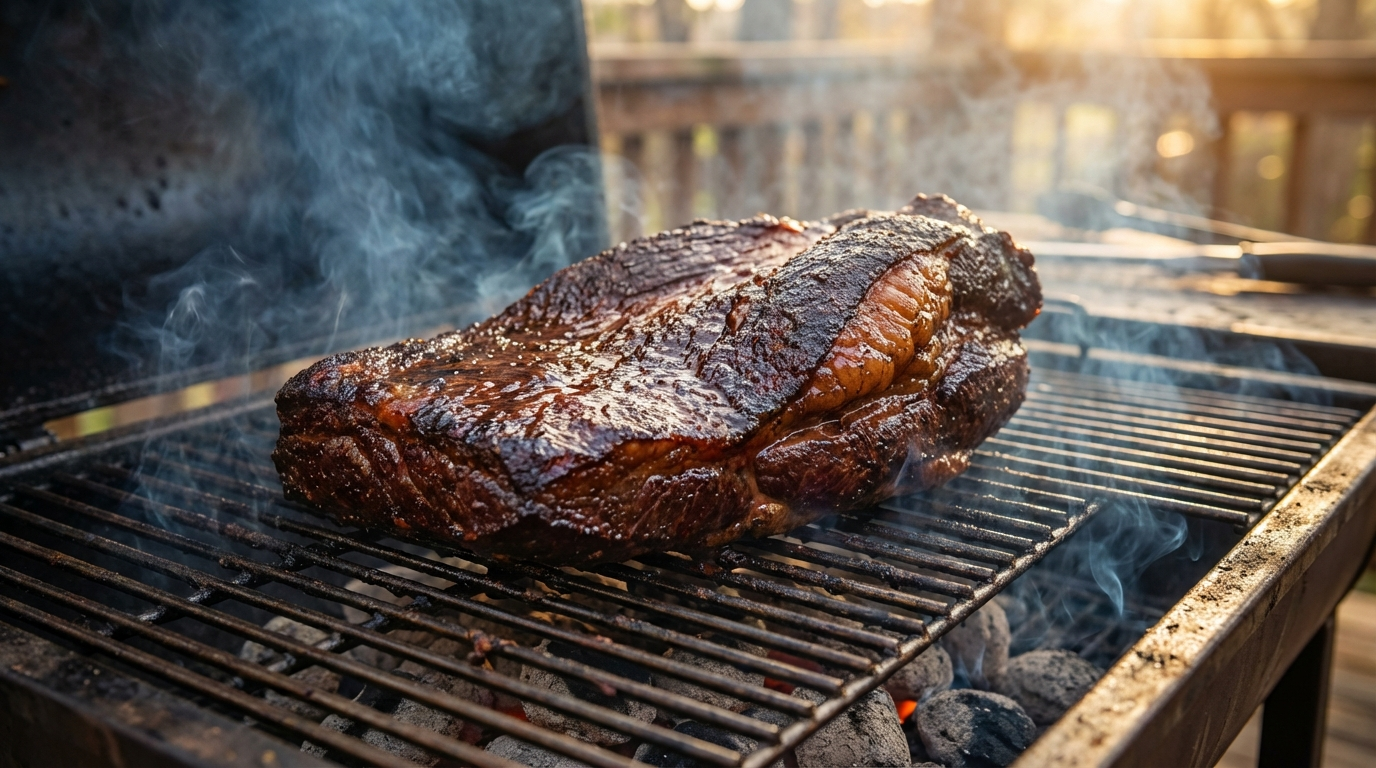
The smoking process for wagyu brisket follows the same broad strokes as conventional brisket — low and slow with hardwood smoke — but with important adjustments at every stage.
Temperature and Wood
Run your smoker at 250–275°F. This is slightly higher than the traditional 225°F that many pitmasters use for Choice brisket. The higher temperature serves two purposes: it helps render the abundant intramuscular fat more completely, and it promotes better bark formation against the fattier surface.
For wood, use oak, hickory, or a blend of the two. Fruitwoods (cherry, apple) work well as secondary woods. Mesquite is too aggressive for wagyu — its sharp, tannic smoke flavor competes with the subtle buttery notes that make wagyu special. You want the smoke to complement, not dominate.
The Stall
Wagyu brisket stalls just like conventional brisket — internal temperature plateaus around 150–170°F as evaporative cooling matches heat input. However, the stall often resolves faster with wagyu because the rendering fat accelerates the cooking process once it starts flowing.
You can wrap wagyu brisket in butcher paper to push through the stall, just like conventional brisket. Avoid aluminum foil wrapping (the "Texas crutch") — it traps too much moisture against the fattier wagyu surface and turns bark into mush. Butcher paper breathes while still accelerating the cook.
Internal Temperature Targets
Pull wagyu brisket when the flat reaches 200–203°F and the probe slides in with virtually no resistance — the classic "probe tender" test. Wagyu often reaches probe tender at a slightly lower temperature than Choice brisket (sometimes as low as 197°F) because the fat has already broken down so much connective tissue.
Don't rely on temperature alone. The probe test is more important than any number on the thermometer. Wagyu brisket that probes tender at 198°F is done. Wagyu brisket that reads 205°F but still has resistance needs more time. Trust the feel.
The Rest
Rest wagyu brisket for a minimum of 1 hour, ideally 2–4 hours. Wrap it in butcher paper, then towels, and place it in a cooler (no ice). The rest allows the abundant rendered fat to redistribute and reabsorb into the muscle fibers.
Skipping or shortening the rest with wagyu brisket is even more costly than with conventional brisket. When you slice into a wagyu brisket too early, the volume of liquid fat that pours out is shocking — and that's flavor and moisture leaving the meat permanently.
Slicing and Serving Wagyu Brisket
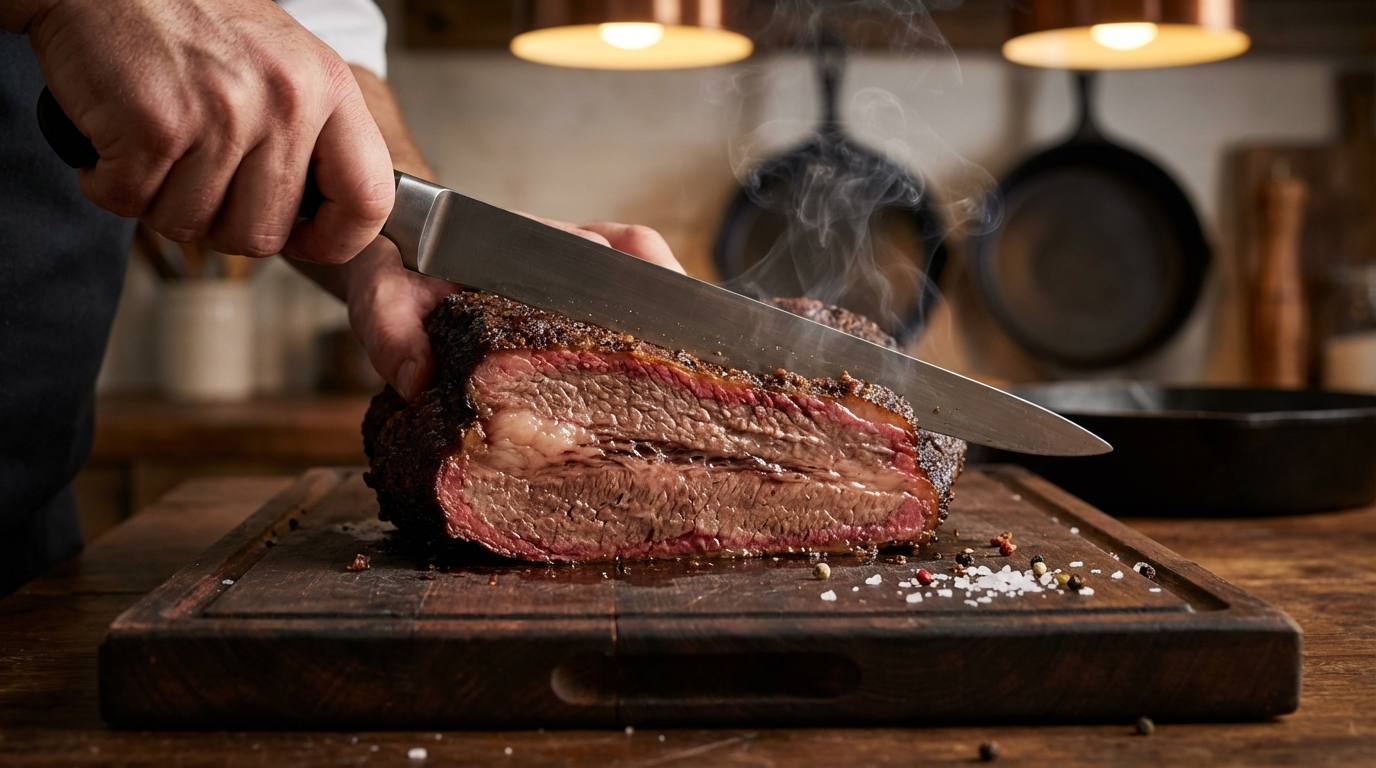
Slice wagyu brisket thinner than you would conventional brisket — roughly ¼ inch thick versus the standard pencil-width ⅜ inch. Thinner slices manage the richness better. A thick-cut wagyu brisket slice can be overwhelming even for beef lovers.
Always slice against the grain. This is standard for any brisket, but the stakes are higher with wagyu because the rendered fat makes the meat so tender that slicing with the grain creates slices that fall apart into mush rather than holding together with pleasant tenderness.
Remember the grain changes direction between the flat and point. When you reach the transition zone, rotate the brisket about 90 degrees and continue slicing perpendicular to the new grain direction.
Portion Sizes
Plan for smaller portions than conventional brisket. Where you might serve 6–8 ounces of Choice brisket per person, 3–4 ounces of wagyu brisket is a generous serving. The richness is filling in a way that lean brisket simply isn't.
This actually makes wagyu brisket more economical than it first appears. A 14-pound whole packer that trims down to 10 pounds of raw meat and yields 6–7 pounds of cooked brisket can serve 20+ people at wagyu-appropriate portions, versus 10–12 people with conventional brisket.
Wagyu Brisket Beyond the Smoker
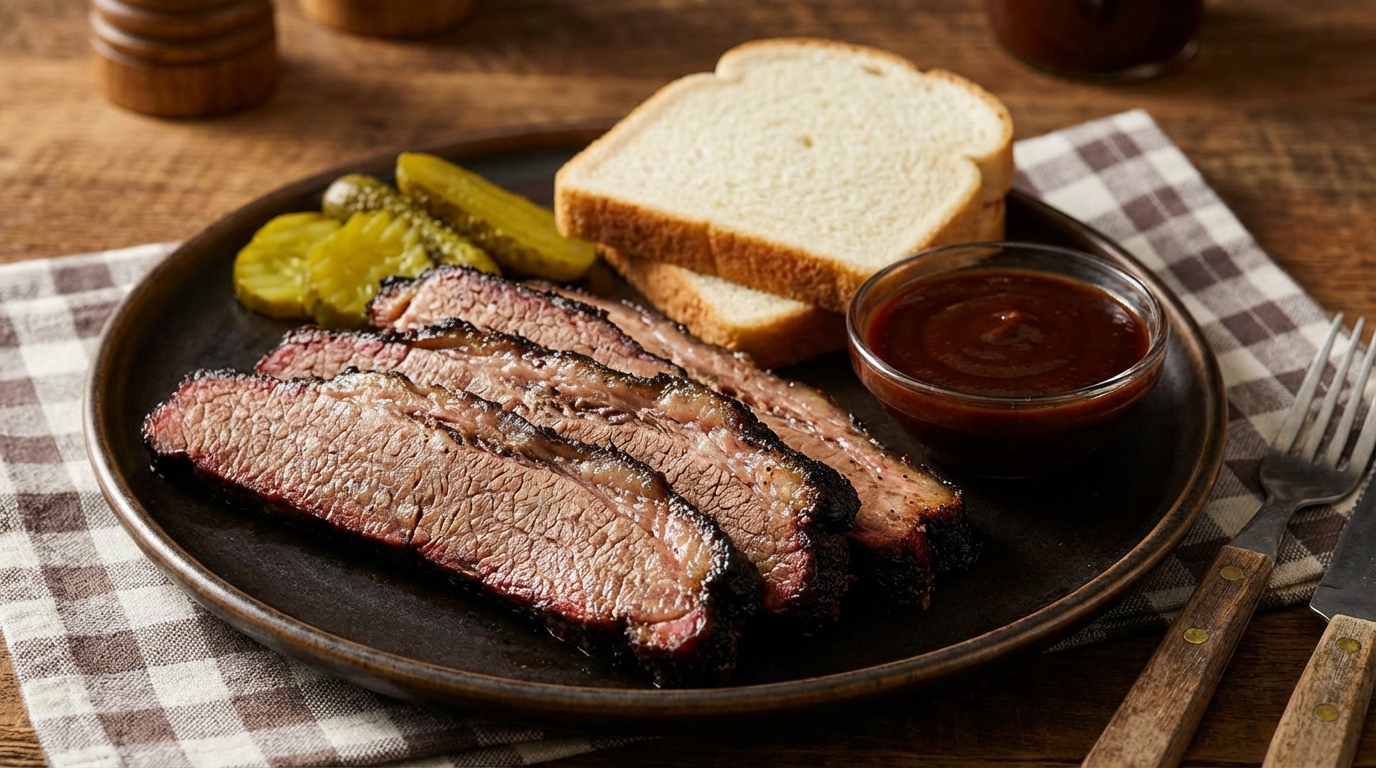
Smoking isn't the only way to cook wagyu brisket, and for higher-grade wagyu (BMS 9+), alternative preparations often showcase the meat better.
Braised Wagyu Brisket
Braising wagyu brisket in red wine, stock, or dashi produces an extraordinarily silky result. The intramuscular fat renders into the braising liquid, creating a sauce that needs almost no finishing. Cook at 300°F for 3–4 hours until fork-tender. The braising liquid will be significantly richer than conventional brisket braises — you may want to degrease it before serving.
Wagyu Brisket Burnt Ends
If you think regular burnt ends are good, wagyu burnt ends are transcendent. Cut the smoked point into 1-inch cubes, toss with sauce, and return to the smoker at 275°F for 1–2 hours. The additional rendering time turns each cube into a sticky, caramelized nugget of concentrated beef flavor. These disappear faster than any other barbecue item you'll ever serve.
Thin-Sliced (Yakiniku Style)
For A5 or high-BMS full-blood wagyu brisket, thin-slicing and grilling over charcoal (yakiniku) is arguably the best preparation. Slice the raw brisket paper-thin (⅛ inch or less, partially frozen for easier slicing), then grill each slice for just 10–15 seconds per side on a blazing hot charcoal grill. The brief, intense heat renders just enough fat to create a caramelized exterior while keeping the interior essentially rare. Dip in ponzu or sea salt.
Common Wagyu Brisket Mistakes
After cooking dozens of wagyu briskets and watching others cook them, these are the mistakes I see most often:
- Under-trimming: The number one mistake. People leave too much exterior fat because they paid premium prices and don't want to "waste" it. That untrimmed fat doesn't render, blocks smoke, prevents bark, and gives you a greasy exterior with mediocre flavor. Trim it.
- Cooking too low: 225°F works for Choice brisket. For wagyu, bump it up to 250–275°F. The extra fat needs higher heat to render properly, and the bark needs it to set against the fattier surface.
- Skipping the rest: A wagyu brisket that isn't rested loses an astonishing amount of rendered fat when sliced. Two hours minimum.
- Slicing too thick: Thick slices of wagyu brisket overwhelm the palate. Go thinner than instinct tells you.
- Over-saucing: Wagyu brisket has so much natural flavor that heavy sauce masks exactly what you paid a premium for. Serve sauce on the side, or skip it entirely. A little coarse salt and black pepper is all properly smoked wagyu brisket needs.
- Buying the wrong grade for the application: BMS 6–9 for smoking. BMS 10+ for thin-sliced preparations. Matching the grade to the cooking method is critical.
Is Wagyu Brisket Worth It?
This is the question everyone asks, and the honest answer depends entirely on what you're looking for.
If you're a competitive pitmaster or an experienced home smoker who's cooked dozens of briskets and wants to experience the best possible version of smoked brisket, yes. Wagyu brisket at BMS 6–9 is a genuine upgrade — more forgiving to cook, more flavorful, more tender, and a memorable experience for everyone at the table.
If you're new to brisket, start with USDA Choice or Prime. Learning trimming, fire management, and the stall on a $50 brisket is smarter than learning on a $200 one. Wagyu brisket's higher fat content actually masks some of the technique signals (temperature probing, bend test) that teach you how brisket works. Master the fundamentals first.
If you're hosting a special event and want to serve something extraordinary, wagyu brisket is one of the best values in premium beef. At $200 for a whole packer that serves 20 people, you're looking at $10 per person for the best brisket they've ever tasted. That's cheaper than a mediocre steakhouse appetizer.
The bottom line: wagyu brisket isn't better in every way — it's different. It's richer, more forgiving, and more intensely flavored. But it also requires adjusted technique and appropriate expectations. Approach it as its own experience rather than "regular brisket but better" and you'll get the most out of every dollar.
Frequently Asked Questions
Is wagyu brisket worth the price?
For experienced pitmasters who want the richest possible brisket experience, yes. Wagyu brisket delivers significantly more intramuscular fat, which means more flavor and a wider margin of error during cooking. A full-blood wagyu brisket costs $150–$300+ but feeds 12–20 people, making the per-serving cost reasonable for a special occasion.
How long does it take to smoke a wagyu brisket?
Wagyu brisket typically cooks 15–25% faster than conventional brisket due to higher fat content conducting heat more efficiently. A 14-pound wagyu brisket at 250°F usually takes 10–14 hours compared to 12–18 hours for a similar-sized USDA Choice brisket. Always cook to internal temperature (200–205°F in the thickest part of the flat), not time.
What grade of wagyu brisket should I buy?
For smoking, American wagyu (crossbred) in the BMS 6–9 range offers the best balance of marbling and traditional brisket character. Full-blood Japanese wagyu (BMS 10–12) can be almost too rich for a full brisket cook — the fat content is so high it can feel more like wagyu butter than barbecue brisket. Start with American wagyu if it's your first time.
Do you trim wagyu brisket differently?
Yes. Trim wagyu brisket more aggressively than conventional brisket — the fat cap should be trimmed to about ¼ inch (versus ½ inch for Choice/Prime). Wagyu already has abundant intramuscular fat throughout the meat, so you don't need as much external fat for moisture protection. Leaving too much surface fat prevents bark formation and smoke penetration.
Can you smoke full-blood Japanese wagyu brisket?
You can, but it produces a very different result than traditional barbecue brisket. Full-blood A5 wagyu brisket is extremely rich — most people can only eat a few slices before feeling satiated. Many pitmasters recommend crossbred American wagyu for smoking, reserving full-blood Japanese wagyu for preparations where smaller portions are served, like yakiniku-style grilling or thin-sliced hot pot.
More Expert Guides
What Is Wagyu Beef? The Complete Guide to Grades, Origins & Quality
Discover wagyu beef origins, the difference between Japanese A5 and American wagyu, how BMS grading works, why marbling matters, proper cooking techniques, and what you should pay in 2026.
12 min readA5 Wagyu: Your Complete Buying & Authentication Guide (2026)
A5 wagyu represents the pinnacle of beef quality, but not all A5 is created equal. Learn how to authenticate real Japanese A5, decode BMS scores, find fair prices, and cook it perfectly at home.
14 min readA5 Wagyu Prefectures: Regional Guide to Japan's Best Beef
Discover the regional differences in Japanese A5 wagyu across 12 key prefectures. Learn which prefecture produces the flavor profile you'll love most.