Wagyu Filet Mignon: The Complete Guide to the Most Tender Cut
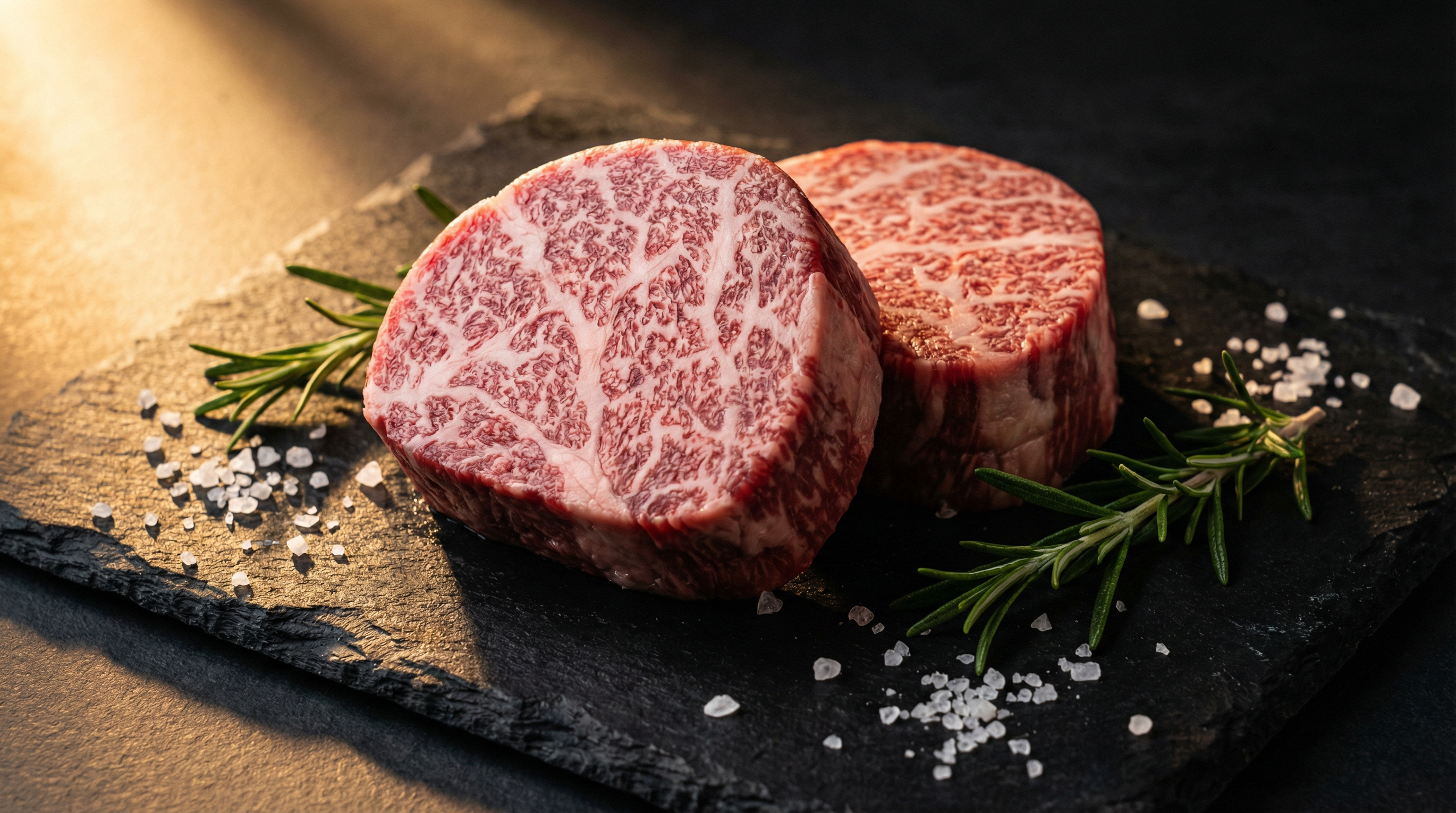
Filet mignon is already the most tender cut on any animal. When that tenderloin comes from wagyu cattle — animals bred across generations for intramuscular fat — the result is something that genuinely has no equivalent in the beef world. You get the butter-knife tenderness of a conventional filet combined with a richness and depth of flavor that standard tenderloins simply cannot deliver.
But wagyu filet mignon also carries unique challenges. The tenderloin is naturally the leanest primal on the animal, which means even in wagyu, the marbling is less dramatic than a ribeye or strip. Understanding what to expect — and what you're actually paying for — makes the difference between a transcendent meal and an expensive disappointment.
What Makes Wagyu Filet Mignon Different
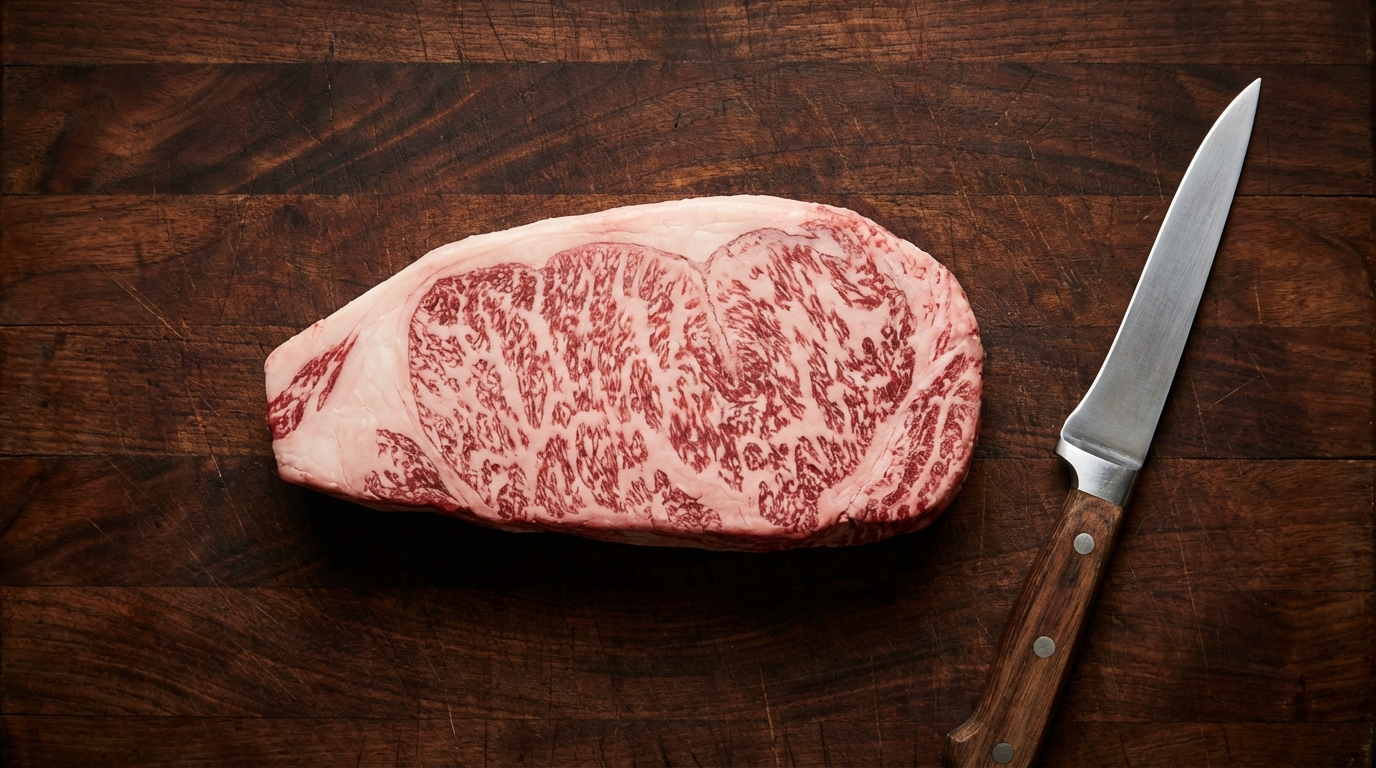
The tenderloin (psoas major) runs along the spine inside the loin primal. It's a muscle that does almost no work during the animal's life, which is why it's so tender. Filet mignon is cut from the narrow end of this muscle — typically yielding 4 to 6 steaks per animal depending on thickness.
In conventional cattle, the tenderloin is prized almost exclusively for its texture. The trade-off has always been that while it's incredibly tender, it lacks the bold beefy flavor of working muscles like the ribeye or chuck. This is where wagyu changes the equation fundamentally.
Wagyu cattle deposit intramuscular fat even in muscles that are naturally lean in other breeds. A wagyu tenderloin at BMS 6 or above will show visible marbling throughout — fine white threads webbed through the deep red muscle. This fat accomplishes two things simultaneously:
- Flavor amplification: The intramuscular fat in wagyu is rich in oleic acid, the same monounsaturated fat found in olive oil. It melts at lower temperatures than conventional beef fat (as low as 77°F in high-grade wagyu versus 104°F in standard beef), creating that characteristic coating sensation on the palate.
- Moisture retention: Those fat threads act as internal basting during cooking. Where a conventional filet can go from perfect to dry in 60 seconds, a wagyu filet has a wider margin because the melting intramuscular fat continuously lubricates the muscle fibers.
The result is a steak that delivers the tenderness people love about filet mignon while adding a richness that the cut traditionally lacks. It's the best of both worlds — if you cook it correctly.
Wagyu Grades and What They Mean for Filet Mignon
Not all wagyu filet mignon is created equal, and the grading system matters enormously for this particular cut. Because the tenderloin is inherently leaner than other primals, the grade differences are more pronounced.
American Wagyu (crossbred): Most American wagyu is a cross between Japanese wagyu bloodlines and domestic breeds (usually Angus). The tenderloin from these animals typically shows moderate marbling — noticeably more than USDA Prime but well below Japanese standards. Expect BMS 4-6 range. These filets deliver excellent tenderness with good flavor enhancement, and they're the most accessible entry point. Price range: $40-$80 per steak.
Australian Wagyu: Australia has developed strong full-blood wagyu herds, and their tenderloins often reach BMS 6-9. The marbling is finer and more evenly distributed than most American wagyu crossbreeds. Australian wagyu filet mignon represents arguably the best value in the premium wagyu space for this cut. Price range: $60-$120 per steak.
Japanese A5 Wagyu: The pinnacle. Japanese A5 wagyu tenderloin at BMS 10-12 is an entirely different eating experience. The marbling is so intense that the meat almost looks pink rather than red — the white fat threads are so numerous and fine that they change the overall color. A5 wagyu filet mignon is served in smaller portions (typically 3-4 ounces) because the richness is overwhelming in larger quantities. Price range: $80-$200+ per steak depending on prefecture and size.
Here's the critical insight: for filet mignon specifically, BMS 6-8 often delivers the best overall experience. At BMS 10-12, the filet's natural tenderness combined with extreme marbling can create a texture that some people find almost too soft — like beef butter. The mid-range grades preserve the satisfying bite of a great steak while adding meaningful richness.
How to Buy Wagyu Filet Mignon
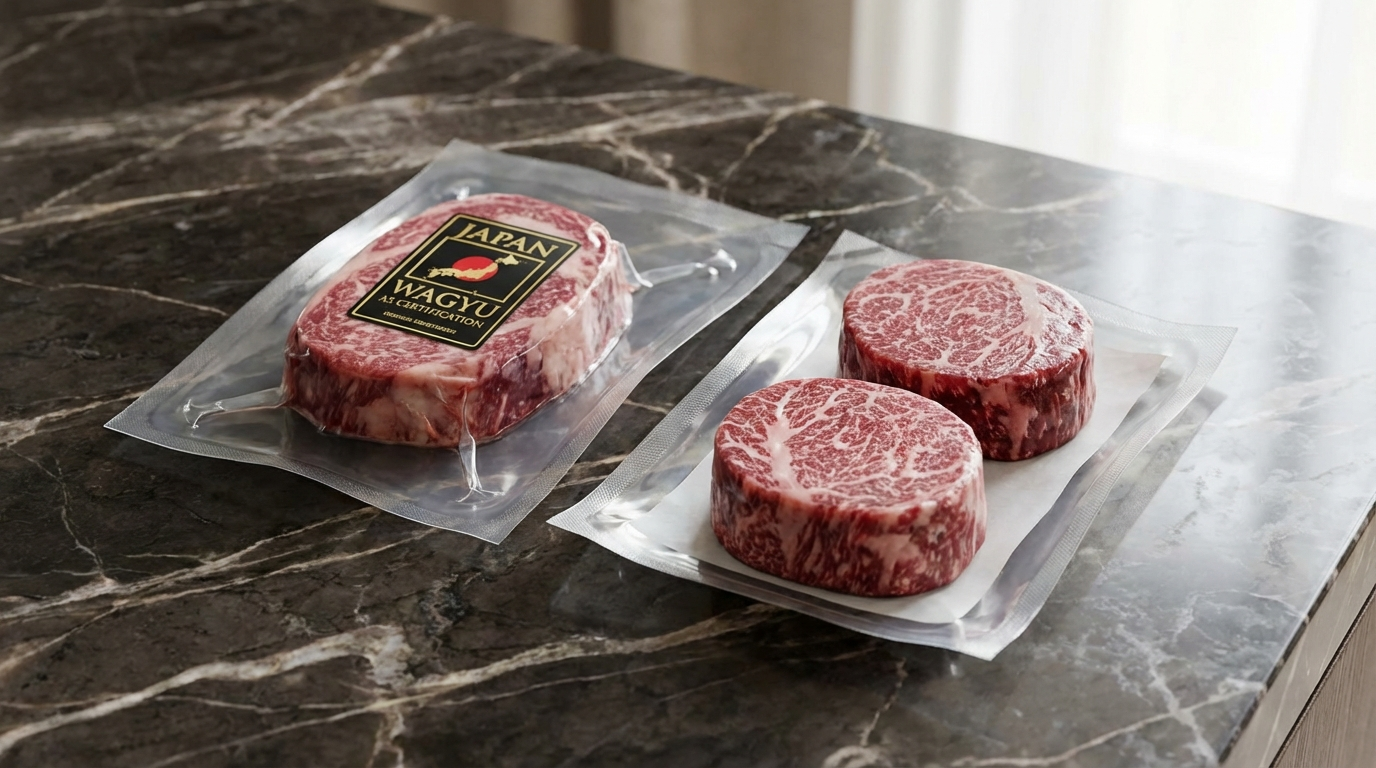
Buying wagyu filet mignon requires more attention than buying a standard steak. The price premium means the cost of a bad purchase is significant, and the market includes a frustrating amount of misleading labeling.
Verify the grade. Any legitimate wagyu filet mignon should come with explicit grading information. For Japanese wagyu, look for the JMGA certification with a 10-digit traceability number. For American wagyu, the supplier should specify whether the animal is full-blood, F1 cross, or percentage wagyu — and ideally the BMS score. If a seller just says "wagyu" without any specifics, be skeptical.
Consider the thickness. Wagyu filet mignon should be cut at least 1.5 inches thick, preferably 2 inches. Thinner cuts are nearly impossible to cook properly because the high fat content means the interior reaches temperature too quickly. You need that thickness to develop a proper crust while keeping the center at medium-rare.
Buy from specialized suppliers. General grocery stores — even high-end ones — rarely handle wagyu with the care it requires. Dedicated wagyu suppliers maintain proper cold chain management, provide accurate grading documentation, and cut to appropriate specifications. Online specialists like Holy Grail Steak Co., Crowd Cow, and The Wagyu Shop have earned reputations for quality and authenticity.
Check the color. Fresh wagyu filet mignon should be a deep, rich cherry red with clearly visible white marbling. If the meat looks brown, grayish, or if the fat appears yellow rather than white, it's either old or wasn't stored properly. The marbling should be distributed throughout — not concentrated in one area.
Portion planning. For American or Australian wagyu filet mignon at BMS 4-8, plan for 6-8 ounce portions per person. For Japanese A5 wagyu at BMS 9+, reduce to 3-4 ounces per person. A5 wagyu is extraordinarily rich, and most people find that larger portions become overwhelming.
Cooking Wagyu Filet Mignon: Techniques That Work
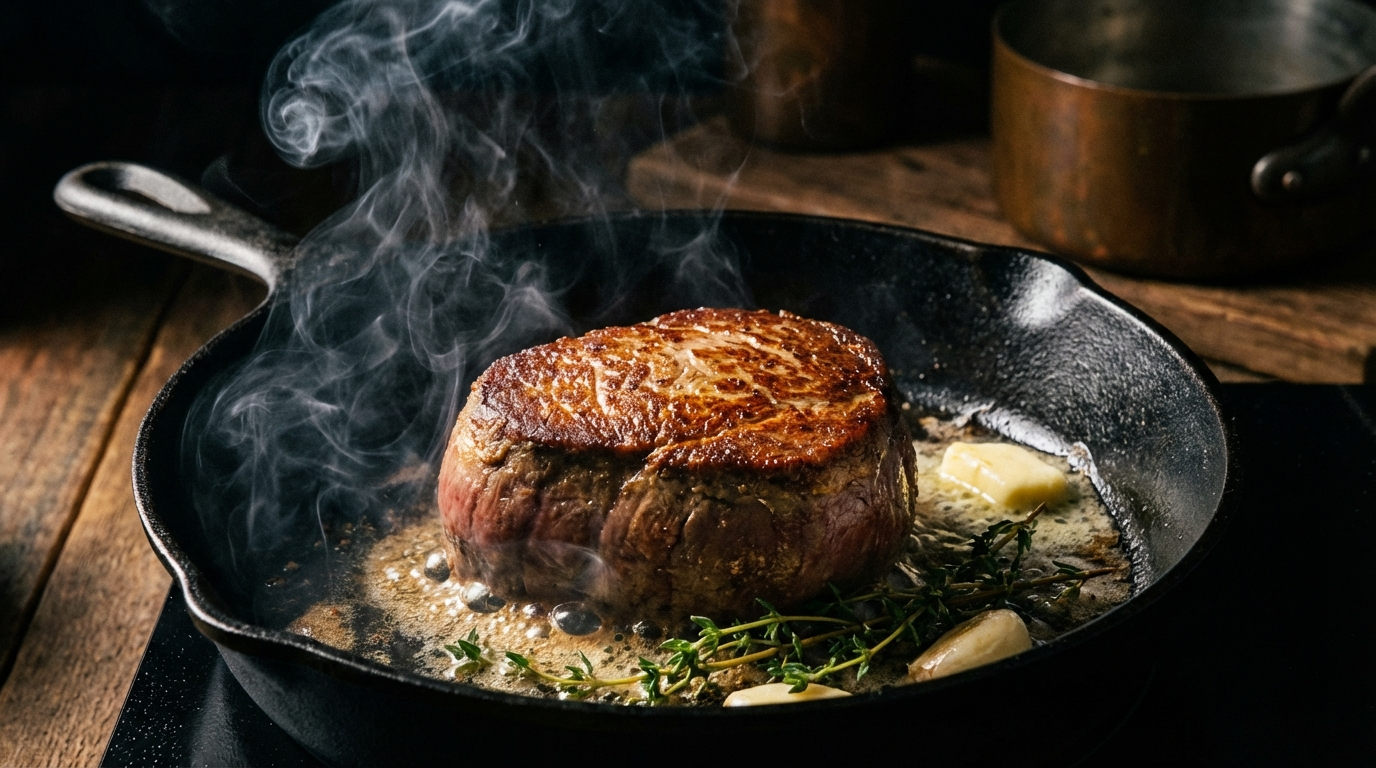
Cooking wagyu filet mignon is fundamentally about temperature control. The high intramuscular fat content means this steak behaves differently from conventional beef in ways that catch people off guard.
The Reverse Sear Method (Recommended)
The reverse sear is the most reliable method for wagyu filet mignon, especially for steaks 1.5 inches or thicker. It gives you precise control over the internal temperature before you add the crust.
- Temper the steak. Remove from refrigeration 45-60 minutes before cooking. Season generously with coarse salt and freshly ground black pepper — nothing else. The wagyu fat provides all the richness you need.
- Low oven first. Place the filet on a wire rack over a sheet pan. Cook in a 225°F oven until the internal temperature reaches 110°F (for a final target of 130°F medium-rare). This typically takes 25-35 minutes depending on thickness. Use an instant-read thermometer — do not guess.
- Rest briefly. Pull the steak and let it rest for 5 minutes while you heat your pan.
- Sear hard and fast. Heat a cast iron skillet until it's smoking. Add a thin film of high-smoke-point oil (avocado or refined grapeseed). Sear each side for 45-60 seconds. In the final 30 seconds, add a tablespoon of unsalted butter, two crushed garlic cloves, and a sprig of thyme. Baste continuously by tilting the pan and spooning the foaming butter over the top.
- Rest again. Transfer to a warm plate and rest for 5 minutes. The carryover will bring the internal temperature to approximately 130°F.
Sous Vide Method
Sous vide eliminates the guesswork entirely and produces incredibly consistent results. Set your water bath to 129°F for medium-rare. Vacuum seal the seasoned filet with a small pat of butter and a thyme sprig. Cook for 1.5 to 2 hours (thicker steaks benefit from the longer time for even heat penetration). Pat completely dry, then sear in a screaming-hot cast iron pan for 30-45 seconds per side.
The sous vide advantage with wagyu specifically is that the extended low-temperature cooking allows the intramuscular fat to begin softening and rendering gently, creating an even more uniform texture throughout the steak. Many serious wagyu enthusiasts consider this the optimal method for filet mignon.
Critical Temperature Notes
Wagyu filet mignon should be served no higher than medium-rare (130°F internal). Here's why: the intramuscular fat that makes this cut special begins rendering significantly above 135°F. If you cook a wagyu filet to medium (140°F) or beyond, you lose the very marbling you paid a premium for — it literally melts out of the meat and into the pan. What's left is an expensive but unremarkable steak.
Target 125-130°F internal temperature after resting. If your guest prefers well-done beef, genuinely save your money and buy a conventional filet instead. This isn't snobbery — it's chemistry.
Serving and Pairing Wagyu Filet Mignon
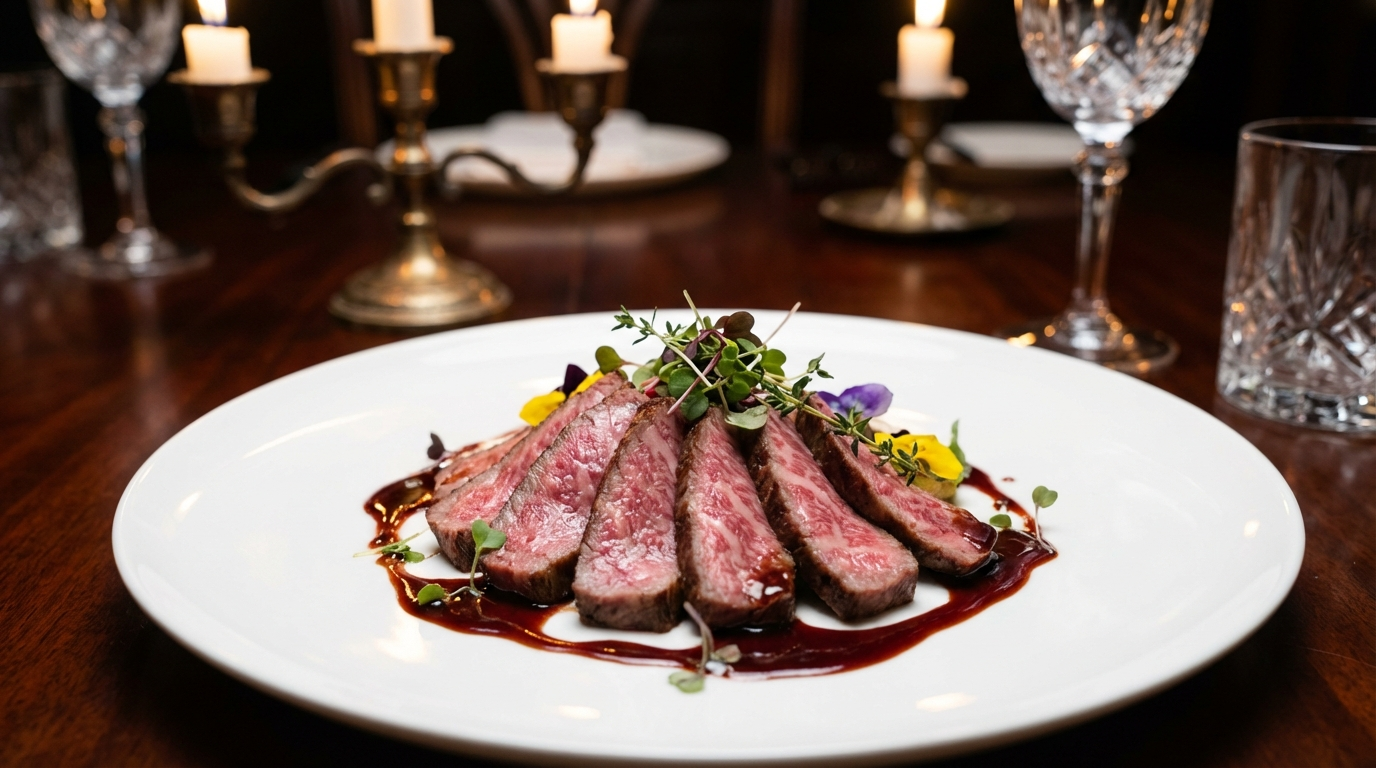
The richness of wagyu filet mignon demands careful pairing. Heavy sauces and bold sides that work with conventional steaks can overwhelm or compete with the nuanced flavors of high-quality wagyu.
Wine: For American and Australian wagyu filets (BMS 4-8), a medium-bodied Pinot Noir or a Burgundy works beautifully — the wine's acidity cuts through the fat without overpowering the beef's subtlety. For Japanese A5, consider a dry Champagne or an aged Sake (junmai daiginjo). The effervescence and acidity cleanse the palate between bites of intensely rich beef.
Sauces: Less is more. A simple red wine reduction (reduced by two-thirds, finished with cold butter) adds depth without masking the wagyu flavor. Truffle butter — a thin slice melting on top of the resting steak — is a classic pairing that works because truffle's earthiness complements beef fat. Avoid heavy béarnaise or pepper sauces that you'd use on a conventional filet.
Sides: Choose sides that provide contrast. Roasted asparagus with lemon zest adds brightness. A simple arugula salad with shaved parmesan and light vinaigrette cuts richness. Pommes purée (smooth mashed potatoes with a high butter ratio) works because it matches the luxurious texture. Avoid heavy, creamy sides that compound the richness — your palate will fatigue quickly.
Presentation: If serving Japanese A5 wagyu filet mignon, slice it before plating. The thin slices (about ¼-inch thick) allow guests to appreciate the marbling visually and make the smaller portions feel more generous. For American or Australian wagyu, serve the filet whole — the thicker cut and moderate marbling support traditional plating.
Wagyu Filet Mignon vs Other Wagyu Cuts
Understanding where filet mignon sits in the wagyu hierarchy helps set expectations and guides your purchasing decisions.
Wagyu filet mignon vs wagyu ribeye: The ribeye will always have more marbling — it comes from a muscle group that naturally carries more intramuscular fat. If pure richness and beefy flavor are your priority, the ribeye wins. But the filet offers something the ribeye can't: that melt-in-your-mouth tenderness with zero chew. At BMS 6-8, wagyu filet mignon delivers a balance of tenderness and richness that many consider the ideal wagyu experience.
Wagyu filet mignon vs wagyu New York strip: The strip offers a firmer bite with a pronounced beefy flavor and a satisfying fat cap along one edge. It's a more "steak-like" experience — muscular and assertive. The filet is quieter, more refined, more about texture than bold flavor. Both are excellent; they're fundamentally different eating experiences.
Wagyu filet mignon vs wagyu tenderloin tataki: In Japan, wagyu tenderloin is frequently prepared as tataki — seared only on the exterior and served nearly raw inside, sliced thin with ponzu and grated daikon. This preparation highlights the tenderloin's texture at its most extreme and is an outstanding way to experience A5 wagyu tenderloin for the first time.
Common Mistakes to Avoid
After cooking and eating dozens of wagyu filets across every grade level, these are the mistakes I see most often:
- Overcooking. This is the number one killer of wagyu filet mignon. Use a thermometer. Pull at 125°F and let carryover take it to 130°F. There is zero room for "it looks about right" with a $100+ steak.
- Cutting too thin. Wagyu filet mignon cut to 1 inch or less will overcook before you can develop a proper crust. Insist on 1.5-2 inch cuts. If your supplier won't accommodate this, find a different supplier.
- Adding too much fat to the pan. Wagyu renders its own fat as it sears. Starting with too much oil or butter in the pan creates a pool of fat that prevents proper Maillard browning. Start with the thinnest possible film of oil.
- Overseasoning. Salt and pepper are sufficient. Wagyu filet mignon at BMS 6+ has profound natural flavor that complex spice rubs or marinades will obscure. Season simply and let the beef speak.
- Skipping the rest. Resting allows the internal juices — which are partly rendered intramuscular fat — to redistribute. Cut into a wagyu filet immediately after cooking and you'll watch liquid gold pool on your plate instead of staying in the meat.
- Buying on label alone. "Wagyu filet mignon" on a menu or package means nothing without grade information. Ask for the BMS score or, for Japanese wagyu, the traceability number. If they can't provide it, you're likely paying wagyu prices for something that isn't.
Frequently Asked Questions
Is wagyu filet mignon worth the price?
At BMS 6-8 (Australian or high-grade American wagyu), absolutely. You get the tenderloin's signature tenderness enhanced by meaningful marbling at a price point ($60-$120) that represents real value for a special occasion. At A5 grade ($150+), it's worth trying once for the experience, but many find that A5 wagyu's extreme richness is better showcased in cuts with bolder flavor like ribeye.
What temperature should wagyu filet mignon be cooked to?
Medium-rare (125-130°F internal after resting) is optimal. The intramuscular fat that defines wagyu begins rendering out above 135°F, so cooking beyond medium-rare literally removes the quality you paid for. Use an instant-read thermometer — never guess with wagyu.
How is wagyu filet mignon different from regular filet mignon?
Regular filet mignon is prized for tenderness but is naturally lean with mild flavor. Wagyu filet mignon adds significant intramuscular fat (marbling) to that tenderness, creating a richer, more buttery eating experience with deeper beef flavor. The wagyu fat also melts at a lower temperature, creating a coating sensation on the palate that conventional beef fat cannot replicate.
What is the best grade of wagyu for filet mignon?
BMS 6-8 (Australian wagyu or high-grade American wagyu) often delivers the best overall experience for filet mignon specifically. This range provides meaningful marbling enhancement while preserving the satisfying texture of a great steak. BMS 10-12 (Japanese A5) creates an almost butter-like texture that some find too soft for a filet.
How much wagyu filet mignon per person?
For American or Australian wagyu (BMS 4-8), plan 6-8 ounces per person. For Japanese A5 wagyu (BMS 9+), 3-4 ounces per person is sufficient — the extreme richness makes larger portions overwhelming for most palates.
More Expert Guides
Halal Wagyu Beef: Everything You Need to Know Before You Buy
Halal wagyu combines the extraordinary marbling of wagyu genetics with Islamic slaughter standards. Here is how to find it, verify certification, and choose the right cuts.
12 min readWagyu Teppanyaki: The Complete Guide to Japan's Theatrical Steak Experience
Teppanyaki transformed wagyu from an ingredient into a performance. This guide covers the best cuts, iron griddle technique, essential sauces, and how to recreate the full experience at home.
14 min readWagyu Sashi: The Japanese Art of Fine Marbling Explained
Sashi is the Japanese term for the fine web-like intramuscular fat that defines premium wagyu. Learn the science, evaluation criteria, and cooking techniques that honor this artful marbling.