Wagyu Tataki: The Complete Guide to Japan's Flash-Seared Beef Delicacy
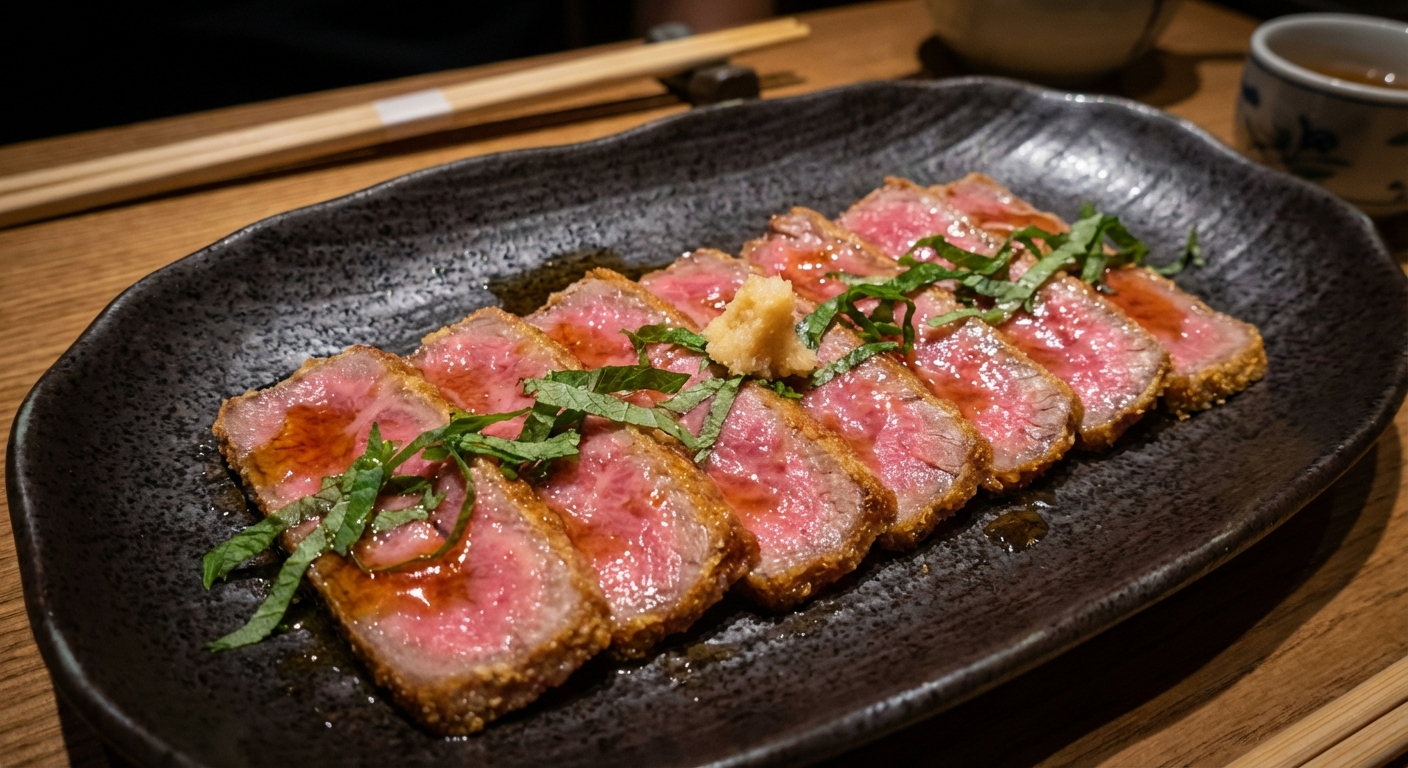
Tataki is one of the most beautiful ways to experience wagyu beef. The technique is deceptively simple—sear the outside at extreme heat, chill it immediately, then slice it thin to reveal a contrast of charred crust and silky rare interior. But when the beef is high-quality wagyu, that simplicity becomes transcendent. The brief sear renders just the outermost layer of intramuscular fat, creating a golden, caramelized shell that gives way to cool, buttery, melt-on-the-tongue beef. Having worked with wagyu across every Japanese preparation from shabu shabu to yakiniku, I can say tataki is the one that surprises people the most—it delivers maximum flavor impact with minimal cooking, and it's far easier to execute at home than most people realize.
What Is Beef Tataki?
Tataki (たたき) is a Japanese technique where beef or fish is seared briefly at very high heat, then immediately chilled in an ice bath to stop the cooking. The word literally means "pounded" or "hit"—a reference to the original preparation where seared fish was lightly pounded to press seasonings into the surface. Modern beef tataki has evolved beyond that, but the core principle remains: an intense crust on the outside, completely rare on the inside.
While bonito (katsuo) tataki is the most traditional version, beef tataki has become equally iconic in Japanese cuisine. It emerged from the same culinary philosophy that produced sashimi—a belief that the finest ingredients should be minimally cooked to let their natural quality shine. When restaurants in Kobe and Matsusaka began applying tataki technique to their local wagyu in the mid-20th century, it quickly became a signature dish. The extreme marbling of Japanese wagyu was perfectly suited to this preparation: even when served nearly raw, the intramuscular fat provided richness and mouthfeel that lean beef simply couldn't match.
Today, wagyu tataki appears on menus from Tokyo to New York as both an appetizer and a standalone course. It occupies a unique space in Japanese beef cuisine—more refined than yakiniku, less involved than shabu shabu, and arguably the purest expression of what makes wagyu special. The brief sear develops complex Maillard flavors on the surface while preserving the raw interior's silky texture and clean beefy sweetness.
Best Wagyu Cuts for Tataki
Not every cut works equally well for tataki. The technique demands beef that is tender enough to eat essentially raw, with enough marbling to provide richness at low temperatures (where fat is firmer and less melty than in cooked preparations). Here are the cuts that deliver the best results, ranked by suitability:
Tenderloin (ヒレ / Hire): The classic tataki cut and my top recommendation. Wagyu tenderloin's buttery texture and uniform cylindrical shape make it ideal—every slice is consistent, and the extreme tenderness means it practically dissolves even when raw. The marbling in wagyu tenderloin is more delicate than in ribeye, producing a clean, elegant richness. BMS 6+ wagyu tenderloin is pure luxury in tataki form.
Sirloin (サーロイン / Sāroin): An excellent choice that offers more pronounced beef flavor than tenderloin. Wagyu sirloin has a firmer bite that provides satisfying contrast with the seared crust. The marbling is typically concentrated in distinct streaks, which creates visual drama when sliced. Choose the strip loin portion (striploin) rather than top sirloin for the best fat distribution.
Ribeye (リブロース / Riburosu): The richest option. Wagyu ribeye brings the highest marbling intensity, which means extraordinary butteriness even in the raw center. The trade-off is that the cap and eye sections have different textures, making slices less uniform. For tataki, I recommend using just the eye of the ribeye (longissimus dorsi) without the cap for consistent presentation. Save the cap for shabu shabu where its loose grain shines.
Eye of Round (シンタマ / Shintama): A surprisingly good budget option. When sourced from wagyu cattle, eye of round has enough marbling to be enjoyable raw while its tight grain produces beautifully neat slices. It's leaner than the cuts above, so the ponzu sauce becomes more important for adding richness. Many izakayas in Japan use wagyu eye of round for their tataki because it's economical and visually striking.
For BMS grade, aim for BMS 5–9. You don't necessarily need A5 grade for tataki—the fat isn't being rendered by sustained heat, so extreme marbling doesn't have the same impact as in grilled or hot pot preparations. BMS 5–7 actually produces a more balanced tataki where you can taste both the beef and the fat distinctly, while BMS 8+ leans heavily toward richness.
The Flash-Searing Technique
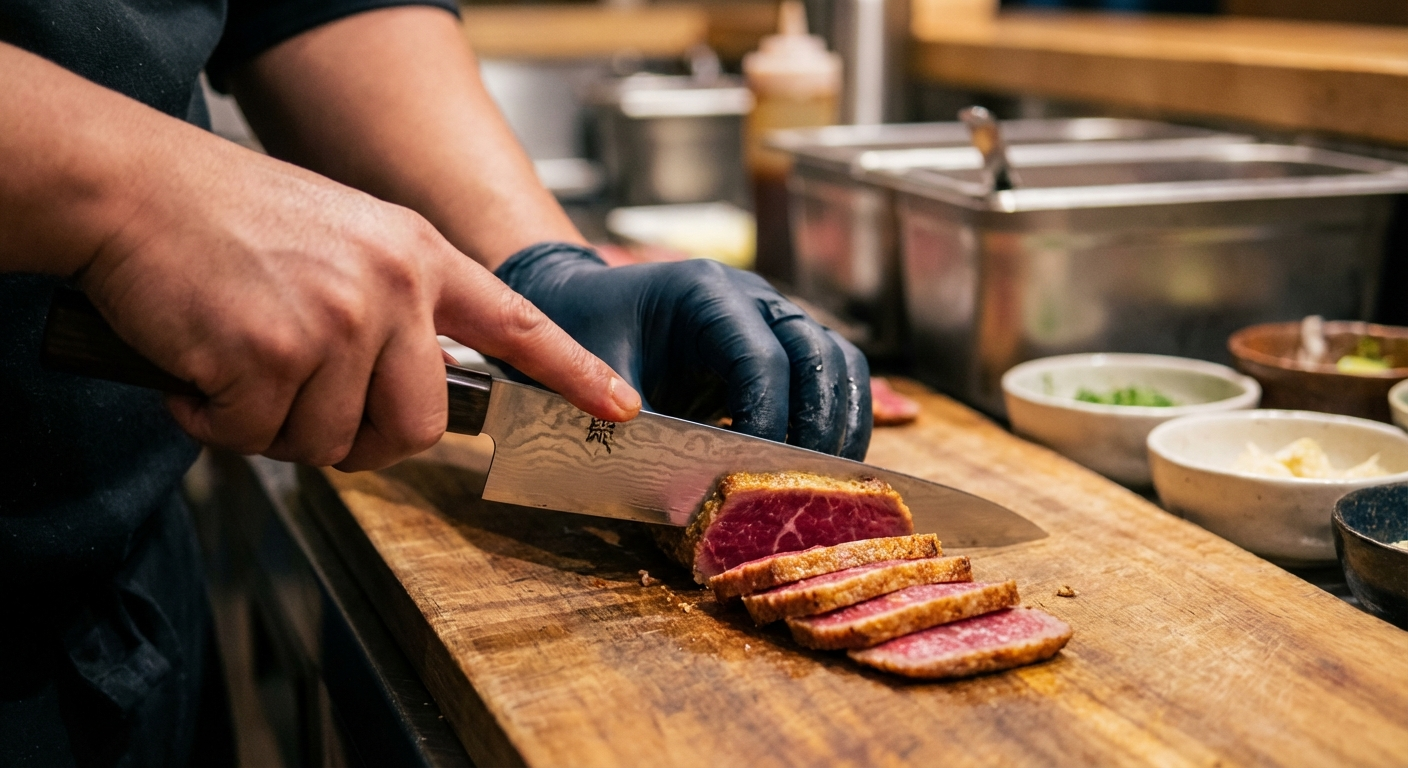
The sear is everything in tataki. You need the hottest possible surface for the shortest possible time—the goal is a deep golden-brown crust that penetrates no more than 1 to 2 millimeters into the meat, leaving everything beneath completely rare. This is not the same as cooking a steak rare or medium-rare. In tataki, only the very surface sees any heat at all.
Step 1: Prepare the beef. Bring your wagyu to room temperature for 20 to 30 minutes. Pat it completely dry with paper towels—any surface moisture creates steam instead of sear, which gives you a gray, flabby crust instead of a golden one. Season lightly with fine sea salt only. Some chefs skip salt entirely at this stage, seasoning after slicing instead. Either approach works.
Step 2: Heat the pan to smoking. Use a cast iron skillet or carbon steel pan—these retain heat best and recover quickly when cold protein hits the surface. Heat it over your strongest burner for a full 3 to 4 minutes until it's genuinely smoking. Add a thin film of high-smoke-point oil (grapeseed, avocado, or rice bran). The oil should shimmer and smoke within 2 seconds of hitting the pan. If it doesn't, the pan isn't hot enough.
Step 3: Sear all sides. Place the wagyu in the pan and sear each side for 15 to 30 seconds. For a cylindrical tenderloin, you'll have 4 to 6 sides to sear; for a rectangular striploin, 4 sides plus the two ends. Use tongs to rotate the beef—don't press down on it. You want contact searing, not compression. The total searing time should be 60 to 90 seconds for most cuts. If you hear the sizzle die down at any point, the pan has cooled too much; remove the beef and reheat before continuing.
Step 4: Ice bath immediately. The moment you finish searing, transfer the beef to a bowl of ice water for 30 to 60 seconds. This halts all residual cooking and drops the internal temperature rapidly, ensuring the interior stays completely raw. Some chefs skip the ice bath and chill in the refrigerator for 30 minutes instead—this works but risks more carryover cooking. The ice bath is faster and more reliable.
Step 5: Dry and rest. Remove the beef from the ice bath, pat it thoroughly dry, wrap it in plastic wrap, and refrigerate for at least 30 minutes (up to 24 hours). Chilling firms the beef, making it much easier to slice thin and evenly. The cold temperature also improves the eating experience—tataki is traditionally served cold or at cool room temperature, never warm.
Alternative: Torch searing. A culinary torch (or even a propane torch with a large tip) offers precise control that's hard to match with a pan. Hold the flame 2 to 3 inches from the surface and move it steadily across the beef until you see a golden-brown crust form. This method is especially effective for tenderloin, where the round shape makes even pan-searing tricky. Many high-end Japanese restaurants use binchōtan charcoal or torches for their tataki precisely because of this control.
How to Slice Wagyu Tataki
Slicing technique dramatically affects both the texture and presentation. Tataki should be cut into medallions approximately 5 to 8 millimeters thick—thin enough to eat in one bite, thick enough that each slice has a satisfying ratio of seared crust to rare interior. This is thicker than shabu shabu (1.5mm) but thinner than a typical steak slice.
Always slice against the grain. With tenderloin, this means cutting straight across the cylinder. With striploin or ribeye, identify the direction of the muscle fibers and cut perpendicular to them. Cutting against the grain shortens the muscle fibers, making each slice melt-in-your-mouth tender rather than chewy. For wagyu with its extensive marbling, this is less critical than for lean beef—but it still makes a noticeable difference.
Use the sharpest knife you have. A Japanese yanagiba (sashimi knife) is ideal—its single-bevel edge produces clean cuts that preserve the visual integrity of the marbling pattern. A sharp chef's knife works fine too. The key is to cut in a single smooth stroke rather than sawing back and forth, which tears the delicate raw interior and ruins the presentation.
Arrange slices in a single layer on a chilled plate, slightly overlapping in a circular or linear pattern. Each slice should show the ring of golden crust surrounding the pink-to-red raw center—this contrast is the visual signature of tataki and should be clearly visible. Fan the slices rather than stacking them so diners can see and access each piece individually.
The Perfect Ponzu Sauce
Ponzu is tataki's essential companion. Its bright citrus acidity cuts through wagyu's richness, and its umami depth (from soy and dashi) bridges the gap between the sauce and the beef. A great ponzu elevates good tataki to extraordinary; a mediocre one holds it back. Making your own is simple and dramatically better than bottled versions.
Classic Ponzu Recipe (makes about 1 cup):
- ¼ cup fresh yuzu juice (or equal parts lemon and lime juice as substitute)
- ¼ cup soy sauce (use a quality Japanese soy like Yamasa or Kikkoman Marudaizu)
- 2 tablespoons rice vinegar
- 2 tablespoons mirin
- One 2-inch piece of dried kombu
- Small handful of katsuobushi (bonito flakes), about 3 grams
Combine all ingredients in a jar, seal, and refrigerate for at least 24 hours—48 hours is better. The kombu and bonito flakes slowly infuse the liquid with deep umami. Strain through a fine mesh sieve before serving. This ponzu keeps refrigerated for up to two weeks.
For wagyu tataki specifically, I add a teaspoon of freshly grated ginger to the strained ponzu just before serving. The ginger's sharp heat creates a third layer of flavor that bridges the citrus brightness and the beef's richness. Some chefs also add a splash of yuzu kosho (fermented yuzu-chili paste) for gentle heat—this is exceptional with fattier cuts like ribeye tataki.
Soy-ginger alternative: If you can't find yuzu or prefer a simpler sauce, combine 3 tablespoons soy sauce, 1 tablespoon rice vinegar, 1 tablespoon fresh lemon juice, 1 teaspoon sesame oil, and 1 tablespoon finely grated fresh ginger. This lacks the complexity of true ponzu but is bright and flavorful enough to complement wagyu beautifully.
Traditional Garnishes and Plating
Tataki garnishes aren't decorative afterthoughts—they're functional components that build flavor, texture, and visual contrast. The traditional garnish set for beef tataki is:
Momiji oroshi (紅葉おろし): Grated daikon radish mixed with dried red chili. It adds gentle heat and a juicy, refreshing crunch that cleanses the palate between bites. Place a small mound beside the sliced beef, not on top—diners add it to their ponzu dip according to personal preference.
Myoga (茗荷): Japanese ginger buds, thinly sliced. Their sharp, floral bite is unlike regular ginger—more aromatic, less spicy. If you can find them at a Japanese grocery, they're the single most transformative tataki garnish. Scatter thin slices over the arranged tataki.
Shiso (大葉): Green perilla leaves add a minty, basil-like freshness. Use them as a bed under the tataki slices or julienne them finely as a top garnish. Shiso is widely available at Asian markets and easy to grow at home.
Green onion (ネギ): Both the white and green parts, sliced razor-thin on a sharp diagonal. Soak in ice water for 5 minutes before serving to curl them and remove harsh bite. The mild allium flavor pairs naturally with beef and ponzu alike.
Toasted sesame seeds: A light scatter of white sesame seeds adds subtle nuttiness. Toast them in a dry pan until fragrant and just golden—30 seconds of attention can mean the difference between aromatic and burnt.
For plating, the Japanese aesthetic principle of moritsuke (arrangement) applies: create height, vary textures, and leave negative space on the plate. A circular fan of tataki slices with garnishes mounded at the center, ponzu pooled alongside or in a separate dish, and the dark plate showing through at the edges is the classic presentation. The visual contrast between the pink beef, golden crust, green shiso, white daikon, and dark ceramic should be striking.
Wagyu Tataki vs Other Raw Beef Preparations
Tataki sits in a family of raw and near-raw beef dishes, each with its own philosophy. Understanding the differences helps you choose the right preparation for your wagyu and your occasion.
Tataki vs Beef Sashimi (Gyusashi): True beef sashimi is served completely raw—no searing at all. It relies entirely on the quality of the beef and the skill of the knife work. Tataki's sear adds Maillard complexity and a textural contrast that sashimi lacks, making tataki more approachable for diners new to raw beef. For the finest A5 wagyu (BMS 10+), sashimi may be the purest expression; for BMS 5–8, tataki's sear adds value.
Tataki vs Beef Carpaccio: Italian carpaccio uses raw beef sliced paper-thin and dressed with olive oil, lemon, arugula, and often Parmesan. It's a different flavor profile entirely—Mediterranean versus Japanese. Tataki's ponzu-based seasoning and its seared crust make it a richer, more texturally complex dish. Both are excellent; tataki is simply the natural choice when working with wagyu and Japanese flavors.
Tataki vs Beef Tartare: Tartare involves mincing or chopping raw beef and mixing it with seasonings, egg yolk, and condiments. It's a very different texture experience—rustic and chunky versus tataki's elegant slices. Wagyu works beautifully in both, but tataki preserves the visual spectacle of the marbling pattern, which tartare's chopping destroys.
The takeaway: tataki occupies a sweet spot between fully raw and fully cooked that makes it both accessible and spectacular. The sear provides familiar "cooked beef" flavors that ease diners into the raw interior, while the cold serving temperature and ponzu sauce keep it firmly in Japanese culinary territory.
Common Mistakes to Avoid
Having watched hundreds of home cooks attempt tataki, certain errors come up repeatedly. Avoiding these will immediately elevate your results:
Pan not hot enough: This is the most common failure. If the pan isn't genuinely smoking, the sear takes too long, heat penetrates too deep, and you end up with medium-rare beef instead of seared-outside-raw-inside tataki. Invest the full 3–4 minutes of preheating. Better to err on the side of too hot.
Skipping the ice bath: Residual heat continues cooking the beef after you remove it from the pan. Without the ice bath, a 1mm sear can become a 5mm gray band by the time you slice. The ice bath isn't optional—it's what makes the technique work.
Slicing too soon: If you slice before the beef has fully chilled (at least 30 minutes in the refrigerator after the ice bath), the texture will be soft and the slices will fall apart. Cold, firm beef slices cleanly and holds its shape on the plate.
Over-seasoning the beef: Tataki is about the beef. Heavy spice rubs, crusts of peppercorns, or aggressive seasoning work against the preparation's philosophy. Stick to salt—maybe a whisper of freshly cracked black pepper—and let the ponzu and garnishes provide complexity.
Using bottled ponzu: Bottled ponzu is to fresh ponzu what bottled lemon juice is to fresh lemons. The difference is stark. If you're investing in quality wagyu, spend the 5 minutes to make ponzu from scratch. It transforms the dish.
Serving warm: Tataki should be cold or at most cool room temperature. Warm tataki is just an undercooked steak. The cold temperature firms the fat slightly, creating the signature buttery-but-clean mouthfeel that distinguishes tataki from all other preparations.
Where to Buy Wagyu for Tataki
Because tataki is served essentially raw, beef quality and sourcing matter even more than in cooked preparations. You need beef that is safe to eat raw, which means purchasing from a trusted source that maintains proper cold chain handling and can confirm the beef is sashimi-grade or suitable for raw consumption.
The Meatery carries Japanese and American wagyu cuts ideal for tataki, including tenderloin and striploin. When ordering specifically for tataki, look for whole muscle cuts (not pre-sliced) so you can sear the full piece before slicing yourself. A wagyu tenderloin of 8 to 12 ounces serves 3 to 4 people as an appetizer course, or 2 people as a generous main.
If purchasing from a local butcher, ask specifically whether the beef is suitable for raw or rare preparations. Not all beef is—proper handling from slaughter through retail matters for food safety. Japanese wagyu from established importers is generally held to the highest handling standards, but it's always worth confirming. Our guide to buying wagyu online covers sourcing in more detail.
Budget approximately $25–40 per person for quality wagyu tataki using Japanese A5 wagyu as an appetizer, or $15–25 using American wagyu. As a percentage of what you'd spend at a high-end Japanese restaurant for the same dish (typically $40–80 per serving), preparing tataki at home is an exceptional value.
Serving Wagyu Tataki as Part of a Japanese Meal
In a traditional Japanese meal structure (kaiseki), tataki appears as a mukōzuke (向付)—the sashimi course served early in the progression. Its cold temperature and clean flavors set the palate for warmer, more robustly seasoned courses to follow. At home, wagyu tataki works beautifully in several contexts:
As an appetizer: Serve 3 to 4 slices per person alongside a small salad of mixed greens dressed with wafu (Japanese-style) vinaigrette. This is the most common presentation at dinner parties—impressive, easy to prepare in advance, and portion-controlled.
As part of a tataki bowl (tataki-don): Lay sliced tataki over warm sushi rice, drizzle with ponzu, and top with garnishes. Add a raw egg yolk in the center for extra richness. This transforms tataki from an elegant appetizer into a satisfying one-bowl meal.
Alongside other Japanese beef courses: Serve tataki as the cold course, followed by teppanyaki or sukiyaki as the hot course. This showcases wagyu across multiple preparations and textures—an impressive progression for a dinner party.
With sake pairing: Wagyu tataki pairs exceptionally well with junmai daiginjo sake served cold. The sake's delicate fruit notes and clean finish complement the ponzu's citrus while matching the beef's richness without overwhelming it. Avoid heavy or warm sake, which can clash with tataki's cold, clean profile.
Frequently Asked Questions
What does tataki mean in Japanese cooking?
Tataki (たたき) literally means 'pounded' or 'hit.' In modern usage, it refers to a technique where beef or fish is seared briefly at very high heat on the outside while remaining completely raw inside, then sliced thin and served with ponzu sauce and garnishes.
What is the best cut of wagyu for tataki?
Tenderloin (hire) is the best cut for wagyu tataki. Its buttery texture, uniform shape, and delicate marbling are ideal for the raw-center preparation. Sirloin and ribeye also work well, offering more intense beef flavor and marbling respectively.
How long do you sear wagyu for tataki?
Sear each side of the wagyu for only 15 to 30 seconds over extremely high heat. Total searing time should be 60 to 90 seconds. The goal is a golden-brown crust that penetrates only 1-2mm while leaving the entire interior completely raw.
Is it safe to eat wagyu tataki raw?
Yes, when sourced from a reputable supplier that maintains proper cold chain handling. Japanese wagyu from established importers is held to the highest food safety standards. Always purchase from trusted sources and keep the beef properly refrigerated until preparation.
What is the difference between tataki and beef sashimi?
Beef sashimi (gyusashi) is served completely raw with no cooking at all. Tataki has a brief sear on the outside that adds caramelized flavor and textural contrast while the interior remains raw. Tataki also traditionally includes ponzu sauce and garnishes, while sashimi is served with soy sauce and wasabi.
More Expert Guides
Wagyu Picanha: The Brazilian Cut That Transforms Japanese Beef
Picanha is Brazil's most prized cut. Add wagyu-level marbling and you get one of the most flavorful, juicy steaks available — with a built-in fat cap that bastes the meat as it cooks.
14 min readWagyu vs Angus: Which Premium Beef Is Worth Your Money?
Wagyu and Angus are both premium beef breeds, but they deliver completely different eating experiences. Compare marbling, flavor, price, cooking methods, and nutrition to decide which belongs on your table.
10 min readHow to Store Wagyu Beef: Refrigeration, Freezing & Thawing Done Right
Wagyu beef demands careful storage to protect the marbling you paid for. This guide covers refrigerator timing, vacuum sealing, freezer methods, and the only thawing techniques that preserve A5-level quality.