Where to Buy Wagyu Beef Online: The Definitive Guide
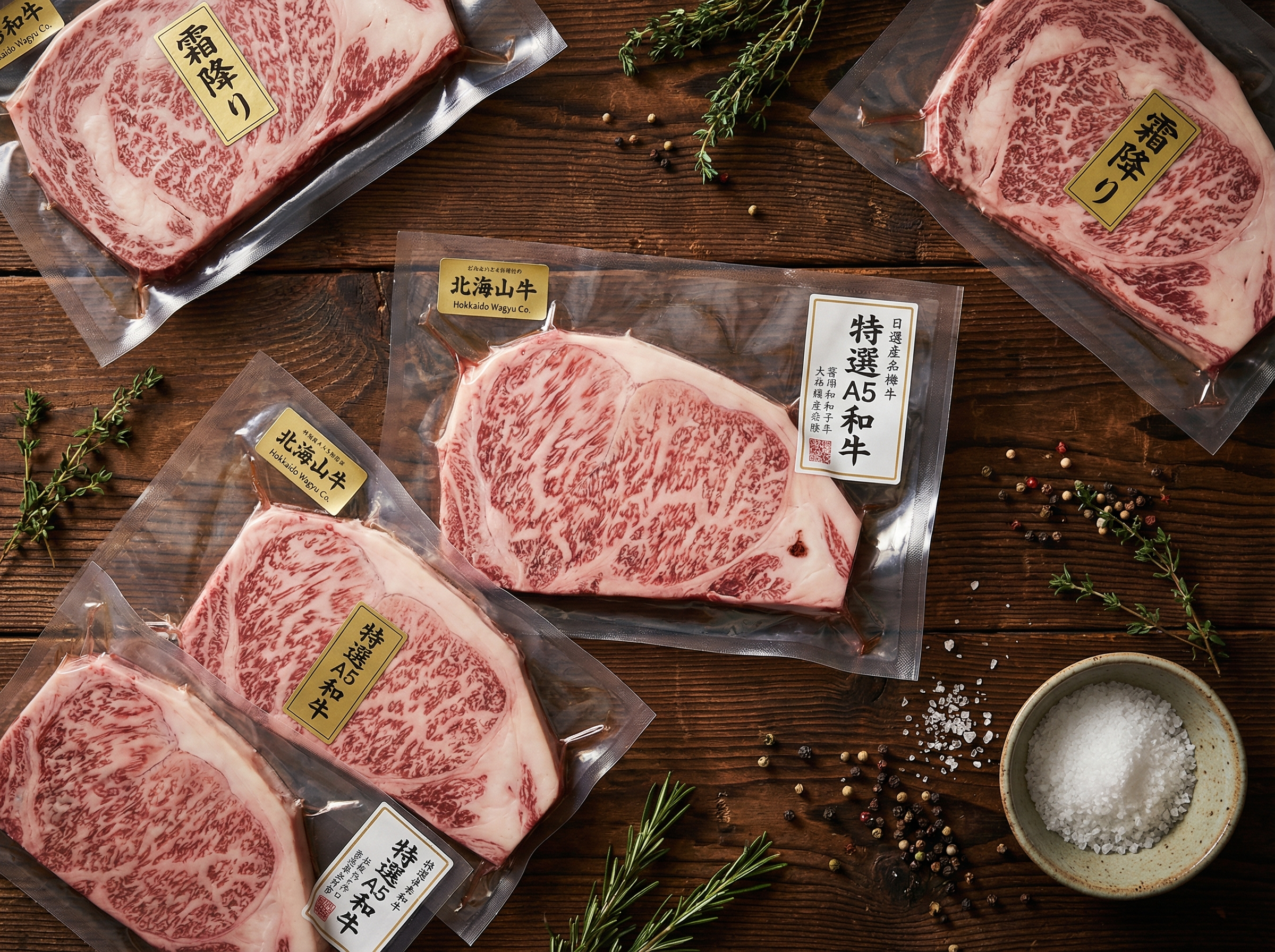
Ten years ago, buying authentic Japanese Wagyu in the United States meant knowing someone in the import business or living near one of a handful of specialty butcher shops. Today, dozens of online retailers claim to sell "genuine A5 Wagyu" — and that abundance has created a new problem: figuring out who's actually selling what they say they're selling.
I've spent two decades sourcing, importing, and evaluating Wagyu beef. In that time, I've seen the online market evolve from a niche corner of the food world into a crowded, sometimes confusing marketplace where marketing often outpaces reality. This guide will teach you exactly how to navigate it — what to look for, what to avoid, and where to buy Wagyu beef online with confidence.
Why Buy Wagyu Online?
Unless you live in a major metropolitan area with a dedicated Japanese beef importer, online is likely your best — and sometimes only — option for authentic Wagyu. Here's why the online market has become the primary channel for premium beef:
- Selection: Online retailers can offer cuts, grades, and prefectures that no local butcher could justify stocking. Want a BMS 11 Miyazaki striploin? A Kagoshima zabuton? You'll find it online.
- Transparency: The best online sellers provide more information than any butcher counter — BMS scores, prefecture of origin, individual animal traceability numbers, and detailed photos of actual product.
- Cold-chain logistics: Flash-frozen Wagyu shipped overnight in insulated packaging with dry ice arrives in better condition than beef that's been sitting in a display case for three days.
- Price competition: Multiple retailers competing for your business keeps margins honest. You can compare prices across vendors in minutes.
The caveat: buying online also means you can't inspect the product before purchasing. That makes choosing the right retailer — and knowing what questions to ask — critically important.
What to Look for in an Online Wagyu Retailer
Not all online Wagyu sellers are created equal. Here are the non-negotiable criteria I use when evaluating any retailer:
1. Specific Grading Information
A trustworthy retailer lists the BMS score — not just "A5." As I've explained in our BMS guide, A5 encompasses BMS 8 through 12, a massive quality range. A seller who lists only "A5 Wagyu" without specifying BMS is either hiding something or doesn't understand their own product well enough to sell it.
What to look for: Individual BMS scores on each product listing. Bonus points for listing the specific quality sub-scores (meat color, fat color, firmness).
2. Traceability and Documentation
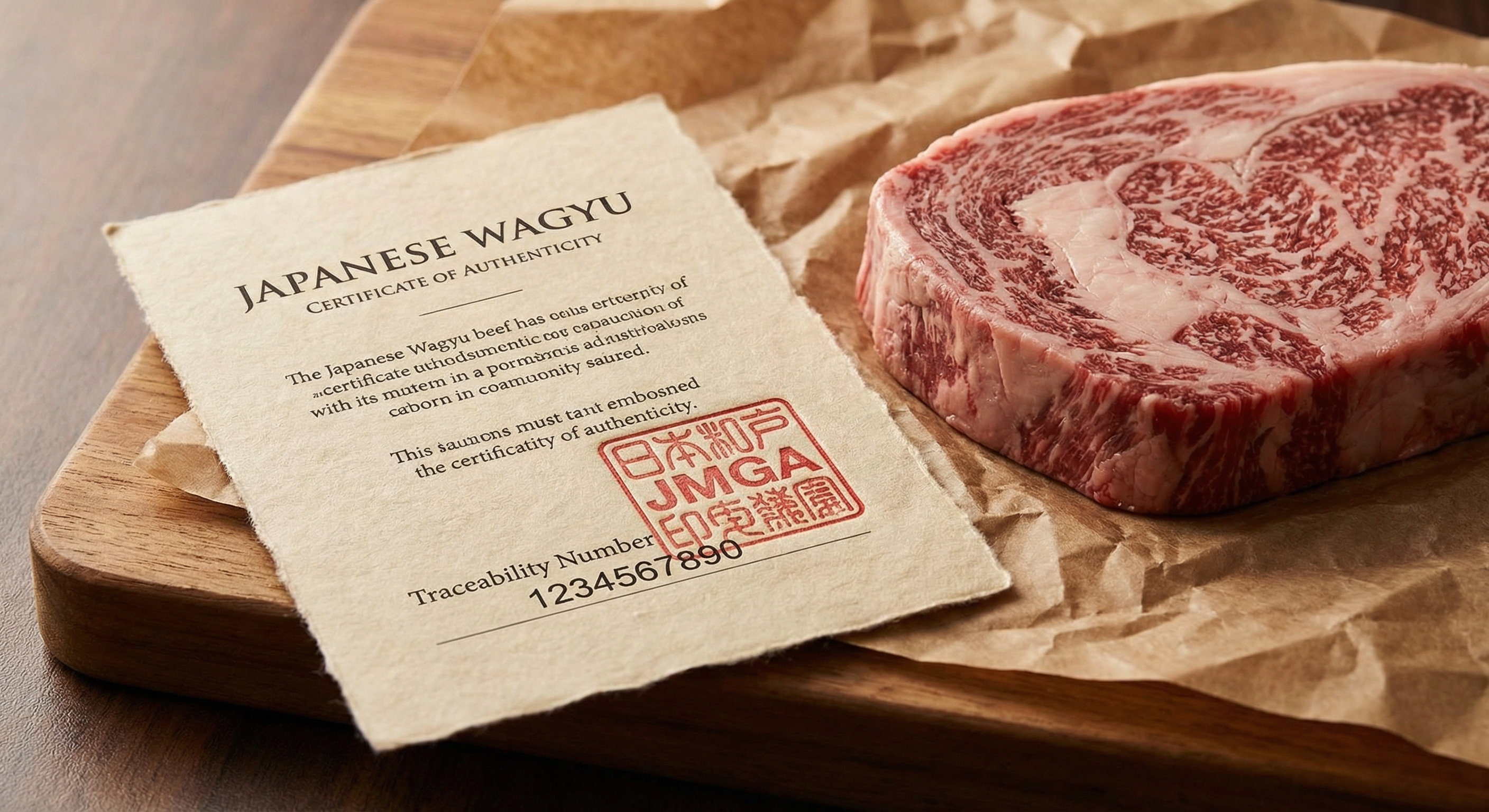
Every legitimate Japanese Wagyu carcass is assigned a 10-digit individual identification number that can be traced through Japan's national livestock database. This number tells you the animal's breed, birthplace, every farm it lived on, the slaughter facility, and the grading results.
A retailer who can provide this number — or at minimum, the prefecture of origin and processing facility — is dealing in verified product. A retailer who can't or won't provide traceability information should raise immediate red flags.
What to look for: Individual animal ID numbers, certificates of authenticity, prefecture identification, and the ability to verify origin on request.
3. Proper Cold-Chain Shipping
Wagyu's high fat content makes it particularly sensitive to temperature abuse. Premium online retailers ship flash-frozen product in insulated packaging (typically styrofoam or insulated liners) with sufficient dry ice to maintain frozen temperatures for 24-48 hours.
What to look for: Overnight or two-day shipping options, insulated packaging with dry ice, and clear instructions for thawing and storage. Avoid any seller shipping Wagyu via standard ground shipping — the product will arrive compromised.
4. Cut Selection and Education
A retailer who specializes in Wagyu will offer more than just ribeye and striploin. Look for a range of cuts including value options like zabuton (chuck flap), flat iron, and short rib. A diverse selection indicates a retailer who's buying whole carcasses or primals from importers — not cherry-picking a few cuts to resell at inflated margins.
Additionally, a knowledgeable retailer provides educational content: cooking guides, grading explanations, and honest information about what to expect from each product.
5. Realistic Pricing
If a deal looks too good to be true, it probably is. Here are the realistic price ranges for authentic Wagyu in the U.S. market as of 2026:
| Product | Price Range (per lb) |
|---|---|
| Japanese A5 Ribeye/Striploin | $100–$200 |
| Japanese A5 Tenderloin | $130–$220 |
| Japanese A5 Chuck/Shoulder Cuts | $35–$80 |
| Japanese A5 Ground | $25–$40 |
| American Fullblood Wagyu | $40–$80 |
| American F1 Cross Wagyu | $20–$40 |
| Australian Wagyu | $30–$70 |
If you see "A5 Japanese Wagyu Ribeye" for $50/lb, something is wrong. Either it's not A5, it's not Japanese, or the weights are misleading. The import costs alone (duties, cold-chain logistics, USDA inspection) make prices below these ranges economically impossible for genuine product.
The Best Places to Buy Wagyu Beef Online
Based on years of evaluating product quality, sourcing transparency, and customer experience, here are the retailers I recommend:
The Meatery — Best Overall
The Meatery has established itself as one of the most trusted sources for authentic Wagyu online. What sets them apart:
- Full traceability: Every Japanese A5 product includes the individual animal ID number, prefecture of origin, and BMS score.
- Comprehensive selection: Their Japanese A5 collection spans premium cuts (ribeye, striploin, tenderloin) and value cuts (zabuton, short rib, ground). They also carry an excellent American Wagyu program and Australian Wagyu options.
- Education-first approach: Detailed product descriptions, cooking guides, and grading information on every listing. They want you to understand what you're buying.
- Shipping quality: Overnight shipping in insulated packaging with ample dry ice. Product arrives frozen solid.
- Price transparency: Prices are competitive and clearly listed per pound with exact weights. No hidden fees or inflated shipping costs.
Whether you're buying your first A5 striploin or stocking up on American Wagyu for weekly grilling, The Meatery consistently delivers authentic product with the documentation to back it up.
What About Other Retailers?
Several other online retailers sell legitimate Wagyu, including Holy Grail Steak Co., Crowd Cow, and Snake River Farms (for American Wagyu). Each has strengths, but when evaluating any retailer, apply the same criteria: BMS scores listed, traceability provided, proper shipping, realistic pricing, and knowledgeable customer service.
Japanese A5 vs. American Wagyu vs. Australian Wagyu: What to Buy Online
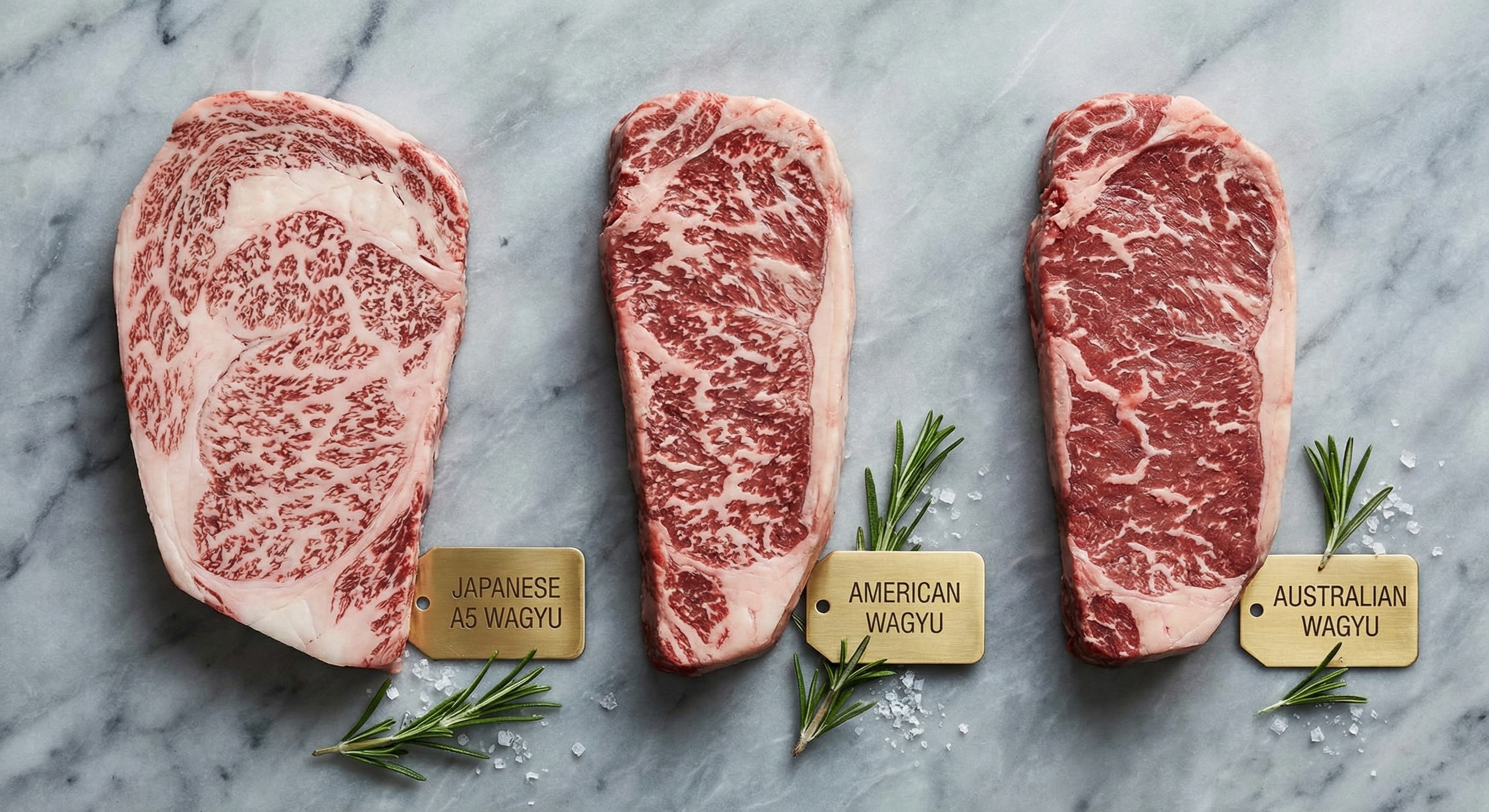
The term "Wagyu" on an online store can refer to dramatically different products. Understanding the categories helps you buy intelligently:
Japanese A5 Wagyu
The pinnacle. Purebred Japanese cattle, raised in Japan, graded by the JMGA. BMS 8-12 marbling creates an eating experience unlike any other beef. Best for: special occasions, small tasting portions (3-4 oz per person), impressing guests who appreciate fine food.
Buy it from: The Meatery's Japanese A5 Collection
American Wagyu
Cattle with Japanese genetics raised in the U.S. The quality varies enormously based on genetic percentage:
- Fullblood (100% Wagyu): Can reach BMS 7-10 equivalent. Genuinely exceptional beef that approaches mid-range Japanese quality with a more robust, beefy flavor profile.
- F1 Cross (50% Wagyu × 50% Angus): The most common "American Wagyu." BMS 4-6 equivalent. A meaningful upgrade over conventional beef at accessible prices.
Best for: full-sized steak dinners, regular weeknight cooking (F1 crosses), steak enthusiasts who want premium quality in familiar portions.
Buy it from: The Meatery's American Wagyu Collection
Australian Wagyu
Australia has developed a strong Wagyu industry using Japanese genetics. Their grading uses the AUS-MEAT system (marbling scores 0-9+) and the product typically falls between American and Japanese quality. Australian Wagyu offers excellent value — rich marbling and clean flavor at prices below Japanese A5.
Best for: the sweet spot between quality and value, regular enjoyment without the A5 price tag, those who find Japanese A5 too rich.
Buy it from: The Meatery's Australian Wagyu Collection
How to Verify Wagyu Authenticity When Buying Online
Fraud in the online Wagyu market is a real and persistent problem. Here's how to protect yourself:
Check for the 10-Digit ID
Every Japanese Wagyu carcass has a unique identification number traceable through Japan's Individual Identification Number of Domestic Animals database. Legitimate retailers either print this on packaging, include it on the product page, or provide it on request. If a seller claims "Japanese A5" but cannot provide traceability, walk away.
Verify the Grade Independently
The grade should match the price. If someone is selling "A5 BMS 10" at prices that would barely cover A4, the product is likely mislabeled. Cross-reference our BMS pricing guide to understand what each score should cost.
Look at the Marbling
Product photos should show clear, detailed images of the actual marbling pattern. Stock photos or generic "Wagyu" images are a red flag. The marbling in A5 Wagyu is unmistakable — dense, fine, weblike fat distribution throughout the muscle. If the photos show widely spaced fat streaks or conventional-looking marbling, the product likely isn't what it claims to be.
Read the Fine Print
Watch for terms like "Wagyu-style," "Wagyu blend," or "Kobe-style" — these are not Wagyu. Also be cautious of listings that say "A5" in the title but describe "Wagyu cross" or "American-raised" in the details. Authentic Japanese A5 comes from Japan. Period.
Shipping and Handling: What to Expect
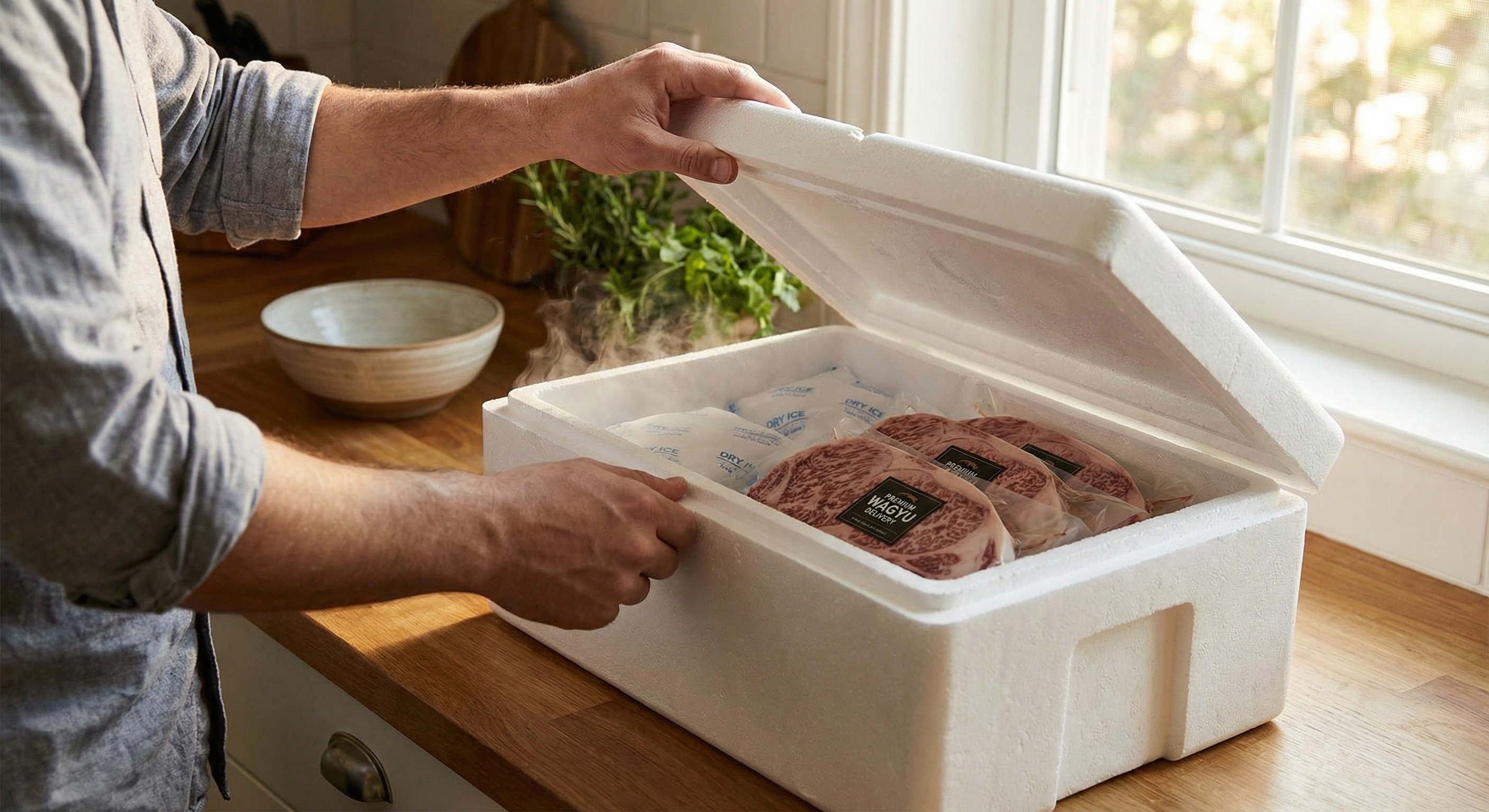
When you order Wagyu online from a reputable retailer, here's what the experience should look like:
Packaging
Your order arrives in an insulated shipping box (corrugated cardboard exterior, styrofoam or insulated liner interior) packed with dry ice. The beef itself is vacuum-sealed and flash-frozen. Some retailers use gel packs instead of dry ice for shorter transit times — both work, but dry ice is preferred for overnight shipments across long distances.
Arrival Condition
The beef should arrive frozen solid or at minimum very cold to the touch. Some residual dry ice should remain in the box. If the beef arrives fully thawed and warm, contact the retailer immediately — most reputable sellers will replace the order.
Storage
Place the vacuum-sealed packages directly in your freezer. Properly vacuum-sealed Wagyu maintains excellent quality for 6-12 months in a home freezer. When ready to cook, thaw in the refrigerator for 24-48 hours — never at room temperature or in a microwave.
Shipping Costs
Expect to pay $20-$50 for overnight shipping, depending on the retailer and your distance from their fulfillment center. Many retailers offer free shipping above a certain order threshold (typically $200-$300). Given the cost of insulated packaging and dry ice, shipping charges in this range are legitimate and necessary.
How Much Wagyu Should You Order?
This depends entirely on what you're buying:
Japanese A5
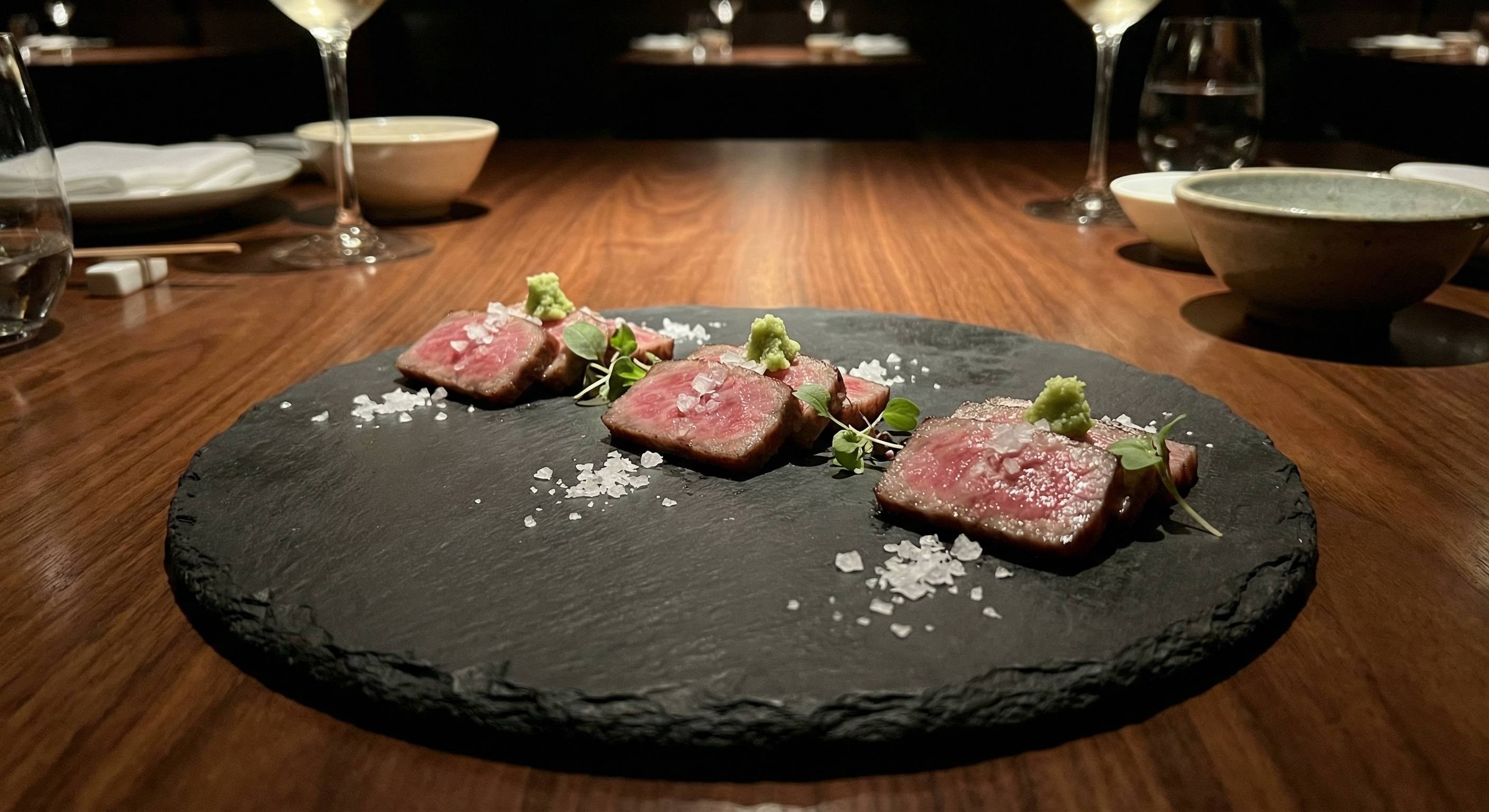
Plan for 3-4 ounces per person. Yes, really. A5's extreme richness means a little goes a long way. For a dinner party of four, a single 12-16 oz steak is sufficient. Slice it thin, sear briefly, and serve as a tasting course alongside other dishes.
For your first order, I recommend starting with a single striploin steak (typically 10-14 oz) to share between 2-3 people. This lets you experience A5 without over-committing financially.
American Wagyu
Portion like you would any quality steak: 8-12 ounces per person for a main course. American Wagyu is rich but not overwhelmingly so — it's designed to be enjoyed in full steak portions.
Australian Wagyu
Similar to American Wagyu portions. The higher-marbled cuts (MS 7+) might warrant slightly smaller portions, but 8-10 ounces per person is standard.
Common Mistakes When Buying Wagyu Online
After years of fielding customer questions, these are the most common errors I see:
1. Buying on Price Alone
The cheapest "A5 Wagyu" is almost never the best value. Low prices usually mean lower BMS scores (the bottom of the A5 range), less reputable sourcing, or outright mislabeling. Buy from trusted retailers and pay fair market prices.
2. Ordering Too Much A5
First-time buyers frequently order 8-12 oz per person of A5, treating it like a conventional steak dinner. They end up overwhelmed by the richness and unable to finish. Start small. You can always order more.
3. Ignoring the Cut
Not all A5 cuts eat the same. Ribeye is the most intensely marbled, striploin offers better balance, and tenderloin is relatively lean even at A5 grade. Value cuts like zabuton deliver remarkable marbling at a fraction of the price. Read our cuts guide before ordering.
4. Confusing American Wagyu with Japanese A5
These are fundamentally different products at different price points. American Wagyu labeled as "Wagyu" without further specification is typically an F1 cross — excellent beef, but not comparable to Japanese A5. Make sure you know which you're buying.
5. Not Checking the Seller's Return Policy
Reputable retailers stand behind their product. Look for sellers who offer replacements for shipping damage, quality guarantees, and responsive customer service. If a seller has no return policy for a perishable premium product, consider that a warning sign.
The Bottom Line: How to Buy Wagyu Online with Confidence
Buying Wagyu online is straightforward once you know what to look for. Here's the checklist:
- Choose a reputable retailer — The Meatery is my top recommendation for their transparency, selection, and consistently excellent product.
- Verify the grade — Look for specific BMS scores, not just "A5." Ask for traceability documentation.
- Match the product to your occasion — Japanese A5 for special tastings, American Wagyu for steak dinners, Australian Wagyu for everyday premium.
- Order the right amount — 3-4 oz per person for A5, 8-12 oz for American/Australian.
- Check shipping details — Overnight with dry ice is the standard. Accept nothing less.
- Plan your cooking — Read our cooking guide before the beef arrives. Preparation is everything.
The online Wagyu market has never offered more choice or better access to world-class beef. With the right knowledge and a trusted retailer, you can enjoy authentic Japanese A5, premium American Wagyu, or excellent Australian Wagyu delivered directly to your door — no connections, no specialty shops, no compromises required.
Frequently Asked Questions
What is the best website to buy Wagyu beef?
The Meatery is our top recommendation for buying Wagyu online. They provide full traceability (individual animal ID numbers), specific BMS scores on every product, and carry Japanese A5, American, and Australian Wagyu with proper overnight cold-chain shipping.
How much does Wagyu beef cost online?
Japanese A5 Wagyu costs $100-$200/lb for premium cuts (ribeye, striploin) and $35-$80/lb for value cuts. American fullblood Wagyu runs $40-$80/lb. F1 cross Wagyu is $20-$40/lb. Australian Wagyu falls at $30-$70/lb. Prices significantly below these ranges may indicate mislabeled product.
How do I know if Wagyu beef sold online is authentic?
Look for the 10-digit individual animal identification number (for Japanese Wagyu), specific BMS scores, prefecture of origin, and detailed product photos showing actual marbling. Legitimate sellers provide traceability documentation. Avoid sellers who list only "A5 Wagyu" without specific grading details.
Can Wagyu beef be shipped safely?
Yes. Reputable retailers flash-freeze Wagyu and ship it overnight in insulated packaging with dry ice. The beef should arrive frozen solid. Properly vacuum-sealed frozen Wagyu maintains quality for 6-12 months in a home freezer.
How much Wagyu should I order per person?
For Japanese A5 Wagyu, plan 3-4 ounces per person — the richness is intense. For American or Australian Wagyu, standard steak portions of 8-12 ounces per person work well. First-time A5 buyers should start with a single steak to share.
What is the difference between Japanese and American Wagyu?
Japanese Wagyu is purebred cattle raised in Japan, graded on the BMS 1-12 scale, with extreme marbling (BMS 8-12 for A5). American Wagyu uses Japanese genetics crossed with American breeds, typically reaching BMS 4-7. Both are excellent but deliver very different eating experiences at different price points.
More Expert Guides
What Is Wagyu Beef? The Complete Guide to Grades, Origins & Quality
Discover wagyu beef origins, the difference between Japanese A5 and American wagyu, how BMS grading works, why marbling matters, proper cooking techniques, and what you should pay in 2026.
12 min readA5 Wagyu: Your Complete Buying & Authentication Guide (2026)
A5 wagyu represents the pinnacle of beef quality, but not all A5 is created equal. Learn how to authenticate real Japanese A5, decode BMS scores, find fair prices, and cook it perfectly at home.
14 min readA5 Wagyu Prefectures: Regional Guide to Japan's Best Beef
Discover the regional differences in Japanese A5 wagyu across 12 key prefectures. Learn which prefecture produces the flavor profile you'll love most.