How to Cook Wagyu Steak: The Complete Guide to Perfect Results
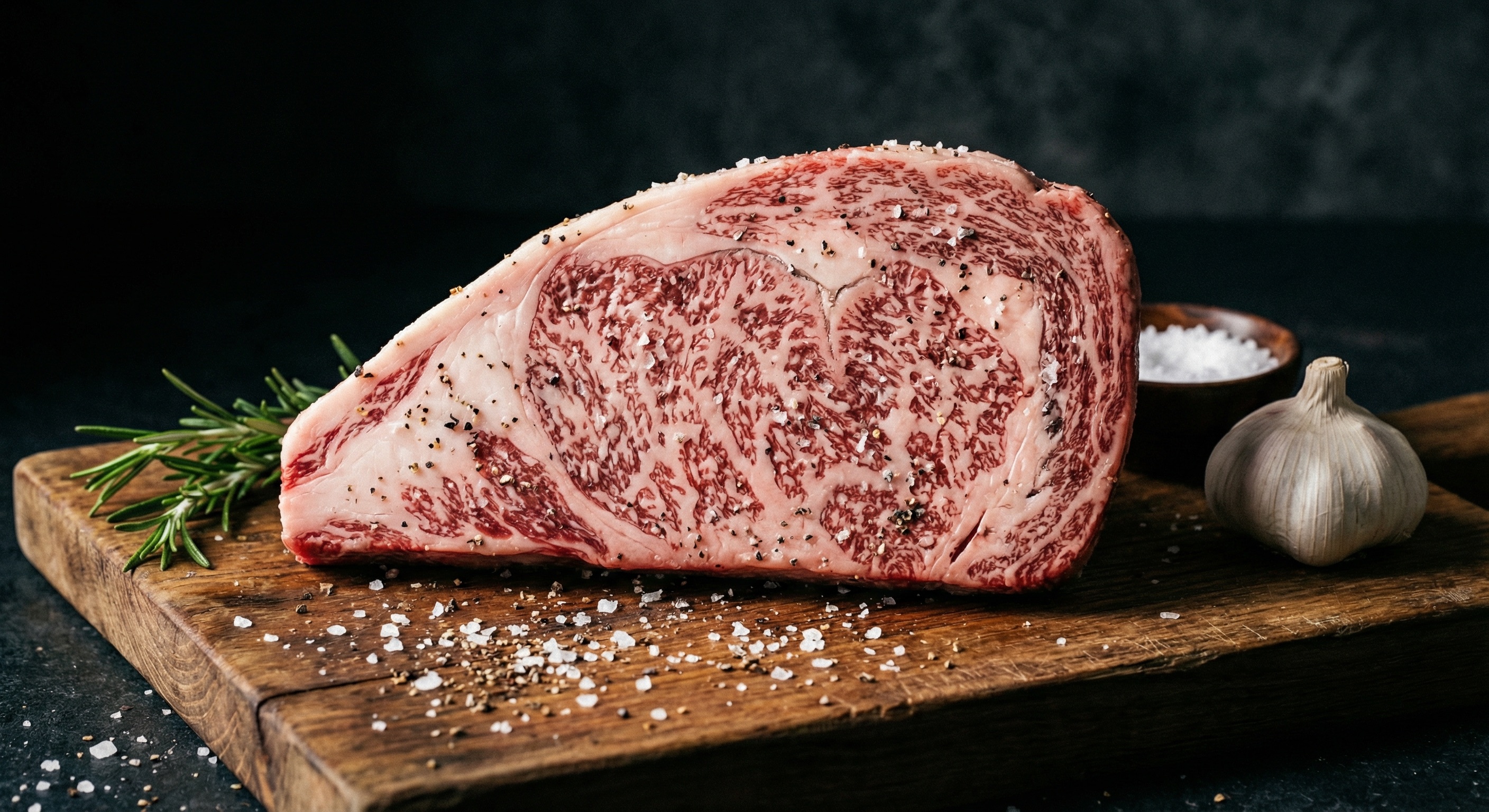
You've invested in a piece of world-class beef — perhaps a heavily marbled Japanese A5 Wagyu ribeye or a thick-cut American Wagyu strip. Now comes the moment of truth: putting it in the pan.
For many home cooks, this is terrifying. The fear of ruining an expensive cut leads to overthinking, overcomplicating, or worse — overcooking.
Here is the good news: cooking Wagyu steak is actually easier than cooking conventional beef. The extreme intramuscular fat insulates the meat, keeping it juicy even if you miss your target temperature by a few degrees. However, the technique is different. You cannot treat A5 Wagyu like a grocery store ribeye. The goal is not just to cook the meat — it is to render the fat without losing it.
This guide covers four proven methods for cooking Wagyu steak at home: pan sear, reverse sear, grilling, and sous vide. Whether you are handling delicate Japanese A5 or robust American Wagyu, you will find the right approach here.
The Golden Rules of Wagyu Preparation
Before you touch the stove, internalize these non-negotiable rules:
- Temper the meat: Remove Wagyu from the fridge 30–45 minutes before cooking. Cold fat does not render properly. You need the internal temperature to climb so the marbling begins softening before the steak hits the heat.
- Portion sizes matter: Japanese A5 is incredibly rich — comparable to foie gras. A 16 oz A5 steak is not a single serving; it feeds 3–4 people comfortably. American Wagyu is heartier and can be portioned more like traditional steak at 8–12 oz per person.
- Keep it simple: No marinades. No rubs. No compound butters (at least for A5). The flavor of the beef is the entire point. Coarse sea salt is all you need.
- Use a thermometer: Time is an estimate. Temperature is a fact. An instant-read thermometer is the single most important tool for cooking Wagyu correctly.
Wagyu Temperature Guide
Internal temperatures differ slightly depending on whether you are cooking Japanese A5 or American Wagyu. The key insight: A5 Wagyu actually benefits from slightly higher internal temps than lean beef because the fat needs heat to render. Undercooked A5 has a waxy, unpleasant mouthfeel.
| Doneness | Internal Temp | A5 Wagyu | American Wagyu |
|---|---|---|---|
| Rare | 120°F (49°C) | Not recommended — fat stays solid | Acceptable for thin cuts |
| Medium-Rare | 125–130°F (52–54°C) | IDEAL — fat renders, meat stays tender | IDEAL |
| Medium | 135°F (57°C) | Acceptable — slightly more rendered | Good for fattier cuts like ribeye |
| Medium-Well | 145°F (63°C) | Not recommended | Not recommended |
| Well Done | 155°F+ (68°C+) | Please don't | Please don't |
Remember: Carryover cooking adds 5–10°F after you remove the steak from heat. Pull your steak 5°F below target temperature.
Method 1: Pan Sear (Best for A5 Wagyu)
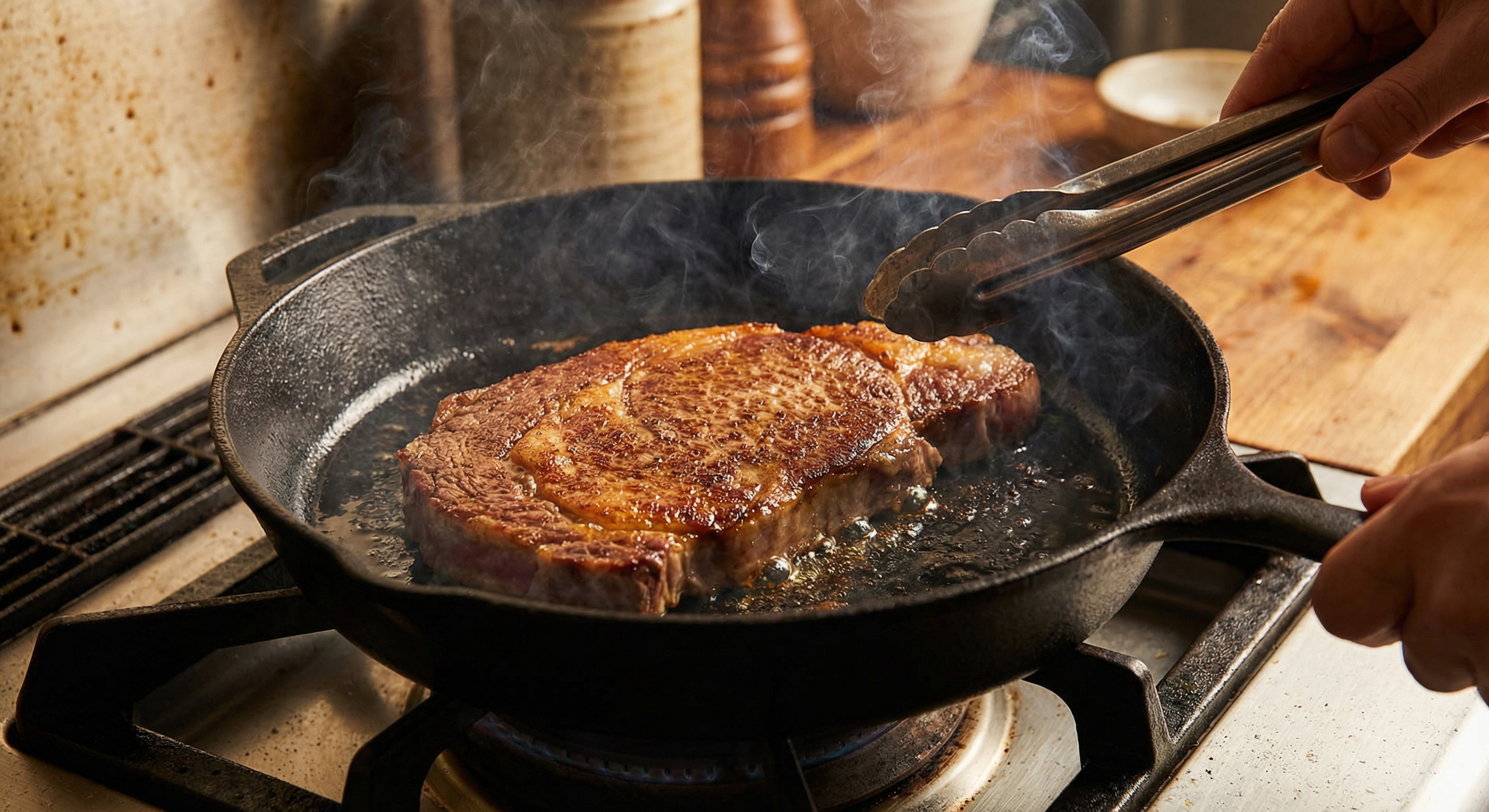
The pan sear is the most reliable method for Japanese A5 Wagyu. It mimics the teppanyaki experience from high-end steakhouses in Tokyo and gives you maximum control over the sear.
Equipment
- Cast-iron skillet or carbon steel pan
- Tongs
- Instant-read thermometer
Step-by-Step
1. Prepare the Steak
- Thaw correctly: 24 hours in the refrigerator. Never microwave or use hot water.
- Temper: 30–45 minutes at room temperature.
- Pre-slice (recommended for A5): Cut the steak into 1-inch strips or bite-sized cubes before cooking. This lets you sear every surface and control portions precisely. For American Wagyu, cook the steak whole.
- Season: Generous coarse sea salt immediately before cooking. Skip the pepper — it burns at high heat and turns bitter.
2. Heat the Pan
- Get the pan to medium-high heat — hot enough that a drop of water dances and evaporates instantly.
- No oil for A5: The steak is 50%+ fat. Trim a small piece of fat from the edge and rub it on the pan to lubricate. Adding oil makes the dish greasy and masks the delicate beef flavor.
- Light oil for American Wagyu: Use a thin film of avocado oil or beef tallow.
3. Sear
- A5 strips/cubes: 45–60 seconds per side until a golden-brown crust forms.
- Whole steaks (¾ inch): 2 minutes on the first side, 1.5–2 minutes on the second side.
- Whole steaks (1.5 inch): 3 minutes per side, then render the edges by holding the steak vertically with tongs for 1 minute.
4. Rest
Transfer to a warm plate. Rest A5 for 3–5 minutes; rest thicker American Wagyu steaks for 8–10 minutes. Slice against the grain and serve immediately.
Method 2: Reverse Sear (Best for Thick American Wagyu)
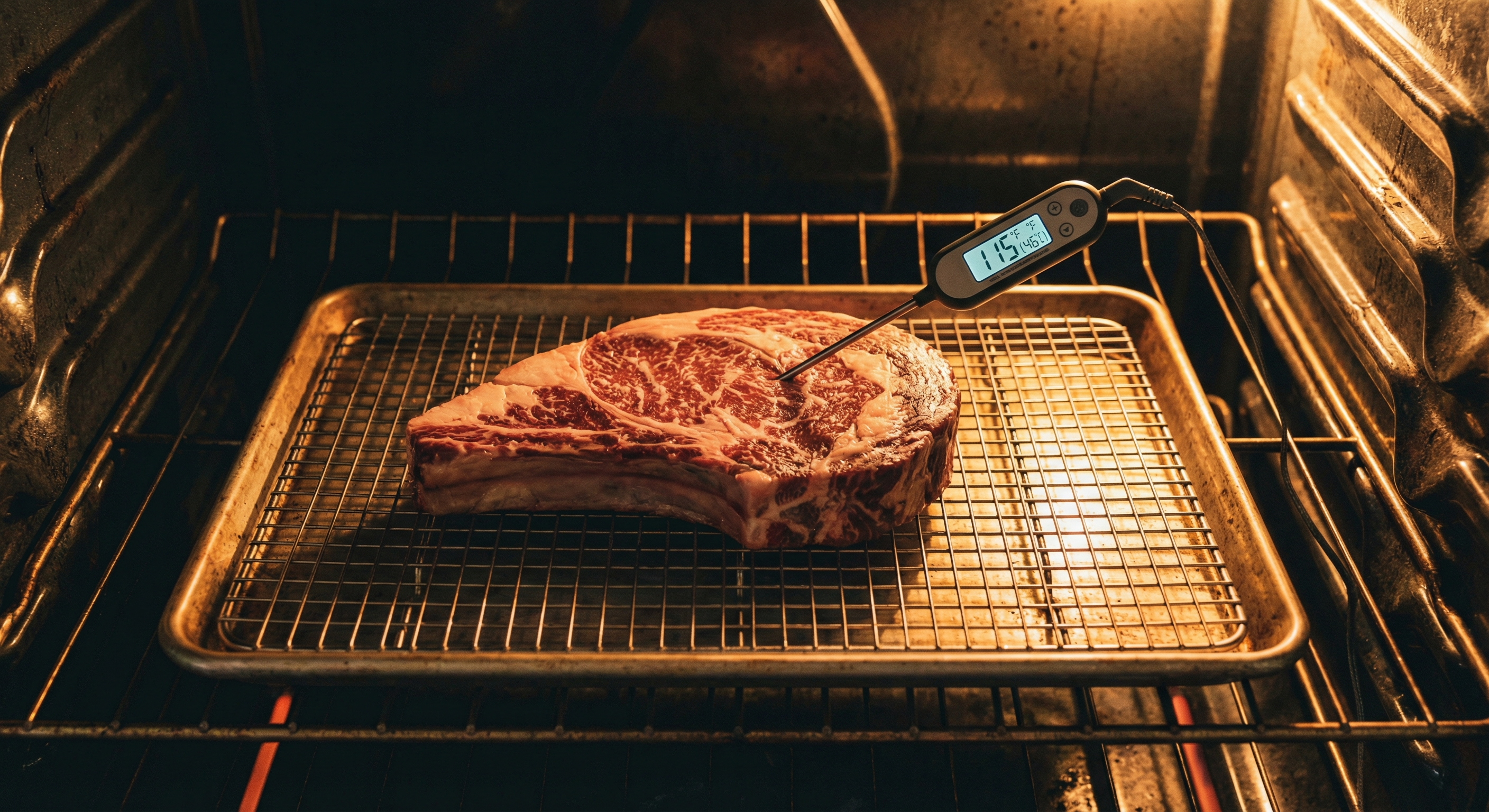
If your steak is over 1.5 inches thick, the reverse sear is the gold standard. It guarantees edge-to-edge medium-rare with no gray band — the bane of thick-steak cooking.
Step-by-Step
1. Low-Temperature Bake
- Preheat oven to 225°F (107°C).
- Season the steak with salt and place on a wire rack over a sheet pan.
- Cook until internal temperature reaches 115°F (for a medium-rare finish after searing). This takes 45–60 minutes for a 1.5-inch steak, but use your thermometer.
2. Rest
- Remove from oven. The steak will look gray and unappetizing — this is normal.
- Rest for 10–15 minutes while you heat the searing pan.
3. High-Heat Sear
- Get a cast-iron skillet ripping hot over the highest burner setting.
- Add avocado oil or beef tallow (the steak surface is dry, so it needs lubrication for the crust).
- Sear 45–60 seconds per side. You are adding color and crust only — the steak is already cooked internally.
- Optional butter baste: In the last 30 seconds, add a knob of butter, crushed garlic, and fresh thyme. Spoon the foaming butter over the steak. This works beautifully with American Wagyu's beefier flavor profile.
Method 3: Grilling Wagyu Steak
Grilling Wagyu is possible but requires caution. The extreme fat content causes intense flare-ups that can char your expensive steak in seconds. Here is how to do it safely.
Two-Zone Setup (Essential)
Create two heat zones on your grill: a hot direct zone for searing and a cooler indirect zone for gentle cooking. This is non-negotiable for Wagyu.
For Charcoal Grills
- Bank all coals to one side. The coal side is your sear zone; the empty side is your indirect zone.
- Target 450–500°F over the coals for searing.
For Gas Grills
- Set one side to high, the other to low or off.
Grilling Process
- Start indirect: Place the seasoned steak on the cool side, close the lid, and cook until internal temp reaches 110–115°F.
- Finish direct: Move to the hot zone. Sear 60–90 seconds per side. Stay vigilant — flare-ups will happen. Move the steak to the cool side if flames engulf it.
- Rest: 5–10 minutes off the grill before slicing.
Pro tip: Keep a spray bottle of water nearby to tame flare-ups. Better yet, use a cast-iron skillet or plancha directly on the grill grates. This eliminates flare-ups entirely while still giving you that outdoor cooking experience.
Method 4: Sous Vide (Most Precise)
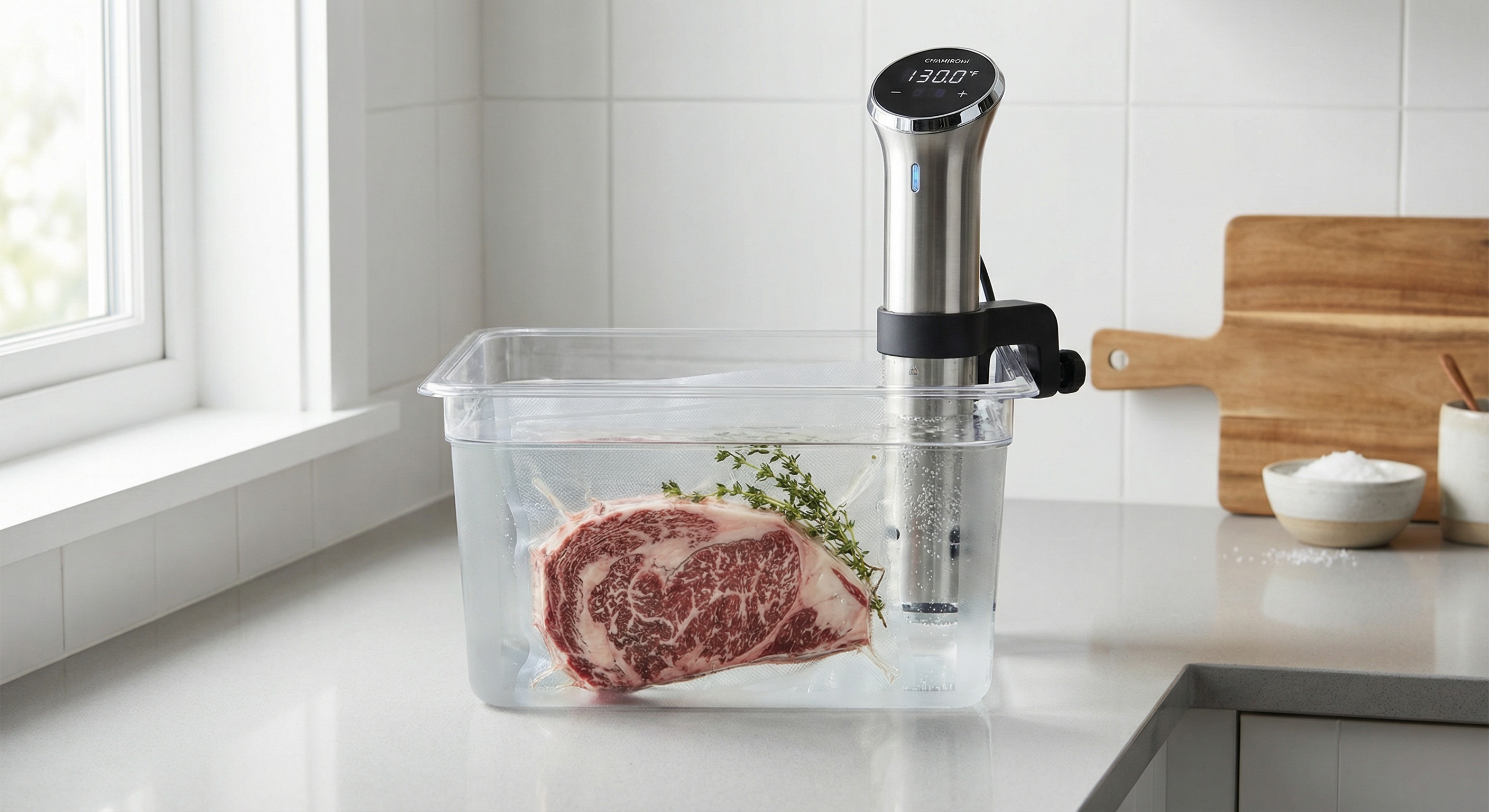
Sous vide gives you absolute temperature precision — the steak reaches your exact target and stays there. For expensive Wagyu, this insurance policy is worth the extra equipment.
Step-by-Step
1. Seal and Cook
- Season the steak with salt.
- Vacuum seal or use the water displacement method with a zip-lock bag.
- Set your immersion circulator to 130°F (54°C) for medium-rare.
- Cook for 1–2 hours for steaks up to 1.5 inches. For thicker cuts, extend to 2–3 hours. Unlike traditional cooking, there is no penalty for going slightly longer — the steak cannot overcook past the water temperature.
2. Dry and Sear
- Remove the steak from the bag. Pat it completely dry with paper towels. Moisture is the enemy of a good sear.
- Heat a cast-iron skillet until smoking hot.
- Sear 30–45 seconds per side. The steak is already at temperature, so you need the shortest possible sear to avoid overcooking.
3. Serve Immediately
Sous vide steaks do not need additional resting — the prolonged cooking time has already equalized the juices throughout the meat. Slice and serve.
Sous Vide Temperature Guide for Wagyu
| Target | Water Bath Temp | Notes |
|---|---|---|
| Medium-Rare (A5) | 130°F (54°C) | Best for rendering A5 fat properly |
| Medium-Rare (American) | 129°F (54°C) | Classic medium-rare result |
| Medium | 137°F (58°C) | Fuller fat render, still juicy |
Cooking Different Wagyu Cuts
Not all Wagyu cuts cook the same. Here is how to adjust your approach by cut:
Ribeye
The most heavily marbled steak cut. For A5 ribeye, pre-slicing into strips is strongly recommended — the fat content is so high that a whole steak can feel overwhelming. Pan sear is the best method. For American Wagyu ribeye, reverse sear or sous vide handles the thickness well.
Striploin (New York Strip)
Slightly leaner than ribeye with a firmer texture. This is the most versatile Wagyu cut — excellent with any of the four methods. The firmer grain makes it ideal for beginners because it is more forgiving of slight overcooking.
Tenderloin (Filet Mignon)
The leanest premium cut, even in A5. Because there is less intramuscular fat to render, you can cook tenderloin slightly rarer (120–125°F) than ribeye or strip. A quick pan sear or sous vide works best. The lack of fat means you may want a small amount of oil in the pan.
Zabuton (Chuck Flap)
One of the best-kept secrets in Wagyu. Zabuton has ribeye-level marbling at a fraction of the price. It is thinner than premium steaks, so a hot, fast pan sear (45–60 seconds per side) is the ideal method. Do not reverse sear or sous vide — the cut is too thin.
Flat Iron (Top Blade)
Excellent marbling, slightly firmer texture, and a hint of mineral flavor. Pan sear to medium-rare. The connective tissue seam in the center softens beautifully when the fat renders properly.
The Science of Resting Wagyu
Resting is not optional. When you cook meat, heat drives moisture toward the center. If you cut immediately, those concentrated juices pour out onto the cutting board instead of staying in the meat.
Resting allows the temperature to equalize and the muscle fibers to relax, redistributing moisture throughout the steak. The result: every bite is juicy instead of just the center.
Resting Times by Method
| Method | Rest Time | Notes |
|---|---|---|
| Pan Sear (A5 strips) | 2–3 minutes | Small pieces cool quickly |
| Pan Sear (whole steak) | 5–8 minutes | Tent loosely with foil |
| Reverse Sear | No additional rest needed | Already rested before the sear |
| Grill | 5–10 minutes | Depends on thickness |
| Sous Vide | No rest needed | Juices already equalized |
Common Mistakes That Ruin Wagyu
1. Cooking It Straight from the Fridge
A cold A5 steak in a hot pan means the outside burns while the inside stays cold and waxy. The fat never renders properly. Always temper for 30–45 minutes.
2. Overcrowding the Pan
If you are cooking for a group, cook in batches. Crowding drops the pan temperature dramatically, causing the steaks to steam instead of sear. You want a crust, not boiled beef.
3. Using Too Much Oil
A5 Wagyu is self-lubricating. Adding oil or butter to the pan creates a greasy, muddled flavor. Save the butter baste for American Wagyu or leaner cuts.
4. Skipping the Thermometer
Poking the steak or using the "finger test" does not work reliably, especially with Wagyu. The high fat content makes the steak feel softer than conventional beef at the same temperature. Use a thermometer. Every time.
5. Cooking A5 Like a Regular Steak
A5 Wagyu is not a "better version" of a normal steak — it is a fundamentally different product. Serving a 12 oz A5 steak to one person will overwhelm them. Slice it thin, share it, and think of it as a luxurious tasting experience rather than a traditional steak dinner.
6. Throwing Away Rendered Fat
After cooking Wagyu, your pan will contain liquid gold — pure rendered beef fat with extraordinary flavor. Save it. Sauté mushrooms, fry eggs the next morning, or toss it with roasted potatoes. Wagyu tallow is a precious cooking ingredient.
Serving and Pairing Suggestions
Wagyu is the star. Your sides should play a supporting role — offering acid, crunch, or freshness to cut through the richness.
Accompaniments
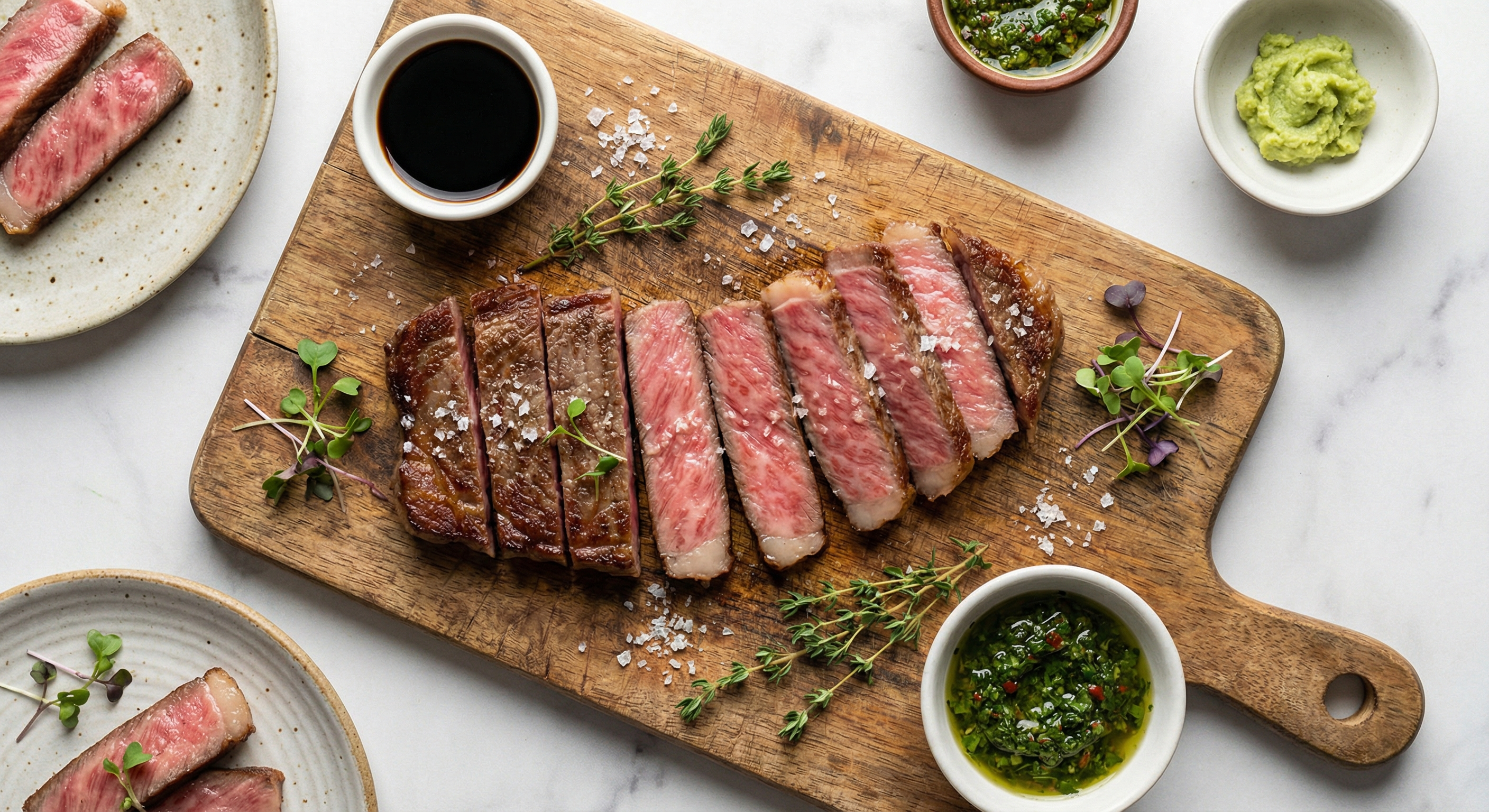
- Fresh wasabi (not the neon-green paste — real grated wasabi)
- Flaky sea salt (Maldon or fleur de sel)
- Crispy garlic chips
- A simple ponzu or soy-vinegar dipping sauce
- Pickled ginger or quick-pickled vegetables
- Steamed Japanese rice
Wine Pairing
- For A5: Dry Champagne, Junmai Daiginjo sake, or a structured Nebbiolo. The acidity and tannin cleanse the palate between bites of rich beef.
- For American Wagyu: Napa Cabernet Sauvignon, Barossa Shiraz, or a bold Malbec. The beefier, iron-rich flavor profile stands up to fuller-bodied reds.
Quick Reference: Which Method for Which Wagyu?
| Wagyu Type | Best Method | Second Choice |
|---|---|---|
| A5 strips/yakiniku | Pan Sear | Grill (on plancha) |
| A5 whole steak | Pan Sear | Sous Vide + Sear |
| American Wagyu (thick) | Reverse Sear | Sous Vide + Sear |
| American Wagyu (thin) | Pan Sear | Grill (direct) |
The Bottom Line
Cooking Wagyu steak is less about complicated technique and more about respecting the product. Temper it, season it simply, apply the right amount of heat for the cut, and do not overcook it. The extraordinary marbling does most of the work for you.
Ready to cook? Browse Japanese A5 Wagyu for the ultimate tasting experience, or explore American Wagyu for a full-sized steak with exceptional marbling.
Frequently Asked Questions
Do I need to put oil in the pan for Wagyu?
For Japanese A5 Wagyu, no. The steak has so much intramuscular fat that it lubricates the pan within seconds. For American Wagyu or leaner cuts like tenderloin, a thin film of high-smoke-point oil (avocado oil or beef tallow) is helpful.
What is the best internal temperature for Wagyu steak?
Medium-rare (125–130°F) is ideal for both A5 and American Wagyu. A5 actually needs slightly more heat than lean beef to properly render its intramuscular fat. If cooked too rare, the fat stays solid and creates a waxy, unpleasant texture.
Can I grill Wagyu steak?
Yes, but use a two-zone setup (indirect + direct heat) to avoid flare-ups from the high fat content. Start on the cool side to bring the steak up to temperature, then finish with a quick sear over direct heat. A cast-iron skillet on the grill grates eliminates flare-ups entirely.
How long should I rest Wagyu steak?
Rest A5 strips for 2–3 minutes and whole steaks for 5–8 minutes. American Wagyu benefits from 8–10 minutes of resting. If you used reverse sear or sous vide, no additional rest is needed — the cooking method already equalized the juices.
Should I slice Wagyu steak before cooking?
For Japanese A5, yes — slicing into 1-inch strips before cooking allows you to sear every surface and control portions. For American Wagyu, cook the steak whole and slice after resting for the best presentation and juice retention.
What is the best method for cooking Wagyu steak at home?
For Japanese A5 Wagyu, pan searing in a cast-iron skillet is the most reliable method. For thick American Wagyu steaks, the reverse sear (low oven followed by hot sear) gives the most consistent edge-to-edge results. Sous vide is the most precise option for either type.
Can I sous vide Wagyu steak?
Absolutely — sous vide is excellent for Wagyu because it eliminates any risk of overcooking. Set your water bath to 130°F for medium-rare, cook for 1–2 hours, pat dry, then finish with a 30–45 second sear per side in a smoking-hot pan.
More Expert Guides
What Is Wagyu Beef? The Complete Guide to Grades, Origins & Quality
Discover wagyu beef origins, the difference between Japanese A5 and American wagyu, how BMS grading works, why marbling matters, proper cooking techniques, and what you should pay in 2026.
12 min readA5 Wagyu: Your Complete Buying & Authentication Guide (2026)
A5 wagyu represents the pinnacle of beef quality, but not all A5 is created equal. Learn how to authenticate real Japanese A5, decode BMS scores, find fair prices, and cook it perfectly at home.
14 min readA5 Wagyu Prefectures: Regional Guide to Japan's Best Beef
Discover the regional differences in Japanese A5 wagyu across 12 key prefectures. Learn which prefecture produces the flavor profile you'll love most.