Wagyu Yakiniku: The Complete Guide to Japanese BBQ at Home
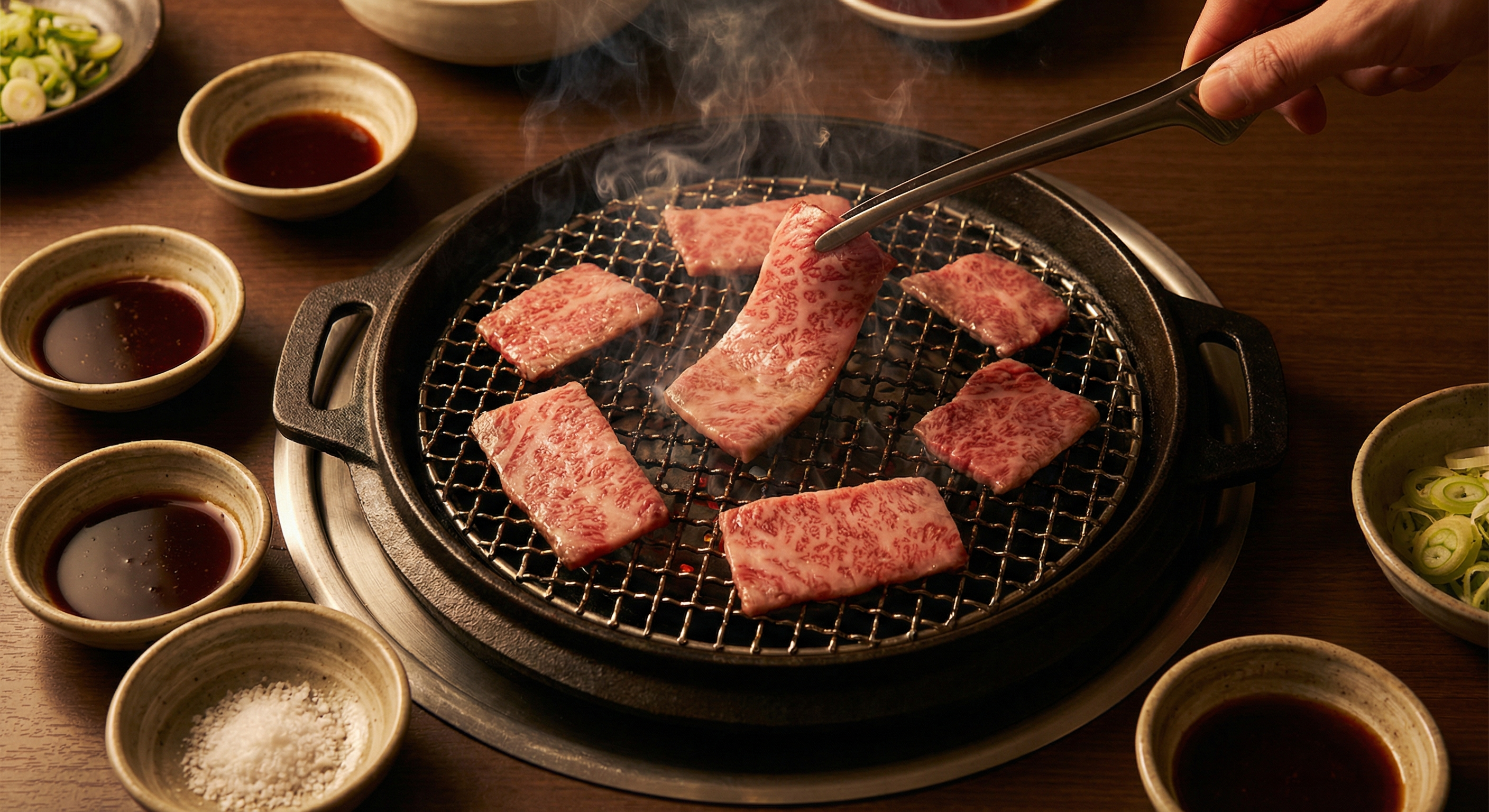
Ask most Americans how to eat wagyu and they'll describe a thick seared steak. Ask a Japanese person the same question and they'll almost certainly say yakiniku — thin slices of beef grilled quickly over high heat at the table, dipped in sauce, and eaten one perfect bite at a time.
Yakiniku (焼肉, literally "grilled meat") is the most popular way to enjoy wagyu in Japan, and for good reason. It's interactive, social, and — most importantly — it's the format that lets heavily marbled beef express its full potential without overwhelming the palate. Where a thick A5 steak can feel like too much after a few bites, yakiniku keeps every piece fresh, hot, and perfectly portioned.
This guide covers everything you need to bring authentic wagyu yakiniku home.
Why Yakiniku Is the Best Way to Eat Wagyu
The logic is simple: when beef has 40-50% intramuscular fat, you want small, thin pieces cooked fast. Each slice hits the grill for 10-20 seconds per side, developing a caramelized exterior while the interior fat barely begins to render. You eat it immediately — one or two bites of intense, beefy richness — then reset your palate before the next piece.
This approach solves the biggest challenge with high-BMS wagyu: richness fatigue. A 12-ounce A5 steak can overwhelm you by the third bite. Yakiniku turns that same amount of beef into 20-30 individual moments of perfection, spaced out over an hour of cooking, eating, and conversation.
The Best Wagyu Cuts for Yakiniku
In Japanese yakiniku restaurants, you'll see a long menu of individual muscles, each with a different texture and flavor. For home yakiniku, focus on these cuts:
Premium Cuts
Karubi (カルビ / Short Rib): The king of yakiniku. Karubi refers to beef from the short rib area — heavily marbled, rich, and deeply flavorful. In A5 wagyu, karubi has marbling that rivals or exceeds ribeye. It's cut into thin strips (about ⅛ inch) and grills in seconds. The fat caramelizes beautifully on the grill surface, creating an almost candy-like sweetness.
Jo-karubi (上カルビ / Premium Short Rib): The best section of the short rib — the plate short rib area with the most consistent marbling. If a yakiniku restaurant offers different karubi tiers, jo-karubi is the upgrade worth paying for.
Zabuton (ザブトン / Chuck Flap): One of the most marbled muscles on the entire animal, hidden in the chuck. The name means "cushion" because the cross-section looks like a sitting cushion. In yakiniku, zabuton is sliced thin and melts almost instantly on the grill. It's the secret weapon of Japanese BBQ — ribeye-level marbling at a fraction of the price.
Ribeye (リブロース): Classic yakiniku cut. Thin-sliced A5 ribeye on the grill is an extraordinary experience — the spinalis cap in particular is transcendent when flash-grilled.
Lean Counterpoints
Great yakiniku isn't all about fat. You need lean cuts to balance the richness:
Harami (ハラミ / Outside Skirt): Technically the diaphragm, not a traditional beef muscle. Harami has moderate marbling with a distinct, iron-rich beefiness. It provides a chewier, more textured contrast to the melt-in-your-mouth fattier cuts. Essential for pacing.
Tan (タン / Tongue): Beef tongue, sliced thin, is the traditional starter at every yakiniku meal. It has a firm, clean bite with subtle sweetness. Grilled with just salt and a squeeze of lemon, it's one of the most satisfying bites in all of Japanese BBQ.
Rosu (ロース / Loin): Striploin or loin muscle, leaner than ribeye but still well-marbled in wagyu. It provides "steak-like" satisfaction in a yakiniku format.
Offal (For the Adventurous)
Traditional yakiniku menus include organ meats: hatsu (heart), tetchan (large intestine), and mino (tripe). These are optional for home yakiniku but add authentic variety if you're comfortable with them.
How to Slice Wagyu for Yakiniku
Proper slicing is the most important skill for yakiniku. The goal: thin enough to cook in seconds, thick enough to have structure on the grill.
- Target thickness: ⅛ to ¼ inch (3-6mm) for most cuts
- Partially freeze first: Place the beef in the freezer for 30-45 minutes until firm but not frozen solid. This makes thin, even slicing dramatically easier.
- Slice against the grain: Always. This shortens the muscle fibers and makes each piece tender.
- Use a sharp knife: A Japanese gyuto or sujihiki works best. A dull knife will tear the delicate fat structure.
- For karubi: Cut across the bone (if bone-in) into strips about 3 inches long.
- For tongue: Slice as thin as possible — 2-3mm is ideal.
If you're buying from The Meatery's A5 collection, some cuts come pre-sliced for yakiniku. Otherwise, ask your butcher to slice thin, or do it yourself with the partial-freeze method.
Equipment: Setting Up for Home Yakiniku
The Grill
In Japan, yakiniku restaurants use gas or charcoal grills built into the table with exhaust hoods. At home, you have several options:
Best: Tabletop charcoal grill (konro/shichirin). A Japanese konro grill with binchotan charcoal is the authentic choice. Binchotan burns incredibly hot with minimal smoke and no petroleum smell. The infrared heat from the charcoal creates a sear that gas can't match. A quality konro costs $40-$100 and lasts years.
Good: Tabletop gas grill or electric grill. An Iwatani tabletop gas grill is the most practical option for most home cooks. Clean, controllable, and no charcoal setup required. Electric grills work but often don't get hot enough for proper yakiniku searing.
Acceptable: Cast iron grill pan on the stove. Not ideal — you lose the tableside experience — but a smoking-hot cast iron grill pan will produce good results if you're cooking for two.
Essential Accessories
- Long-handled tongs: Metal, not silicone. You need precision grip for thin slices.
- Small dipping bowls: One per person for tare sauce.
- Lettuce leaves: Butter lettuce or perilla (shiso) leaves for wrapping — this is the Korean-influenced ssam style that many yakiniku spots embrace.
- Rice: Short-grain Japanese rice is non-negotiable. The plain rice absorbs rendered fat and provides a neutral counterpoint.
Yakiniku Sauces and Seasonings
Tare (タレ / Dipping Sauce)
Yakiniku tare is the soul of the meal. The standard sauce is soy-based with fruit, garlic, and sesame. You can buy bottled tare (Ebara, Bachan's) or make your own:
Classic Yakiniku Tare:
- ½ cup soy sauce
- 2 tablespoons mirin
- 1 tablespoon sake
- 1 tablespoon sugar
- 1 tablespoon sesame oil
- 2 cloves garlic, grated
- 1 teaspoon grated fresh ginger
- 1 tablespoon toasted sesame seeds
- ½ Asian pear or apple, grated (the fruit enzyme tenderizes and adds sweetness)
Combine all ingredients and let sit for at least 30 minutes before serving. This makes enough for 4 people. Keeps refrigerated for a week.
Other Dipping Options
Shio (Salt): Premium wagyu — especially A5 — is often best with just salt. The fat carries so much flavor that sauce can mask it. Use flaky sea salt (Maldon) or matcha salt.
Ponzu: Citrus-soy sauce. The acidity cuts through rich fat beautifully. Excellent with fattier cuts like karubi.
Wasabi + soy: A tiny dab of fresh wasabi with light soy sauce. The heat is aromatic, not burning, and it complements the beef's sweetness.
Lemon + salt: The classic pairing for beef tongue. Simple, clean, lets the meat speak.
The Yakiniku Order of Service
In Japan, there's a traditional progression to a yakiniku meal. Following this order paces the richness and builds flavor throughout the evening:
- Tongue (tan): Always first. Light, clean, with lemon and salt. This wakes up the palate.
- Lean cuts (harami, rosu): Moderate marbling. You're warming up — both the grill and your appetite.
- Premium cuts (karubi, zabuton): The main event. Rich, heavily marbled, dipped in tare.
- Ribeye or special cuts: The peak of richness. Small quantities, savored slowly.
- Rice or bibimbap: Near the end, make a small bowl of rice mixed with remaining tare, pickled vegetables, and sesame oil. This stretches the meal and soaks up every last bit of flavor.
- Dessert: Light — vanilla ice cream, fresh fruit, or a yuzu sorbet to cleanse.
Cooking Technique: The 10-Second Rule
The actual grilling technique for yakiniku is deceptively simple:
- Grill must be hot. If thin-sliced wagyu doesn't sizzle immediately on contact, the grill isn't ready.
- Lay the slice flat. No bunching, no overlapping. Every part of the meat should touch the grill surface.
- Watch for the color change. When you see the bottom edge of the slice turn from red to gray (about 10-15 seconds), flip once.
- Second side: 5-10 seconds. The second side needs less time — the meat is already warming through from the first side.
- Remove and eat immediately. Don't pile grilled meat on a plate to "accumulate." Each piece should go from grill to mouth in seconds. That's the yakiniku experience.
The biggest mistake: overcooking. When thin-sliced wagyu curls up, stiffens, or turns uniformly gray, it's overdone. You want the center still slightly translucent — the residual heat finishes the cooking between grill and mouth.
Wagyu Yakiniku for Different Budgets
The Splurge: All A5
Budget about $80-$120 per person. Buy A5 karubi, zabuton, and a small portion of A5 ribeye from The Meatery's Japanese A5 collection. Add tongue and a few vegetables. This is the full luxury yakiniku experience.
The Sweet Spot: Mixed Grade
Budget $40-$60 per person. Use A5 for one or two premium cuts (zabuton or karubi), American wagyu for the lean cuts, and conventional beef tongue. This gives you the A5 peak moments while keeping the total spend reasonable.
The Accessible Version
Budget $25-$35 per person. Use American wagyu throughout. The marbling is lower than A5 but still significantly above conventional beef. Slice thin, grill hot, and the yakiniku format makes it exceptional.
Vegetables and Sides
Yakiniku isn't just meat. Grilled vegetables are integral to the meal:
- King trumpet mushrooms: Slice lengthwise, grill until golden. They absorb rendered wagyu fat and become incredibly savory.
- Shishito peppers: Grill whole until blistered. Pop them in your mouth between bites of meat.
- Sweet onion: Thick rounds, grilled until caramelized. The sweetness pairs beautifully with salty tare sauce.
- Sweet potato: Thin slices, grilled slowly. Starchy and sweet — a traditional yakiniku accompaniment.
- Corn: Cut into rounds, grill until charred. Brush with soy sauce and butter.
- Cabbage: Wedges grilled until wilted and charred. Dipped in sesame oil with salt.
Hosting a Yakiniku Party
Yakiniku is the perfect format for entertaining. The cooking happens at the table, everyone participates, and the meal naturally unfolds at a social pace.
For 4-6 people:
- 1.5-2 lbs total meat (mixed cuts and grades)
- 2-3 types of vegetables
- Rice and tare sauce
- Beer (Japanese lager — Asahi, Sapporo, or Kirin) and/or sake
- 2 tabletop grills if you have them (one grill for 4+ people creates a bottleneck)
Set everything on platters in the center of the table. Let guests grill their own meat at their own pace. Provide small plates, dipping bowls, and plenty of napkins. The informality is the point — yakiniku is convivial, not precious.
This is the way wagyu was meant to be eaten: slowly, socially, one perfect bite at a time.
Frequently Asked Questions
What is the best cut of wagyu for yakiniku?
Karubi (short rib) is the most popular yakiniku cut — heavily marbled, deeply flavorful, and perfect for thin slicing. Zabuton (chuck flap) is the connoisseur's choice, offering ribeye-level marbling at a lower price. A mix of both fatty and lean cuts (like harami/skirt) makes the best yakiniku meal.
How thin should wagyu be sliced for yakiniku?
Target ⅛ to ¼ inch (3-6mm) thickness. Partially freeze the beef for 30-45 minutes before slicing to make it easier to cut thin, even slices. Always slice against the grain for maximum tenderness.
What equipment do I need for yakiniku at home?
A tabletop grill (Japanese konro with binchotan charcoal is ideal, or an Iwatani gas grill), metal tongs, small dipping bowls for tare sauce, and short-grain rice. A cast iron grill pan on the stove works as a budget alternative.
What sauce do you use for wagyu yakiniku?
Yakiniku tare — a soy-based dipping sauce with mirin, sake, garlic, sesame, and grated fruit (pear or apple). Premium A5 wagyu is also excellent with just flaky salt, ponzu (citrus soy), or wasabi with light soy sauce. Tongue is traditionally served with lemon and salt.
How long do you cook wagyu on a yakiniku grill?
Just 10-20 seconds per side for thin-sliced wagyu. Lay the slice flat, wait for the bottom edge to change color (about 10-15 seconds), flip once, cook another 5-10 seconds, then eat immediately. The center should still be slightly translucent — residual heat finishes the cooking.
More Expert Guides
What Is Wagyu Beef? The Complete Guide to Grades, Origins & Quality
Discover wagyu beef origins, the difference between Japanese A5 and American wagyu, how BMS grading works, why marbling matters, proper cooking techniques, and what you should pay in 2026.
12 min readA5 Wagyu: Your Complete Buying & Authentication Guide (2026)
A5 wagyu represents the pinnacle of beef quality, but not all A5 is created equal. Learn how to authenticate real Japanese A5, decode BMS scores, find fair prices, and cook it perfectly at home.
14 min readA5 Wagyu Prefectures: Regional Guide to Japan's Best Beef
Discover the regional differences in Japanese A5 wagyu across 12 key prefectures. Learn which prefecture produces the flavor profile you'll love most.