Wagyu Beef Price Guide: What Every Cut Costs in 2026
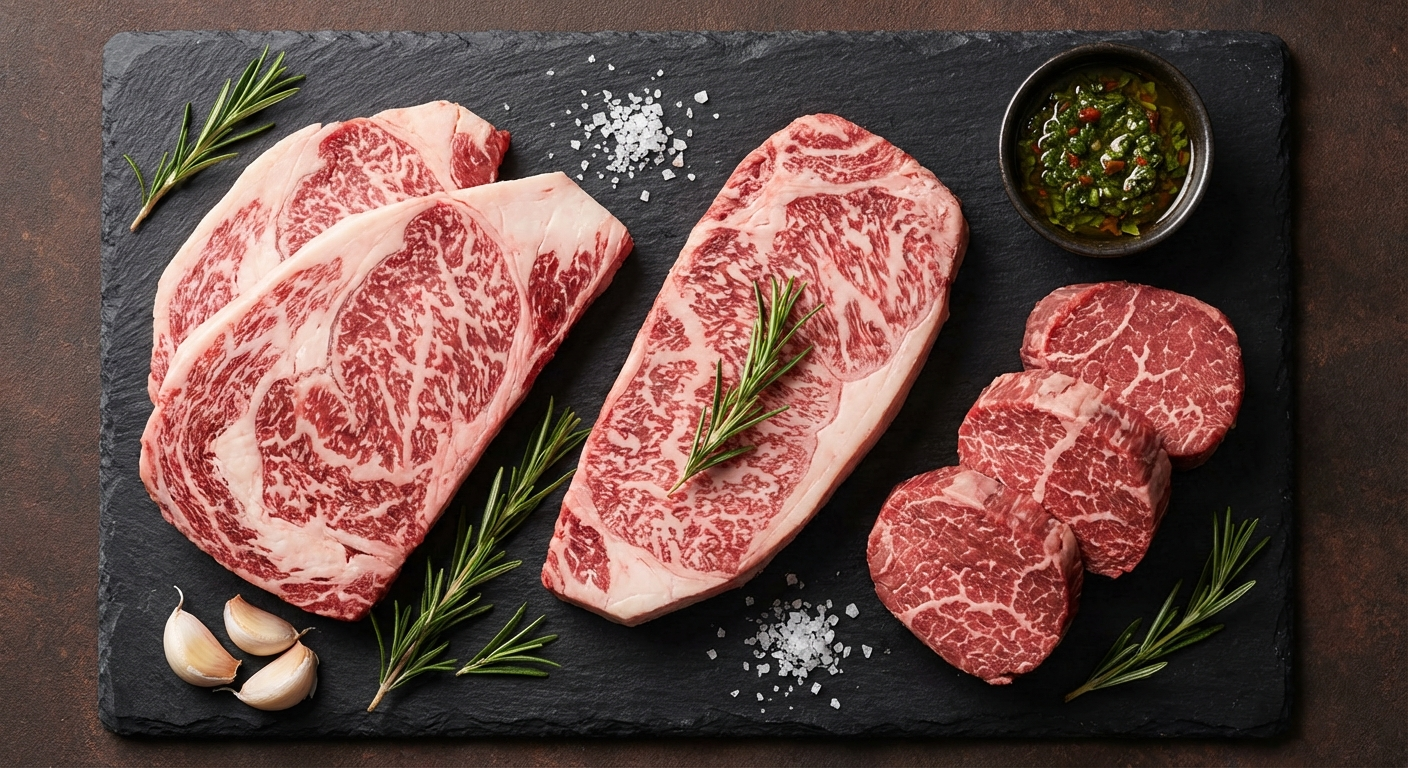
Wagyu beef pricing confuses even experienced buyers. You'll see "wagyu" steaks online ranging from $25 to $450 for what looks like the same cut. The difference comes down to three things: origin country, grade, and cut — and understanding how those interact saves you from both overpaying and buying something that isn't what you think it is.
I've tracked wagyu retail and wholesale pricing across dozens of suppliers for years. Here's what the market actually looks like in 2026.
The Three Wagyu Price Tiers
Before looking at individual cuts, understand that "wagyu" spans three distinct price tiers based on origin:
Tier 1: Japanese Wagyu (A4–A5)
This is the real thing — cattle born, raised, and processed in Japan under the Japanese Meat Grading Association (JMGA) system. Expect to pay $100–$300+ per pound depending on cut, grade, and prefecture.
Japanese wagyu commands these prices because of:
- Limited supply: Japan exports a tiny fraction of its production
- Import restrictions: Only USDA-approved Japanese processors can export to the US
- Grading standards: BMS 8–12 marbling that no other country consistently matches
- Feed duration: 28–32 months on grain (vs. 120–180 days for conventional US beef)
Tier 2: Australian Wagyu
Australia has the largest wagyu herd outside Japan, with genetics imported starting in the 1990s. Prices range from $50–$150 per pound for premium cuts.
Australian wagyu sits in the middle because:
- Genetics vary: Fullblood (100% Japanese genetics) costs more than crossbred (F1–F4)
- AUS-MEAT grading: Their marble score 8–9+ approaches Japanese A4–A5 quality
- Higher supply: More availability than Japanese, with established US import channels
Tier 3: American Wagyu
Most American wagyu is crossbred — Japanese wagyu genetics crossed with Angus or other breeds. Prices range from $30–$100 per pound depending on cut and producer.
American wagyu is more accessible because:
- Domestic production: No import duties or shipping from overseas
- Crossbred genetics: Most are 50% wagyu (F1), producing less extreme marbling
- Higher volume: Several large producers (Snake River Farms, Mishima Reserve) have scaled operations
Japanese A5 Wagyu Prices by Cut (2026)
These are typical retail prices from reputable US-based importers. Wholesale is roughly 30–40% less.
Ribeye (A5)
$180–$300 per pound
The flagship cut. A5 ribeye with BMS 10–12 from Miyazaki or Kagoshima typically runs $200–$250/lb. Kobe beef certified ribeye pushes $280–$300/lb due to brand premium and scarcity — Kobe accounts for less than 0.06% of Japan's total beef production.
Striploin / New York Strip (A5)
$150–$250 per pound
Slightly less marbled than ribeye on average, but still extraordinarily rich. This is many enthusiasts' preferred cut because the texture holds up better to searing than the ultra-soft ribeye.
Tenderloin / Filet Mignon (A5)
$200–$350 per pound
The most expensive Japanese wagyu cut by weight. Tenderloin is a small muscle, and A5 tenderloin has a buttery texture nothing else replicates. Supply is extremely limited — each animal yields only about 4–6 pounds of tenderloin.
Chuck / Shoulder Cuts (A5)
$80–$140 per pound
Don't overlook these. Japanese A5 chuck (specifically the zabuton or chuck flap) carries marbling comparable to conventional prime ribeye. It's one of the best values in Japanese wagyu.
Ground Wagyu / Trim (Japanese)
$40–$60 per pound
Made from trim of A4–A5 carcasses. At this price point, you get legitimate Japanese wagyu fat in burger form. Worth it for special-occasion burgers, but not economical for everyday use.
Australian Wagyu Prices by Cut (2026)
Ribeye (MS 8–9+)
$80–$150 per pound
Fullblood Australian wagyu ribeye at marble score 9+ approaches Japanese A5 quality at 40–60% of the price. This is the sweet spot for many wagyu enthusiasts — exceptional marbling without the Japanese import premium.
Striploin (MS 6–9)
$60–$120 per pound
Wide price range here because marble score matters enormously. MS 6–7 striploin at $60–$70/lb is a great entry point to real wagyu. MS 9+ pushes toward $120/lb.
Brisket (MS 5–7)
$25–$45 per pound
Australian wagyu brisket has become the competition BBQ secret weapon. The intramuscular fat makes it nearly impossible to dry out during a 12-hour smoke. At these prices, it's accessible for backyard cooks too.
American Wagyu Prices by Cut (2026)
Ribeye
$50–$90 per pound
American wagyu ribeye from top producers (Snake River Farms Gold grade, Mishima Reserve) delivers USDA Prime-plus marbling. The beef flavor is stronger than Japanese wagyu — more fat than USDA Prime, but not the melt-in-your-mouth experience of A5.
Striploin / New York Strip
$40–$70 per pound
A solid choice for grilling. American wagyu striploin cooks like a beefier, more forgiving version of a USDA Prime strip. Hard to overcook thanks to the extra intramuscular fat.
Ground Beef
$12–$20 per pound
The most accessible wagyu product. American wagyu ground beef makes noticeably juicier burgers than conventional beef. This is where most people should start their wagyu journey.
Brisket
$15–$30 per pound
American wagyu brisket is widely available from online retailers and some Costco locations. The extra marbling provides insurance against drying out, making it popular with competition pitmasters and home smokers.
Why Wagyu Prices Vary So Much
Grade and Marble Score
This is the biggest price driver within any origin category. A jump from BMS 6 to BMS 10 can double or triple the price of the same cut from the same producer. In Japanese wagyu, A4 (BMS 6–8) typically costs 30–50% less than A5 (BMS 8–12).
Prefecture and Brand
Kobe beef costs more than equivalent-grade Miyazaki or Kagoshima wagyu purely because of brand recognition. The beef isn't meaningfully better — all three prefectures produce world-class A5 — but Kobe's name recognition commands a 20–40% premium.
Cut Yield
A single wagyu animal yields drastically different amounts of each cut. Tenderloin represents about 1.5% of the carcass, while chuck is 25%+. Lower-yield cuts cost more per pound because there's less of them from each expensive animal.
Supply Chain
Direct importers and producer-to-consumer brands offer better prices than retailers adding their own margins. Buying a whole wagyu striploin (8–12 lbs) and cutting it yourself typically saves 20–30% compared to buying individual steaks.
How to Spot Overpriced Wagyu
The market has pricing traps. Here's how to avoid them:
- "Wagyu" without origin specified: If a seller doesn't tell you whether it's Japanese, Australian, or American, assume it's the cheapest option and price accordingly
- Japanese A5 under $100/lb for ribeye: Either it's a smaller portion than you think, it's not actually A5, or the seller is liquidating inventory near its freeze date
- "Kobe-style" anything: This legally meaningless term lets sellers charge Kobe prices for non-Kobe beef. Real Kobe beef is certified by the Kobe Beef Marketing & Distribution Promotion Association
- Restaurant markup: Expect 3–5x retail pricing at restaurants. A $60 "wagyu steak" at a steakhouse is likely 4–6 oz of American wagyu that costs the restaurant $15–$20
Best Value Wagyu Cuts to Buy
If you want the best wagyu experience per dollar, these are my recommendations:
- Japanese A5 zabuton (chuck flap): $80–$120/lb with ribeye-level marbling. The best-kept secret in wagyu
- Australian fullblood MS 9+ striploin: $100–$120/lb delivers 90% of the Japanese experience at 50% of the price
- American wagyu brisket: $15–$30/lb transforms your barbecue for a modest upcharge over prime brisket
- Japanese A4 (not A5) anything: A4 wagyu at BMS 6–8 still outmarbles any other beef in the world, at 30–50% less than A5
- Australian wagyu brisket: $25–$45/lb is the competition circuit's favorite for good reason
Where Wagyu Prices Are Heading
Japanese wagyu exports to the US have grown steadily since the 2012 re-opening of the market. More supply has modestly reduced pricing on common cuts, but A5 from top prefectures holds its value because demand grows faster than export quotas.
American wagyu supply is expanding significantly as more ranchers invest in wagyu genetics. Expect American wagyu prices to decrease 10–15% over the next few years as supply catches up with demand.
Australian wagyu remains stable. The weak Australian dollar relative to USD has kept imports competitively priced, and Australian producers are investing in higher-grade genetics that command premium pricing.
Final Thoughts
The wagyu market rewards educated buyers. Understanding the three tiers (Japanese, Australian, American) and how grade affects pricing within each tier lets you make smart purchases instead of overpaying for marketing claims.
Start with American wagyu ground beef or brisket to understand what wagyu fat tastes like. Move up to Australian fullblood for a premium steak experience. And when you're ready to splurge, a Japanese A5 zabuton or A4 ribeye delivers the full wagyu experience without necessarily requiring the A5 ribeye price tag.
Frequently Asked Questions
How much does A5 wagyu cost per pound?
Japanese A5 wagyu ranges from $80–$350 per pound depending on the cut. Ribeye averages $180–$300/lb, striploin $150–$250/lb, and chuck cuts $80–$140/lb. Kobe beef certified cuts carry a 20–40% premium over equivalent-grade non-Kobe Japanese wagyu.
Why is wagyu beef so expensive?
Wagyu costs more due to extended feeding periods (28–32 months vs. 4–6 months for conventional beef), limited supply from Japan, strict grading requirements, and specialized genetics that take generations to develop. Import restrictions and shipping costs add further premiums to Japanese wagyu sold in the US.
Is American wagyu worth the price?
American wagyu offers excellent value at $30–$90/lb depending on cut. It delivers noticeably more marbling than USDA Prime at a fraction of Japanese wagyu prices. For everyday cooking, American wagyu ground beef ($12–$20/lb) and brisket ($15–$30/lb) offer the best value.
What is the cheapest way to try real wagyu?
American wagyu ground beef at $12–$20/lb is the most accessible entry point. For Japanese wagyu, A5 chuck flap (zabuton) at $80–$120/lb offers ribeye-level marbling at a lower price. Buying whole subprimals and cutting them yourself saves 20–30% compared to individual steaks.
More Expert Guides
What Is Wagyu Beef? The Complete Guide to Grades, Origins & Quality
Discover wagyu beef origins, the difference between Japanese A5 and American wagyu, how BMS grading works, why marbling matters, proper cooking techniques, and what you should pay in 2026.
12 min readA5 Wagyu: Your Complete Buying & Authentication Guide (2026)
A5 wagyu represents the pinnacle of beef quality, but not all A5 is created equal. Learn how to authenticate real Japanese A5, decode BMS scores, find fair prices, and cook it perfectly at home.
14 min readA5 Wagyu Prefectures: Regional Guide to Japan's Best Beef
Discover the regional differences in Japanese A5 wagyu across 12 key prefectures. Learn which prefecture produces the flavor profile you'll love most.