Wagyu BMS Score Explained: The Complete Guide to Beef Marbling Standards
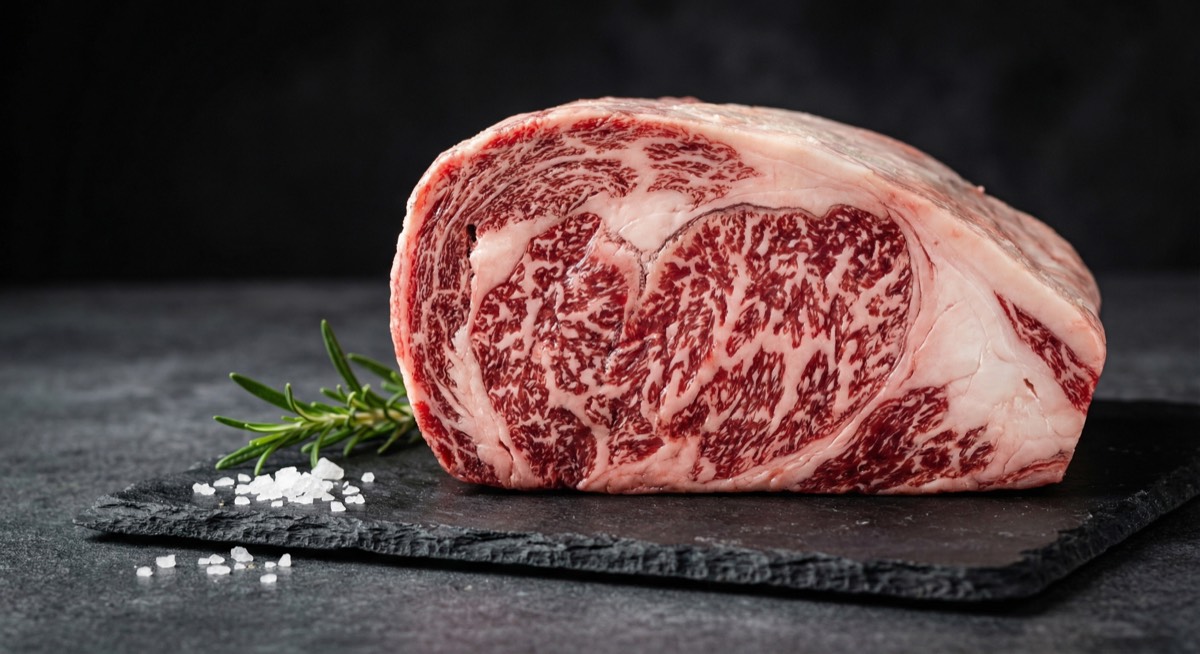
If you've ever shopped for authentic Wagyu beef, you've likely encountered the term "BMS" followed by a number. This score—the Beef Marbling Standard—is perhaps the single most important indicator of Wagyu quality, yet it remains one of the most misunderstood aspects of Japanese beef grading. As someone who has spent decades working with cattle ranchers across Japan and evaluating thousands of carcasses, I can tell you that understanding BMS is essential for anyone serious about experiencing the finest beef in the world.
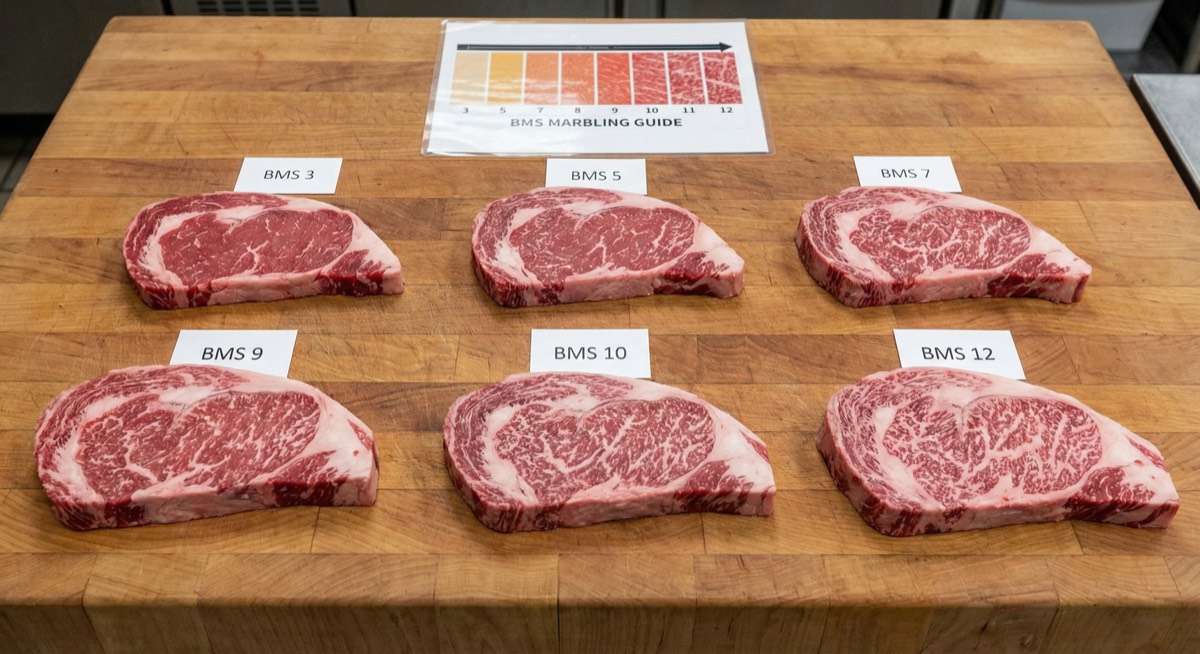
What Is BMS (Beef Marbling Standard)?
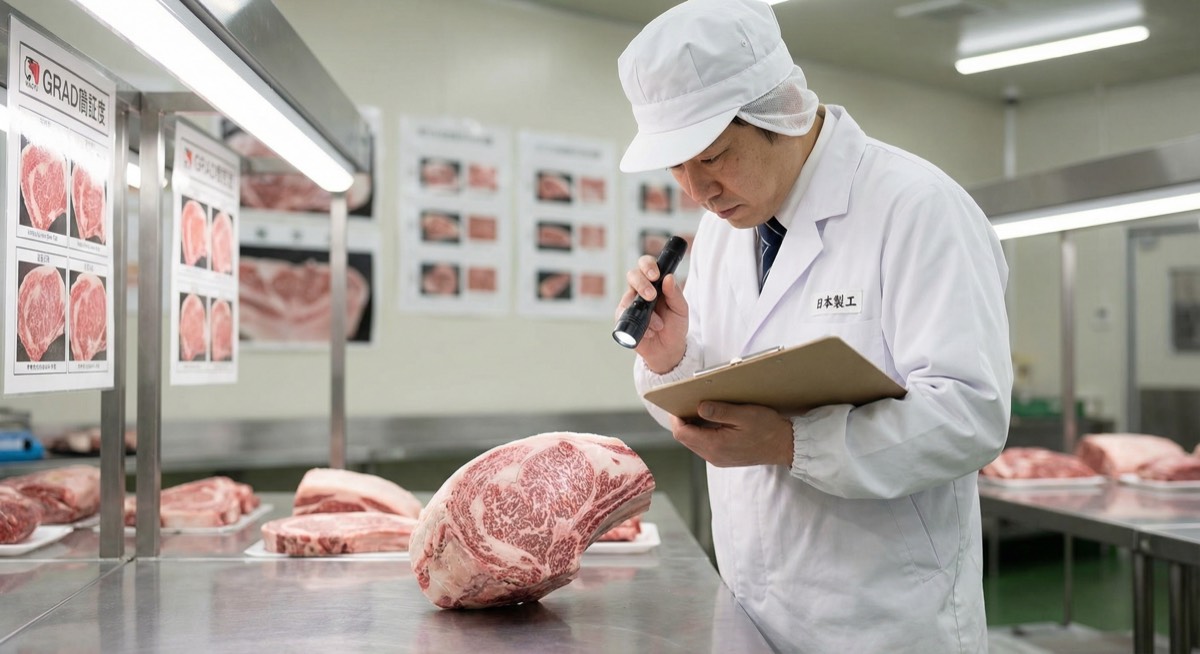
The Beef Marbling Standard, or BMS, is a numerical scale developed by the Japanese Meat Grading Association (JMGA) to quantify the amount and distribution of intramuscular fat—what we commonly call marbling—in beef. Unlike subjective assessments, BMS provides an objective, standardized measurement that allows producers, buyers, and consumers to communicate precisely about meat quality.
The BMS scale ranges from 1 to 12, with 1 representing minimal marbling (similar to what you'd find in standard beef) and 12 representing the highest possible concentration of fine, evenly distributed fat throughout the muscle tissue. This intramuscular fat is what gives Wagyu its legendary buttery texture and rich, complex flavor profile.
What makes the BMS system particularly valuable is its focus not just on the amount of marbling, but also on its quality. Graders evaluate the fineness of the fat particles, the uniformity of distribution, and the overall visual appearance when determining a score. A cut might have substantial fat content but still receive a lower BMS if that fat is coarsely distributed or concentrated in certain areas rather than evenly dispersed.
The Complete BMS Scale: 1-12 Breakdown
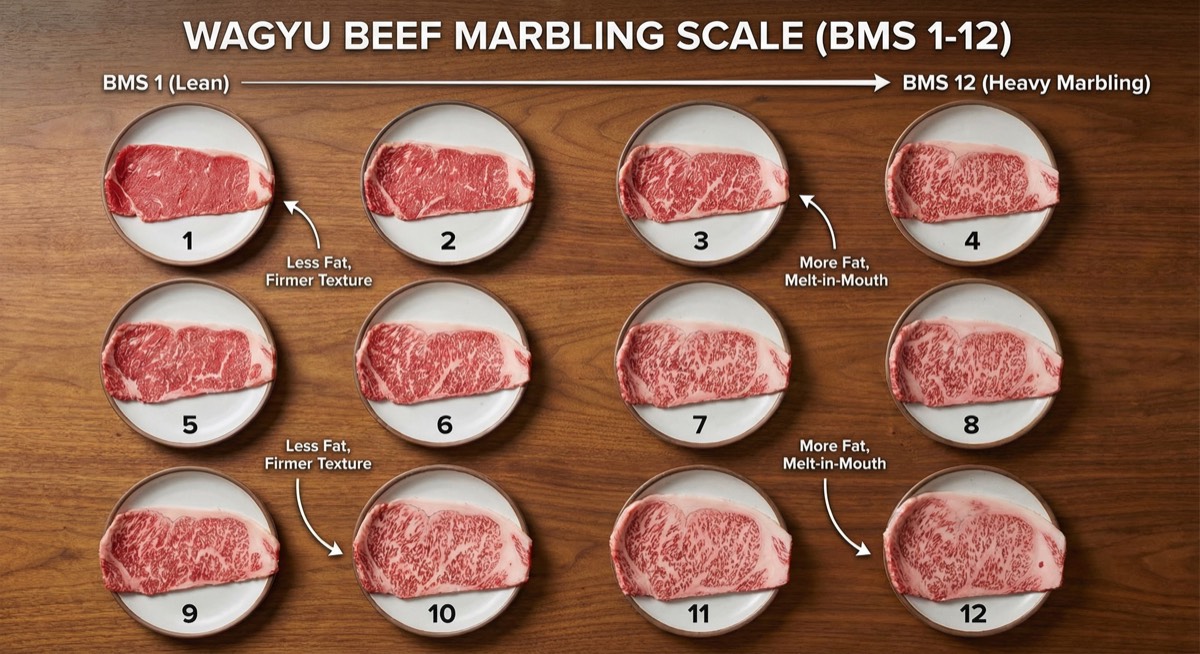
Understanding each level of the BMS scale helps you make informed purchasing decisions based on your preferences and budget. Here's what you can expect at each tier:
BMS 1-2: Minimal Marbling
At the lowest end of the scale, BMS 1-2 beef shows very little intramuscular fat. The meat appears predominantly red with only sparse, scattered flecks of white. This level is comparable to Select grade beef under the USDA system. You won't find authentic Japanese Wagyu at this level—these scores are included in the scale primarily for grading non-Wagyu cattle.
BMS 3-4: Light Marbling
BMS 3-4 represents light to modest marbling with visible but limited fat distribution. The meat shows some white streaking but maintains a predominantly lean appearance. This corresponds roughly to USDA Choice beef. Some crossbred Wagyu cattle may fall into this range, but purebred Japanese Wagyu rarely scores this low.
BMS 5-6: Moderate Marbling
This is where we begin to see the characteristic Wagyu marbling pattern emerge. BMS 5-6 displays noticeable white streaking throughout the meat, with fat beginning to form a web-like pattern. The beef at this level qualifies for Japan's A3 grade and offers a good introduction to the Wagyu experience. Many quality American Wagyu products fall into this range, providing excellent flavor at more accessible price points.
BMS 7-8: Abundant Marbling
BMS 7-8 represents abundant marbling where the fat distribution becomes truly impressive. The muscle fibers are visibly interlaced with fine fat deposits, creating a snowflake-like appearance. This level corresponds to Japan's A4 grade and represents exceptional quality that satisfies even discerning palates. The eating experience at this level delivers the rich, buttery notes that Wagyu is famous for.
BMS 9-10: Superior Marbling
At BMS 9-10, we enter the realm of superior marbling. The meat takes on an almost pink appearance due to the extensive fat distribution, with fine marbling creating intricate patterns throughout every section. This level qualifies for Japan's prestigious A5 grade. The texture becomes incredibly tender, almost dissolving on the tongue, while the flavor develops extraordinary depth and complexity.
BMS 11-12: Extraordinary Marbling
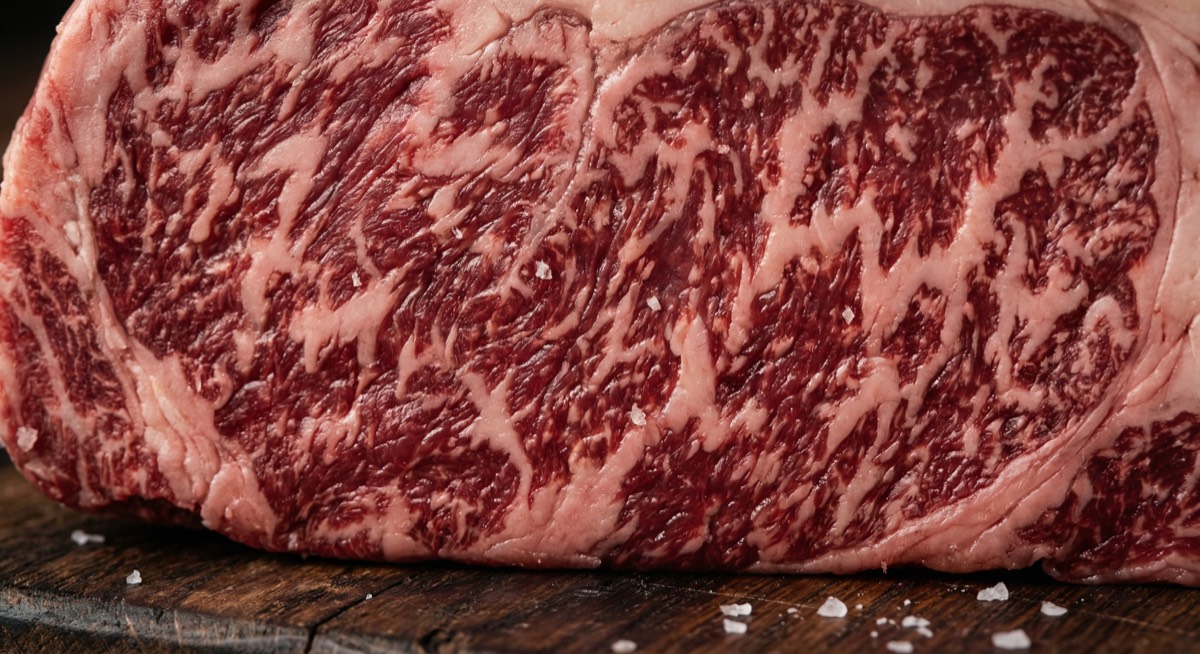
The pinnacle of the scale, BMS 11-12 represents the rarest and most exceptional beef in the world. At this level, the marbling is so extensive and finely distributed that the meat appears almost white with hints of pink. Only a tiny percentage of all cattle—even purebred Wagyu raised under ideal conditions—achieve these scores. When you explore authentic Japanese A5 Wagyu, you're experiencing beef in this extraordinary range.
How BMS Relates to Japanese Beef Grades (A1-A5)
The relationship between BMS and the familiar A1-A5 grading system often causes confusion. Here's what you need to know: the letter-number combination in Japanese beef grading actually represents two separate evaluations combined into a single designation.
The letter grade (A, B, or C) indicates yield—essentially how much usable meat the carcass provides relative to its total weight. "A" represents above-average yield, "B" is average, and "C" is below average. This matters to producers and wholesalers but has no bearing on eating quality.
The number grade (1-5) represents meat quality, and this is where BMS becomes crucial. However, the quality grade also considers three other factors: meat color and brightness, firmness and texture, and fat color and luster. The final quality grade is determined by whichever of these four factors scores lowest—a system the Japanese call "low-point determination."
Here's how BMS scores map to quality grades:
- Quality Grade 5: BMS 8-12
- Quality Grade 4: BMS 5-7
- Quality Grade 3: BMS 3-4
- Quality Grade 2: BMS 2
- Quality Grade 1: BMS 1
This means that A5 Wagyu can technically range from BMS 8 to BMS 12—a significant spread in marbling intensity. When shopping for the finest Wagyu, asking specifically about the BMS score gives you more precise information than relying on the grade alone.
How BMS Affects Taste, Texture, and Price
The practical implications of BMS extend far beyond numbers on a certificate. Each increase in marbling fundamentally transforms the eating experience.
Taste and Flavor
Intramuscular fat serves as a carrier for flavor compounds, and Wagyu fat has a uniquely high concentration of oleic acid—the same monounsaturated fat found in olive oil. As BMS increases, the beef develops richer, more complex flavors with pronounced umami notes. Higher BMS Wagyu often exhibits subtle sweetness and a lingering, savory finish that lower-marbled beef simply cannot achieve.
Texture and Mouthfeel
Perhaps the most immediately noticeable effect of high BMS is the transformation in texture. The extensive marbling in BMS 10+ Wagyu creates an almost impossible tenderness—the meat seems to dissolve rather than require chewing. This buttery, melt-in-your-mouth quality is unique to highly marbled Wagyu and cannot be replicated through cooking technique alone.
Price Implications
As you might expect, BMS and price correlate strongly. The rarity of high-BMS cattle—combined with the intensive raising practices required to achieve such marbling—drives significant price premiums. A BMS 12 ribeye might cost three to four times more than a BMS 8 cut from the same ranch. Whether the premium is worthwhile depends on your palate, the occasion, and how you plan to prepare the beef.
BMS vs. USDA Marbling Grades
American consumers are often more familiar with USDA marbling grades than BMS. Understanding the relationship between these systems helps bridge the knowledge gap.
The USDA uses a qualitative scale: Select, Choice, and Prime (plus lower grades rarely seen at retail). These grades roughly correspond to BMS ranges:
- USDA Select: Approximately BMS 1-2
- USDA Choice: Approximately BMS 3-4
- USDA Prime: Approximately BMS 5-6
Notice that USDA Prime—the highest American grade—only reaches the lower-middle range of the BMS scale. This illustrates why authentic Japanese Wagyu represents a completely different category of beef. Even the most exceptional American Prime steak rarely approaches the marbling intensity of standard A5 Wagyu.
That said, American Wagyu programs have made remarkable progress. Many domestic Wagyu producers now achieve BMS 6-9, offering an excellent middle ground between conventional American beef and the ultra-premium Japanese imports.
Australian MSA and AUS-MEAT Marble Scores
Australia has developed its own marbling assessment systems, which you'll encounter when shopping for Australian Wagyu. Understanding these scales prevents confusion and helps you compare products accurately.
AUS-MEAT Marble Score
The AUS-MEAT system uses a 0-9 scale (plus scores of 9+ for exceptional marbling). Here's the approximate conversion:
- AUS-MEAT 0-1: Equivalent to BMS 1-2
- AUS-MEAT 2-3: Equivalent to BMS 3-4
- AUS-MEAT 4-5: Equivalent to BMS 5-6
- AUS-MEAT 6-7: Equivalent to BMS 7-8
- AUS-MEAT 8-9: Equivalent to BMS 9-10
- AUS-MEAT 9+: Equivalent to BMS 11-12
MSA (Meat Standards Australia)
MSA takes a different approach, using a 100-1190 point scale that considers multiple factors beyond marbling, including aging, cut thickness, and cooking method. While comprehensive, this system is less directly comparable to BMS for marbling assessment specifically.
When evaluating Australian Wagyu, look for the AUS-MEAT marble score for the most direct comparison to Japanese BMS standards.
How to Read Wagyu Labels and Certificates
Authentic Japanese Wagyu comes with documentation that can seem overwhelming at first glance. Here's what to look for:
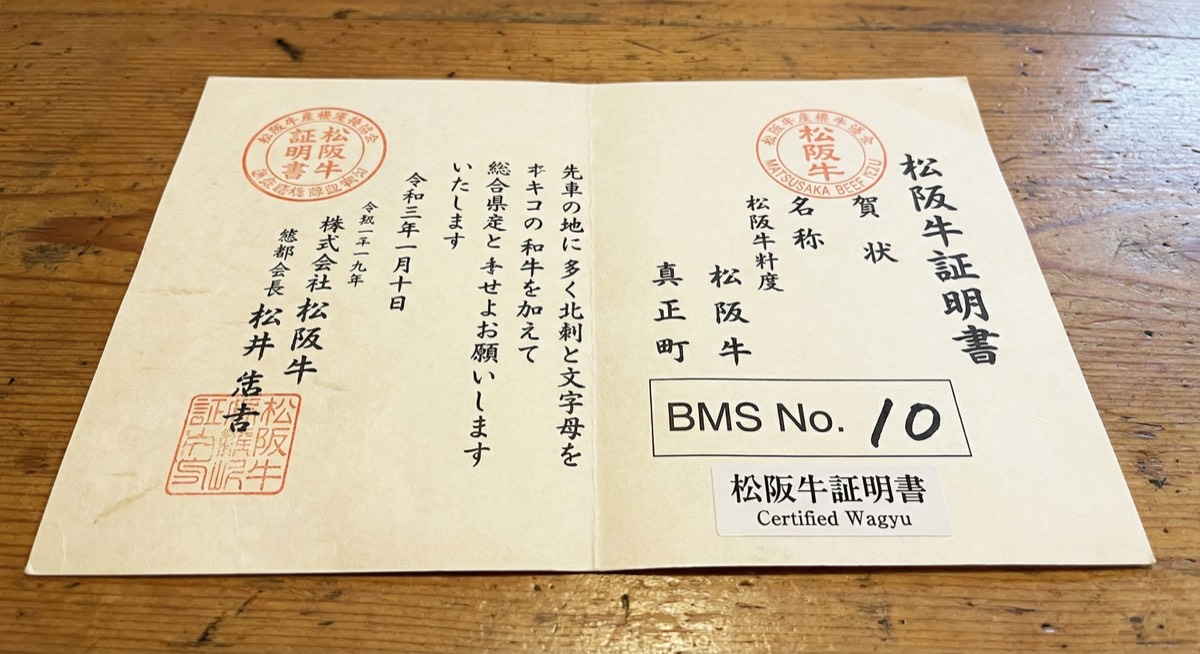
Key Information on Japanese Wagyu Certificates
- Individual ID Number: A 10-digit tracking number that traces the animal from birth
- Grade: The combined letter-number designation (e.g., A5)
- BMS Score: The specific marbling number (e.g., BMS 11)
- BCS (Beef Color Standard): Meat color rating from 1-7
- BFS (Beef Fat Standard): Fat color rating from 1-7
- Prefecture of Origin: Where the cattle was raised
- Brand Name: If applicable (Kobe, Matsusaka, etc.)
For American and Australian Wagyu, labels typically show breed percentage (e.g., "F1 Wagyu" for 50% or "Fullblood" for 100%), the marble score using the relevant system, and the producer or program name.
Buying Guide: Choosing the Right BMS for Your Needs
Higher BMS isn't always better—it depends on your preferences, cooking method, and budget. Here's my guidance for different scenarios:
BMS 5-6: Everyday Excellence
This range offers outstanding value for regular enjoyment. The marbling is sufficient to deliver recognizable Wagyu characteristics—enhanced tenderness and flavor—without the intensity that can overwhelm some palates. Ideal for grilling, and these cuts work well in larger portions.
BMS 7-8: Special Occasions
When you want to impress guests or celebrate a milestone, BMS 7-8 delivers a memorable experience. The marbling is visually stunning and the eating quality superb, yet the beef retains enough structure for various cooking methods. This sweet spot balances quality and accessibility.
BMS 9-10: The Connoisseur's Choice
For those who truly appreciate fine beef, BMS 9-10 represents the beginning of the extraordinary. Plan for smaller portions—the richness is intense—and consider preparations that highlight the beef's quality, such as simple seasoning and brief, high-heat cooking.
BMS 11-12: The Ultimate Experience
Reserve these rare treasures for moments when only the absolute finest will do. The intensity requires thoughtful consumption—small bites savored slowly. Many find that 2-3 ounces provides complete satisfaction. Prepare simply to let the beef speak for itself.
Final Thoughts on BMS
The Beef Marbling Standard represents decades of Japanese expertise in evaluating and communicating beef quality. While no number can fully capture the experience of exceptional Wagyu, BMS provides the most reliable indicator of what you can expect when that first bite reaches your palate.
As you explore the world of premium beef, let BMS guide you—but don't let it limit you. Try different levels, compare experiences, and discover which marbling intensity resonates with your personal taste. The journey through the BMS scale is one of the great pleasures available to those who appreciate fine beef.
Frequently Asked Questions
What is the highest BMS score for Wagyu beef?
The highest BMS (Beef Marbling Standard) score is 12, representing the most extraordinary marbling possible in beef. Only a tiny fraction of Wagyu cattle—even those from elite Japanese breeding programs—achieve BMS 11-12. This exceptional marbling creates the legendary melt-in-your-mouth texture and rich, complex flavor that defines premium Wagyu.
What BMS score is considered A5 Wagyu?
A5 Wagyu requires a minimum BMS score of 8, but can range from BMS 8 to BMS 12. This means there's significant variation within the A5 grade itself. When purchasing A5 Wagyu, asking for the specific BMS score gives you more precise information about the marbling level you'll receive.
How does BMS compare to USDA Prime beef?
USDA Prime, the highest American beef grade, roughly corresponds to BMS 5-6 on the Japanese scale. This means even entry-level A5 Wagyu (BMS 8) exceeds the marbling of the finest USDA Prime steaks. Japanese Wagyu with BMS 10-12 represents a category of marbling that simply doesn't exist in the USDA grading system.
Does higher BMS always mean better Wagyu?
Not necessarily—'better' depends on personal preference. Higher BMS means more intense marbling, richer flavor, and more buttery texture. However, some people find BMS 11-12 too rich and prefer the balance of BMS 7-9. Higher BMS also commands premium prices and is best enjoyed in smaller portions. The ideal BMS depends on your taste preferences, how you'll cook it, and the dining occasion.
What BMS score should I look for when buying Wagyu?
For everyday meals, BMS 5-6 offers excellent Wagyu character at accessible prices. For special occasions, BMS 7-8 provides impressive quality. Connoisseurs seeking the full Wagyu experience should explore BMS 9-10, while BMS 11-12 is reserved for those seeking the ultimate beef experience and willing to pay premium prices for extremely rare cuts.
Can American Wagyu achieve high BMS scores?
Yes, American Wagyu programs have made significant progress in achieving high marbling scores. Quality American Wagyu regularly achieves BMS 6-9, with some exceptional fullblood programs reaching BMS 10+. While the very highest scores (BMS 11-12) remain more common in Japanese programs due to generations of selective breeding, American Wagyu offers excellent quality often at more accessible price points.
More Expert Guides
What Is Wagyu Beef? The Complete Guide to Grades, Origins & Quality
Discover wagyu beef origins, the difference between Japanese A5 and American wagyu, how BMS grading works, why marbling matters, proper cooking techniques, and what you should pay in 2026.
12 min readA5 Wagyu: Your Complete Buying & Authentication Guide (2026)
A5 wagyu represents the pinnacle of beef quality, but not all A5 is created equal. Learn how to authenticate real Japanese A5, decode BMS scores, find fair prices, and cook it perfectly at home.
14 min readA5 Wagyu Prefectures: Regional Guide to Japan's Best Beef
Discover the regional differences in Japanese A5 wagyu across 12 key prefectures. Learn which prefecture produces the flavor profile you'll love most.