Australian Wagyu: The Complete Guide to Grades, Producers & Quality
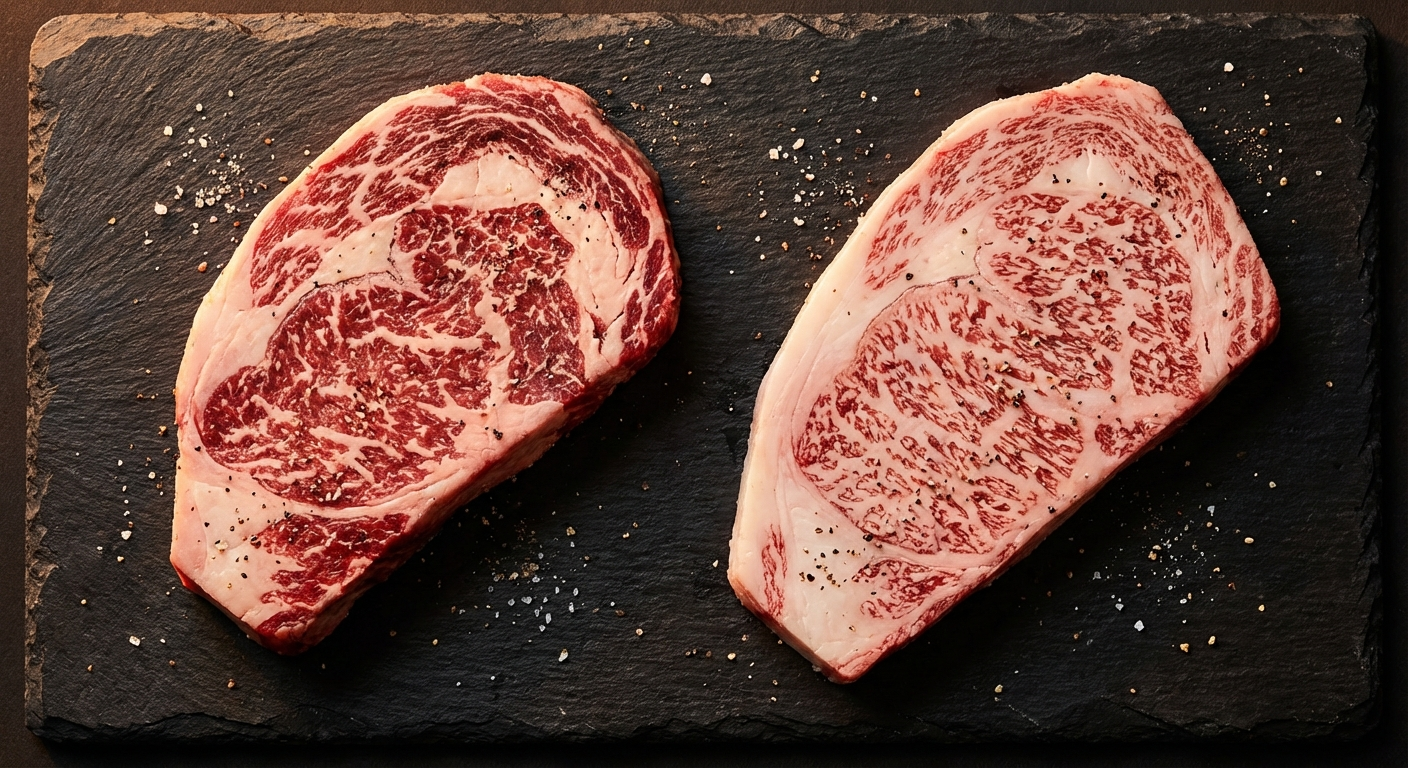
Australian Wagyu: The Complete Guide to Grades, Producers & Quality
When people think of Wagyu beef, Japan comes to mind first. But over the past three decades, Australia has quietly built the most significant Wagyu industry outside Japan — and some of the beef coming out of Australian programs now rivals mid-range Japanese product in marbling, flavor, and consistency.
I've spent twenty years evaluating Wagyu from every major producing country. Australian Wagyu occupies a fascinating middle ground: it carries authentic Japanese genetics but expresses them through distinctly Australian terroir, feeding practices, and grading standards. Understanding these differences is essential for making informed buying decisions.
Let me walk you through everything you need to know about Australian Wagyu — from its origins to its grading system, top producers, and how it compares to Japanese and American alternatives.
How Wagyu Came to Australia
Australia's Wagyu story begins in the early 1990s, when a small number of Japanese cattle — both fullblood and genetics (semen and embryos) — were exported before Japan permanently closed its borders to live Wagyu exports in 1997. This genetic window was brief but transformative.
The pioneers of Australian Wagyu imported genetics from several key Japanese bloodlines, including Tajima (the same strain behind Kobe beef), Kedaka, Fujiyoshi, and Shimane lines. Some operations focused on maintaining purebred Japanese genetics (fullblood programs), while others crossed Wagyu sires with local breeds — primarily Angus and Holstein — to create crossbred Wagyu programs.
Today, Australia is the largest Wagyu-producing country outside Japan, with over 300,000 Wagyu and Wagyu-cross cattle. The Australian Wagyu Association (AWA) maintains one of the most rigorous breed registries in the world, with DNA-verified pedigrees and estimated breeding values (EBVs) that rival Japan's record-keeping.
Australian Wagyu Grading: AUS-MEAT and MSA
Australia uses two grading systems relevant to Wagyu, and neither perfectly mirrors the Japanese JMGA system:
AUS-MEAT Marble Score (0-9+)
The AUS-MEAT marble score is the primary marbling measurement for Australian beef. It uses a 0-9 scale with a "9+" designation for exceptional marbling:
| AUS-MEAT Score | Approximate BMS Equivalent | Description |
|---|---|---|
| 0-1 | BMS 1-2 | Minimal marbling |
| 2-3 | BMS 3-4 | Slight marbling |
| 4-5 | BMS 5-6 | Moderate marbling (USDA Prime range) |
| 6-7 | BMS 7-8 | High marbling (entry-level A5 range) |
| 8-9 | BMS 9-10 | Very high marbling |
| 9+ | BMS 11-12 | Exceptional marbling |
The AUS-MEAT scale is roughly equivalent to the Japanese BMS system but uses fewer gradations at the top end. This means that an AUS-MEAT 9 encompasses a wider range of marbling than a single Japanese BMS score. Some Australian producers have adopted the Japanese BMS scale directly (scoring up to 12) for their premium fullblood programs, providing more precision at the top end.
Meat Standards Australia (MSA)
The MSA system takes a more consumer-focused approach, predicting eating quality based on multiple factors: marbling, meat color, fat color, maturity (ossification), pH, and hanging method. MSA grades beef into eating quality categories — 3-star, 4-star, and 5-star — for specific cuts and cooking methods.
For Wagyu specifically, MSA is less commonly referenced than AUS-MEAT marble scores. The premium Wagyu market focuses primarily on marble score, genetics (fullblood vs. crossbred), and producer reputation.
Fullblood vs. Crossbred: The Critical Distinction
This is the single most important factor when evaluating Australian Wagyu:
Fullblood (F4+ / 100% Wagyu Genetics)
Fullblood Australian Wagyu cattle are 100% genetically Japanese — descended entirely from the original imported genetics with no crossbreeding. These animals can produce marbling equivalent to BMS 8-12, rivaling Japanese product. Key fullblood producers include Blackmore Wagyu, Mayura Station, and Jack's Creek.
Fullblood Australian Wagyu is typically grain-fed for 350-600+ days on carefully formulated rations. The extended feeding period (compared to 100-150 days for conventional Australian beef) allows the marbling to develop fully. The best fullblood programs produce beef that, in blind tastings, can stand alongside Japanese A4 and even lower-range A5 product.
Crossbred (F1-F3 / 50-93.75% Wagyu Genetics)
The majority of Australian Wagyu production is crossbred — typically Wagyu sires crossed with Angus or Holstein dams. The F-number indicates the generation:
- F1 (50% Wagyu): First cross. Typically reaches AUS-MEAT 4-6. Good marbling, beefy flavor, accessible pricing.
- F2 (75% Wagyu): Second cross. AUS-MEAT 5-7 typical. Noticeably more marbling and Wagyu character.
- F3 (87.5% Wagyu): Third cross. AUS-MEAT 6-8 typical. Approaching fullblood quality.
- F4+ (93.75%+ Wagyu): Considered fullblood-equivalent by some registries.
Crossbred Wagyu offers genuine quality improvements over conventional beef at more accessible prices. An F1 Wagyu × Angus cross with AUS-MEAT 5-6 is an exceptional steak — significantly more marbled than USDA Prime, with noticeably better fat quality and eating experience.
Top Australian Wagyu Producers
Blackmore Wagyu
David Blackmore was one of Australia's earliest Wagyu pioneers, importing fullblood genetics in the 1990s. Blackmore Wagyu is widely regarded as Australia's finest — their fullblood program consistently produces AUS-MEAT 9+ beef with marbling that rivals Japanese A5 BMS 10-11. The cattle are grain-fed for 500+ days on a proprietary ration. Limited supply and premium pricing reflect the quality.
Mayura Station
Located in South Australia's Limestone Coast, Mayura Station runs a fullblood program with cattle fed 400+ days. Their "Platinum" grade (AUS-MEAT 9+) has won multiple international awards. Mayura is notable for transparency — they publish marble scores, feed programs, and genetic information.
Jack's Creek
Jack's Creek has won "World's Best Steak" at the World Steak Challenge multiple times. Based in New South Wales, they run both fullblood and crossbred programs. Their F3+ Wagyu represents extraordinary value — high marbling with consistent quality at more accessible prices than Japanese imports.
Rangers Valley
One of Australia's largest premium beef producers, Rangers Valley offers Wagyu programs at multiple price points. Their "Black Market" line is crossbred Wagyu grain-fed 270+ days, hitting AUS-MEAT 6-7 consistently. It's one of the best value propositions in the Wagyu market globally.
Westholme by AACo
The Australian Agricultural Company (AACo) runs the Westholme Wagyu brand — one of the largest fullblood Wagyu programs in the world. Their top-tier product reaches AUS-MEAT 9+ and is widely available in premium restaurants globally.
Australian vs. Japanese Wagyu: How They Compare
Genetics
Australian fullblood Wagyu shares identical base genetics with Japanese cattle — the original imports came from the same bloodlines. However, 30 years of separate breeding has created subtle divergence. Japanese programs have continued refining for marbling intensity under controlled conditions; Australian programs have selected for cattle that thrive in Australian conditions while maintaining marbling.
Feeding
This is the biggest practical difference. Japanese Wagyu is typically fed proprietary grain blends for 28-32 months total (finishing phase of 8-10 months). Australian Wagyu is grain-fed for 350-600+ days (fullblood) or 200-400 days (crossbred), but the ration composition, water, and mineral profile differ from Japanese programs.
The result: Australian Wagyu tends to have a slightly beefier, more robust flavor compared to the more delicate, sweet character of Japanese Wagyu. Neither is "better" — they're different expressions of the same genetics in different environments.
Fat Character
Japanese A5 Wagyu fat tends to be exceptionally soft with a very low melting point and a clean, sweet flavor. Top Australian fullblood Wagyu achieves similar fat softness, but the flavor profile leans slightly more savory — more umami depth, less floral sweetness. The oleic acid content in top Australian programs approaches Japanese levels (55-65%), contributing to that desirable buttery texture.
Price
Australian Wagyu is significantly more affordable than Japanese imports:
- Australian fullblood (AUS-MEAT 9+): $60-$120/lb for premium cuts
- Australian crossbred (AUS-MEAT 6-7): $30-$60/lb
- Japanese A5 (BMS 8-12): $100-$200+/lb
For many consumers, Australian fullblood Wagyu at AUS-MEAT 9 delivers 85-90% of the Japanese A5 experience at 50-60% of the price. That value proposition is why Australian Wagyu has become the fastest-growing premium beef category globally.
Australian vs. American Wagyu
Both countries imported Japanese genetics around the same time, but the industries developed differently:
- Feeding: Australian programs generally feed longer (350-600 days vs. 300-400 for top American programs). Longer feeding typically produces more marbling.
- Genetics: Australia maintained more pure Tajima genetics; American programs mixed more Kedaka and other lines. Neither approach is superior — they produce different flavor profiles.
- Grading: Australia's AUS-MEAT system provides more granularity than USDA for Wagyu-level marbling.
- Availability: Australian Wagyu is more widely exported. American Wagyu is primarily consumed domestically.
In head-to-head comparisons at similar price points, Australian fullblood and top American fullblood programs are remarkably close in quality. The choice often comes down to availability and personal flavor preference.
How to Buy Australian Wagyu
What to Look For
- Marble score: Always ask for the AUS-MEAT marble score (or BMS equivalent). This is the primary quality indicator.
- Genetics: Fullblood vs. crossbred. Know which you're buying — the quality and price should align.
- Feed days: Longer grain-feeding generally correlates with higher marbling. 350+ days for fullblood is standard for premium product.
- Producer name: Unlike commodity beef, Australian Wagyu quality varies significantly by producer. Established names (Blackmore, Mayura, Jack's Creek) provide consistency.
Where to Buy
Specialty retailers like The Meatery carry verified Australian Wagyu with full provenance information. Look for retailers who specify the marble score, producer, genetics (fullblood or F-number), and feeding days.
Red Flags
- "Australian Wagyu" with no marble score listed
- No producer information
- Prices that seem too good (under $25/lb for anything claiming to be fullblood)
- Vague genetic claims ("Wagyu-style" or "Wagyu-influenced")
How to Cook Australian Wagyu
Cooking approach depends on the marble score:
High Marble Score (AUS-MEAT 8-9+)
Treat this like Japanese A5: smaller portions (4-6 oz), minimal seasoning, brief sear, serve rare to medium-rare. The marbling is intense enough to warrant the same respect you'd give Japanese product. Thin-slice for yakiniku-style preparation.
Mid Marble Score (AUS-MEAT 5-7)
This is where Australian Wagyu shines as a "steak" experience. Cook a full-sized portion (8-12 oz) like you would the best conventional steak — season with salt, sear on high heat, rest properly. The marbling is generous enough to be distinctly luxurious but not so intense that you need to limit portions. Medium-rare is ideal.
Lower Marble Score (AUS-MEAT 3-4)
Essentially very good beef. Cook as you would premium conventional steak. The Wagyu genetics still contribute better fat quality and tenderness than non-Wagyu beef at similar marbling levels.
The Future of Australian Wagyu
Australia's Wagyu industry is at an inflection point. Genetic selection is accelerating — genomic testing allows producers to identify high-marbling animals earlier and breed more precisely. Several programs are now producing BMS 11-12 equivalent beef with increasing consistency, territory once reserved exclusively for Japanese programs.
The growth in oleic acid testing is particularly interesting. Some Australian producers now certify the oleic acid percentage of their beef — a direct measure of fat quality that the Japanese system doesn't capture. This could give Australian Wagyu a transparency advantage that differentiates it in a market increasingly driven by informed consumers.
For buyers, the trend is unambiguously positive: Australian Wagyu quality is improving, availability is increasing, and the value proposition — genuine Wagyu genetics, rigorous grading, competitive pricing — continues to strengthen. Whether you're a Wagyu novice looking for an accessible entry point or an experienced enthusiast seeking excellent value, Australian Wagyu deserves a place on your radar.
Frequently Asked Questions
Is Australian Wagyu real Wagyu?
Yes. Australian Wagyu cattle descend from Japanese genetics imported in the 1990s before Japan closed exports. Fullblood Australian Wagyu is 100% genetically Japanese. The Australian Wagyu Association maintains DNA-verified pedigrees to ensure genetic authenticity.
How does Australian Wagyu compare to Japanese A5?
Top Australian fullblood Wagyu (AUS-MEAT 9+) approaches Japanese A5 BMS 8-10 in marbling intensity. The flavor profile is slightly more robust and beefy compared to Japanese Wagyu's delicate sweetness. Australian Wagyu typically costs 40-60% less than equivalent Japanese product.
What marble score should I buy for Australian Wagyu?
For a premium Wagyu experience, look for AUS-MEAT 7+ (fullblood). For an excellent steak that's distinctly better than conventional beef, AUS-MEAT 5-6 (crossbred) offers outstanding value. AUS-MEAT 9+ is the top tier, comparable to Japanese A5.
Why is Australian Wagyu cheaper than Japanese Wagyu?
Lower production costs (larger-scale operations, less labor-intensive farming), no import duties for domestic consumption, and higher production volumes compared to Japan's limited supply. The quality gap has narrowed significantly while the price gap remains substantial.
More Expert Guides
What Is Wagyu Beef? The Complete Guide to Grades, Origins & Quality
Discover wagyu beef origins, the difference between Japanese A5 and American wagyu, how BMS grading works, why marbling matters, proper cooking techniques, and what you should pay in 2026.
12 min readA5 Wagyu: Your Complete Buying & Authentication Guide (2026)
A5 wagyu represents the pinnacle of beef quality, but not all A5 is created equal. Learn how to authenticate real Japanese A5, decode BMS scores, find fair prices, and cook it perfectly at home.
14 min readA5 Wagyu Prefectures: Regional Guide to Japan's Best Beef
Discover the regional differences in Japanese A5 wagyu across 12 key prefectures. Learn which prefecture produces the flavor profile you'll love most.