Wagyu Tomahawk Steak: The Complete Guide to Buying, Cooking, and Serving
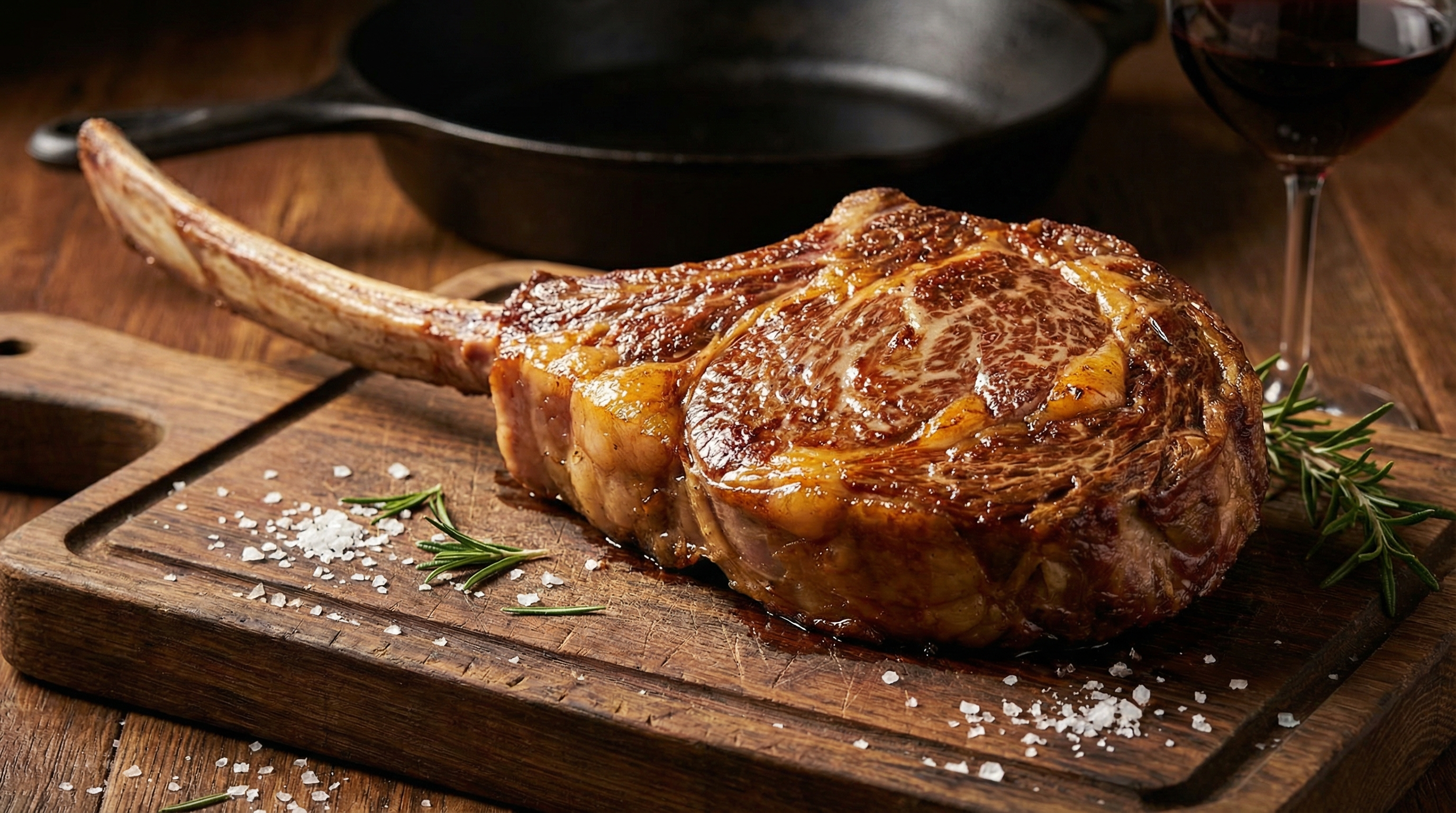
A wagyu tomahawk steak is, without exaggeration, the most impressive single cut of beef you can put on a table. It's a bone-in ribeye with the entire rib bone left intact and frenched clean — creating a handle that can extend 6 to 8 inches beyond the meat. When that ribeye comes from wagyu cattle, you get extraordinary marbling layered throughout a cut that already ranks among the most flavorful on the animal.
I've cooked dozens of wagyu tomahawks at various grades — from American wagyu crossbreeds to full-blood Japanese A5. The technique matters more with this cut than almost any other, because you're dealing with a thick steak (typically 2 to 2.5 inches) with a bone that conducts heat differently than the meat around it. Here's everything I've learned.
What Makes a Wagyu Tomahawk Different
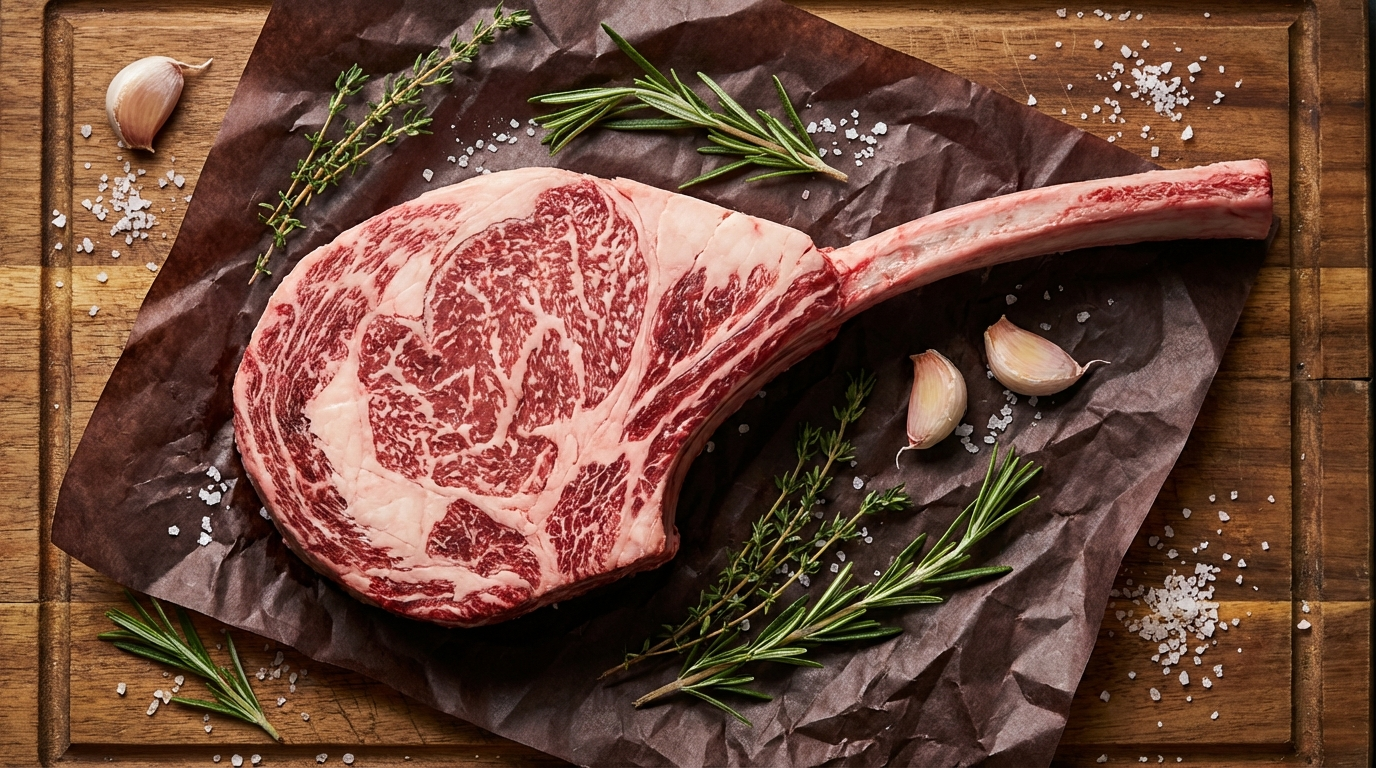
A tomahawk is cut from the rib primal — specifically ribs 6 through 12. It's the same muscle group as a standard ribeye, but the preparation is what sets it apart. The butcher leaves the entire rib bone attached and scrapes (frenches) it clean of meat and fat, creating that distinctive handle.
When the source animal is wagyu, several things change:
- Marbling intensity: A standard USDA Choice ribeye might have modest intramuscular fat. A wagyu tomahawk — even at the American wagyu level — will have significantly more fat webbed throughout the meat. Japanese A5 wagyu tomahawks can reach BMS 10-12, where the fat-to-lean ratio approaches 50/50.
- Fat composition: Wagyu intramuscular fat has a higher percentage of oleic acid (monounsaturated fat), which melts at a lower temperature than conventional beef fat. This is why wagyu fat literally dissolves on your tongue.
- Size and weight: A typical wagyu tomahawk weighs between 1.5 and 3 pounds, with the bone accounting for a meaningful portion of that weight. The meat portion alone is usually 24 to 40 ounces depending on the cut thickness.
- Price range: American wagyu tomahawks run $80 to $150. Australian wagyu versions range from $120 to $250. Japanese A5 wagyu tomahawks — when you can find them — start around $200 and can exceed $500 for premium prefecture beef.
How to Choose the Right Wagyu Tomahawk
Not all wagyu tomahawks are created equal. The grade, source, and thickness all dramatically affect the eating experience. Here's what to evaluate:
Grade and Marbling
For a tomahawk specifically, I actually recommend moderate marbling over the highest possible BMS scores. Here's why: the tomahawk ribeye already contains the spinalis (ribeye cap), longissimus (eye), and complexus muscles — each with different fat levels. At extremely high BMS scores (10+), the overall richness can be overwhelming in a steak this large.
My sweet spot recommendations:
- American wagyu (BMS 6-8): Best for most people. Rich enough to be distinctly wagyu, balanced enough to eat a generous portion. This is the grade range I cook most often for dinner parties.
- Australian wagyu (BMS 7-9): Excellent middle ground. Australian wagyu programs like Rangers Valley and Blackmore produce tomahawks with consistent, beautiful marbling.
- Japanese A5 (BMS 10-12): The ultimate splurge, but serve smaller portions (4-6 oz per person). This level of marbling is meant to be savored in smaller quantities — it's incredibly rich.
Thickness
For the cooking methods that work best with wagyu, you want a tomahawk cut at least 2 inches thick. Thinner cuts make it nearly impossible to develop a good crust without overcooking the interior. If your butcher or online source offers a choice, request 2.5 inches.
Bone Quality
Look for a cleanly frenched bone with no meat scraps left on it. The bone should be straight and intact — cracked or splintered bones can indicate rough handling during butchery, which sometimes correlates with less careful aging and storage practices.
Preparing Your Wagyu Tomahawk
Preparation starts well before the steak hits heat. These steps are non-negotiable for the best result:
Tempering
Remove the steak from the refrigerator 60 to 90 minutes before cooking. A wagyu tomahawk is thick, and a cold center will cook unevenly. You want the internal temperature to reach roughly 50-55°F before you start cooking. For A5 wagyu, the higher fat content means it tempers faster — 45 to 60 minutes is usually sufficient.
Seasoning
With wagyu, less is more. The beef flavor and fat quality should be the star:
- The minimum: Coarse kosher salt and freshly cracked black pepper, applied generously on all surfaces 30-45 minutes before cooking (dry brining)
- Optional upgrade: A light brush of high-quality extra virgin olive oil helps seasoning adhere and promotes crust formation
- What to avoid: Heavy spice rubs, marinades, or anything with sugar (which burns before the crust develops properly at the high heat you need)
Drying the Surface
Pat the steak thoroughly dry with paper towels before cooking. Surface moisture is the enemy of a good Maillard crust. If you have time, place the seasoned steak uncovered on a wire rack in the refrigerator overnight — this dry-brining approach produces the best crust I've achieved on any steak.
The Reverse Sear Method (Recommended)
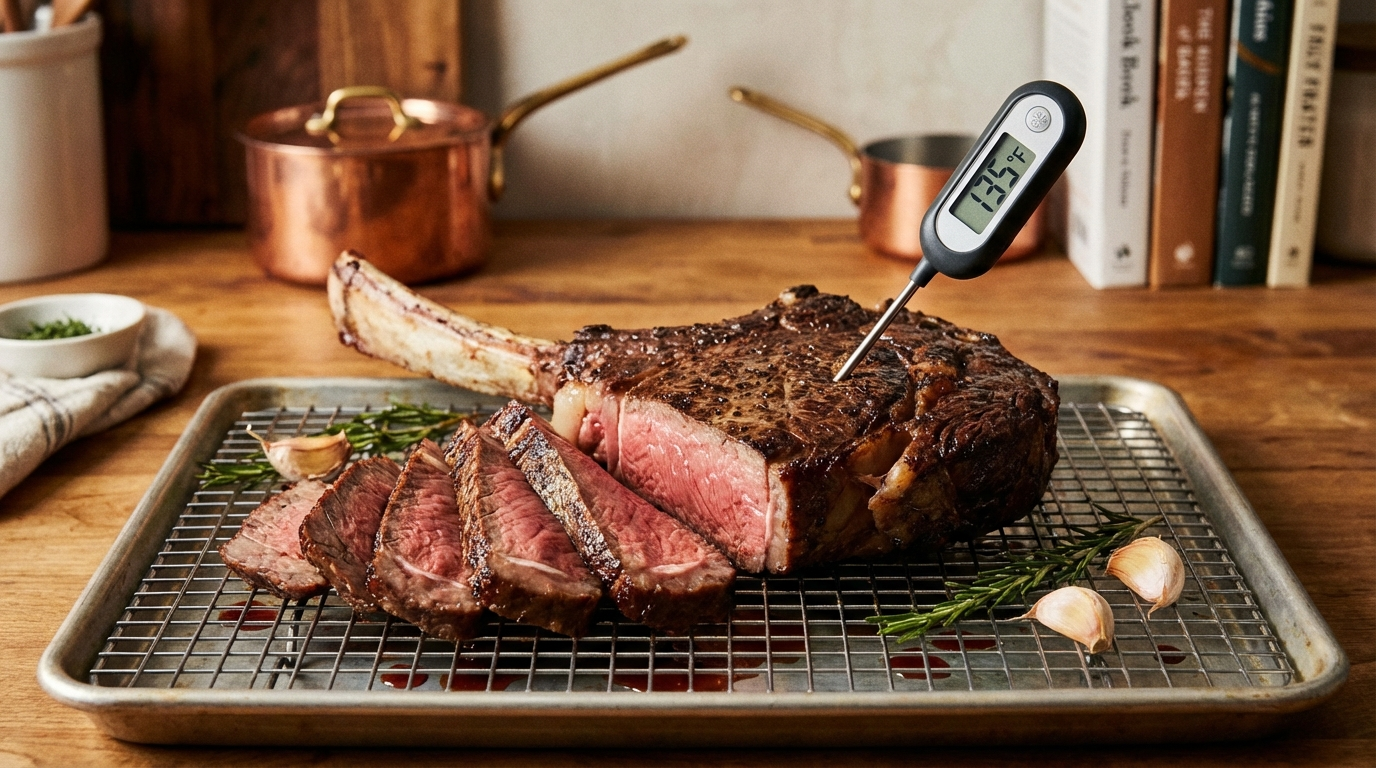
For a thick wagyu tomahawk, the reverse sear is my go-to method. It gives you the most control over doneness and produces an edge-to-edge even cook with a stunning crust. Here's the step-by-step:
Step 1: Low Oven
Preheat your oven to 250°F. Place the tomahawk on a wire rack set over a rimmed baking sheet. Insert a probe thermometer into the thickest part of the meat, away from the bone. Cook until the internal temperature reaches:
- Rare target: 105°F (will finish at 120-125°F after sear)
- Medium-rare target: 115°F (will finish at 130-135°F after sear)
- Medium target: 125°F (will finish at 140-145°F after sear)
This typically takes 45 to 75 minutes depending on the steak's thickness and starting temperature. Don't rush it — the low and slow approach is the entire point.
Step 2: Rest Briefly
Pull the steak from the oven and let it rest for 10 minutes while you heat your searing surface. The internal temperature will drop slightly, which actually helps — it gives you more thermal headroom during the sear.
Step 3: The Sear
Get a cast iron skillet or carbon steel pan screaming hot over the highest heat your stove can produce. Add a high-smoke-point oil (avocado oil works perfectly). When the oil just begins to smoke:
- Sear the first flat side for 60 to 90 seconds
- Flip and sear the other side for 60 to 90 seconds
- Use tongs to sear the edges, including the fat cap, for 30 seconds per edge
- In the final 30 seconds, add 2 tablespoons of butter, crushed garlic, and fresh thyme. Baste the steak continuously with the foaming butter.
Step 4: Final Rest
Rest the steak for 8 to 10 minutes on a cutting board. This is essential — cutting too early will lose a significant amount of rendered fat and juice. With wagyu especially, the intramuscular fat needs time to redistribute.
Cast Iron Sear Method
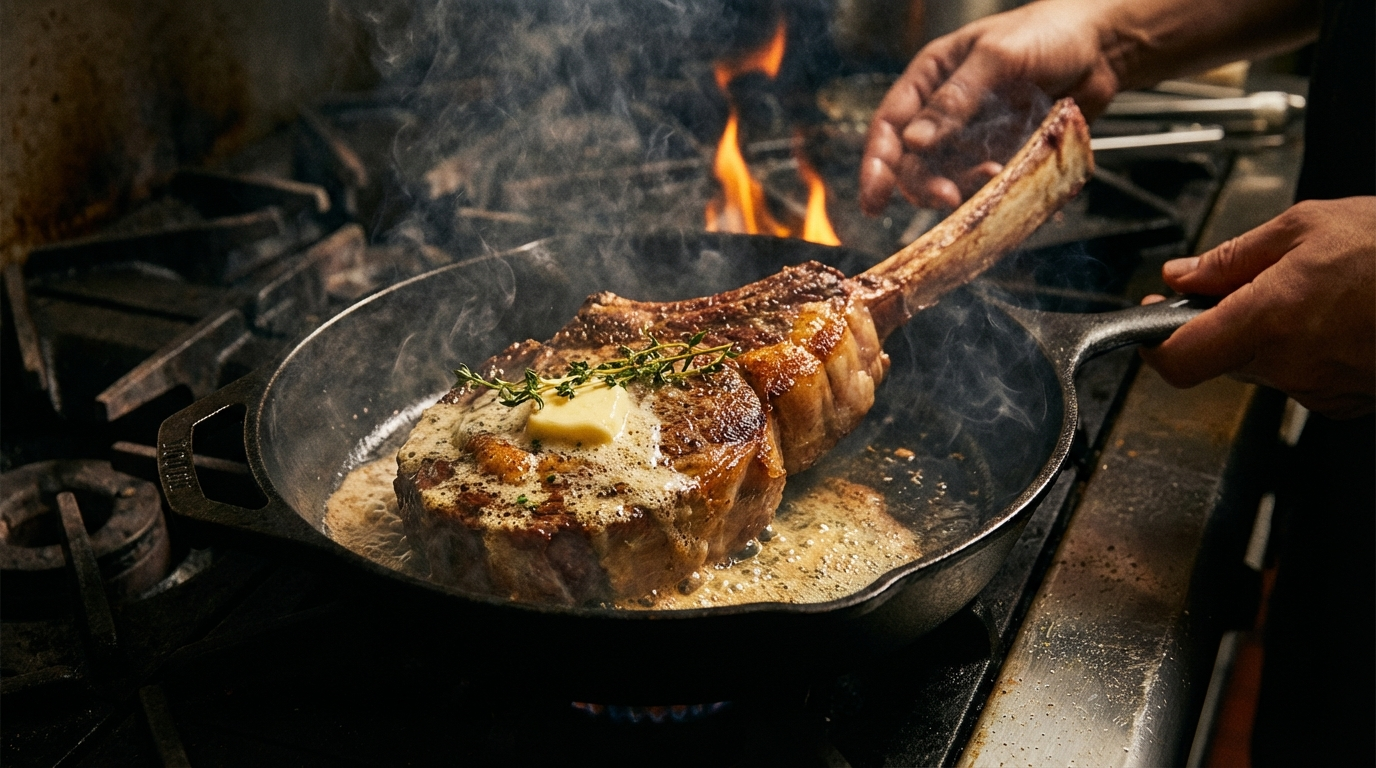
If you don't want to use the oven at all, you can cook a wagyu tomahawk entirely in a cast iron skillet — but it requires more attention and works best with thinner cuts (2 inches or less).
The method:
- Preheat a large cast iron skillet over medium-high heat for 5 minutes
- Add avocado oil and heat until shimmering
- Place the tomahawk in the pan — the bone will extend beyond the edge, which is fine
- Sear for 4 minutes on the first side without moving
- Flip and sear for 3 minutes
- Reduce heat to medium-low and continue cooking, flipping every 2 minutes, until the internal temperature reaches your target (130°F for medium-rare)
- Add butter, garlic, and herbs for a final baste in the last 2 minutes
Total cooking time with this method is typically 14 to 20 minutes depending on thickness. The main disadvantage versus the reverse sear is that you'll get a slightly wider "gray band" of well-done meat near the surface — the reverse sear produces a more uniformly pink interior.
Grilling a Wagyu Tomahawk
Grilling a wagyu tomahawk is absolutely possible, and the smoky char adds a flavor dimension you can't get indoors. The key is creating a two-zone fire:
- Set up indirect/direct zones: For charcoal, bank all coals to one side. For gas, light one side to high and leave the other off.
- Start indirect: Place the tomahawk on the cool side with the bone pointing toward the heat source (the bone acts as a heat shield for the thinner end of the meat). Close the lid and cook at 250-275°F until the internal temperature hits 110-115°F.
- Finish direct: Move the steak over the hot coals/burners and sear for 60-90 seconds per side. The wagyu fat will cause flare-ups — have a spray bottle of water ready to manage them, or briefly move the steak away from direct flame.
- Rest: 10 minutes on a cutting board.
A tip specific to wagyu on the grill: the higher fat content means more dripping and more flare-ups than standard beef. Keep the lid open during the direct sear phase so you can react quickly. Some grillers position the steak at an angle to let rendered fat drip away from the coals rather than onto them.
Slicing and Serving
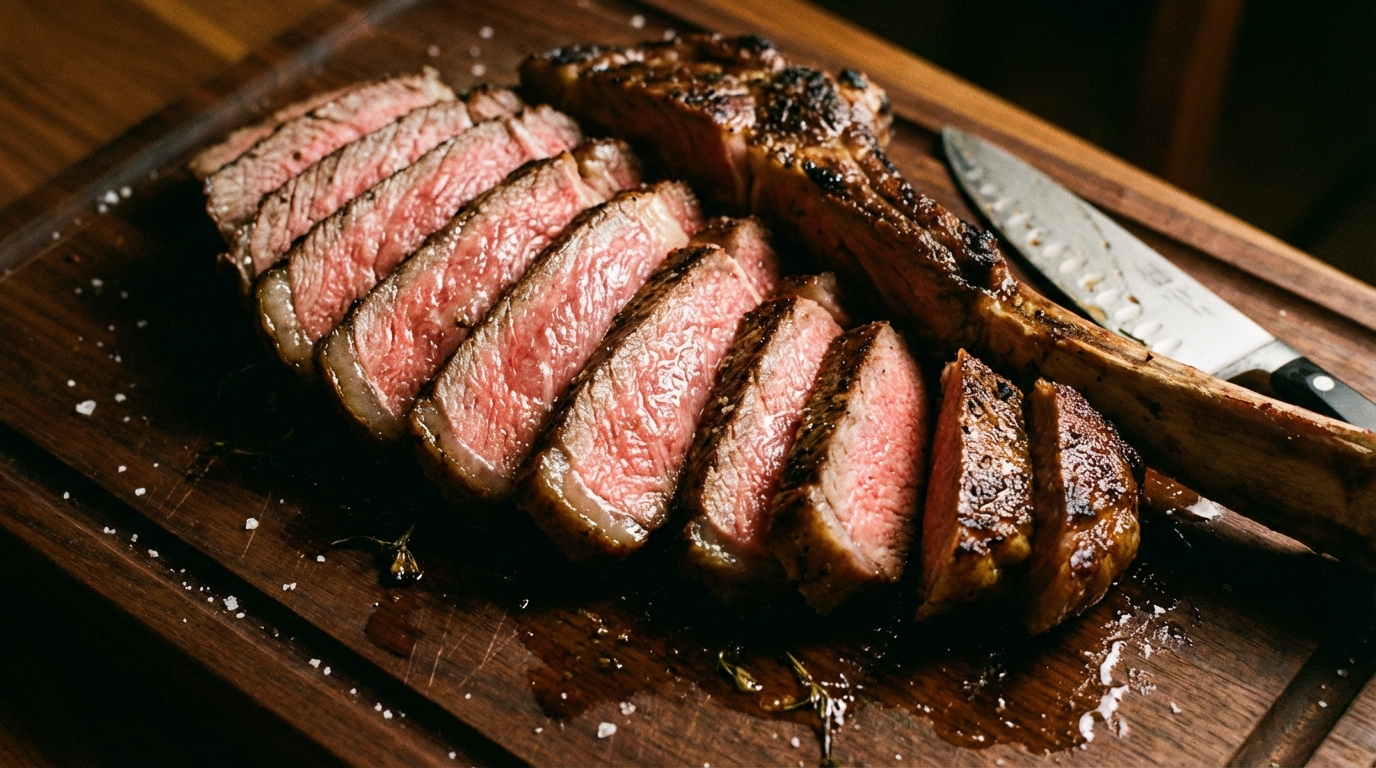
How you slice and present a wagyu tomahawk is part of the experience:
- Remove the bone: Run a sharp knife along the bone to separate it from the meat. Save the bone — it's excellent for stock.
- Identify the grain: The ribeye has multiple muscle sections that run in different directions. The main eye runs one way; the cap (spinalis) runs another.
- Slice against the grain: Cut each section into strips approximately half an inch thick, cutting perpendicular to the muscle fibers. This maximizes tenderness.
- Fan the slices: Arrange slices on a warm platter, fanned out with the bone placed alongside for presentation.
Finishing Touches
A wagyu tomahawk needs minimal finishing, but these additions complement without competing:
- Flaky finishing salt: Maldon or fleur de sel, applied right before serving
- Fresh herbs: A few sprigs of thyme or rosemary tucked alongside
- Compound butter (optional): A small medallion of herb butter melting over the slices — though with A5 wagyu, this is overkill given the existing fat content
- Acid contrast: A small side of chimichurri or a squeeze of lemon can cut through the richness, especially with higher-BMS wagyu
How Many People Does a Wagyu Tomahawk Serve?
This depends entirely on the wagyu grade:
- American wagyu (BMS 4-7): A 2.5-pound tomahawk serves 2-3 people comfortably, with 8-12 oz portions
- Australian wagyu (BMS 7-9): The same steak serves 3-4 people, as the richness means smaller portions satisfy
- Japanese A5 (BMS 10-12): Serves 4-6 people easily. Portions of 4-6 oz are standard for A5 — most people can't eat more than that in a sitting due to the extreme richness
I always tell first-time wagyu hosts to plan for smaller portions than they think necessary. You can always slice more, but you can't undo the regret of overserving extremely rich beef to guests who can't finish.
Where to Buy Wagyu Tomahawk Steaks
Wagyu tomahawks aren't something you'll typically find at a regular grocery store. Here are the most reliable sources:
- Online specialty retailers: Companies like The Meatery, Holy Grail Steak Co., and Crowd Cow regularly stock wagyu tomahawks in various grades. Online ordering gives you the widest selection and the ability to compare grades, weights, and prices.
- Local butcher shops: High-end butchers may carry American wagyu tomahawks or can special-order them. Call ahead — these aren't everyday inventory items.
- Japanese imports: For authentic A5 Japanese wagyu tomahawks, you'll need a specialty importer. These are typically available in limited quantities and sell out quickly.
When ordering online, look for sellers that specify the exact BMS score or marbling grade, provide photos of the actual product (not stock images), and ship with adequate dry ice for your climate zone.
Common Mistakes to Avoid
After cooking wagyu tomahawks for years, these are the most common errors I see:
- Cooking it straight from the fridge: A cold 2.5-inch steak will develop an overcooked exterior before the center reaches temperature. Always temper.
- Using too much oil: Wagyu renders its own fat as it cooks. You need far less cooking oil than with conventional beef — just enough to prevent sticking.
- Cutting too soon: The minimum rest time is 8 minutes. Ten is better. The fat redistribution in wagyu is even more critical than in conventional beef because there's simply more of it.
- Overcooking: Medium-rare (130-135°F final temperature) is the sweet spot for wagyu tomahawk. Beyond medium, the intramuscular fat renders out excessively and the texture becomes dry despite the marbling.
- Overseasoning: Complex spice rubs mask what you're paying a premium for. Salt, pepper, and maybe garlic butter are all you need.
- Ignoring carryover cooking: A thick tomahawk can rise 10-15°F after leaving heat. Always pull earlier than your target.
Wagyu Tomahawk FAQ
Frequently Asked Questions
How much does a wagyu tomahawk steak cost?
Prices vary significantly by grade. American wagyu tomahawks typically range from $80 to $150, Australian wagyu from $120 to $250, and Japanese A5 wagyu tomahawks from $200 to $500+. The bone adds weight but not edible meat, so factor that into your per-ounce cost calculation.
What is the best way to cook a wagyu tomahawk?
The reverse sear method is the most reliable approach. Start in a 250°F oven until the internal temperature reaches 115°F, rest briefly, then sear in a screaming hot cast iron skillet for 60-90 seconds per side. This produces even doneness edge-to-edge with a perfect crust.
How long does it take to cook a wagyu tomahawk steak?
Using the reverse sear method, expect 45-75 minutes in the oven at 250°F, plus 3-4 minutes for the sear. Total active and passive cooking time is roughly 60-90 minutes. The cast iron-only method takes 14-20 minutes but produces less even results.
What temperature should a wagyu tomahawk be cooked to?
Medium-rare (130-135°F final internal temperature) is the ideal doneness for wagyu tomahawk. Pull the steak at 115-120°F if searing afterward, as carryover cooking will raise the temperature 10-15°F. Going beyond medium causes excessive fat rendering and dryness.
Is a wagyu tomahawk worth the price?
For a special occasion or dinner party, absolutely. The combination of dramatic presentation (the frenched bone is a genuine showstopper) and the superior eating quality of wagyu marbling makes it one of the most memorable cuts you can serve. For everyday meals, a standard wagyu ribeye offers the same flavors at a lower per-ounce cost.
How many people does a wagyu tomahawk serve?
A 2.5-pound wagyu tomahawk serves 2-3 people with American wagyu (8-12 oz portions), 3-4 people with Australian wagyu, and 4-6 people with Japanese A5 grade. Higher marbling grades are richer, so smaller portions are more satisfying.
More Expert Guides
What Is Wagyu Beef? The Complete Guide to Grades, Origins & Quality
Discover wagyu beef origins, the difference between Japanese A5 and American wagyu, how BMS grading works, why marbling matters, proper cooking techniques, and what you should pay in 2026.
12 min readA5 Wagyu: Your Complete Buying & Authentication Guide (2026)
A5 wagyu represents the pinnacle of beef quality, but not all A5 is created equal. Learn how to authenticate real Japanese A5, decode BMS scores, find fair prices, and cook it perfectly at home.
14 min readA5 Wagyu Prefectures: Regional Guide to Japan's Best Beef
Discover the regional differences in Japanese A5 wagyu across 12 key prefectures. Learn which prefecture produces the flavor profile you'll love most.