Wagyu New York Strip: The Complete Guide to Buying, Cooking, and Enjoying
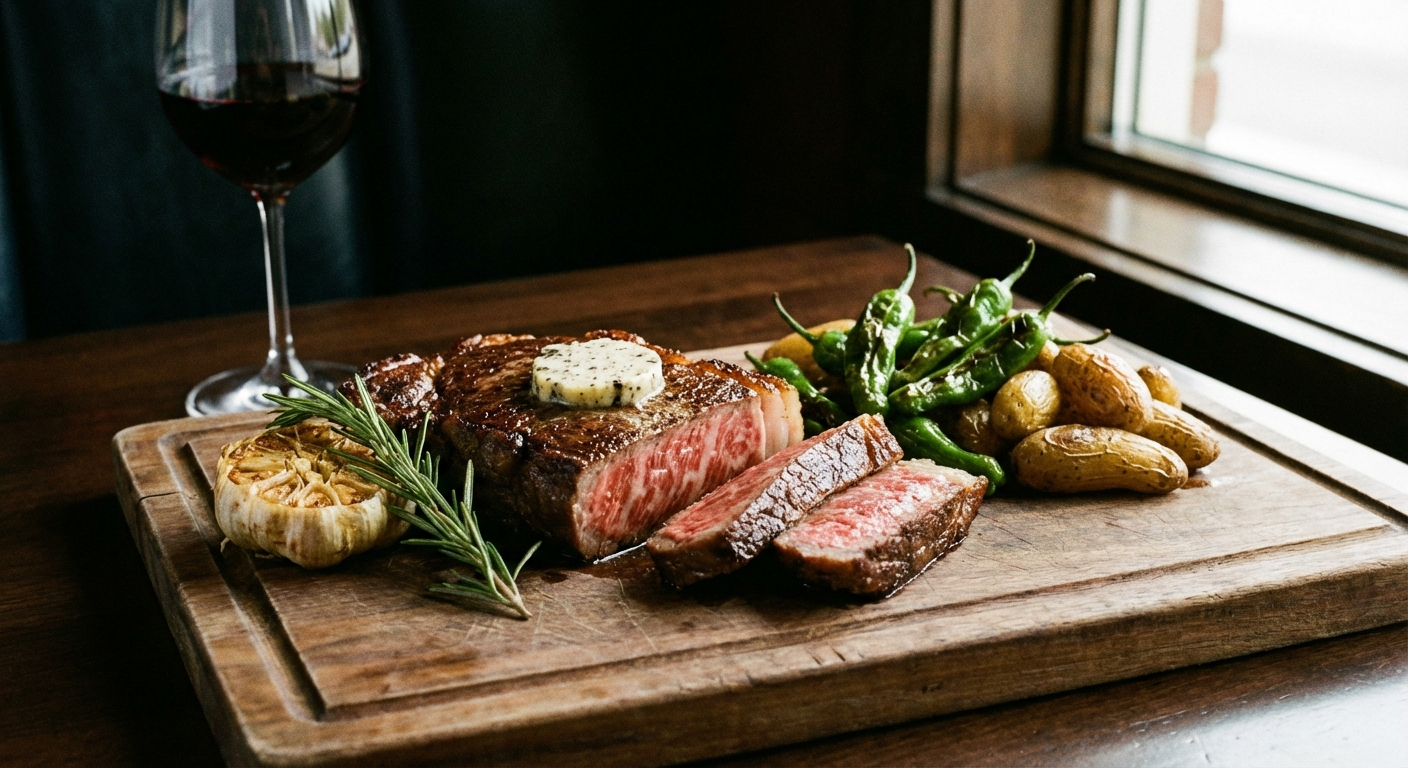
The New York strip sits in a sweet spot that makes it one of the most rewarding wagyu cuts you can buy. It has enough marbling to deliver that signature wagyu richness, but the muscle structure gives you something ribeye can't — a firm, clean bite with concentrated beef flavor that doesn't get lost under waves of fat.
Whether you're choosing between American wagyu and Japanese A5, figuring out the right cooking method, or just trying to understand why this cut costs what it does, this guide covers everything you need to make a smart buying decision and cook it perfectly.
What Makes Wagyu New York Strip Special
The New York strip comes from the short loin — the section of the animal just behind the ribs and ahead of the sirloin. Specifically, it's cut from the longissimus dorsi muscle, the same long muscle that forms the eye of the ribeye. But here's the key difference: in the strip loin section, this muscle does slightly more work than in the rib section, which creates a firmer texture and a more pronounced grain.
In conventional beef, this means strip steak is leaner and chewier than ribeye. In wagyu cattle, the genetic predisposition to deposit intramuscular fat transforms the strip into something remarkable — you get the structural integrity and beefy backbone of a strip steak, but with marbling levels that rival or exceed what you'd find in a USDA Prime ribeye.
A USDA Prime New York strip typically scores around BMS 3–4. American wagyu strip can reach BMS 6–9, and Japanese A5 wagyu strip hits BMS 10–12. At the higher end, the meat develops a web of white fat threading through every fiber that fundamentally changes how the steak cooks, tastes, and feels in your mouth.
The strip also has one feature the ribeye doesn't: a substantial fat cap running along one edge. In wagyu, this cap renders during cooking into a crispy, deeply flavored crust that adds textural contrast to the tender interior. Many steak lovers consider a properly rendered wagyu strip fat cap the single best bite on the plate.
Understanding Wagyu Strip Grades and What They Mean for Your Wallet
Wagyu grading can be confusing because multiple systems exist, and retailers don't always use them consistently. Here's what actually matters when you're buying a New York strip.
American Wagyu (BMS 4–9): Most American wagyu comes from crossbred cattle — typically a wagyu bull crossed with Angus cows. The result is a steak with significantly more marbling than USDA Prime but less than Japanese fullblood wagyu. This is the sweet spot for most home cooks. You get noticeable wagyu richness at a price point that won't make your credit card weep. Expect to pay $35–$70 per pound.
American Fullblood Wagyu (BMS 7–10+): These cattle are 100% wagyu genetics with no crossbreeding. The marbling approaches Japanese levels but at roughly half the price because production costs in the U.S. are lower. If you want near-A5 quality without the import premium, fullblood American wagyu strip is the smart buy. Expect $60–$120 per pound.
Japanese A5 Wagyu (BMS 10–12): The pinnacle. A5 strip from Japanese prefectures like Miyazaki, Kagoshima, or Hokkaido represents the most intensely marbled beef on earth. But here's the thing most people don't realize: A5 strip is not meant to be eaten like a regular steak. A 4–6 ounce portion is a full serving because the fat content is so extreme. Expect $100–$200+ per pound.
How to Cook Wagyu New York Strip Perfectly
The cooking method should match the grade. You wouldn't cook a $200 A5 strip the same way you'd cook an American wagyu crossbreed, and treating them identically is the most common mistake people make with wagyu.
American Wagyu Strip (BMS 4–9): Cast Iron Sear
This is the method that gives you the best crust-to-interior ratio, and it works beautifully with the strip's natural structure.
- Temper the steak. Pull it from the fridge 45–60 minutes before cooking. A cold center means the outside overcooks before the middle reaches temperature.
- Dry the surface. Pat aggressively with paper towels. Moisture is the enemy of a good sear. For an even better crust, salt the steak and leave it uncovered on a wire rack in the fridge for 4–24 hours before cooking (dry brine).
- Preheat the skillet. Cast iron over high heat for 5 full minutes. The pan should be smoking. Add a thin film of high-smoke-point oil (avocado or refined grapeseed).
- Sear the fat cap first. Hold the steak on its edge with tongs and render the fat cap for 60–90 seconds until golden and crispy. This prevents curling and creates an incredible flavor base in the pan.
- Sear the flat sides. Lay the steak down and don't move it for 3–4 minutes. Flip once. Cook another 3–4 minutes. For steaks over 1.5 inches thick, finish in a 400°F oven until internal temperature hits 128–130°F.
- Baste and rest. In the final minute, add 2 tablespoons of butter, crushed garlic, and fresh thyme. Spoon the foaming butter over the steak repeatedly. Remove and rest 5–8 minutes on a wire rack.
Target internal temperature: 130°F for medium-rare. Wagyu's intramuscular fat keeps it juicy even at medium (140°F), but going beyond that starts breaking down the marbling advantage you paid for.
Japanese A5 Wagyu Strip: Hot and Fast
A5 requires a completely different mindset. The fat content is so high that traditional steak-cooking methods produce an overwhelming, greasy result.
- Slice thin. Cut the strip against the grain into pieces roughly 1/3 inch thick and 2–3 inches wide.
- Use a screaming-hot surface. A carbon steel pan, flat-top griddle, or Japanese teppan works best. No oil — the fat renders immediately.
- Sear 20–30 seconds per side. You want a golden crust on the outside while the interior barely changes from raw. The residual fat does all the work.
- Serve immediately with a pinch of flaky sea salt. No sauce, no compound butter — the beef is the entire experience.
Wagyu New York Strip vs. Other Premium Cuts
Understanding how strip compares to other wagyu cuts helps you choose the right steak for the right occasion.
Strip vs. Ribeye: The wagyu ribeye has more total intramuscular fat, especially in the spinalis (cap) muscle. Strip has a firmer bite and more concentrated beef flavor. Choose strip when you want a steak that tastes like beef first and wagyu second. Choose ribeye when you want maximum richness and a butter-soft texture.
Strip vs. Filet Mignon: The wagyu filet is the most tender cut but has less flavor and marbling than strip. Strip delivers more steak experience — better crust, more chew, more taste. Filet is for people who prioritize tenderness above everything else.
Strip vs. Tomahawk: The wagyu tomahawk is essentially a bone-in ribeye with dramatic presentation. It's a showpiece. Strip is the workhorse — less theatrical but more consistent bite-to-bite.
Strip vs. Picanha: Wagyu picanha comes from the sirloin cap and has a thick fat cap similar to strip but with a different muscle structure. Picanha is better for rotisserie or skewer preparation, while strip is the superior pan-sear cut.
How to Buy Wagyu New York Strip
The biggest risk when buying wagyu strip isn't quality — it's misrepresentation. The word "wagyu" has no legal protection in the United States, which means retailers can use it loosely. Here's how to buy smart.
Look for specific grade claims. Reputable sellers like TheMeatery.com list the actual BMS score or grade equivalent. If a retailer just says "wagyu" without specifying American crossbred, fullblood, or Japanese, be skeptical.
Check the genetics. "Wagyu-influenced" or "wagyu-style" are marketing terms that can mean as little as 3% wagyu genetics. Look for "crossbred wagyu" (50%+ wagyu) or "fullblood wagyu" (100% wagyu) for meaningful marbling differences.
Verify the source for Japanese wagyu. Authentic Japanese A5 wagyu comes with a certificate of authenticity including the animal's nose print, origin prefecture, and processing date. If a retailer can't provide this documentation, the product may not be genuine Japanese wagyu.
Thickness matters. For American wagyu strip, 1.25–1.5 inches is the ideal thickness for achieving a proper sear while keeping the center medium-rare. Steaks cut thinner than 1 inch overcook easily. For A5, thinner is better — you'll be slicing it down regardless.
Storage and Handling
Wagyu's high fat content means it's more susceptible to oxidation than conventional beef. The fat can develop off-flavors if stored improperly.
Refrigerator storage: Keep vacuum-sealed wagyu strip at 28–32°F (the coldest part of your fridge, typically the back of the bottom shelf). Unopened vacuum-sealed packages stay fresh for 3–5 weeks from the pack date. Once opened, use within 3–4 days.
Freezer storage: Wagyu freezes well if done properly. Keep it vacuum-sealed and freeze at 0°F or below. Use within 6 months for optimal quality. Thaw in the refrigerator for 24–48 hours — never at room temperature or in warm water, which promotes uneven thawing and bacterial growth.
For more detailed storage techniques, see our complete guide on how to store wagyu beef.
Common Mistakes to Avoid
Even experienced home cooks make these errors with wagyu strip:
- Cooking from cold. Wagyu's intramuscular fat needs time to temper so it renders evenly during cooking. A cold steak produces a grey band of overcooked meat around a cold center.
- Adding oil to A5. Japanese A5 wagyu contains so much fat that adding cooking oil creates a grease bath. The steak renders its own cooking fat within seconds.
- Overcooking to medium-well or beyond. At these temperatures, wagyu's marbling renders out completely and drips away, leaving you with an expensive dry steak. Stay at medium-rare to medium.
- Serving A5 in full-steak portions. A 12-ounce A5 strip is not a one-person serving. The fat content makes 4–6 ounces genuinely filling. Serve A5 as a shared course, not a main.
- Skipping the rest. Wagyu strip needs 5–8 minutes of rest after cooking. The rendered intramuscular fat needs time to redistribute. Cutting too early means fat and juice flood the cutting board instead of staying in the meat.
- Heavy sauces and marinades. You bought wagyu for the beef flavor. A bold chimichurri or heavy steak sauce masks exactly what you paid a premium for. Keep accompaniments minimal — salt, pepper, maybe a light pan sauce from the drippings.
Frequently Asked Questions
Below are answers to the most common questions about wagyu New York strip steak, covering cost, cooking, grading, and how it compares to other premium cuts.
Frequently Asked Questions
How much does a wagyu New York strip steak cost?
American wagyu New York strip typically costs $35–$70 per pound depending on grade and source. A 12-ounce steak runs roughly $26–$52. Japanese A5 wagyu New York strip ranges from $100–$200+ per pound, making a single portion $75–$150. Buying from specialty butchers like TheMeatery.com generally offers better value than restaurant markup, where wagyu strip steaks can easily exceed $150 per serving.
What is the best way to cook wagyu New York strip?
Pan-searing in a preheated cast iron skillet is the best method for wagyu New York strip. For American wagyu (BMS 4–9), sear 3–4 minutes per side over high heat, then rest 5 minutes. Target 130°F internal for medium-rare. For Japanese A5 wagyu strip, slice into thin portions and sear briefly — 30–45 seconds per side — since the extreme fat content makes thick cuts overwhelming.
Is wagyu New York strip better than wagyu ribeye?
It depends on your preference. Wagyu New York strip has a firmer texture and cleaner beef flavor with a defined fat cap rather than heavy interior marbling. Wagyu ribeye is richer and more buttery due to higher intramuscular fat and the spinalis cap. Strip is the better choice if you want bold steak flavor with balanced richness. Ribeye is better if you want maximum melt-in-your-mouth fat.
What grade of wagyu New York strip should I buy?
For everyday premium steak dinners, American wagyu in the BMS 6–8 range offers the ideal balance of marbling and beefy flavor. BMS 4–5 (similar to USDA Prime+) is great for grilling. Japanese A5 (BMS 10–12) is a special occasion cut best enjoyed in small portions. For most home cooks, American wagyu BMS 6–8 delivers the best combination of quality and value.
Should I trim the fat cap on a wagyu New York strip?
Do not remove the fat cap entirely — it bastes the steak during cooking and adds flavor. If the cap is thicker than half an inch, trim it to about a quarter inch. Score the fat cap in a crosshatch pattern before cooking to prevent curling and help it render evenly. The rendered fat cap on wagyu strip is crispy, flavorful, and one of the best parts of the steak.
More Expert Guides
What Is Wagyu Beef? The Complete Guide to Grades, Origins & Quality
Discover wagyu beef origins, the difference between Japanese A5 and American wagyu, how BMS grading works, why marbling matters, proper cooking techniques, and what you should pay in 2026.
12 min readA5 Wagyu: Your Complete Buying & Authentication Guide (2026)
A5 wagyu represents the pinnacle of beef quality, but not all A5 is created equal. Learn how to authenticate real Japanese A5, decode BMS scores, find fair prices, and cook it perfectly at home.
14 min readA5 Wagyu Prefectures: Regional Guide to Japan's Best Beef
Discover the regional differences in Japanese A5 wagyu across 12 key prefectures. Learn which prefecture produces the flavor profile you'll love most.