Miyazaki Wagyu: The Complete Guide to Japan's Most Awarded Beef
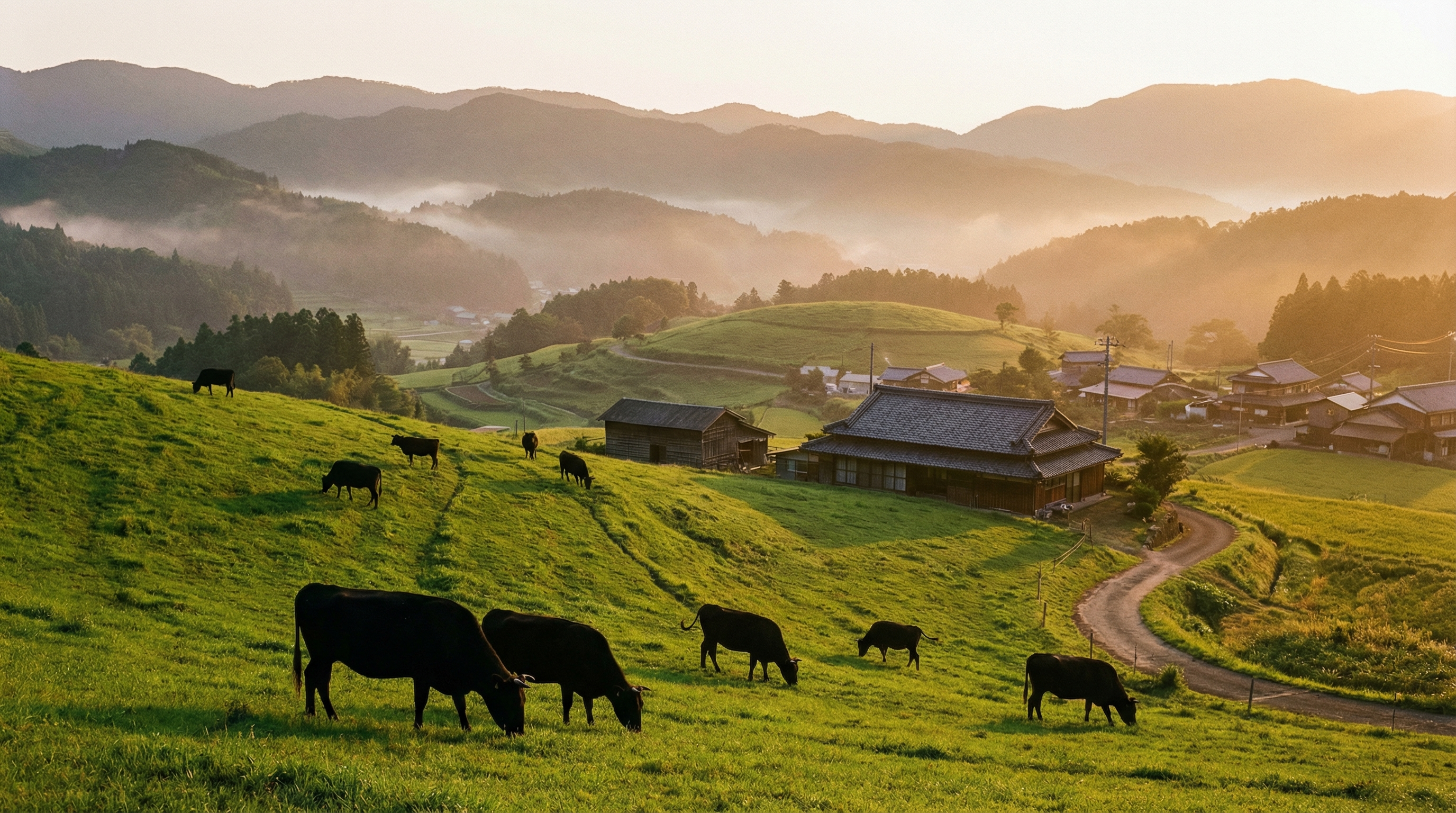
If you follow Japanese Wagyu with any seriousness, one prefecture keeps appearing at the top of every competition, every ranking, every expert recommendation: Miyazaki. Located on the southeastern coast of Kyushu island, this subtropical prefecture has quietly built a reputation for producing Wagyu that rivals — and often surpasses — the famous names like Kobe, Matsusaka, and Omi.
What most Western buyers don't realize is that Miyazaki's dominance isn't accidental. It's the result of decades of meticulous breeding programs, volcanic soil that produces exceptional feed crops, and a climate uniquely suited to stress-free cattle rearing. After evaluating Japanese Wagyu from every major producing region, I can say that Miyazaki consistently delivers the most reliable quality at the A5 level.
What Makes Miyazaki Wagyu Different
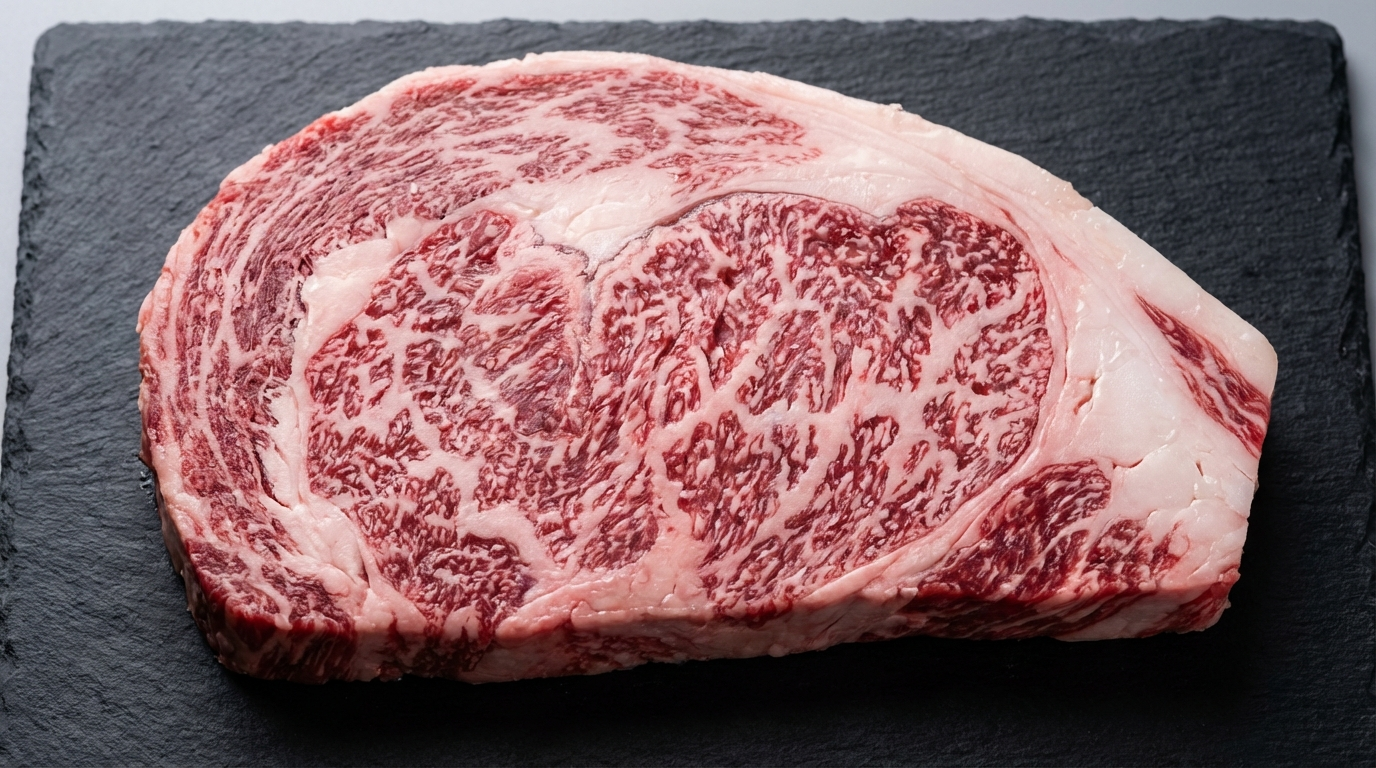
Miyazaki wagyu refers specifically to Japanese Black (Kuroge Washu) cattle raised in Miyazaki Prefecture on the island of Kyushu. While all Japanese Wagyu shares the same breed genetics, what separates Miyazaki from other prefectures comes down to three factors: breeding lineage, environment, and feeding protocols.
Breeding Lineage: The Bloodline Advantage
Miyazaki's breeding program centers on a small number of elite sire bulls whose genetics have been proven to produce exceptional marbling. The prefecture maintains some of the strictest breeding standards in Japan, with AI (artificial insemination) programs that track genetic performance across generations. Key sire lines like Yasufuku, Kitaguni, and Itoshigenami have produced offspring that consistently score BMS 10 and above.
What's particularly notable is that many of the bulls used in other famous Wagyu regions — including Kobe and Matsusaka — trace their genetics back to Miyazaki breeding stock. The prefecture is, in many ways, the genetic engine room of Japan's entire Wagyu industry.
Climate and Geography
Miyazaki's subtropical climate, with warm temperatures and high humidity year-round, reduces cold-weather stress that can affect fat deposition in cattle. The prefecture sits along the Pacific coast of Kyushu, where volcanic ash from nearby Mount Kirishima has enriched the soil for millennia. This mineral-rich soil produces higher-quality rice straw and feed crops — both critical components of the Wagyu feeding regimen.
The rolling terrain also provides natural exercise for cattle during their early grazing period, which develops muscle structure before the intensive feeding phase begins. This combination of natural exercise followed by carefully managed feeding creates the dense, evenly distributed marbling that Miyazaki is known for.
Feeding Protocols
Miyazaki cattle are typically raised for 28–32 months, with the final 16–20 months spent on a high-energy diet of grain, rice straw, and proprietary feed blends. Many Miyazaki producers supplement with locally grown corn, barley, and wheat bran. The extended feeding period — longer than many other prefectures — allows intramuscular fat to develop gradually and distribute more uniformly throughout the muscle fibers.
The Wagyu Olympics: Miyazaki's Three-Peat
Japan holds a national Wagyu competition every five years called the Zenkoku Wagyu Noryoku Kyoshinkai (全国和牛能力共進会), commonly known as the "Wagyu Olympics." This event is the most prestigious competition in the Japanese beef industry, drawing entries from every Wagyu-producing prefecture in the country.
Miyazaki has won the Prime Minister's Award — the competition's highest honor — at three consecutive events: 2007, 2012, and 2017. No other prefecture has achieved this triple crown. In the 2022 competition held in Kagoshima, Miyazaki again placed at the top tier, cementing its position as Japan's dominant Wagyu producer.
The competition evaluates cattle on carcass quality, marbling score, fat quality, meat color, and overall conformation. Miyazaki's consistent wins across multiple judging criteria — not just marbling — demonstrate that the prefecture's advantage extends beyond a single metric.
How Miyazaki Wagyu Is Graded
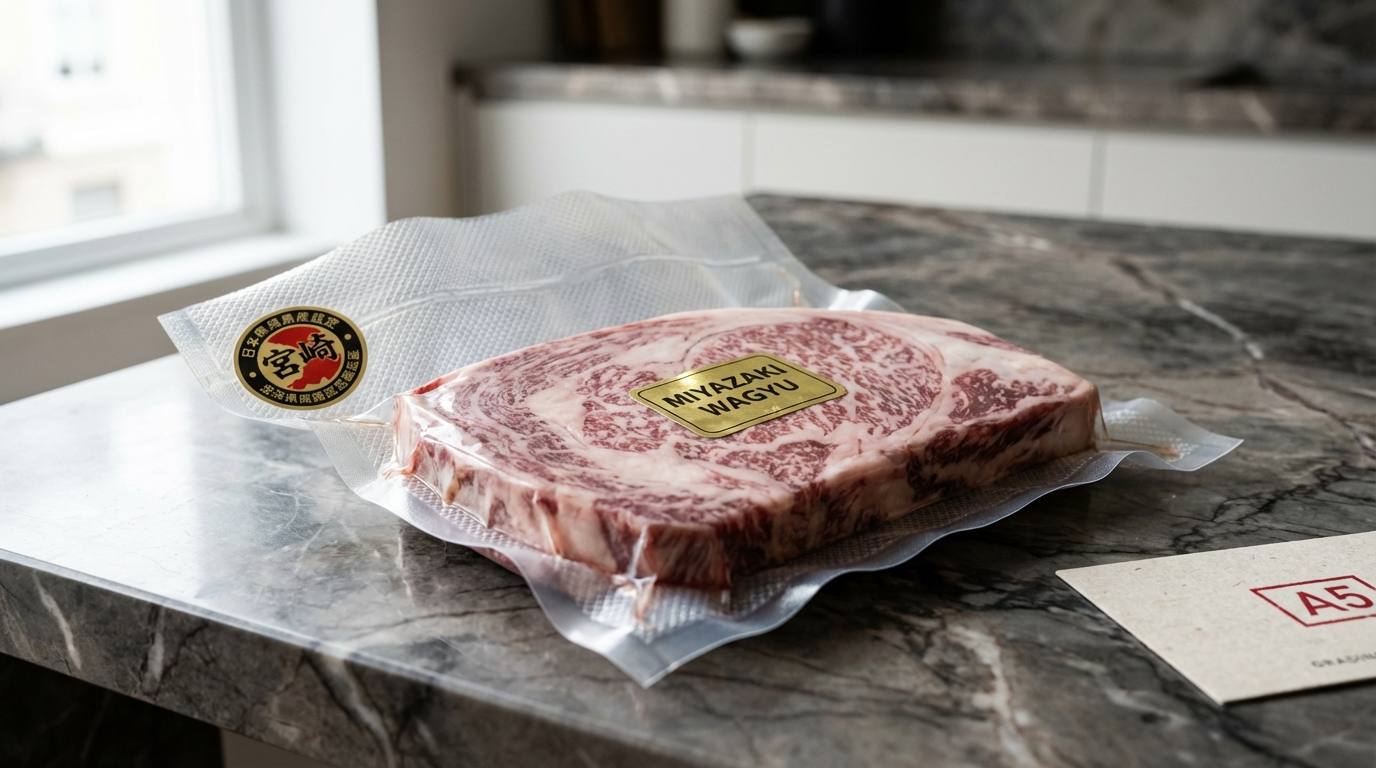
Like all Japanese Wagyu, Miyazaki beef is graded by the Japan Meat Grading Association (JMGA) using the standard yield grade (A/B/C) and quality grade (1–5) system. A5 is the highest possible grade, with BMS (Beef Marbling Standard) scores of 8–12 within the A5 designation.
What sets Miyazaki apart in grading is the distribution of scores. While many prefectures produce some A5 beef, Miyazaki has an unusually high percentage of cattle that achieve A5 with BMS scores of 10, 11, and 12. These upper-tier BMS scores represent marbling so dense and uniform that the meat appears almost pink-white rather than red.
Miyazaki Beef Brand Standards
To qualify for the official "Miyazaki Beef" (宮崎牛) brand designation, cattle must meet strict criteria beyond the JMGA grade:
- Must be Japanese Black breed born and raised entirely in Miyazaki Prefecture
- Must achieve a quality grade of 4 or 5 (BMS 5 or higher)
- Must be processed at approved facilities within the prefecture
- Must carry full traceability documentation from birth to processing
Beef that meets these standards carries the official Miyazaki Beef brand mark — a distinctive logo that includes the prefecture's symbol. This brand certification is separate from, and in addition to, the JMGA grade. Not all A5 Wagyu from Miyazaki qualifies as "Miyazaki Beef" — the cattle must meet the additional origin and lineage requirements.
Miyazaki vs Kobe vs Matsusaka: How They Compare
The comparison between Japan's top Wagyu brands is one of the most common questions I encounter. Here's an honest assessment based on direct evaluation:
Miyazaki vs Kobe: Kobe beef comes from Tajima cattle raised in Hyogo Prefecture and carries enormous international name recognition. In terms of raw marbling scores, Miyazaki routinely matches or exceeds Kobe. The flavor profiles differ subtly — Kobe tends toward a slightly sweeter, butterier note while Miyazaki often delivers a deeper umami character. Miyazaki also offers better value since Kobe commands a significant brand premium.
Miyazaki vs Matsusaka: Matsusaka beef, raised in Mie Prefecture, is often considered the most exclusive Japanese Wagyu due to extremely limited production (only virgin female cattle qualify). Matsusaka's fat has a notably low melting point, creating an almost dissolving-on-contact texture. Miyazaki offers comparable quality at significantly higher production volume, making it more accessible internationally.
Miyazaki vs Omi: Omi beef from Shiga Prefecture is Japan's oldest recognized Wagyu brand, with over 400 years of history. Omi tends to have a slightly firmer texture and more pronounced beef flavor compared to Miyazaki's melt-in-your-mouth richness. Both are excellent; the choice comes down to personal preference for texture and intensity.
How to Cook Miyazaki Wagyu
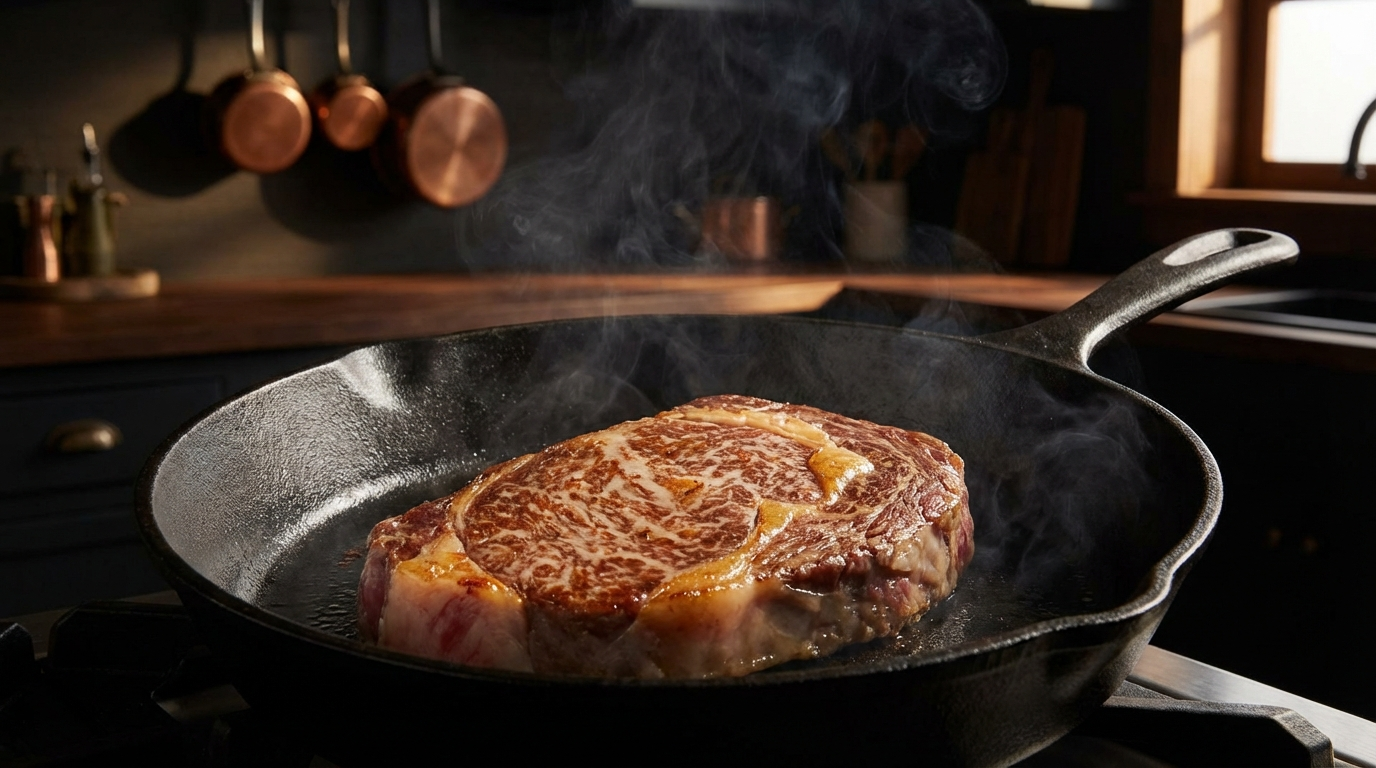
Cooking Miyazaki A5 Wagyu requires a fundamentally different approach than cooking conventional steak. The extreme fat content (often 40–50% intramuscular fat at BMS 10+) means traditional steak-cooking methods will produce greasy, overwhelming results.
Temperature and Portion Size
Serve Miyazaki A5 in small portions — 3 to 4 ounces per person is ideal. The richness means a little goes a long way. Bring the meat to room temperature (about 30 minutes out of the refrigerator) before cooking. Cold fat doesn't render properly and creates an unpleasant waxy texture.
The Sear Method
For steaks cut 1 inch thick or more, a screaming-hot cast iron pan with no added oil is the best approach. The beef's own fat provides more than enough lubrication. Sear for 60–90 seconds per side to develop a golden crust while keeping the interior rare to medium-rare. Internal temperature should be 120–130°F (49–54°C).
Season minimally — high-quality sea salt and perhaps a touch of freshly cracked black pepper. Anything more competes with the beef's natural sweetness and umami. After searing, rest the meat for 3–4 minutes on a warm plate.
Yakiniku Style
For thinner cuts (¼ inch or less), yakiniku-style grilling over high heat is traditional and effective. Slice the beef thin, sear each piece for just 15–20 seconds per side, and eat immediately. This is how most Japanese restaurants serve premium Miyazaki Wagyu, and for good reason — the thin cut allows you to experience the marbling's full effect without the richness becoming overwhelming.
Shabu-Shabu and Sukiyaki
Miyazaki Wagyu is exceptional in hot-pot preparations. For shabu-shabu, slice the beef paper-thin and swish it briefly in simmering kombu dashi. The thin slices cook in seconds and the broth picks up incredible depth of flavor from the rendered fat. For sukiyaki, the sweetened soy broth balances the beef's richness beautifully — this is one of the most popular preparations in Miyazaki itself.
Where to Buy Authentic Miyazaki Wagyu
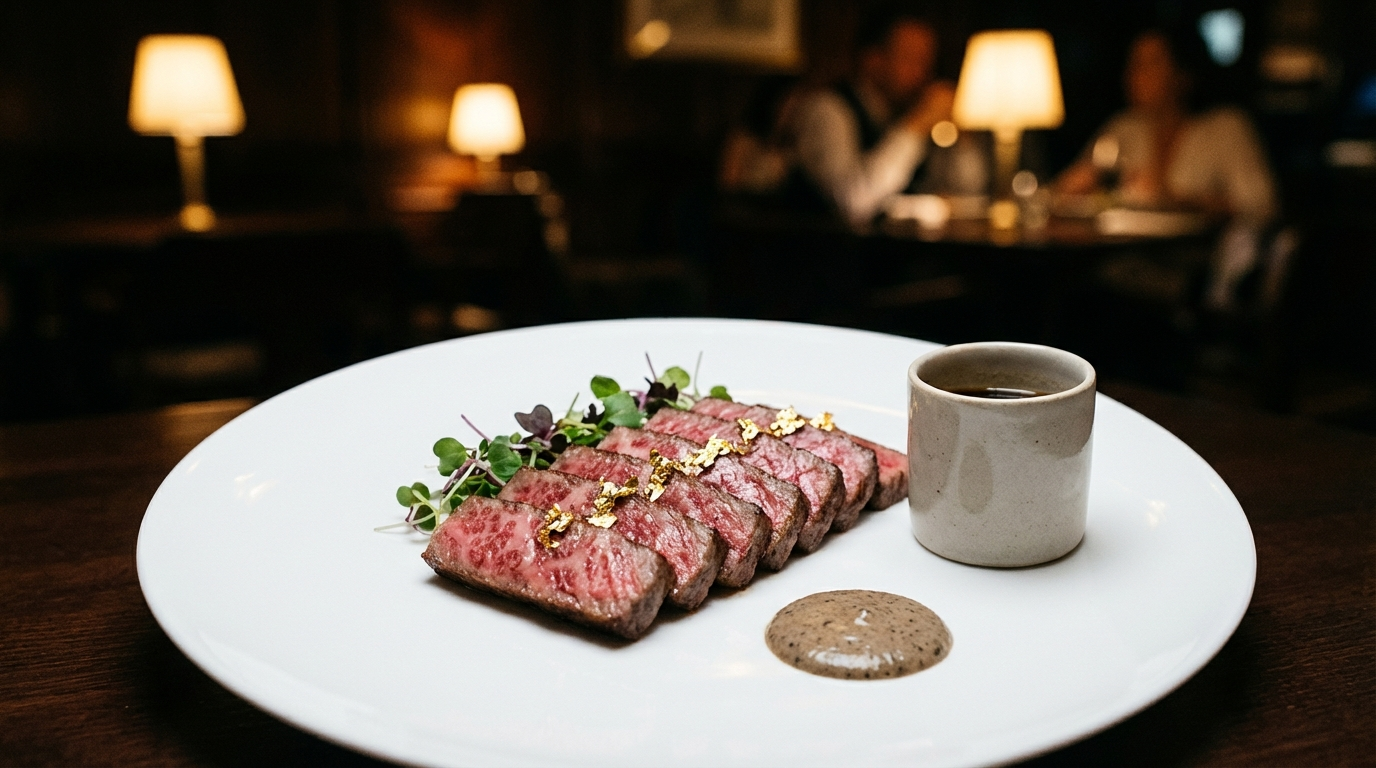
Miyazaki Wagyu is more accessible internationally than Kobe or Matsusaka, partly because Miyazaki produces significantly more A5-grade beef than either of those prefectures. However, authenticity remains a critical concern.
Verification Checklist
When purchasing Miyazaki Wagyu, verify:
- 10-digit traceability number: Every cut of Japanese Wagyu carries a unique ID traceable to the individual animal through Japan's National Livestock Breeding Center database
- JMGA grade certificate: Should specify the yield grade, quality grade, and individual BMS score
- Miyazaki Beef brand mark: The official prefecture certification logo
- Nose print or ear tag number: Some premium retailers provide the animal's original identification
If a retailer can't provide the traceability number, treat the product with skepticism. The traceability system is Japan's most powerful tool against fraud, and legitimate sellers always include it.
Online Retailers
Several reputable importers now offer Miyazaki Wagyu with full certification documentation. Look for retailers who ship frozen (not fresh) with dry ice, provide the JMGA grade certificate, and clearly state the BMS score for each cut. Expect to pay $120–$200 per pound for A5 Miyazaki ribeye or striploin, with prices varying by BMS score and specific cut.
What to Look For in the Meat
Authentic Miyazaki A5 should have:
- Color: Bright cherry-red to pinkish-red meat with pure white fat (yellowing fat indicates age or poor storage)
- Marbling pattern: Fine, feathery fat lines distributed uniformly — not concentrated in patches or along seams
- Texture: When touched, the fat should feel soft and slightly tacky at room temperature, with a melting point near body temperature
- Aroma: Clean, slightly sweet, with no off-odors or metallic notes
Frequently Asked Questions
Is Miyazaki wagyu better than Kobe beef?
Miyazaki wagyu has won Japan's national Wagyu Olympics (Prime Minister's Award) three consecutive times, a feat Kobe has never achieved. In terms of marbling scores, Miyazaki routinely matches or exceeds Kobe. However, "better" is subjective — Kobe tends toward a sweeter, butterier profile while Miyazaki delivers deeper umami. Miyazaki offers better value since Kobe carries a significant brand premium.
How much does Miyazaki wagyu cost?
Expect to pay $120–$200 per pound for A5 Miyazaki ribeye or striploin from certified importers in the US. Prices vary based on BMS score (higher BMS costs more), specific cut, and retailer. Miyazaki is generally 15–30% less expensive than equivalent Kobe grades due to higher production volume.
How do I verify my Miyazaki wagyu is authentic?
Check for three things: a 10-digit traceability number (verifiable through Japan's National Livestock Breeding Center), a JMGA grade certificate showing the yield and quality grade, and the official Miyazaki Beef brand mark. If a seller can't provide the traceability number, the product may not be genuine.
What BMS score does Miyazaki wagyu typically achieve?
Miyazaki has an unusually high percentage of cattle scoring BMS 10–12, the highest tier within the A5 grade. While all A5 wagyu scores BMS 8 or above, Miyazaki's breeding programs and extended feeding periods (28–32 months) consistently push marbling into the upper BMS range.
How should I cook Miyazaki A5 wagyu?
Serve in small portions (3–4 oz per person) due to extreme richness. For steaks, sear on a screaming-hot cast iron pan with no added oil for 60–90 seconds per side, targeting 120–130°F internal temperature. For thinner cuts, yakiniku-style grilling (15–20 seconds per side) is ideal. Season with just salt — the beef's natural flavor needs no enhancement.
More Expert Guides
What Is Wagyu Beef? The Complete Guide to Grades, Origins & Quality
Discover wagyu beef origins, the difference between Japanese A5 and American wagyu, how BMS grading works, why marbling matters, proper cooking techniques, and what you should pay in 2026.
12 min readA5 Wagyu: Your Complete Buying & Authentication Guide (2026)
A5 wagyu represents the pinnacle of beef quality, but not all A5 is created equal. Learn how to authenticate real Japanese A5, decode BMS scores, find fair prices, and cook it perfectly at home.
14 min readA5 Wagyu Prefectures: Regional Guide to Japan's Best Beef
Discover the regional differences in Japanese A5 wagyu across 12 key prefectures. Learn which prefecture produces the flavor profile you'll love most.