How to Store Wagyu Beef: Refrigeration, Freezing & Thawing Done Right
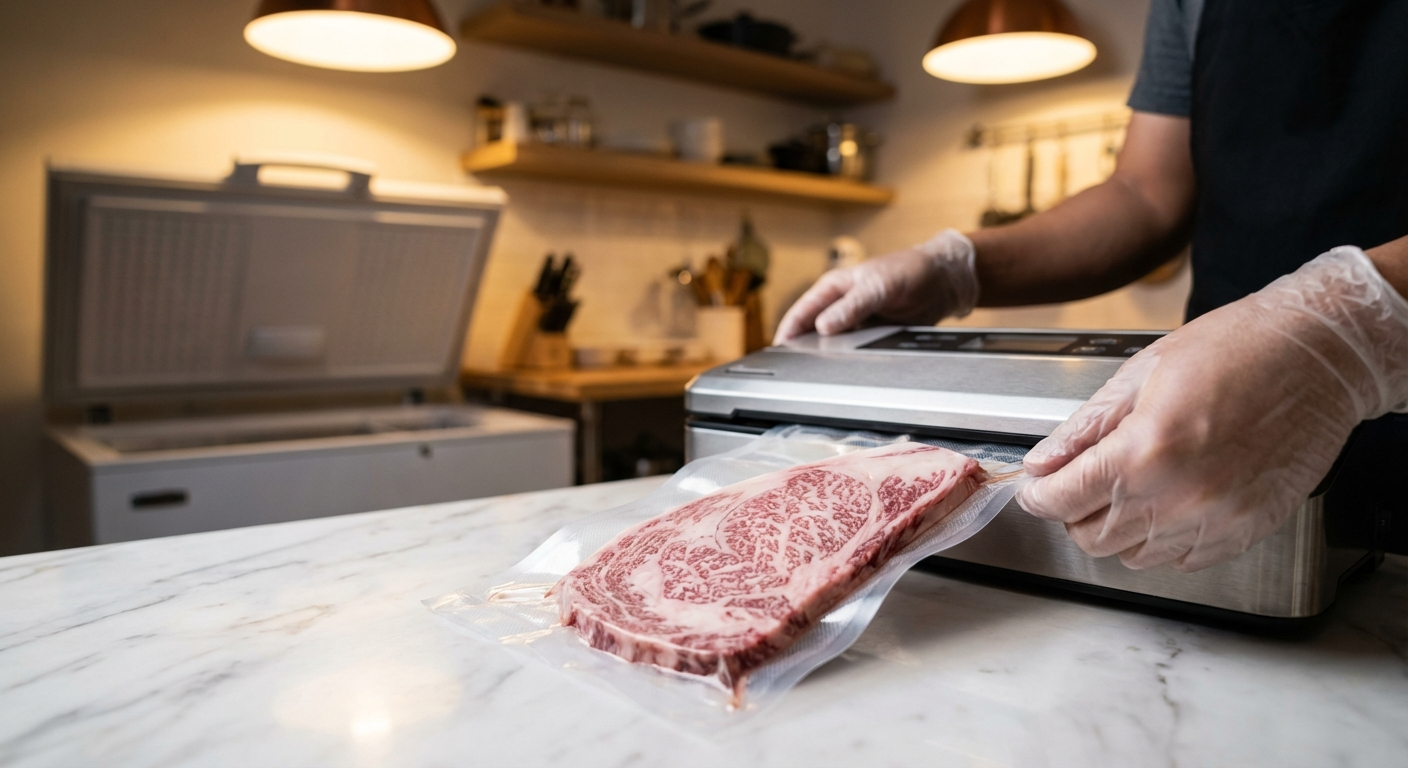
You spent serious money on wagyu beef. The marbling is extraordinary, the sourcing is impeccable, and the potential for a life-changing meal is sitting in your hands. Now comes the part most people get wrong: storage.
Wagyu's dense intramuscular fat — the very thing that makes it special — also makes it more vulnerable to oxidation, freezer burn, and flavor degradation than conventional beef. The marbling that creates that buttery mouthfeel is distributed in microscopic channels throughout the muscle, and improper storage can damage those fat networks before you ever fire up a pan.
This guide covers every storage scenario: short-term refrigeration, long-term freezing, vacuum sealing techniques, and the thawing methods that actually preserve quality. Whether you bought a single A5 strip steak or a bulk order of Australian wagyu, these methods will ensure every piece tastes the way it should.
Why Wagyu Requires Different Storage Than Regular Beef
Standard USDA Choice beef has roughly 6-8% intramuscular fat. A5 Japanese wagyu can exceed 25%. That difference is not just a number on a label — it fundamentally changes how the meat behaves during storage.
Higher fat content means more surface area for oxidation. When fat molecules interact with oxygen, they produce aldehydes and ketones — compounds that create off-flavors ranging from stale to rancid. Wagyu's extensive marbling network provides exponentially more oxidation sites than a lean cut of conventional beef.
Fat also absorbs odors more readily than protein. Leave wagyu unwrapped next to onions in your refrigerator for a day, and those aromatics will migrate directly into the marbling. This is not a minor concern — it is a fundamental property of lipid chemistry that applies to every grade of wagyu.
Three factors drive wagyu degradation during storage:
- Oxidation — fat reacts with oxygen, producing off-flavors and discoloration
- Moisture loss — dehydration concentrates surface salt and changes texture
- Temperature fluctuation — repeated warming and cooling damages fat crystal structure
Understanding these mechanisms is not academic — it directly informs every storage decision you will make.
Refrigerator Storage: The 3-Day Window
Fresh wagyu in the refrigerator has a narrower safe window than most people assume. While conventional beef can sit in a home refrigerator for 3-5 days, wagyu's higher fat content accelerates surface oxidation. The practical limit for optimal quality is 3 days from purchase.
Your refrigerator should maintain 34-38°F (1-3°C). Most home units run warmer than their dial suggests — use an independent thermometer to verify. The meat drawer is typically the coldest, most stable zone, and that is where wagyu belongs.
If It Arrived Vacuum Sealed
Leave it sealed. Vacuum packaging eliminates oxygen contact and is the single best short-term storage method. The purge liquid (myoglobin-tinted moisture that pools in the bag) is normal and is not blood. Do not open the package until you are ready to cook.
Vacuum-sealed wagyu can safely hold in the refrigerator for 5-7 days from the pack date — check the label. If no date is visible, use the 3-day rule from when you received it.
If It Is Unwrapped or Butcher-Paper Wrapped
Rewrap immediately. Here is the method:
- Pat the surface dry with paper towels — moisture accelerates bacterial growth
- Wrap tightly in plastic wrap, pressing out all air pockets
- Add a second layer of aluminum foil or place in a zip-top bag
- Set it on a plate to catch any drips and place in the coldest part of the fridge
This double-wrap method buys you the full 3-day window. Single-layer butcher paper alone allows too much air exchange for wagyu's fat content.
Vacuum Sealing: The Non-Negotiable Step for Freezing
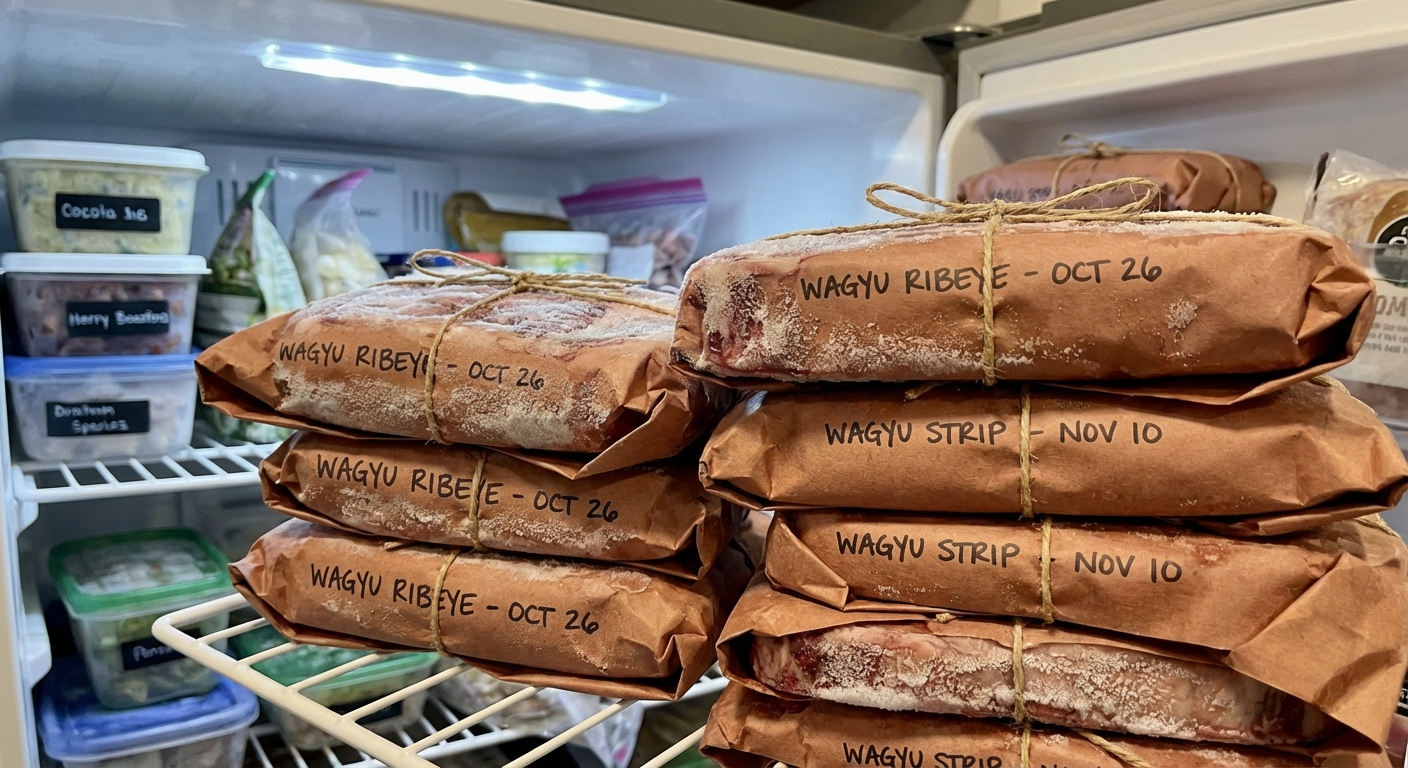
If you are freezing wagyu, vacuum sealing is not optional — it is the difference between preserving your investment and slowly destroying it. Standard freezer bags trap air against the meat surface, and that air causes freezer burn within weeks.
Freezer burn is not just cosmetic. It is localized dehydration that permanently alters the texture of wagyu's delicate fat network. Once those marbling channels dehydrate, no amount of thawing will restore them. The damage is irreversible.
How to Vacuum Seal Wagyu Properly
- Portion before sealing — freeze individual steaks or meal-sized portions. You do not want to thaw a 5-pound block to cut one steak.
- Pat completely dry — surface moisture creates ice crystals inside the bag that can puncture the seal over time.
- Use quality bags — multi-layer, BPA-free vacuum bags rated for freezer use. Thin, single-layer bags develop micro-perforations at freezer temperatures.
- Leave 3 inches of bag above the meat — this ensures a clean, wrinkle-free seal.
- Double seal — run the sealer twice, creating two parallel seal lines. If one fails, the second holds.
- Label with cut, weight, and date — freezer amnesia is real. You will forget what that mystery package is within a month.
No Vacuum Sealer? Use the Water Displacement Method
Place the wagyu in a zip-top freezer bag. Seal all but one corner. Slowly lower the bag into a bowl of cold water — the water pressure pushes air out through the open corner. Seal the corner just before the water line reaches it. This method removes roughly 90% of the air and is a legitimate alternative when a vacuum sealer is not available.
Follow this with a tight wrap of aluminum foil for an additional moisture barrier.
Freezing Wagyu: Temperature, Timing and Quality
The freezer is wagyu's best friend for long-term storage — but only if you do it correctly. Proper freezing preserves marbling integrity for months. Improper freezing creates ice crystals that rupture fat cells and destroy the texture you are paying premium prices for.
Flash Freeze When Possible
The faster meat freezes, the smaller the ice crystals that form. Small crystals cause minimal cellular damage. Large crystals — which form during slow freezing — puncture cell walls and release moisture when thawed, resulting in a drier, less tender steak.
To flash freeze at home:
- Set your freezer to its coldest setting (0°F / -18°C or lower) at least 2 hours before freezing
- Place vacuum-sealed portions in a single layer directly on the freezer floor or a metal baking sheet — metal conducts cold faster than wire racks
- Do not stack packages until fully frozen (at least 24 hours)
- Avoid opening the freezer door during the initial freeze period
How Long Can You Freeze Wagyu?
Vacuum-sealed wagyu maintains optimal quality for these durations:
- Steaks (ribeye, strip, filet) — up to 6 months at 0°F
- Ground wagyu — up to 4 months (higher surface area accelerates oxidation)
- Roasts and large cuts — up to 8 months
- A5 Japanese wagyu — up to 4 months (higher fat content is more oxidation-prone)
These are quality windows, not safety limits. Frozen meat held at a constant 0°F is safe indefinitely from a food safety perspective. But quality degradation — subtle off-flavors, texture changes, color shifts — begins after these timeframes even with perfect vacuum sealing.
How to Thaw Wagyu Beef Without Ruining It
Thawing is where most of the damage happens. Aggressive thawing methods create uneven temperature gradients that melt marbling fat unevenly, cause excessive moisture loss, and can push surface temperatures into the bacterial danger zone while the center remains frozen.
Method 1: Refrigerator Thaw (Best Quality)
Move the vacuum-sealed package from freezer to refrigerator 24-36 hours before cooking. This is the gold standard. The slow, even temperature rise preserves ice crystal structure and minimizes moisture loss.
For thick cuts (over 1.5 inches) or roasts, allow 48 hours. Place the package on a plate or in a container to catch condensation. Do not open the vacuum seal until you are ready to cook.
Method 2: Cold Water Bath (Faster Alternative)
Submerge the sealed package in cold water (below 40°F). Change the water every 30 minutes to maintain temperature. A 1-inch steak thaws in roughly 1-2 hours. A 2-inch cut takes 2-3 hours.
This method works well when you forgot to move the steak to the fridge the day before. It is significantly better than any warm-water or microwave approach.
Methods to Absolutely Avoid
- Microwave thawing — creates hot spots that partially cook the exterior while the center stays frozen. The marbling in those hot spots renders prematurely, and you lose it.
- Room temperature thawing — the surface enters the danger zone (40-140°F) long before the center thaws. Bacterial risk aside, the temperature differential causes uneven moisture distribution.
- Hot water — cooks the outer layer. Period. Do not do this with any steak, especially not wagyu.
Special Considerations for A5 Japanese Wagyu
A5 wagyu requires even more careful handling than American or Australian wagyu because of its extreme fat content. At BMS 10-12, roughly one-quarter of the steak by weight is intramuscular fat. That fat begins to soften at lower temperatures than leaner beef.
A5 wagyu fat starts becoming pliable around 77°F (25°C) — well below room temperature on a warm day. This means an A5 steak left on the counter for even 20 minutes can develop a greasy surface film as the outermost marbling begins to render. This is not dangerous, but it affects searing performance and final texture.
When handling A5 wagyu:
- Keep it refrigerated until 15-20 minutes before cooking — no more
- Handle with cold hands or tongs, not warm fingers pressed into the surface
- If portioning a larger piece, work quickly and return unused portions to the fridge immediately
- Never refreeze thawed A5 wagyu — the fat crystal damage compounds with each freeze-thaw cycle
Signs Your Wagyu Has Gone Bad
Even with perfect storage, you need to know what spoilage looks like. Wagyu presents some unique challenges here because its high fat content can mask or mimic certain spoilage signs.
- Color change — fresh wagyu ranges from bright red to deep pink with white-to-cream fat. Gray or green discoloration indicates oxidation or bacterial growth. Note: vacuum-sealed wagyu often appears purplish-red, which is normal — it blooms back to red after 15-20 minutes of air exposure.
- Smell — fresh wagyu has a clean, slightly sweet, beefy aroma. Any sour, ammonia, or sulfur notes mean discard immediately. Wagyu's fat can develop a slightly tallowy smell before full rancidity — if the fat smells waxy or like old crayons, it has oxidized.
- Texture — the surface should feel moist but not slimy. A sticky or tacky film indicates bacterial colonization. Wagyu's higher fat can feel slightly slippery, which is normal — sliminess is different and you will know it when you feel it.
- Freezer burn — dry, grayish-white patches on frozen wagyu. Small spots can be trimmed away. Extensive freezer burn affects flavor throughout the cut.
Storage Quick Reference
Keep this as your at-a-glance guide:
- Fridge, vacuum sealed: 5-7 days from pack date
- Fridge, rewrapped: 3 days maximum
- Freezer, vacuum sealed: 4-6 months (A5: 4 months)
- Freezer, zip-top + foil: 2-3 months
- Thaw in fridge: 24-36 hours (48 for thick cuts)
- Thaw in cold water: 1-3 hours depending on thickness
- Never: microwave thaw, hot water, room temperature thaw, refreeze thawed A5
Wagyu is an investment. The few extra minutes spent on proper wrapping, sealing, and thawing are not fussiness — they are the difference between tasting what you paid for and tasting a shadow of it. Handle it with the respect the animal and the rancher deserve, and every steak will deliver.
Frequently Asked Questions
Can you freeze wagyu beef without ruining it?
Yes — vacuum-sealed wagyu freezes beautifully for up to 6 months at 0°F. The key is removing all air contact through vacuum sealing and flash freezing on a flat surface. Properly frozen and thawed wagyu is nearly indistinguishable from fresh.
How long does wagyu last in the fridge?
Vacuum-sealed wagyu lasts 5-7 days from the pack date in a refrigerator at 34-38°F. Unwrapped or butcher-paper wrapped wagyu should be double-wrapped in plastic and foil and used within 3 days.
What is the best way to thaw frozen wagyu?
Refrigerator thawing is the gold standard — move the sealed package from freezer to fridge 24-36 hours before cooking. For a faster option, submerge in cold water (changed every 30 minutes) for 1-3 hours. Never use a microwave, hot water, or room temperature thawing.
Does freezing wagyu affect the marbling?
Slow freezing can damage marbling by forming large ice crystals that rupture fat cells. Flash freezing (quick freeze on a flat surface at 0°F or below) creates tiny crystals that preserve the marbling network. With proper vacuum sealing and flash freezing, marbling quality is maintained.
Can you refreeze wagyu beef after thawing?
It is not recommended, especially for A5 Japanese wagyu. Each freeze-thaw cycle damages fat crystal structure and releases moisture, degrading texture and flavor. If you must refreeze, only do so if the meat was thawed in the refrigerator and never reached above 40°F.
More Expert Guides
Wagyu Picanha: The Brazilian Cut That Transforms Japanese Beef
Picanha is Brazil's most prized cut. Add wagyu-level marbling and you get one of the most flavorful, juicy steaks available — with a built-in fat cap that bastes the meat as it cooks.
14 min readWagyu vs Angus: Which Premium Beef Is Worth Your Money?
Wagyu and Angus are both premium beef breeds, but they deliver completely different eating experiences. Compare marbling, flavor, price, cooking methods, and nutrition to decide which belongs on your table.
14 min readWagyu Tataki: The Complete Guide to Japan's Flash-Seared Beef Delicacy
Learn how to prepare authentic wagyu tataki—from choosing the right cut and mastering the flash-sear to slicing, plating, and making the perfect ponzu. A complete guide to Japan's most elegant rare beef preparation.