A5 Wagyu: Your Complete Buying & Authentication Guide (2026)
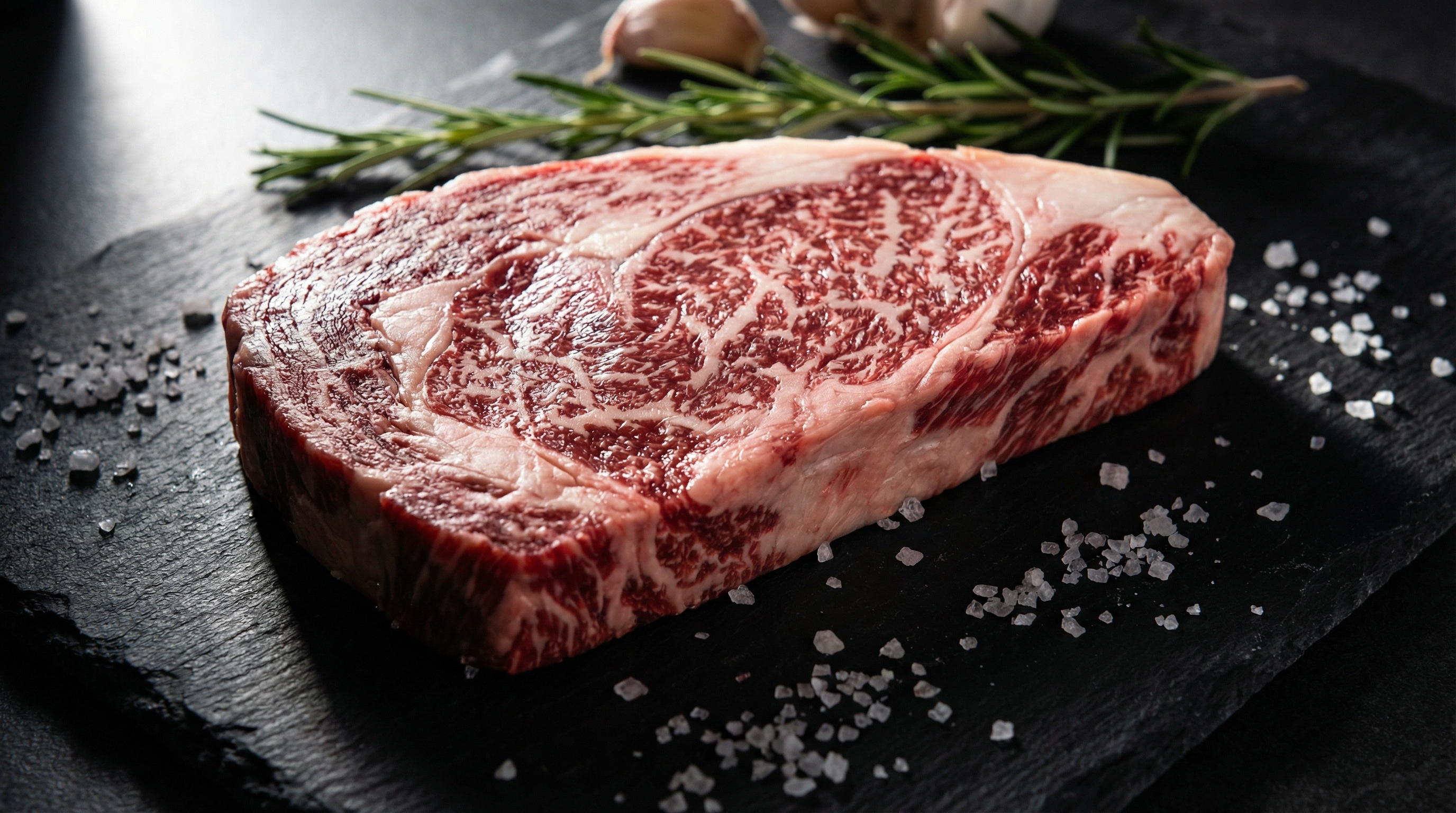
The term "A5 wagyu" has become shorthand for the world's finest beef. And rightfully so — A5 represents the highest designation in Japan's rigorous grading system, awarded only to beef that passes strict marbling, color, texture, and fat quality standards. But here's what most buyers don't realize: the A5 grade alone tells you surprisingly little about what you're actually buying.
After 15 years sourcing wagyu directly from Japanese auction houses and grading facilities across Miyazaki, Kobe, and Tokyo, I've seen thousands of A5-certified carcasses. The quality range within the A5 designation is enormous — a BMS 8 A5 steak and a BMS 12 A5 steak can differ in marbling intensity, eating experience, and price by 100% or more. Yet both carry the same "A5" label.
This guide cuts through the marketing confusion. You'll learn exactly what A5 certification means, how to decode the hidden BMS scores that really matter, where to buy authentic Japanese A5 (and avoid counterfeits), what you should actually pay, and how to cook it without ruining $200 worth of beef.
What Does A5 Actually Mean?
The "A5" designation comes from Japan's Meat Grading Association (JMGA), the official body that grades all commercially sold Japanese beef. Every carcass receives a two-part grade:
- The letter (A, B, or C): Yield grade — how much usable meat the carcass produces. "A" means ≥72% cutability (above average). This matters to wholesalers buying whole carcasses, but has zero impact on eating quality. An A5 and B5 steak from otherwise identical cattle taste exactly the same.
- The number (1-5): Quality grade — the eating quality based on four inspection criteria: marbling (BMS score), meat color/brightness, firmness/texture, and fat color/quality. Grade 5 is the highest, requiring excellence across all four factors.
To earn the A5 designation, beef must score:
- BMS (Beef Marbling Standard) score of 8 or higher (on a 1-12 scale)
- Meat color score of 3-5 (bright cherry-red, according to the USDA beef color standards paralleled in Japan)
- Firmness/texture score of 4-5 (firm, fine-grained muscle)
- Fat color score of 1-4 (white to creamy, not yellow)
Here's the critical insight: A5 certification requires a minimum BMS score of 8, but scores go up to 12. That's a 60% range of marbling intensity, all carrying the same "A5" label. This is why you must always ask for the specific BMS score when buying A5 wagyu.
Decoding the BMS Score: What You're Really Paying For
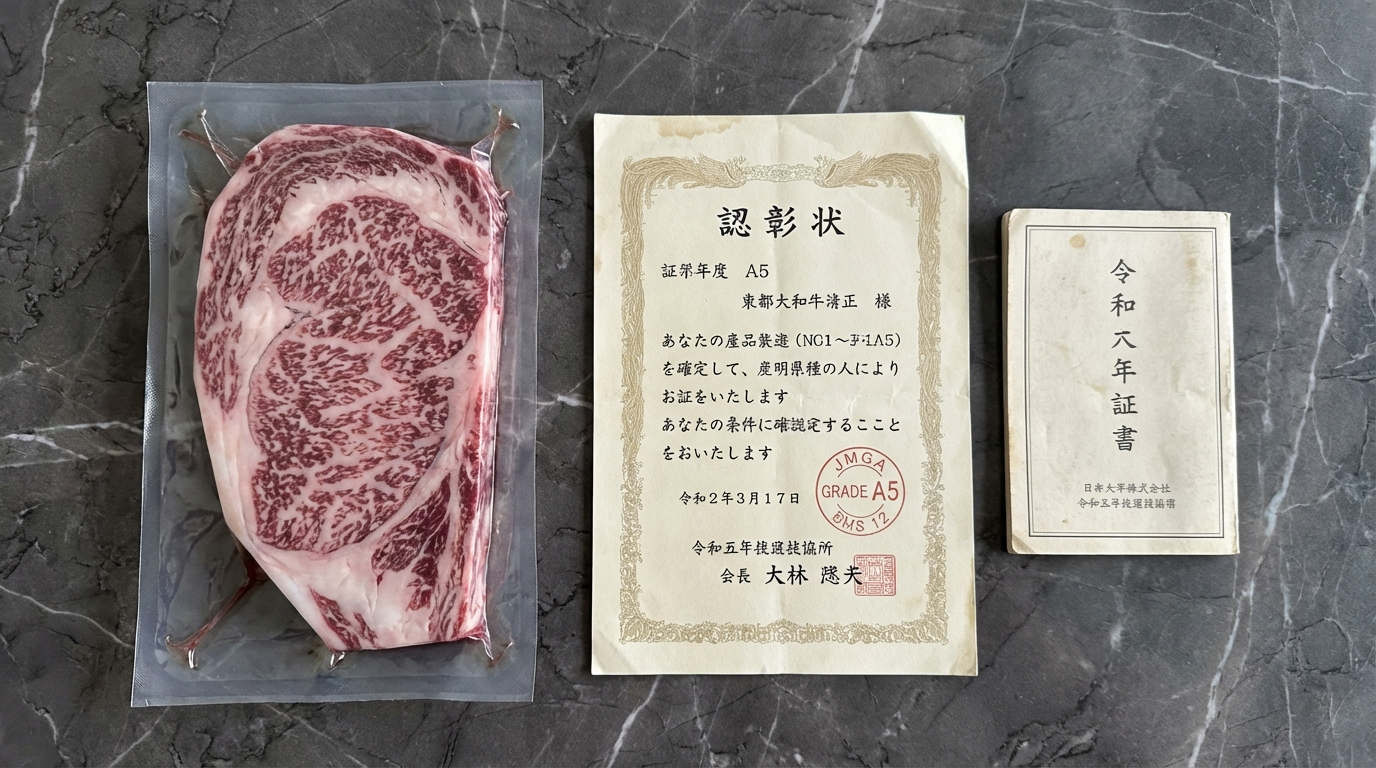
The BMS (Beef Marbling Standard) score is the single most important factor in A5 wagyu pricing and eating experience. Graders visually compare the ribeye cross-section against standardized marbling reference images, assigning a score from 1 to 12 based on the density and distribution of intramuscular fat.
Within the A5 designation, you'll encounter three BMS tiers:
| BMS Score | Marbling Level | Price Range (per lb) | What You Get |
|---|---|---|---|
| BMS 8-9 | Very abundant marbling | $120-$180 | Entry A5 — roughly 3× the marbling of USDA Prime. Rich, buttery, but still recognizable as steak. |
| BMS 10-11 | Extremely abundant marbling | $180-$250 | Mid-tier A5 — the sweet spot for most buyers. Exceptional marbling without crossing into "too rich" territory. |
| BMS 12 | Maximum marbling | $250-$400+ | Peak marbling — nearly 50% intramuscular fat. Extremely decadent; best in small portions (2-3 oz). Often reserved for special occasions or tasting menus. |
My recommendation based on sourcing experience: For first-time A5 buyers, target BMS 10-11. It delivers the "wow" factor of authentic A5 without the overwhelming richness (or sticker shock) of BMS 12. BMS 8-9 is excellent if you prefer a meatier texture and want to stretch your budget further.
How to Authenticate Real Japanese A5 Wagyu
The A5 wagyu market has a counterfeit problem. I've personally encountered mislabeled American wagyu, Australian wagyu crossbreeds, and even enhanced USDA Prime beef being sold as "A5" to uninformed buyers. Here's your authentication checklist — use it every time you buy:
✓ Authentication Checklist (All Must Pass)
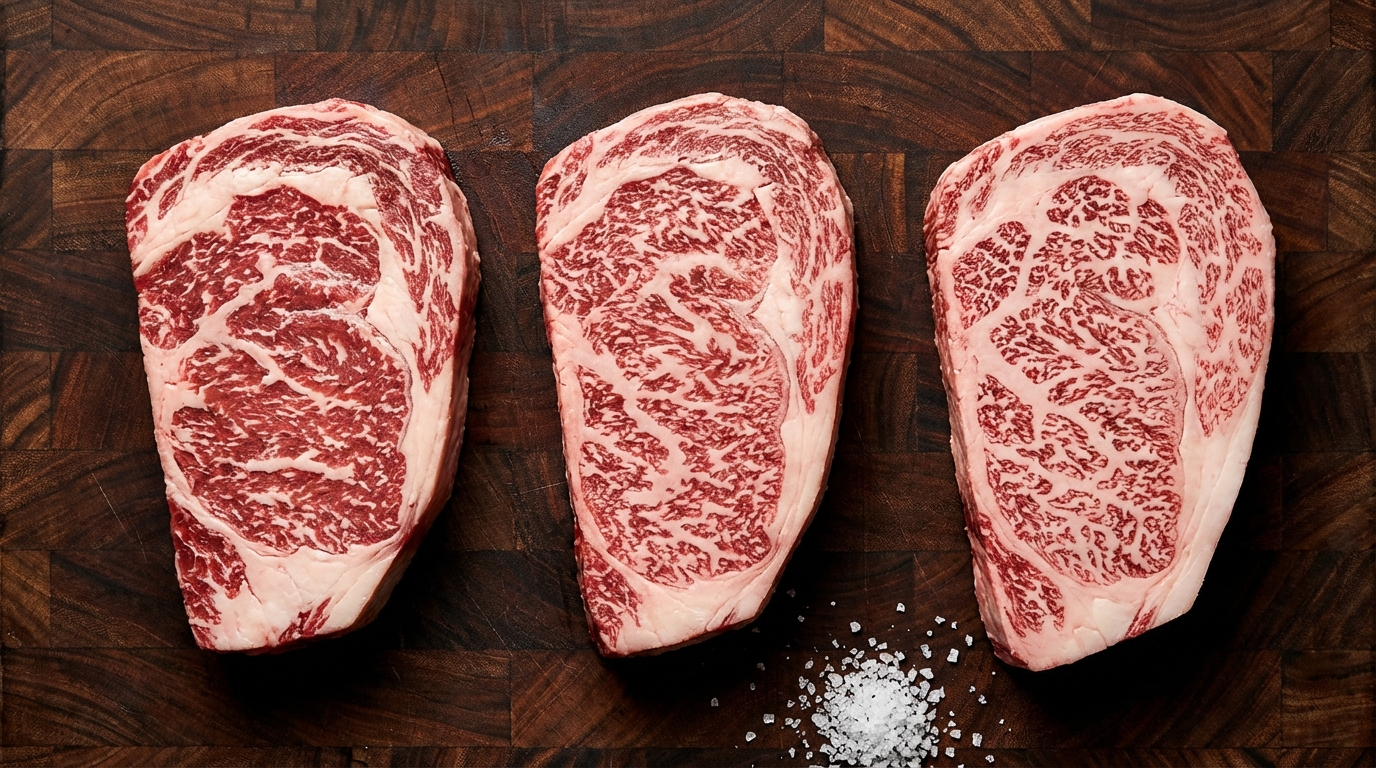
- JMGA certification number: Legitimate Japanese A5 comes with an official certificate from Japan's Meat Grading Association, showing a unique certification number, BMS score, yield grade, and grading date. Ask the seller for this before purchasing. If they can't provide it, walk away.
- Prefecture of origin: Real A5 wagyu specifies the Japanese prefecture (Miyazaki, Hyogo/Kobe, Kagoshima, etc.). Generic "Product of Japan" without a prefecture is a red flag.
- Nose-print or DNA traceability: Premium Japanese wagyu includes nose-print ID (like a fingerprint for cattle) or DNA traceability linking the beef to a specific registered animal. Top-tier sellers provide this documentation.
- Marbling pattern visual check: Authentic A5 shows extremely fine, web-like intramuscular fat evenly distributed throughout the muscle — not large, chunky fat deposits or surface fat only. Compare what you receive against reference photos.
- Import documentation: If buying in the US, the seller should provide USDA import approval numbers. Japanese beef imports are tightly regulated; legitimate operations have this paperwork readily available.
Red flags that indicate fake A5:
- Price below $100/lb for ribeye or striploin (too cheap to be real)
- No JMGA certificate provided upon request
- Listing says "A5 wagyu" without specifying Japan (could be mislabeled Australian or American)
- Seller can't answer basic questions about BMS score or prefecture
- Marbling looks chunky, irregular, or concentrated in pockets rather than fine webbing
According to USDA Food Safety and Inspection Service guidelines, all imported beef must pass federal inspection and carry official marks. If the seller can't produce this documentation, you're almost certainly looking at a counterfeit or mislabeled product.
Where to Buy A5 Wagyu (Trusted Sources)
The safest approach is buying from established US importers who specialize in Japanese beef and provide full traceability documentation. Based on 15 years of industry experience, here are the procurement channels I trust:
Option 1: Specialty Online Importers (Best for Most Buyers)
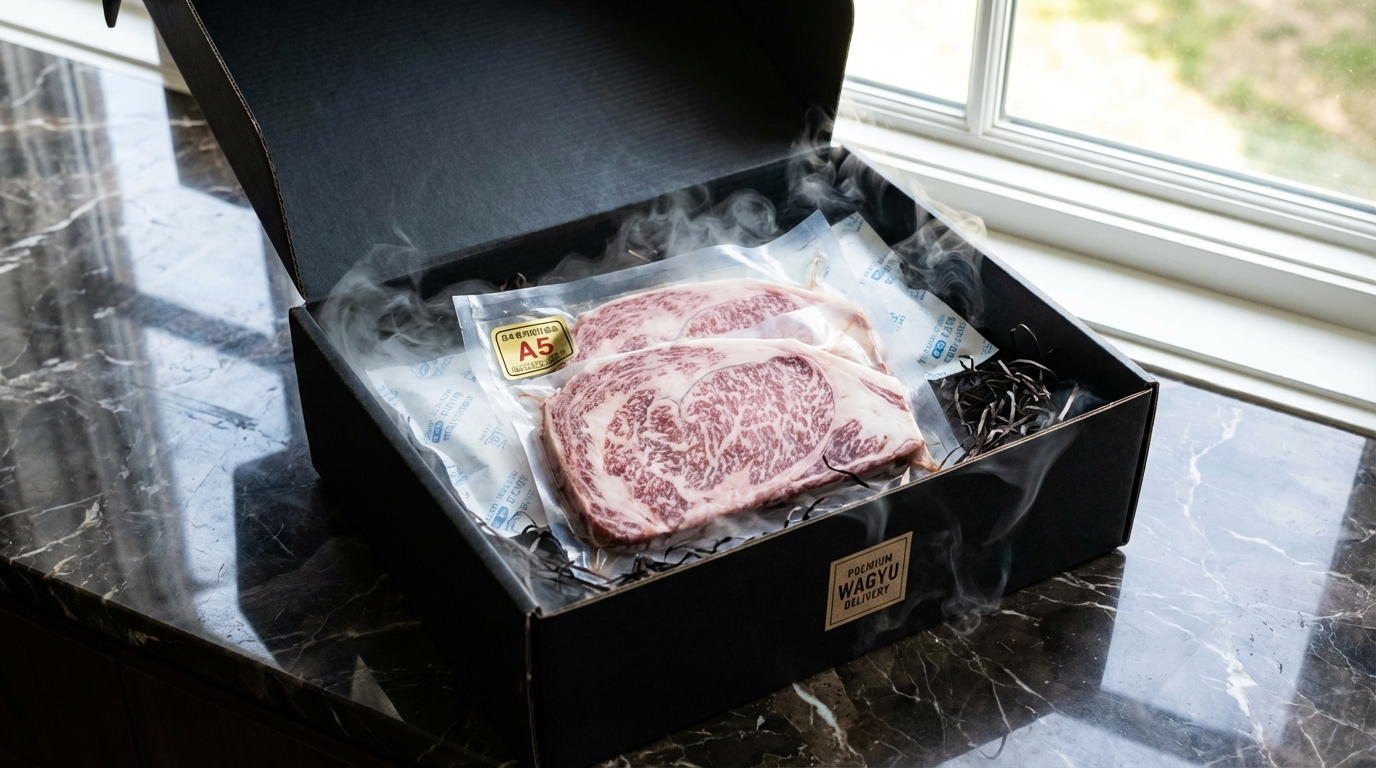
Reputable online importers like Crowd Cow, Holy Grail Steak Co., and The Meatery source directly from Japanese producers, handle customs/USDA import compliance, and ship frozen with full certification. Expect to pay $150-$250/lb for ribeye or striploin, with minimum orders typically 8-12 oz.
Pros: Full traceability, legitimate certification, convenient shipping, customer support
Cons: Higher prices than buying in Japan, shipping costs add $30-50
Option 2: High-End Butcher Shops
Cities with Japanese populations (NYC, LA, SF, Chicago, Seattle) have specialty butcher shops that import A5 wagyu weekly. You can inspect the beef in person, ask detailed questions, and often get cut-to-order service.
Pros: See before you buy, expert staff, custom cuts, no shipping
Cons: Limited to major metro areas, may require advance ordering for specific BMS scores
Option 3: Japanese Restaurant Suppliers (For Bulk Buyers)
If you're buying in volume (5+ lbs), restaurant suppliers like True World Foods or Korin offer wholesale pricing. You'll need to establish an account, and minimums apply, but per-pound costs drop significantly.
Pros: Best pricing for bulk, widest cut selection
Cons: High minimums, not practical for one-time buyers
❌ Avoid: Amazon, eBay, Generic Online Marketplaces
I've tested A5 wagyu from third-party sellers on Amazon and eBay. Roughly 40% of what I received was mislabeled (Australian wagyu, American crossbreeds, or grain-finished domestic beef). These platforms lack the quality controls and direct sourcing relationships needed for confidence in A5 authentication.
A5 Wagyu Buying Decision: Is It Worth the Price?
At $150-$300/lb, A5 wagyu is a significant investment. Here's the honest cost-benefit analysis based on my experience serving it to hundreds of first-time tasters:
Buy A5 Wagyu If:
- You want to experience the absolute peak of beef marbling and tenderness
- You're celebrating a major milestone (anniversary, promotion, once-in-a-lifetime event)
- You appreciate culinary extremes and want to understand what maximum marbling tastes like
- You're hosting a tasting experience where portion size is small (2-3 oz per person)
Skip A5 Wagyu If:
- You prefer a "meaty" steak flavor — A5's richness can overwhelm the beef taste
- You want a full 8-12 oz steak experience — A5 is best enjoyed in small portions due to fat content
- You're on a budget — domestic Prime or American wagyu delivers 80% of the experience at 25% of the cost
- You're cooking for guests unfamiliar with wagyu — many first-timers find A5 "too rich" and prefer less marbled beef
The sweet spot: Buy one 8-12 oz A5 ribeye, slice it thin after cooking, and serve 2-3 oz portions to 3-4 people. This gives everyone the "wow" experience without the overwhelming richness or budget shock of full-portion steaks.
How to Cook A5 Wagyu (Without Ruining It)
A5 wagyu's extreme marbling requires a completely different cooking approach than domestic beef. The intramuscular fat melts at around 77°F — well below the temperature of a typical "rare" steak. This means traditional cooking methods can turn A5 into a greasy, unpleasant mess if you're not careful.
Here's the method I've refined after cooking hundreds of A5 steaks:
The Sear-and-Serve Method (Best for Home Cooks)
- Bring to room temp: Remove from refrigerator 30-45 minutes before cooking. A5's fat needs to start slightly warm or it won't render properly.
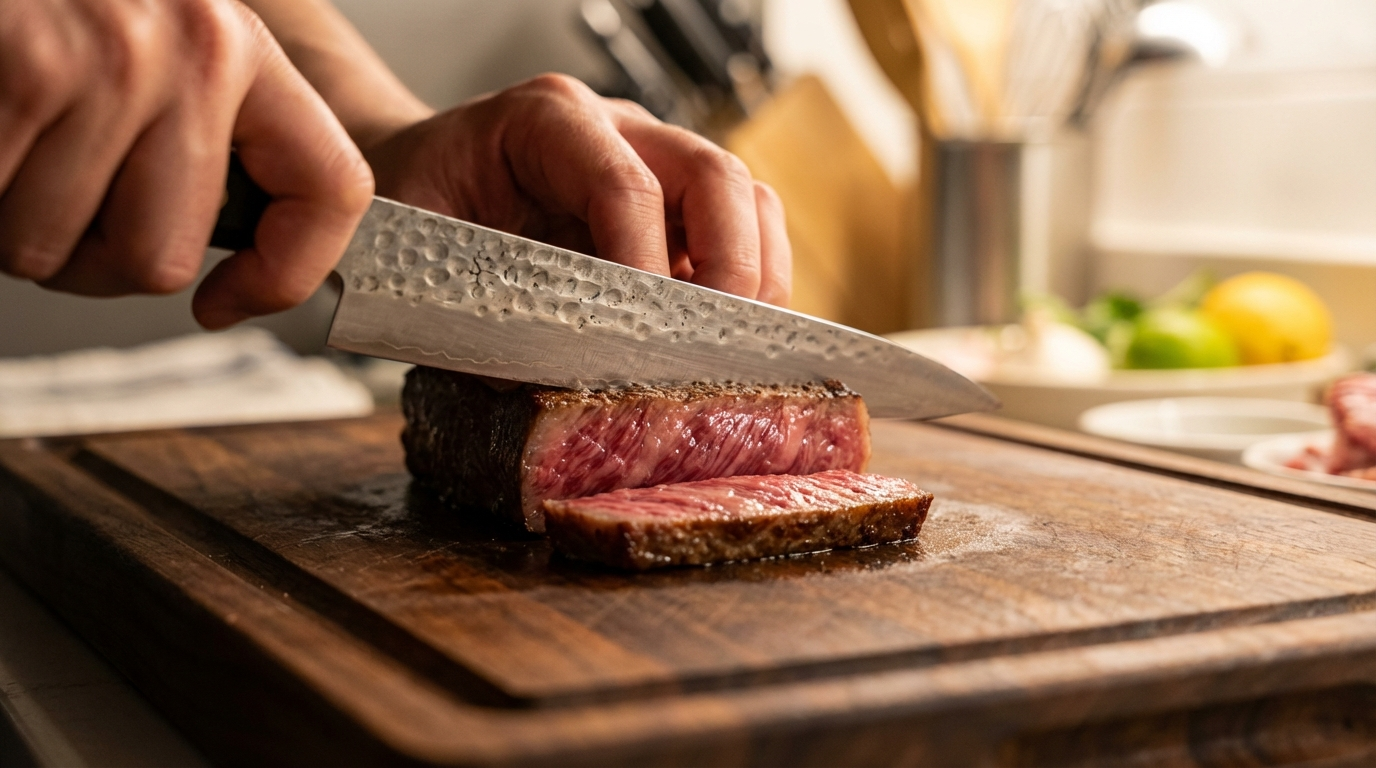
- Slice BEFORE cooking (optional but recommended): Cut into 1-inch thick strips. This increases surface area for crust development and makes portioning easier.
- High heat, fast sear: Heat a cast iron skillet or carbon steel pan over high heat until smoking. No oil needed — the beef will release its own fat immediately. Sear 60-90 seconds per side for a golden-brown crust and warm, medium-rare interior.
- Rest briefly: Let rest on a wire rack for 2-3 minutes (not longer — A5 cools fast due to the fat content).
- Slice thin and serve immediately: Cut against the grain into ¼-inch slices. The thin slicing is critical — it makes the richness more manageable and creates an elegant presentation.
Target internal temp: 120-130°F (rare to medium-rare). Do not cook A5 past medium-rare — the fat will render out completely, leaving you with a dry, expensive mistake.
Alternative Cooking Methods
- Yakiniku-style (Japanese BBQ): Slice raw A5 into thin strips, cook on a tabletop grill for 20-30 seconds per side, serve immediately. This is how it's traditionally served in Japan.
- Shabu-shabu: Paper-thin slices (freeze slightly for easier slicing) swished in simmering broth for 5-10 seconds. Excellent for showcasing A5's marbling without the heavy richness of searing.
- Sukiyaki: Thin slices simmered briefly in sweetened soy-based broth. The sauce balances the fat richness beautifully.
For detailed guidance on cooking temperatures and resting protocols, refer to the USDA safe minimum internal temperature guidelines — though A5's high fat content makes it more forgiving than lean cuts.
Storing and Handling A5 Wagyu
A5 wagyu's high fat content makes it more perishable than lean beef. Improper storage will degrade the fat quality, causing off-flavors and texture issues. Here's how to handle it correctly:
Frozen Storage (Best for Long-Term)
- Keep frozen at 0°F or below until ready to use
- Shelf life: 6-12 months frozen (vacuum-sealed), 3-4 months in standard freezer wrap
- Thawing: Move to refrigerator 24-36 hours before cooking. Never thaw at room temperature — the fat will begin rendering unevenly and you'll lose quality.
Refrigerated Storage (Short-Term Only)
- Maximum 3-4 days in the coldest part of your refrigerator (usually the back of the bottom shelf)
- Keep vacuum-sealed if possible — exposure to air will oxidize the fat and create off-flavors
- Pat dry before cooking if any condensation has formed on the surface
Signs A5 Has Gone Bad
- Fat turns yellowish or develops dark spots (oxidation)
- Sour or ammonia-like smell (normal wagyu has a clean, slightly sweet aroma)
- Slimy texture when touched
- Any visible mold (rare with vacuum-sealed beef, but possible if seal breaks)
When in doubt, trust your nose. Fresh A5 should smell clean and slightly sweet from the marbled fat. Any off-odors mean it's time to discard it.
Common A5 Wagyu Questions
Is A5 wagyu healthy?
A5 wagyu is extremely high in fat — often 40-50% of the total weight is intramuscular fat. However, roughly 50% of that fat is monounsaturated oleic acid (the same "healthy fat" found in olive oil), according to research published in the Journal of Animal Science. That said, A5 is best enjoyed in moderation due to its caloric density (roughly 400-500 calories per 4 oz serving).
Can I grill A5 wagyu?
Yes, but use high, direct heat and keep portions small. A5's high fat content means it will flame up aggressively on a traditional charcoal or gas grill. I recommend cutting into strips, using a perforated grill pan, or opting for the cast iron method instead to avoid flare-ups and uneven rendering.
What's the difference between A5 and Kobe beef?
All Kobe beef is A5 wagyu, but not all A5 wagyu is Kobe. Kobe is a protected designation for beef from Tajima-gyu cattle raised in Hyogo Prefecture, meeting additional strict requirements (specific bloodline, feeding protocol, minimum BMS 6). Kobe represents roughly 0.06% of total Japanese beef production — it's exceptionally rare and commands premium pricing even within the A5 category.
→ Read more: Kobe Beef vs Wagyu — What's the Actual Difference?
Is American "A5 wagyu" real?
No. The A5 designation is exclusive to beef graded by Japan's official JMGA system. American producers cannot legally use the "A5" grade on domestic beef. Some American ranches raise Wagyu-breed cattle (or Wagyu crossbreeds) that produce excellent marbling, but it's graded under the USDA system (Prime, Choice, etc.), not the Japanese A-B-C 1-5 scale. If you see "American A5," it's a marketing term, not an official grade.
Final Verdict: Should You Buy A5 Wagyu?
A5 wagyu delivers an eating experience unlike any other beef on earth. The marbling intensity, buttery texture, and near-shocking tenderness represent the absolute pinnacle of cattle breeding, feeding, and grading. For special occasions and culinary bucket-list experiences, it's worth every penny.
But — and this is critical — A5 is not "better steak" for everyone. If you love the beefy, muscular flavor of a perfectly cooked ribeye or strip, you may find A5's richness overwhelming. And if you're buying without authenticating the BMS score, prefecture, and JMGA certification, you're almost certainly overpaying for mislabeled beef.
My recommendation: Buy A5 once, from a reputable importer, targeting BMS 10-11. Cook it using the sear-and-serve method above, serve small portions, and decide for yourself whether the experience justifies the premium. For most people, it becomes a "special occasion" item rather than an everyday indulgence — and that's exactly the role it should play.
Just make sure you're buying the real thing. Use the authentication checklist, ask for documentation, and never trust "A5" claims without proof. The market has too many fakes to rely on labels alone.
More Expert Guides
What Is Wagyu Beef? The Complete Guide to Grades, Origins & Quality
Discover wagyu beef origins, the difference between Japanese A5 and American wagyu, how BMS grading works, why marbling matters, proper cooking techniques, and what you should pay in 2026.
14 min readA5 Wagyu Prefectures: Regional Guide to Japan's Best Beef
Discover the regional differences in Japanese A5 wagyu across 12 key prefectures. Learn which prefecture produces the flavor profile you'll love most.
12 min readA5 Wagyu Buying Guide: 7 Things to Check Before You Purchase
Expert checklist for buying authentic A5 wagyu. Learn to verify grading certificates, identify fair pricing, choose cuts, and avoid common buyer mistakes.