Wagyu Sashi Score Explained: Understanding Japan's Fat Quality Metric
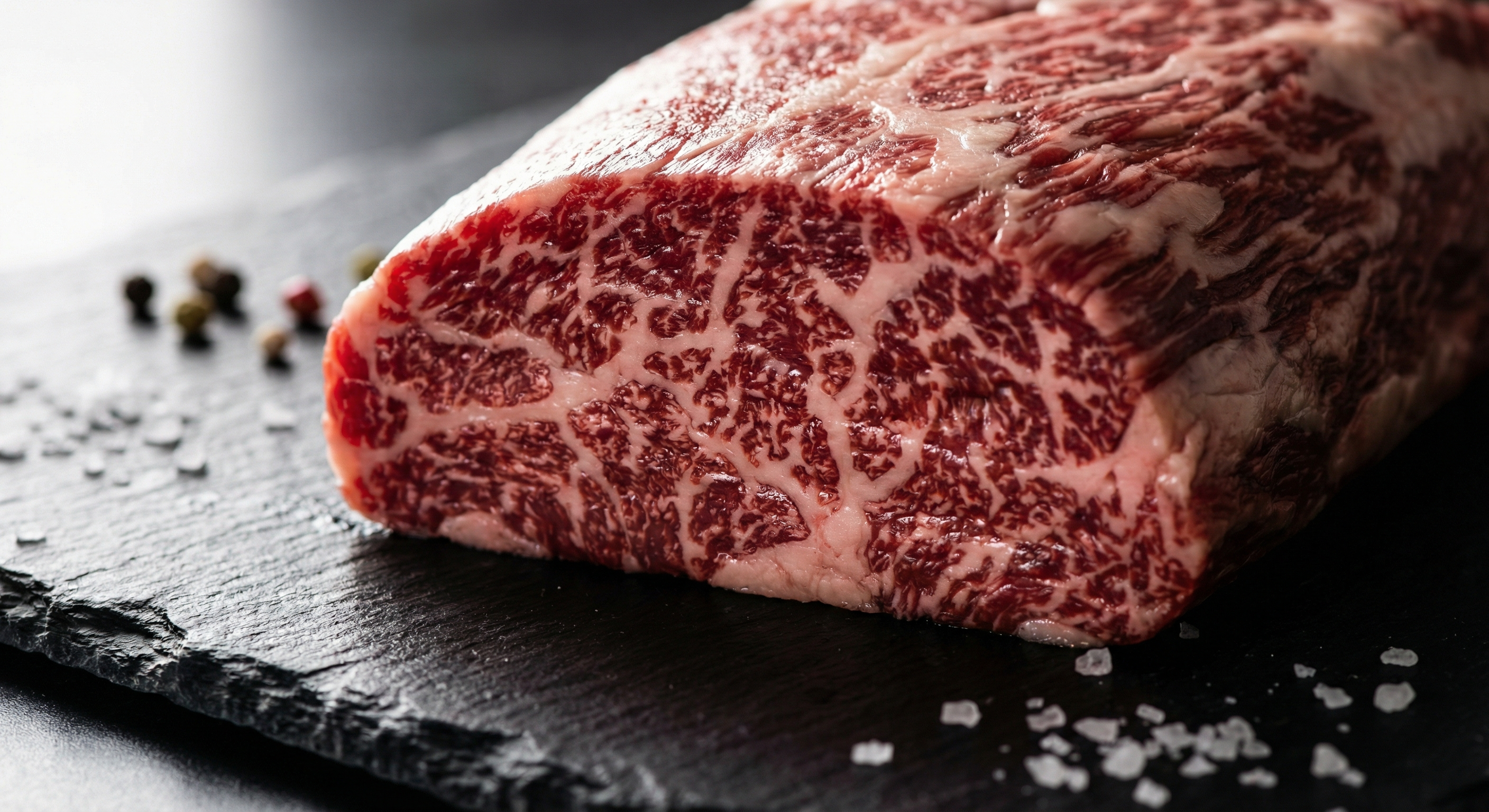
When evaluating premium Wagyu beef, most buyers focus on the BMS (Beef Marbling Standard) score—and for good reason. But there's another metric that Japanese beef professionals consider equally important, if not more revealing of true quality: the sashi score. While BMS tells you how much marbling a cut contains, sashi measures something fundamentally different—the fineness and quality of that marbling at a level the human eye can barely perceive.
What Is the Sashi Score?
The word "sashi" (さし) literally translates to "insertion" in Japanese—referring to how fat inserts itself between muscle fibers. In the context of Wagyu grading, the sashi score is a camera-based measurement that quantifies the fineness, uniformity, and distribution pattern of intramuscular fat in a cross-section of beef.
Unlike the BMS scale, which relies on trained human graders comparing a cut against reference photographs, sashi scoring uses high-resolution digital imaging and computer analysis to evaluate marbling at a microscopic level. The technology captures the ribeye cross-section at the 6th-7th rib interface—the same location used for standard JMGA grading—and processes the image to calculate several fat quality parameters.
The key insight behind sashi scoring is that two cuts of beef can share identical BMS scores yet deliver dramatically different eating experiences. A BMS 10 steak with coarse, unevenly distributed fat pockets will taste and feel entirely different from a BMS 10 steak where the fat is dispersed in thousands of hair-thin threads throughout the muscle. The sashi score captures this critical distinction.
How Sashi Differs from BMS
Understanding the relationship between sashi and BMS is essential for anyone serious about Wagyu quality. Here's how the two systems compare:
BMS (Beef Marbling Standard) measures the overall percentage and visual appearance of intramuscular fat. It uses a 1-12 scale determined by trained graders who compare the cut against standardized reference images. BMS answers the question: "How much marbling does this beef have?"
Sashi scoring measures the fineness, distribution pattern, and uniformity of fat particles within the muscle tissue. It uses camera imaging technology to analyze marbling at a level of detail impossible for the human eye. Sashi answers a different question: "How fine and evenly distributed is the marbling?"
Think of it this way: BMS is like measuring rainfall by total volume, while sashi is like measuring whether that rain fell as a gentle, even mist or as large, scattered droplets. Both delivered the same amount of water, but the pattern matters enormously for the result.
The Science Behind Sashi Measurement
The sashi scoring system emerged from research at Japanese agricultural universities and meat science laboratories seeking more objective, reproducible methods for evaluating beef quality. The technology works through several steps:
Image Capture
A high-resolution camera photographs the ribeye cross-section under controlled, standardized lighting conditions. The consistent lighting is critical—it ensures that fat and lean tissue produce reliable contrast regardless of ambient conditions in the grading facility.
Digital Analysis
Software processes the image to separate fat pixels from lean tissue pixels based on color values and brightness. The algorithm then analyzes the distribution pattern of fat pixels, measuring parameters including:
- Fat particle count: The total number of discrete marbling particles visible in the cross-section. Higher counts indicate finer marbling.
- Average particle size: Smaller average particle sizes correspond to the delicate, web-like marbling pattern prized in elite Wagyu.
- Distribution uniformity: How evenly the fat is spread across all quadrants of the ribeye, rather than concentrated in certain areas.
- Fineness ratio: The proportion of small fat particles relative to large ones—a key indicator of the "melting" quality Wagyu is famous for.
Score Generation
These parameters are combined into a composite sashi score. While different systems use varying scales, the principle remains consistent: higher sashi scores indicate finer, more uniformly distributed marbling that will produce a superior eating experience.
Why Sashi Matters for Eating Quality
The practical significance of sashi becomes clear when you understand how fat distribution affects the sensory experience of eating Wagyu beef.
Mouthfeel and Texture
Finely distributed fat (high sashi) creates the legendary "melts in your mouth" sensation that defines premium Wagyu. When fat particles are tiny and evenly dispersed, they render at lower temperatures and distribute across your palate uniformly. Coarsely marbled beef, even with the same total fat content, tends to produce distinct fatty and lean bites rather than a seamless, buttery experience.
Flavor Development
Intramuscular fat carries the majority of Wagyu's distinctive flavor compounds, including oleic acid and volatile aromatic molecules. Fine marbling ensures these flavor compounds are released consistently with every bite, rather than in irregular bursts. This creates the complex, sustained flavor profile that distinguishes truly exceptional Wagyu from merely well-marbled beef.
Cooking Performance
High-sashi beef performs more predictably during cooking. The fine fat distribution means the steak renders evenly, reducing the risk of dry spots or pools of unrendered fat. Whether you're searing on a teppan or grilling over binchotan charcoal, finely marbled beef responds more consistently to heat. For tips on getting the best results, see our guide to cooking Wagyu steak.
Sashi in Japanese Wagyu Prefectures
Different Wagyu-producing regions in Japan have distinct approaches to sashi optimization, shaped by their breeding programs, feeding regimens, and local traditions.
Miyazaki Prefecture
Miyazaki has been at the forefront of sashi-focused breeding for decades. Their cattle consistently produce some of the finest marbling patterns in Japan, with many animals achieving exceptional sashi scores alongside high BMS ratings. Miyazaki Wagyu has won the prestigious Wagyu Olympics (National Competitive Exhibition of Wagyu) multiple times, partly due to their emphasis on marbling quality over mere quantity.
Kagoshima Prefecture
As Japan's largest Wagyu-producing region, Kagoshima has invested heavily in sashi-optimized genetics. Their breeding programs track sashi performance across generations, selecting for animals that consistently produce fine-grained marbling. The result is a regional style known for its delicate fat distribution and refined flavor profile.
Hyogo Prefecture (Kobe Beef)
The closed bloodline of Tajima cattle used for Kobe beef naturally tends toward finer marbling patterns. The strict breeding controls that define Kobe production have inadvertently selected for high sashi characteristics over centuries, which partly explains why Kobe beef's reputation for exceptional texture has endured for so long.
How to Evaluate Sashi When Buying Wagyu
While you likely won't have access to professional camera-based sashi analysis when shopping, you can make reasonable visual assessments of marbling fineness:
What to Look For
- Web-like patterns: The best sashi appears as an intricate web of fine white threads running through the meat, rather than large patches or streaks of fat.
- Uniform distribution: Look for marbling that extends evenly across the entire cut, including the edges. Concentration in the center with lean edges suggests lower sashi quality.
- Fine grain: Individual fat particles should be small—ideally appearing as a delicate lacework rather than distinct blobs or veins.
- Pink appearance: Beef with exceptional sashi often appears more pink than red, because the fine fat distribution lightens the overall color of the cross-section.
What to Avoid
- Large fat pockets: Visible chunks or pools of fat indicate coarse marbling, regardless of total fat percentage.
- Uneven distribution: Marbling concentrated in streaks or sections rather than uniformly dispersed.
- Seam fat confusion: Don't confuse intermuscular fat (between muscles) with intramuscular marbling. Only the fat woven through the muscle fiber itself contributes to sashi quality.
When shopping for premium Wagyu online, look for vendors who provide detailed photos of the actual cut you'll receive. Reputable sources like The Meatery's A5 Wagyu collection provide high-resolution images that let you evaluate marbling fineness before purchasing.
Sashi and the Future of Wagyu Grading
The growing adoption of camera-based sashi analysis represents a broader shift in how Japan evaluates beef quality. Several developments are worth watching:
Integration with Official Grading
While sashi scoring hasn't replaced the traditional JMGA grading system, several prefectural meat grading associations now use camera analysis as a supplementary tool. There's ongoing discussion about incorporating objective fat fineness measurements into official grade determinations, which could add a new dimension to the familiar A1-A5 system.
Genetic Selection
Sashi data is increasingly used in Wagyu breeding programs to select sires and dams that produce offspring with finer marbling. This represents a refinement of the breeding approach—moving beyond total marbling quantity to optimize marbling quality at the genetic level.
Consumer Education
As more consumers become aware of sashi as a quality indicator, it's likely to influence purchasing decisions and pricing. Beef with documented high sashi scores may command premiums beyond what BMS alone would suggest, creating new tiers of quality distinction within the A5 grade.
Sashi Score vs. BMS: A Practical Comparison
To illustrate the practical difference, consider two hypothetical A5 Wagyu ribeyes, both graded at BMS 10:
Steak A has a moderate sashi score. The marbling is abundant but consists of medium-sized fat deposits with some clustering toward the center of the ribeye. When cooked, it delivers rich flavor with occasional pockets of intense fattiness balanced by leaner bites.
Steak B has an exceptional sashi score. The same total fat content is distributed in thousands of hair-thin threads creating a uniform web throughout the entire cross-section. When cooked, every single bite delivers the same buttery, melt-in-your-mouth experience with remarkable consistency.
Both steaks are excellent—they're A5 BMS 10, after all. But Steak B represents the pinnacle of Wagyu achievement, where quantity and quality of marbling align perfectly. This is the difference that sashi scoring reveals.
Understanding Sashi in the Context of Overall Quality
It's important to remember that sashi is one piece of a larger quality puzzle. The complete evaluation of Wagyu beef considers multiple factors including BMS score, meat color and brightness, firmness and texture, fat color and luster, and yes, sashi or marbling fineness. No single metric tells the complete story.
The best approach for consumers is to understand all these factors and weigh them according to personal preferences. Some people prefer the intensity of coarser marbling, finding the contrast between fat-rich and lean bites more interesting than uniform butteriness. There's no objectively "correct" preference—but understanding sashi gives you the vocabulary and framework to identify exactly what you're looking for.
As camera-based grading technology becomes more widespread and accessible, expect sashi to move from an insider's metric to a standard part of the Wagyu quality conversation. For now, armed with this knowledge, you can evaluate marbling quality with a more discerning eye than most—and make purchasing decisions that align precisely with your taste preferences.
Frequently Asked Questions
What does sashi mean in Wagyu beef?
Sashi (さし) literally means 'insertion' in Japanese and refers to how intramuscular fat inserts itself between muscle fibers. In Wagyu grading, the sashi score measures the fineness, uniformity, and distribution quality of marbling using camera-based imaging technology.
How is sashi different from BMS?
BMS (Beef Marbling Standard) measures the total amount of marbling on a 1-12 scale using visual comparison. Sashi scoring uses digital camera analysis to measure how finely distributed that marbling is. Two steaks can have the same BMS but very different sashi scores depending on whether the fat appears as fine threads or coarse patches.
Can I see the sashi score when buying Wagyu?
Most retail Wagyu is not sold with a listed sashi score, as it's primarily used in breeding programs and wholesale evaluation. However, you can visually assess marbling fineness by looking for web-like fat patterns, uniform distribution, and fine grain rather than large fat pockets.
Does a higher sashi score mean better-tasting Wagyu?
Higher sashi scores indicate finer, more evenly distributed marbling, which generally produces a more consistent buttery mouthfeel and uniform flavor in every bite. However, taste is subjective—some people prefer the contrast of coarser marbling. High sashi does correlate with the classic 'melts in your mouth' Wagyu experience.
Which Japanese Wagyu region has the best sashi?
Miyazaki and Kagoshima prefectures are known for producing cattle with exceptional sashi scores due to their advanced sashi-focused breeding programs. Hyogo Prefecture's Tajima cattle (used for Kobe beef) also naturally produce fine marbling due to their closed bloodline.
More Expert Guides
What Is Wagyu Beef? The Complete Guide to Grades, Origins & Quality
Discover wagyu beef origins, the difference between Japanese A5 and American wagyu, how BMS grading works, why marbling matters, proper cooking techniques, and what you should pay in 2026.
12 min readA5 Wagyu: Your Complete Buying & Authentication Guide (2026)
A5 wagyu represents the pinnacle of beef quality, but not all A5 is created equal. Learn how to authenticate real Japanese A5, decode BMS scores, find fair prices, and cook it perfectly at home.
14 min readA5 Wagyu Prefectures: Regional Guide to Japan's Best Beef
Discover the regional differences in Japanese A5 wagyu across 12 key prefectures. Learn which prefecture produces the flavor profile you'll love most.