Shimofuri: What Japanese Frost-Marbled Wagyu Really Means
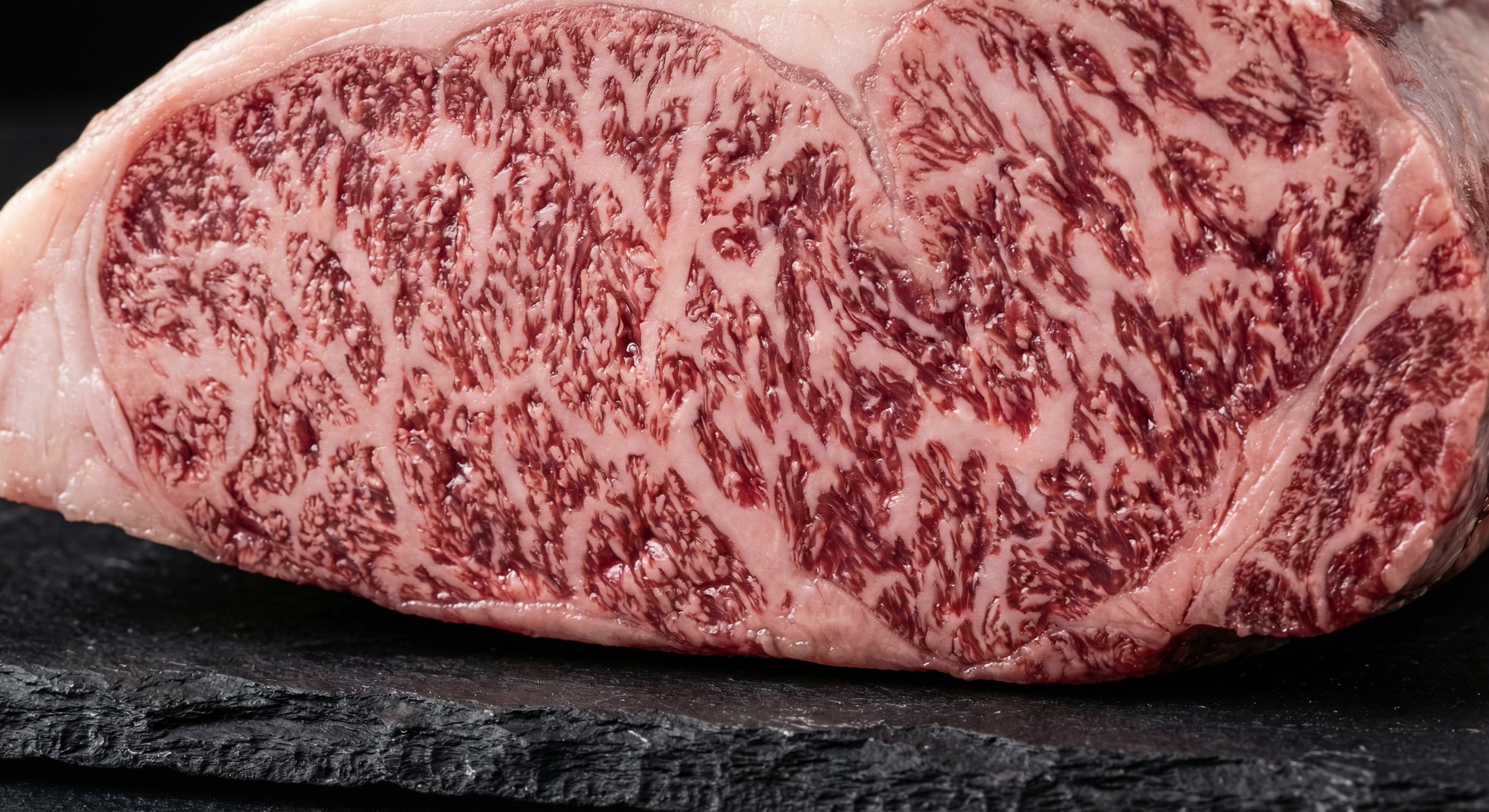
Shimofuri (霜降り, pronounced "shee-moh-foo-ree") is the Japanese term for the fine, frost-like marbling pattern that defines premium wagyu beef. The word combines shimo (霜, frost) and furi (降り, falling/descent), creating a poetic description of what this marbling looks like: frost crystals descending across a surface.
When Japanese beef professionals say a cut has exceptional shimofuri, they're describing something far more specific than "well-marbled." They're evaluating the fineness, distribution, and visual quality of intramuscular fat against standards that have evolved over centuries of wagyu breeding.
This guide breaks down the meaning of shimofuri, how it's evaluated in Japan's beef grading system, and why this particular marbling pattern creates wagyu's legendary eating experience.
What Does Shimofuri Mean?
The term shimofuri literally translates to "frost-descent" or "frosted," referring to the visual appearance of fine white fat distributed across the red muscle tissue. When you look at a cross-section of high-quality wagyu, the intramuscular fat creates a pattern remarkably similar to frost crystals spreading across glass on a cold morning.
In Japanese beef terminology, meat with this characteristic is called shimofuri-niku (霜降り肉), which translates to "frost-descent meat" or more colloquially, "frosted beef."
This isn't just poetic language — the term captures something essential about how the fat should appear. True shimofuri consists of extremely fine fat threads that distribute evenly across the entire muscle cross-section, rather than concentrating in thick veins or isolated pockets. The pattern should look delicate, intricate, and uniform — like frost, not snow chunks.
Shimofuri vs. Sashi: Understanding the Distinction
Japanese beef grading uses another term you'll often see alongside shimofuri: sashi (サシ), which means "marbling" more generally. While these terms are related and sometimes used interchangeably, there's a subtle distinction worth understanding.
Sashi refers to the intramuscular fat itself — the physical fat deposits threaded through muscle tissue. Shimofuri describes the specific visual pattern and quality of that fat when it reaches exceptional fineness and distribution.
Think of it this way: all shimofuri is sashi, but not all sashi qualifies as shimofuri. A cut can have intramuscular fat (sashi) without displaying the fine, frost-like pattern (shimofuri) that characterizes premium grades.
How Shimofuri is Graded in Japan
Japan's beef grading system evaluates shimofuri quality through a component called the Beef Marbling Standard (BMS), which uses a 12-point scale to rate the amount and distribution of intramuscular fat.
The grading happens at the cross-section between the 6th and 7th rib (the ribeye location), where trained evaluators compare the actual muscle to standardized photographic references. But they're not just counting how much fat exists — they're assessing several distinct characteristics.
The Four Shimofuri Evaluation Criteria
1. Fineness (Kimé / きめ)
How thin and delicate are the individual fat threads? The finest shimofuri shows fat deposits so thin they're barely visible as individual strands. This fineness is crucial because thinner fat melts at lower temperatures, creating that signature wagyu texture where the fat begins rendering before the meat even reaches medium-rare.
2. Distribution (Bunpu / 分布)
How evenly does the fat spread across the entire muscle cross-section? Perfect shimofuri coverage means every bite — center, edge, thick section, or thin section — delivers the same luxurious texture. Uneven distribution, where fat concentrates in one area while leaving others lean, reduces the grade even if the total fat percentage is high.
3. Pattern Quality (Kata / 型)
Does the fat form interconnected web-like networks or appear as disconnected dots and streaks? The web pattern matters because it determines how effectively the fat bastes the meat from within during cooking. Web-structured shimofuri keeps every muscle fiber lubricated; isolated fat deposits can't do this consistently.
4. Color and Luster
The fat itself should appear bright white with a slight cream tone and natural luster. Dull, yellowish, or grayish fat indicates lower quality regardless of pattern. This characteristic relates to the fatty acid composition, with whiter fat containing more monounsaturated fats (particularly oleic acid) that melt at lower temperatures.
BMS Scores and Shimofuri Quality
The Beef Marbling Standard scores range from 1 (practically no marbling) to 12 (exceptional shimofuri coverage). Here's how shimofuri quality correlates with BMS scores:
BMS 1-3: Minimal intramuscular fat with no visible shimofuri pattern. These grades rarely appear in wagyu cattle but are common in conventional beef breeds.
BMS 4-6: Visible marbling beginning to form consistent patterns. BMS 5-6 starts showing the fine web characteristics of shimofuri, though coverage may still be incomplete.
BMS 7-9: Clear shimofuri pattern with fine, well-distributed fat creating the frost-like appearance. BMS 8-9 represents the standard for A4 grade wagyu.
BMS 10-12: Exceptional shimofuri where the fat-to-meat ratio reaches 50% or higher, with perfect fineness and distribution. These are A5 grades, with BMS 12 being extraordinarily rare even among premium wagyu.
Why Shimofuri Creates Wagyu's Legendary Texture
The shimofuri pattern isn't just aesthetically impressive — it's functionally engineered (through generations of selective breeding) to create a specific eating experience that's impossible to replicate with ordinary beef marbling.
Low-Temperature Fat Melting
The finest shimofuri contains high concentrations of monounsaturated fats, particularly oleic acid (the same fat that makes olive oil liquid at room temperature). These fats have melting points between 77°F and 95°F (25°C-35°C) — well below human body temperature.
This means shimofuri-rich wagyu begins melting the moment it touches your tongue, before you even start chewing. This characteristic creates the "melt-in-your-mouth" sensation that's become wagyu's signature.
Compare this to conventional beef marbling, which typically contains more saturated fats with melting points around 104°F-122°F (40°C-50°C). That marbling needs actual chewing and body heat to fully render, creating a different mouthfeel entirely.
Internal Basting During Cooking
The web-like structure of shimofuri creates microscopic fat channels that run throughout the muscle tissue. As the steak cooks and the fat renders, these channels continuously baste every muscle fiber from within.
This internal lubrication is why properly cooked wagyu stays juicy even at medium or medium-well doneness levels that would dry out conventional beef. The muscle fibers themselves might lose moisture, but the rendered shimofuri fat replaces it, preventing the dry, chalky texture that comes from overcooking lean beef.
Flavor Distribution
Fat carries flavor compounds. The even distribution of shimofuri means flavor distributes evenly across every bite rather than concentrating in fatty sections while leaving lean sections bland.
Additionally, the specific fatty acid composition of wagyu shimofuri produces different flavor compounds when heated compared to conventional beef fat. Higher oleic acid content creates nuttier, sweeter notes, while lower saturated fat means less of the "tallowy" flavor that can come from conventional beef fat.
How Shimofuri Develops: Breeding and Feeding
Shimofuri doesn't happen by accident. It's the result of careful genetic selection spanning over a century, combined with specialized feeding programs designed to maximize intramuscular fat deposition.
Genetic Predisposition
Japanese Black cattle (Kuroge Washu), which produce most wagyu, have been bred specifically for their ability to deposit intramuscular fat in fine patterns. Bloodlines known for exceptional shimofuri command premium prices at breeding auctions.
The genetic trait isn't just about total fat percentage — it's about where that fat deposits and how finely it distributes. Some bloodlines produce beef with high total marbling but coarse patterns. These get lower grades despite containing similar fat percentages to beef with finer shimofuri.
Extended Feeding Programs
Most wagyu cattle destined for A4-A5 grades spend 28-32 months on feed (compared to 14-18 months for conventional beef cattle). This extended period allows time for fine intramuscular fat deposition to develop.
During the final months, farmers carefully manage the diet to promote fat marbling without creating excessive subcutaneous (under the skin) or intermuscular (between muscles) fat, which doesn't contribute to shimofuri and is trimmed away.
The feed typically includes high-energy grains (often rice, barley, or wheat), roughage for digestive health, and sometimes specialized supplements believed to improve fat quality. Some famous production regions have proprietary feeding formulas guarded for generations.
Regional Variations in Shimofuri Standards
While Japan's national grading system provides consistent BMS standards, different wagyu-producing prefectures have developed reputations for particular shimofuri characteristics.
Kobe Beef
Kobe beef (from Hyogo Prefecture) is famous for extremely fine, silk-like shimofuri texture. Kobe grading standards require BMS 6 or higher, but most Kobe beef scores BMS 8-10. The fineness is so pronounced that the fat threads are sometimes difficult to distinguish individually without magnification.
Matsusaka Beef
Matsusaka beef (from Mie Prefecture) emphasizes not just fineness but also the pure white color of the shimofuri fat. Matsusaka cattle are often virgin female cows that receive specialized feeding believed to produce especially white, lustrous fat.
Omi Beef
Omi beef (from Shiga Prefecture), Japan's oldest branded beef, is known for shimofuri that shows both fine texture and particularly even distribution from edge to center of the muscle. Some Omi beef producers aim for a specific web density where the fat network appears almost uniform.
Miyazaki Beef
Miyazaki Prefecture has won multiple national wagyu competitions by producing beef with extraordinarily high BMS scores (often BMS 11-12) while maintaining fine pattern quality. Their shimofuri often shows the highest fat-to-meat ratios achievable without sacrificing the delicate web structure.
Cooking Shimofuri Wagyu: Preserving the Pattern
The shimofuri pattern is visible raw but transforms during cooking. Understanding this transformation helps you preserve (or intentionally modify) the characteristics that make wagyu special.
Temperature Considerations
Shimofuri begins melting around 77°F (25°C), so wagyu steaks should come to room temperature before cooking. Starting cold means the exterior overcooks before the interior shimofuri has time to render properly.
Most shimofuri-rich wagyu reaches optimal texture at internal temperatures between 120°F-135°F (49°C-57°C) — what most Americans would call medium-rare to medium. Going beyond 140°F (60°C) renders so much fat that the texture can become greasy rather than luxurious.
Heat Method
High, fast heat on a very hot surface (cast iron, teppan, charcoal grill) sears the exterior while giving interior shimofuri time to render without overcooking the meat. Low-and-slow methods risk melting too much fat before developing proper crust.
Many Japanese chefs cut A5 wagyu into strips or thin steaks (under 1 inch thick) specifically to maximize the ratio of caramelized surface to rendered interior. This approach showcases the shimofuri texture while preventing fat overload.
Resting and Slicing
After cooking, the rendered shimofuri fat redistributes as the steak rests. Slicing against the grain (perpendicular to muscle fibers) in thin pieces ensures each bite includes the full cross-section of shimofuri pattern rather than following a single fat vein or muscle fiber.
Traditional Japanese presentation often involves slicing wagyu very thin (2-3mm) and arranging pieces so the shimofuri pattern is visible from above — turning the plate into a showcase of the frost-like marbling.
Shimofuri in American Wagyu
American wagyu producers have worked since the 1990s to develop cattle that produce shimofuri-quality marbling. The approach typically involves crossing Japanese Black genetics with American breeds, then raising the crossbred cattle on extended feeding programs.
Grading Differences
The U.S. beef grading system (Prime, Choice, Select) doesn't have an equivalent to Japan's BMS scale. Prime grade — the highest USDA grade — only requires marbling levels equivalent to Japanese BMS 4-5, which is well below the BMS 8-10 typical of A5 wagyu.
Some American wagyu producers use the Japanese BMS scale for their own quality control, but this is voluntary and not part of official USDA grading. When buying American wagyu, look for producers who specify BMS scores or provide cross-section photos showing the actual shimofuri pattern.
Full-Blood vs. Crossbred
Full-blood American wagyu (100% Japanese genetics) generally produces finer shimofuri patterns more similar to Japanese wagyu. F1 crossbred cattle (50% Japanese Black, 50% Angus or other breeds) produce excellent marbling but often in slightly coarser patterns.
Both can be delicious — the crossbred versions often deliver better beef flavor while still providing substantial shimofuri. But if you're specifically seeking that ultra-fine frost-like pattern, look for full-blood or high-percentage wagyu genetics.
Evaluating Shimofuri When Buying Wagyu
If you're shopping for wagyu and want to evaluate shimofuri quality yourself, here's what to look for in photos or in person:
Visual Checklist
✓ Fineness: Can you distinguish individual fat threads, or does the marbling appear as a fine powder-like distribution? Finer is better.
✓ Even Distribution: Does the fat coverage look consistent from edge to center? Avoid pieces where all the marbling concentrates in one area.
✓ Web Pattern: Does the fat form interconnected networks, or does it appear as isolated dots? Look for pieces where the fat creates continuous lace-like structures.
✓ Color: Is the fat bright white or slightly cream-colored with natural luster? Avoid yellowish, dull, or grayish fat.
✓ Muscle Color: Is the lean meat a vibrant red or pink? Dull, dark, or brownish meat indicates age or poor handling.
Red Flags
✗ Thick Fat Veins: Large, distinct fat deposits between muscle sections aren't shimofuri — they're intermuscular fat that will need to be trimmed.
✗ Uneven Coverage: Marbling concentrated heavily in one area with lean sections elsewhere indicates lower quality regardless of total fat percentage.
✗ Coarse Pattern: If you can clearly see every individual fat deposit as a distinct element rather than a fine network, it's not premium shimofuri.
✗ Off Colors: Gray muscle or yellow fat suggests storage issues or lower-quality feeding programs.
The Future of Shimofuri: Technology and Tradition
Japanese wagyu producers are exploring new technologies to improve shimofuri consistency and quality while preserving traditional breeding programs.
Genomic Selection
DNA testing can now identify genetic markers associated with fine marbling patterns before cattle reach breeding age. This allows producers to select for shimofuri quality much earlier, accelerating breed improvement without sacrificing traditional bloodlines.
Ultrasound Monitoring
Live ultrasound scanning during the feeding period lets producers track intramuscular fat development in real-time. Farmers can adjust feed programs based on each animal's shimofuri development rather than relying on general timelines.
Fat Quality Analysis
Researchers are studying the relationship between specific fatty acid compositions and shimofuri melting characteristics. Future feeding programs may target not just quantity of marbling but specific oleic acid ratios to optimize the melt-in-your-mouth texture.
Final Thoughts: Why Shimofuri Matters
Shimofuri is more than a grading criterion — it's a philosophy about what makes beef exceptional. The Japanese approach recognizes that fat quality, distribution, and pattern matter just as much as quantity. You can't create true shimofuri simply by feeding cattle longer or breeding for higher marbling scores. The fineness, evenness, and web structure require careful genetic selection refined over generations.
When you see genuine shimofuri in a cross-section of wagyu — those delicate white frost-like patterns against deep red muscle — you're looking at the culmination of over a century of selective breeding, months of specialized feeding, and evaluation by trained graders who can distinguish subtle pattern differences invisible to untrained eyes.
That's why shimofuri commands premium prices. It's not just about having marbling; it's about having the right marbling, distributed in the right pattern, with the right characteristics to create an eating experience that can't be replicated any other way.
Understanding shimofuri means understanding why not all "wagyu" is created equal, why BMS scores matter, and what separates a truly exceptional piece of wagyu from merely well-marbled beef.
More Expert Guides
What Is Wagyu Beef? Complete Guide to Types, Grades & Quality
A comprehensive guide to wagyu beef covering Japanese and American varieties, grading systems, quality indicators, pricing, and how to identify authentic wagyu.
16 min readA5 Wagyu: Complete Buying Guide (2026)
A5 Wagyu is the pinnacle of Japanese beef — but what does that actually mean? This complete guide covers grading, pricing, where to buy, and how to cook the world's most luxurious beef.
12 min readA5 Wagyu: The Ultimate Guide to Japan's Highest Grade
A5 wagyu represents the absolute pinnacle of beef grading in Japan. Less than 10% of Japanese wagyu earns this designation. Here's everything you need to know about A5 grading, BMS scores, prefecture differences, and how to buy authentic A5 beef.