Wagyu Beef: Complete Buying, Grading & Cooking Guide (2026)
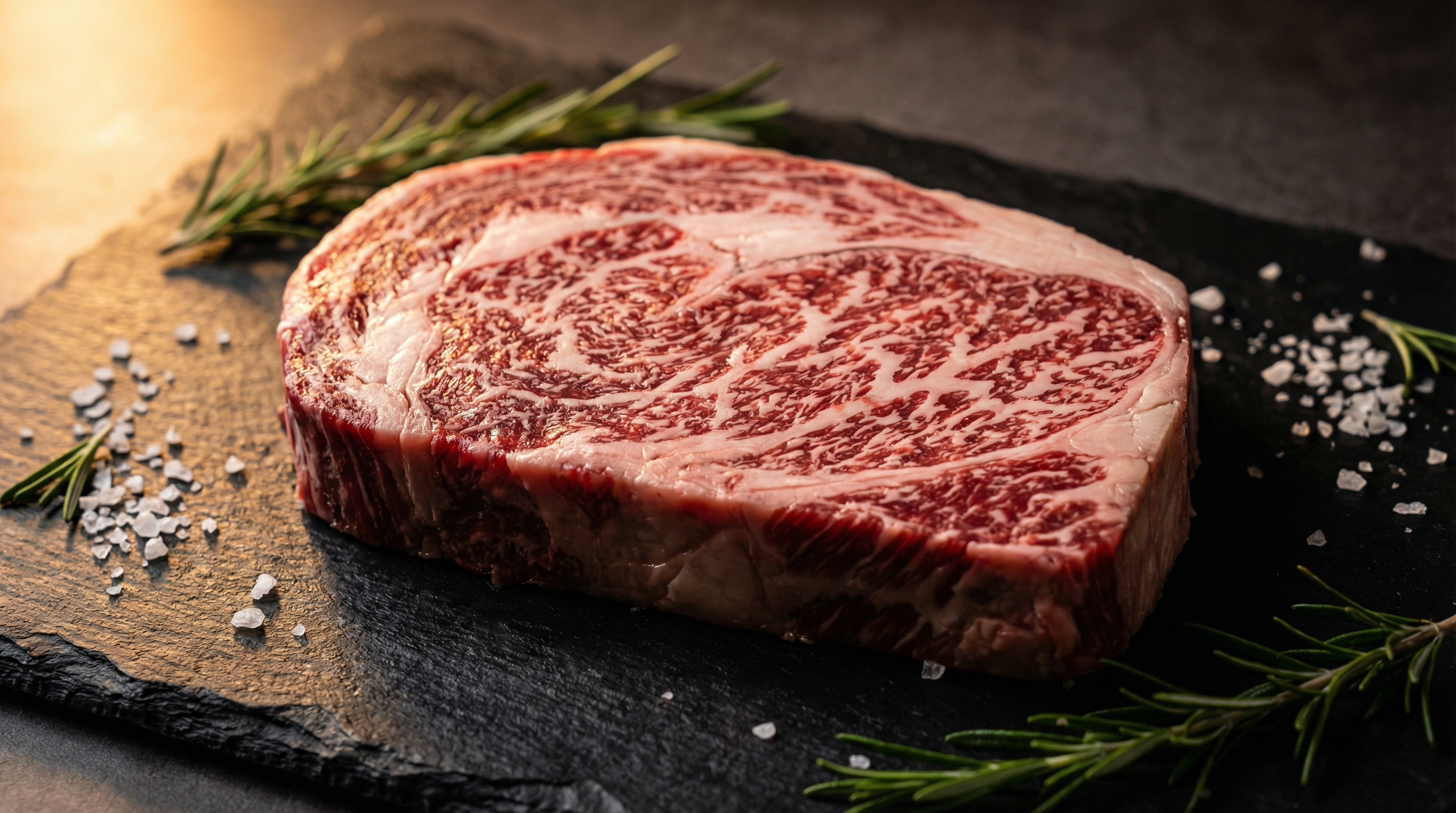
Wagyu beef represents the pinnacle of beef production — cattle bred specifically for intense marbling, resulting in meat that's extraordinarily tender, richly flavored, and unlike anything else you'll experience. But the term "wagyu" has become diluted. You'll find everything from $30/lb American crossbred wagyu to $400/lb authentic Japanese A5, all marketed under the same name. Understanding what you're actually buying is the difference between a transformative meal and an expensive disappointment.
After 15 years sourcing wagyu directly from Japanese auction houses, American ranches, and Australian exporters, I've evaluated thousands of carcasses across every grade and breed. I've seen legitimate BMS 12 Japanese A5 that justifies its $300/lb price tag, and I've seen American "wagyu" with marbling barely above USDA Choice being sold for $80/lb. The quality range is enormous, and the labeling is intentionally confusing.
This guide gives you the complete playbook: how Japan's BMS grading system actually works, what American wagyu really means, how to identify authentic Japanese sources, what you should pay, the best cuts for home cooking, and the exact techniques I use to cook wagyu perfectly. By the end, you'll know more about buying and cooking wagyu than 95% of steak enthusiasts.
What Makes Wagyu Beef Different?
Wagyu literally translates to "Japanese cow" (wa = Japanese, gyu = cow). But the term specifically refers to four heritage Japanese cattle breeds: Japanese Black (Kuroge Washu), Japanese Brown (Akage Washu), Japanese Shorthorn (Nihon Tankaku Washu), and Japanese Polled (Mukaku Washu). Over 90% of wagyu beef comes from Japanese Black cattle — the breed genetically predisposed to extreme intramuscular fat marbling.
What sets wagyu apart at the cellular level is the distribution and composition of intramuscular fat. According to research from Texas A&M's Muscle Biology Lab, wagyu cattle have significantly more monounsaturated fatty acids (MUFAs) than conventional beef — particularly oleic acid, the same heart-healthy fat found in olive oil. This gives wagyu its characteristic buttery texture and lower melting point (around 77°F, compared to 113°F for conventional beef fat).
The result is beef that:
- Melts in your mouth: Fat literally begins rendering at room temperature, creating an unctuously tender texture.
- Has an umami-rich, buttery flavor profile: The high concentration of MUFAs and intramuscular fat creates a deeply savory, almost sweet taste.
- Remains tender even at higher doneness levels: The extensive fat marbling keeps the meat moist and tender well beyond typical steak doneness targets.
But here's the critical caveat: not all wagyu is created equal. Genetics alone don't guarantee extraordinary marbling — Japanese breeding programs, feeding protocols, and grading systems produce vastly superior results compared to American crossbred wagyu.
Understanding Wagyu Grading Systems
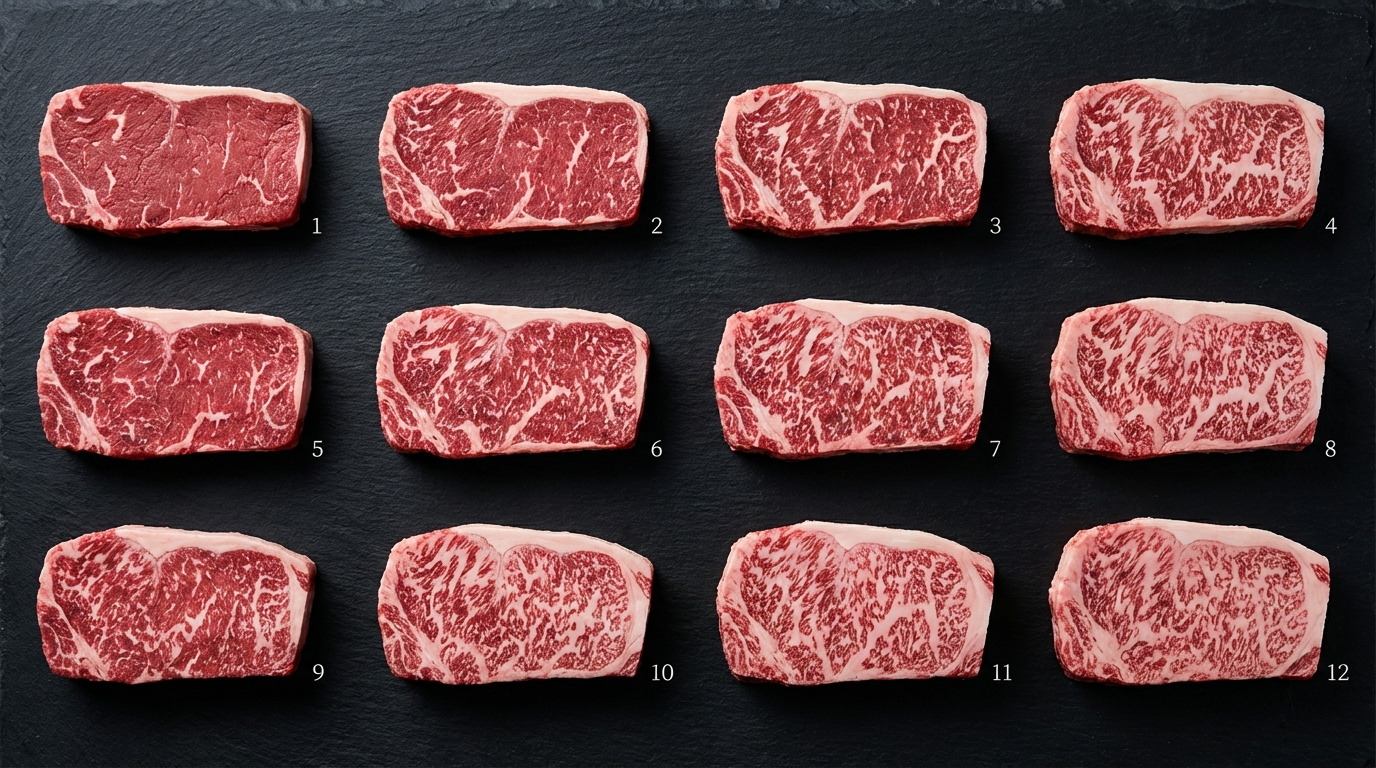
Japan's Meat Grading Association uses the most rigorous beef grading system in the world. Every commercially sold Japanese wagyu carcass receives two grades:
The Letter Grade (A, B, C): Yield
This measures carcass cutability — how much usable meat the carcass produces. "A" grade means ≥72% yield, which is above average. This matters to wholesalers buying whole carcasses, but has zero impact on eating quality. An A5 and B5 steak from otherwise identical cattle taste exactly the same.
The Number Grade (1-5): Quality
This is what actually matters for flavor and texture. Quality grades are determined by four inspection criteria:
- BMS (Beef Marbling Standard): Scored 1-12, measuring intramuscular fat distribution. This is the single most important factor.
- Meat color and brightness: Graded 1-7, with 3-5 being ideal (bright cherry-red). According to the USDA beef color standards, darker meat typically indicates older cattle or longer aging.
- Firmness and texture: Graded 1-5, measuring muscle fiber density and resilience.
- Fat color and luster: Graded 1-5, with white to creamy being ideal. Yellowish fat indicates lower quality feed or genetics.
To achieve a "5" quality grade (as in A5), beef must score:
- BMS 8 or higher (on the 1-12 scale)
- Meat color 3-5
- Firmness 4-5
- Fat color 1-4
Here's what most buyers don't understand: A5 certification only guarantees a minimum BMS score of 8. But BMS scores go up to 12. That's a 60% range of marbling intensity, all carrying the same "A5" label. A BMS 8 A5 ribeye and a BMS 12 A5 ribeye differ dramatically in marbling density, eating experience, and price — yet both are labeled identically as "A5."
When buying Japanese A5, always ask for the specific BMS score. Anything below BMS 9 is technically A5 but represents the lower threshold. BMS 10-11 is exceptional. BMS 12 is extraordinarily rare and commands premium pricing.
American Wagyu Grading: A Different Standard
American wagyu typically doesn't use the BMS system. Instead, it's graded under the USDA system (Prime, Choice, Select). Most American wagyu falls into the "Prime" designation, which requires only "moderately abundant" marbling — roughly equivalent to BMS 4-6. That's well below the BMS 8 minimum required for Japanese A5.
Some American producers use unofficial grading terms like "Gold Grade" or "Black Grade" to differentiate their highest-marbled beef, but these aren't standardized. When buying American wagyu, look for BMS-equivalent scoring or ask for specific marbling photos.
Japanese vs. American vs. Australian Wagyu: What's the Difference?
Not all wagyu is from Japan, and the differences go far beyond origin labels:
Japanese Wagyu (100% Kuroge Washu)
- Genetics: Purebred Japanese Black cattle with centuries of genetic selection for marbling.
- Feeding: Grain-fed for 600+ days (compared to 200-300 days for American beef), often with beer, sake mash, or specialized grain blends.
- Marbling: BMS 8-12 (A5 grade), with fat representing 40-50% of total weight in high-grade cuts.
- Price: $200-400/lb for authentic A5 from premium regions (Kobe, Miyazaki, Matsusaka).
- Best for: Special occasions, tasting experiences, when maximum marbling is the goal.
American Wagyu (Crossbred)
- Genetics: Typically F1 hybrids (50% Japanese Black, 50% Angus) or F2+ crosses with varying Japanese genetics.
- Feeding: Grain-fed for 400-500 days, using corn-based diets.
- Marbling: Equivalent to BMS 4-7, occasionally reaching BMS 8+ in premium programs.
- Price: $30-100/lb depending on marbling grade and producer.
- Best for: Everyday luxury, those wanting marbling above Prime without Japanese A5 prices.
Australian Wagyu (Crossbred & Fullblood)
- Genetics: Mix of crossbred (F1-F4) and some fullblood Japanese Black herds.
- Feeding: Grain-fed for 300-500 days, with some programs reaching 600+ days for top grades.
- Marbling: Uses a 0-9+ marbling score system (MB), with MB9+ roughly equivalent to BMS 8-9.
- Price: $40-150/lb for premium grades (MB8-9+).
- Best for: A middle ground — better marbling than American wagyu, lower price than Japanese A5.
In my experience, Japanese A5 (BMS 10+) delivers an eating experience you simply can't replicate with crossbred wagyu. But American and Australian wagyu programs have improved dramatically in the past decade — some American producers are now achieving BMS 8-9 marbling with Angus-cross genetics, offering 80% of the experience at 30% of the price.
How to Buy Authentic Wagyu (And Avoid Fakes)
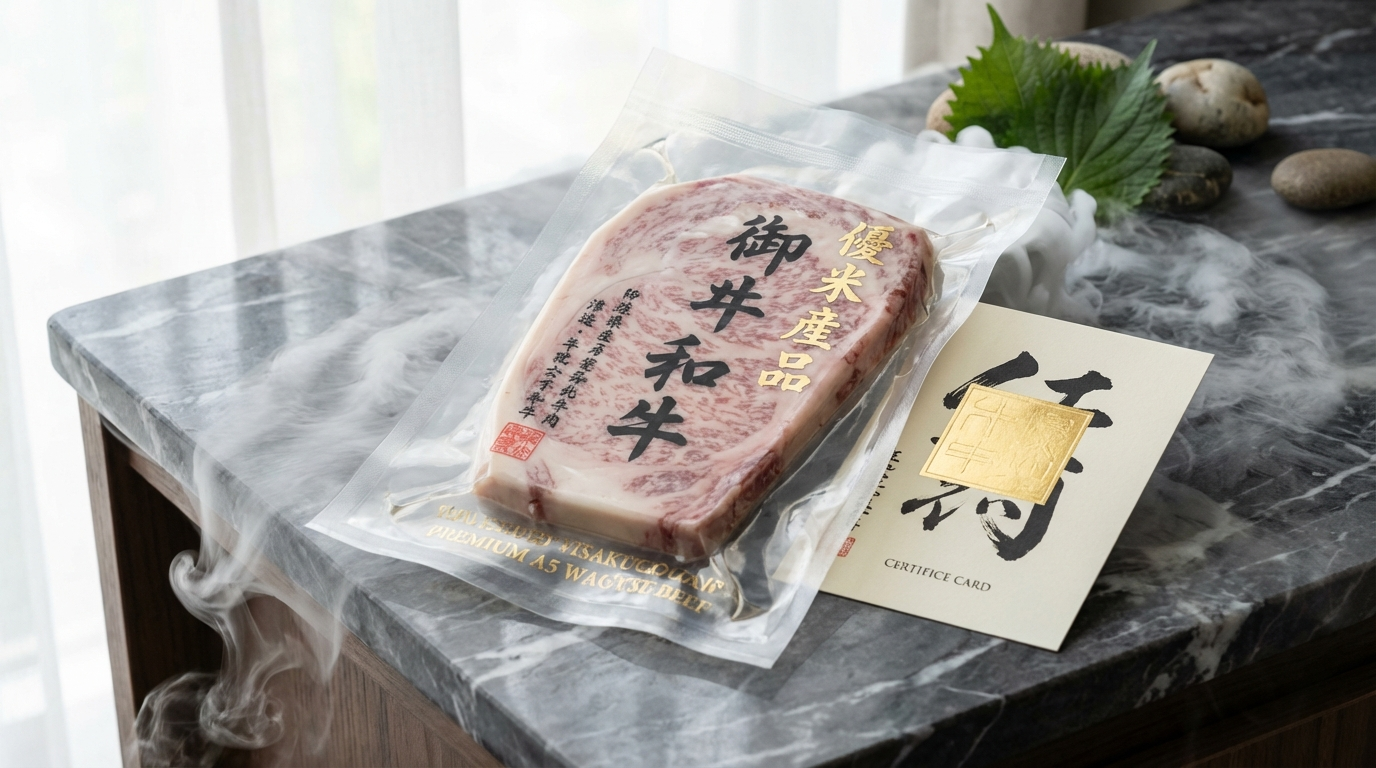
The wagyu market is rife with mislabeling. Here's how to verify you're buying the real thing:
For Japanese A5 Wagyu
1. Demand certification documentation. Legitimate Japanese A5 imports include an official certificate from Japan's Meat Grading Association showing:
- JMGA grading stamp (official seal)
- Individual carcass identification number (10 digits)
- Prefecture of origin (Hyogo for Kobe, Miyazaki for Miyazaki, etc.)
- Quality grade (should state "5" and list the BMS score)
- Export certification number (required for US imports)
If the seller can't provide this documentation, it's not authentic Japanese A5. Period.
2. Verify the carcass ID. Use Japan's national cattle traceability system at id.nlbc.go.jp — enter the 10-digit ID number to confirm the animal's birth farm, breed, and slaughter date.
3. Check visual marbling. A5-grade beef should show dense, intricate fat webbing throughout the muscle. If you're seeing large fat pockets or streaky marbling (rather than fine intramuscular marbling), it's likely not A5.
4. Understand regional designations. "Kobe beef," "Miyazaki beef," and "Matsusaka beef" are protected geographical indications with additional certification beyond A5. If a seller claims Kobe beef, they must provide Kobe Beef Marketing & Distribution Promotion Association certification — this is separate from JMGA grading.
For American & Australian Wagyu
American and Australian wagyu lack centralized grading, so you're relying on producer reputation:
- Buy from established programs: Snake River Farms (Idaho), Lone Mountain (New Mexico), Holy Grail Steak Co. (California), Blackmore (Australia), Westholme (Australia).
- Ask for marble scoring: Reputable producers will provide BMS-equivalent scores or high-resolution cross-section photos.
- Verify genetics: Ask what percentage Japanese Black genetics the cattle carry. Full-blood (100%) and F1 crosses (50%) are preferable to F3+ (less than 25%).
Best Wagyu Cuts for Home Cooking
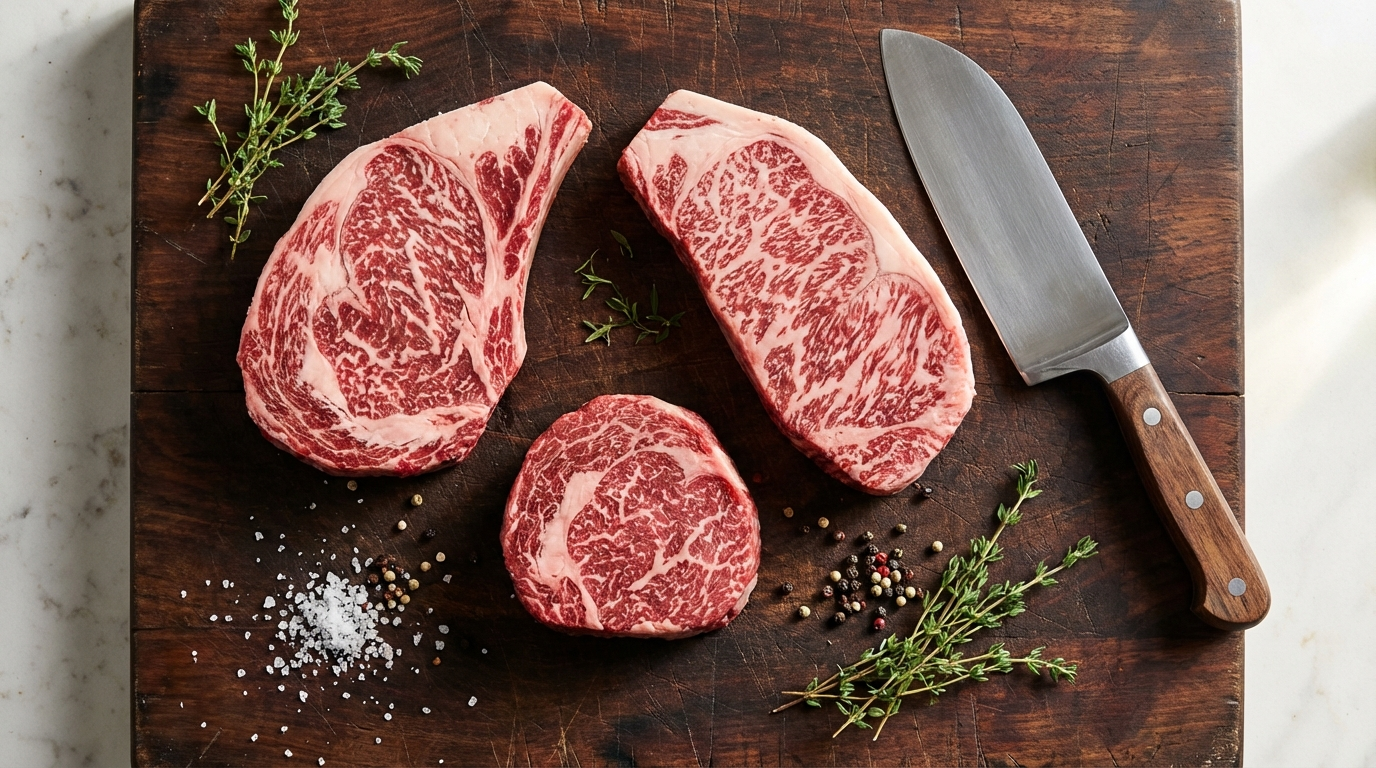
Different cuts deliver different experiences. Here's what I recommend based on 15 years of cooking and sourcing wagyu:
Ribeye (Most Popular)
- Best for: Maximum marbling, richest flavor, most forgiving cook
- Marbling: Highest intramuscular fat of any cut, especially in the spinalis (ribeye cap)
- Cooking method: Cast iron sear or reverse sear
- Price (A5): $200-300/lb
- Why I choose it: The spinalis muscle on A5 ribeye is the single best bite of beef you'll ever eat — it's almost pure fat, melting instantly on your tongue. This cut showcases wagyu at its peak.
Striploin / New York Strip (My Personal Favorite)
- Best for: Those who want intense marbling but still prefer some beefiness
- Marbling: Slightly less than ribeye, but still BMS 10+ in A5 grades
- Cooking method: Cast iron sear
- Price (A5): $180-280/lb
- Why I choose it: Ribeye can be almost too rich — striploin gives you intense marbling with a firmer texture and more pronounced beef flavor. It's the cut I cook most often at home.
Tenderloin / Filet Mignon (Leanest Option)
- Best for: Those who prioritize texture over intense marbling
- Marbling: Lower than ribeye/striploin, but still exceptionally tender
- Cooking method: Sear + finish in oven (benefits from gentle heat)
- Price (A5): $250-350/lb (scarcity drives price up despite lower marbling)
- Why I choose it: When I want a buttery, melt-in-your-mouth texture without the richness of ribeye. It's less overtly "wagyu" in flavor but showcases the breed's tenderness.
Cuts to Avoid (For A5)
- Brisket: The extreme marbling makes it difficult to render properly; you'll end up with greasy, fatty brisket rather than tender BBQ.
- Short ribs: Similar issue — the fat doesn't render cleanly, and you lose the textural contrast that makes short ribs appealing.
- Ground wagyu: A waste of premium beef. Grinding destroys the marbling structure that makes wagyu special.
How to Cook Wagyu Beef Perfectly
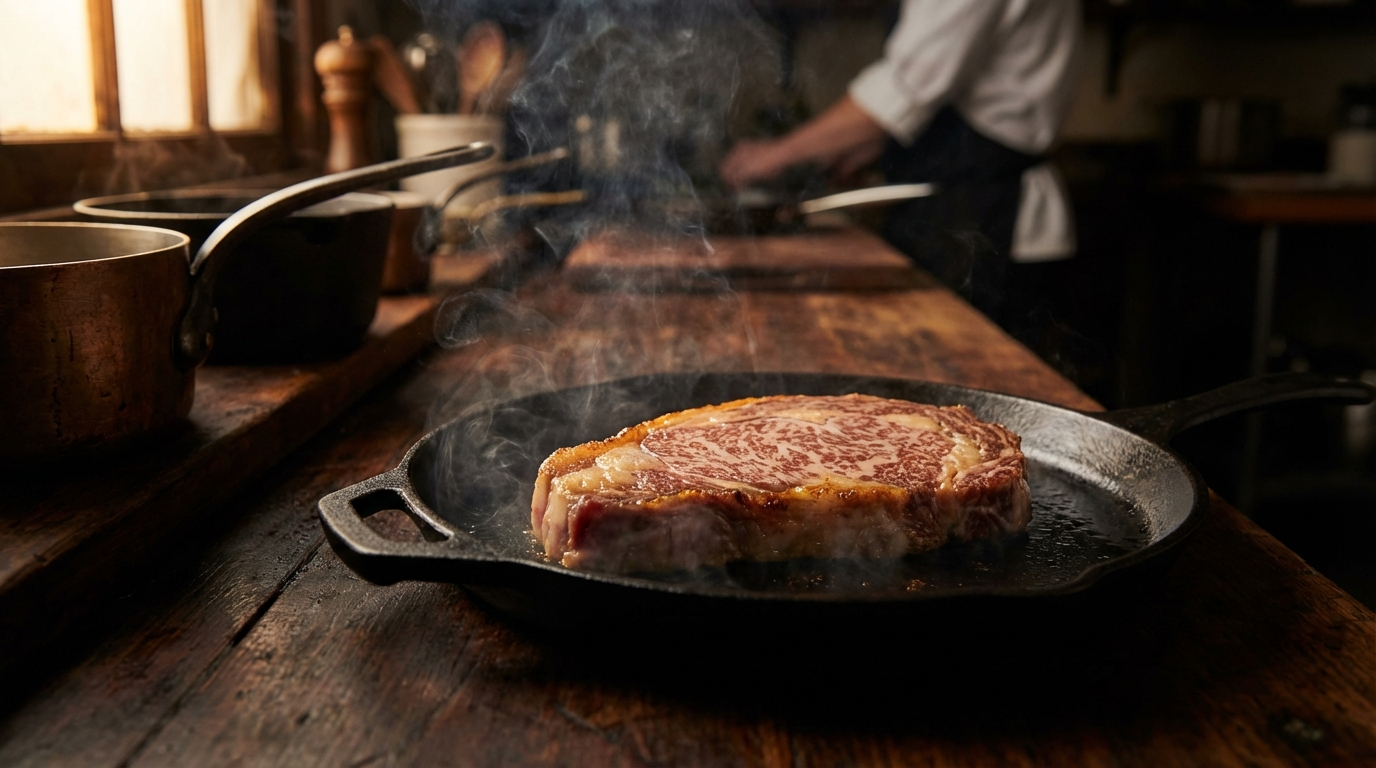
Wagyu demands different cooking techniques than conventional beef. The extreme marbling means it cooks faster, requires less heat, and reaches optimal doneness at different internal temperatures. Here's the exact method I use:
Pan-Searing Method (Best for Ribeye & Striploin)
1. Bring the steak to room temperature. Remove from refrigerator 45-60 minutes before cooking. This ensures even cooking throughout.
2. Season minimally. Use only coarse sea salt (like Maldon or Jacobsen) on both sides. Wagyu's flavor is so pronounced that additional seasoning masks it. No pepper — it burns at high heat.
3. Preheat your pan aggressively. Use a cast iron skillet over high heat for 5-7 minutes until it's smoking hot. Wagyu has enough internal fat that you need zero added oil or butter.
4. Sear for 60-90 seconds per side. For a 1-inch thick steak, that's all you need. The intense heat creates crust while keeping the interior at the target temperature. Do not move the steak while searing — let it develop a proper crust.
5. Target 120-125°F internal temperature. This is medium-rare for conventional steak, but for A5 wagyu it's closer to medium because the fat marbling insulates the muscle. Use an instant-read thermometer — this isn't the time to guess.
6. Rest for 5 minutes. Carryover heat will raise the internal temp another 5°F. Resting allows the rendered fat to redistribute rather than running out when you cut.
Reverse Sear Method (Best for Thick Cuts 1.5"+)
1. Bring to room temperature and season. Same as above.
2. Place on a wire rack over a baking sheet. Cook in a 225°F oven until internal temp reaches 110°F (about 25-30 minutes for a 1.5" steak).
3. Sear in a smoking-hot cast iron pan. 60 seconds per side to develop crust.
4. Target 120-125°F final temp. The low-and-slow oven phase gives you more control over doneness.
Common Mistakes to Avoid
- Cooking to conventional steak temps: Because of the high fat content, wagyu at 135°F (medium for conventional beef) will taste overdone. Aim for 120-125°F.
- Overcrowding the pan: Sear one steak at a time. Multiple steaks drop the pan temperature, preventing proper crust formation.
- Adding butter or oil: Wagyu renders enough fat on its own. Added fat makes it greasy rather than rich.
- Over-seasoning: Salt only. Wagyu's flavor is delicate and complex — garlic, rosemary, and other aromatics overpower it.
- Slicing too thick: Because of the richness, slice wagyu into 1/4-inch slices rather than serving a whole steak. It's more enjoyable in smaller, more concentrated bites.
Storing Wagyu Beef
Proper storage is critical to preserve quality:
Short-Term (3-5 Days)
Keep vacuum-sealed in the coldest part of your refrigerator (usually the back of the bottom shelf, around 32-34°F). Do not open the vacuum seal until ready to cook — exposure to oxygen accelerates oxidation and off-flavors.
Long-Term (3-6 Months)
Wagyu freezes exceptionally well due to the high fat content. Keep vacuum-sealed and store at 0°F or below. Thaw slowly in the refrigerator (24-48 hours) rather than using a microwave or water bath, which damages the fat structure.
Dry Aging Wagyu: Should You?
Short answer: no. Dry aging is designed to concentrate flavor and tenderize tough cuts through enzymatic breakdown. Wagyu is already extraordinarily tender and richly flavored. Dry aging (especially beyond 14 days) creates funky, nutty notes that overpower wagyu's delicate buttery profile. Save dry aging for Prime or Choice grade beef.
What You Should Actually Pay
Pricing varies widely by grade, cut, and source. Here are fair market ranges based on current 2026 pricing:
| Grade/Origin | Price Range (per lb) | When It's Worth It |
|---|---|---|
| Japanese A5 (BMS 10-12) | $200-400 | Special occasions, maximum marbling experience |
| Japanese A5 (BMS 8-9) | $150-250 | Introducing someone to A5 without top-tier pricing |
| Australian Wagyu (MB9+) | $60-150 | Excellent marbling at lower price than Japanese A5 |
| American Wagyu (BMS 6-8) | $40-100 | Everyday luxury, better marbling than Prime |
| American Wagyu (BMS 4-6) | $30-60 | Entry-level wagyu, comparable to upper Prime |
Red flags for pricing:
- Japanese A5 under $150/lb (likely counterfeit or mislabeled)
- American "wagyu" over $120/lb (unless it's verified BMS 9+)
- "Kobe beef" under $300/lb (real Kobe is extraordinarily rare in the US)
Final Thoughts: Is Wagyu Worth It?
After spending my career working with wagyu, here's my honest take: Japanese A5 (BMS 10+) is worth experiencing at least once. It's not just "better beef" — it's a fundamentally different eating experience that redefines what beef can be. The buttery texture, umami intensity, and melt-in-your-mouth richness are unmatched.
But for regular consumption? High-quality American or Australian wagyu (BMS 6-8) delivers 80% of the experience at 25% of the cost. That's where I spend most of my budget.
The key is knowing exactly what you're buying. Demand marble scores, verify certifications, buy from reputable sources, and don't pay A5 prices for crossbred beef labeled as "wagyu." With the information in this guide, you're now equipped to buy, cook, and enjoy wagyu at any level — from entry-level American crossbreeds to top-tier Japanese BMS 12.
Happy cooking, and welcome to the world of extraordinary beef.
More Expert Guides
What Is Wagyu Beef? The Complete Guide to Grades, Origins & Quality
Discover wagyu beef origins, the difference between Japanese A5 and American wagyu, how BMS grading works, why marbling matters, proper cooking techniques, and what you should pay in 2026.
12 min readA5 Wagyu: Your Complete Buying & Authentication Guide (2026)
A5 wagyu represents the pinnacle of beef quality, but not all A5 is created equal. Learn how to authenticate real Japanese A5, decode BMS scores, find fair prices, and cook it perfectly at home.
14 min readA5 Wagyu Prefectures: Regional Guide to Japan's Best Beef
Discover the regional differences in Japanese A5 wagyu across 12 key prefectures. Learn which prefecture produces the flavor profile you'll love most.