Halal Wagyu: Complete Guide to Islamic Certified Japanese Beef
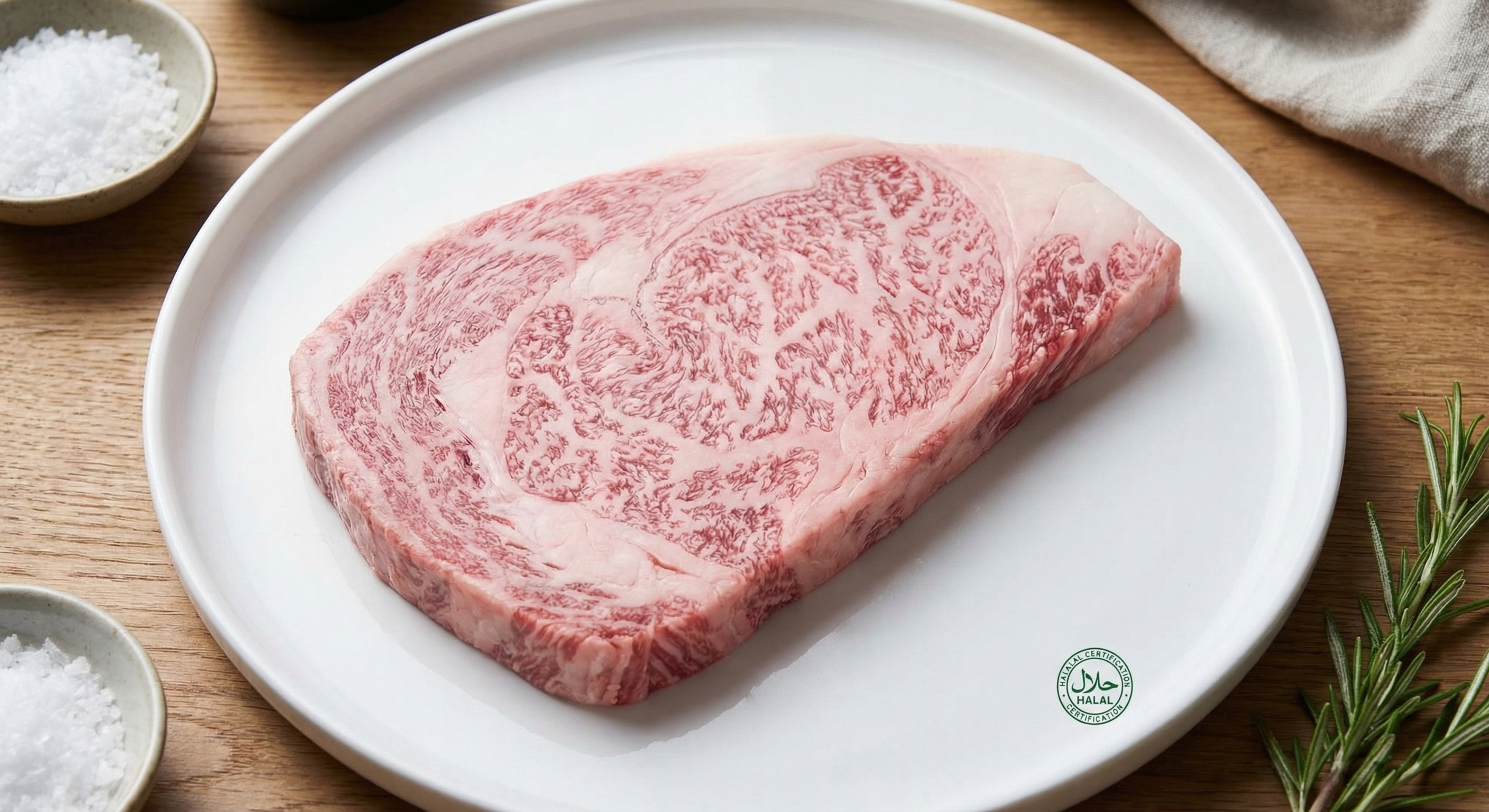
The Intersection of Japanese Excellence and Islamic Tradition
After spending years working with wagyu producers across Japan and halal certification bodies in multiple countries, I've witnessed the fascinating convergence of two ancient traditions: the meticulous Japanese art of cattle breeding and the Islamic principles of ethical slaughter. The question "Is wagyu halal?" has a more nuanced answer than most people realize.
Wagyu beef itself—the cattle breed and marbling characteristics—poses no inherent conflict with Islamic dietary law. The challenge lies entirely in the slaughter and processing methods. This guide will walk you through everything you need to know about halal wagyu: where it comes from, how it's certified, where to buy it, and what quality standards to expect.
What Makes Wagyu Halal?
For wagyu beef to be considered halal, it must meet the strict requirements outlined in Islamic law (Shariah). These requirements apply to all meat, not just wagyu, but the premium nature of wagyu adds additional complexity to the certification process.
Core Halal Requirements
Islamic law requires five essential elements for meat to be halal:
- The animal must be alive and healthy at the time of slaughter — No pre-stunning methods that kill the animal before the Islamic slaughter cut
- The slaughterer must be Muslim — A practicing Muslim must perform the actual cut
- The name of Allah must be invoked — The slaughterer recites "Bismillah, Allahu Akbar" before the cut
- The cut must sever the throat, windpipe, and blood vessels — A single, swift cut with a sharp knife
- The blood must be fully drained — Complete exsanguination is required
These requirements align remarkably well with wagyu quality standards in several ways. Both traditions emphasize minimal stress to the animal (which affects meat quality), swift processing, and careful handling. The primary challenge lies in the stunning requirements.
The Stunning Debate
Modern commercial slaughter facilities in Japan, Australia, and the United States typically use electrical or captive bolt stunning before slaughter. This creates a theological question: if the stunning renders the animal unconscious (but not dead), is the meat halal?
Islamic scholars have different interpretations:
- Strict interpretation: No stunning whatsoever. The animal must be fully conscious when the throat is cut. Some halal certifying bodies require this approach.
- Moderate interpretation: Reversible stunning (where the animal would recover if not slaughtered) is permissible because the animal remains alive. The actual Islamic slaughter cut is what causes death.
- Flexible interpretation: Any stunning that doesn't kill the animal before the cut is acceptable if performed by Muslims invoking Allah's name.
When buying halal wagyu, understanding which interpretation your certification body follows matters—especially if you're purchasing for a community or business serving Muslims with different scholarly preferences.
Where Halal Wagyu Comes From
Halal wagyu production exists in three main regions, each with distinct certification standards and supply chain characteristics.
Japan: Limited But Growing
Japan has a relatively small Muslim population (less than 2% of the total), which historically meant limited halal infrastructure. However, the combination of Muslim tourism and export demand to Islamic countries has driven growth in halal-certified wagyu facilities.
Certified Japanese Facilities: A handful of wagyu processing facilities in Japan now hold halal certification from recognized Islamic bodies. These facilities typically serve the export market to Indonesia, Malaysia, and the Middle East rather than the domestic Japanese market.
The Japanese halal wagyu available for purchase usually comes from:
- Specialized export programs in Kagoshima and Miyazaki prefectures
- Processing facilities certified by the Japan Halal Standard (JHS) or recognized international bodies
- Premium retailers who arrange custom slaughter runs for halal certification
What to expect: Japanese halal wagyu commands the highest prices in the market because of the combination of authentic Japanese bloodlines, rigorous Japanese grading (A5, BMS 10-12), and the added complexity of halal certification. Expect to pay 20-40% more than standard A5 wagyu from the same region.
Australia: The Global Leader in Halal Wagyu
Australia produces more halal-certified wagyu than any other country. The Australian wagyu industry developed specifically to serve export markets in Asia and the Middle East, where halal certification is often mandatory.
Why Australia dominates:
- Scale: Large processing facilities with dedicated halal slaughter lines
- Genetics: Australian fullblood and crossbred wagyu programs produce marbling scores (MB 6-9+) competitive with Japanese wagyu
- Infrastructure: Purpose-built halal certification systems integrated into major export abattoirs
- Cost advantage: Lower production costs than Japan while maintaining high marbling standards
Australian halal wagyu typically carries certification from:
- AGAHAP (Australian Government Authorised Halal Program)
- ICCV (Islamic Coordinating Council of Victoria)
- Halal Australia
- AFIC (Australian Federation of Islamic Councils)
What to expect: Australian halal wagyu offers the best value proposition in the market. You'll find MB 6-9 marbling (roughly equivalent to Japanese BMS 6-9) at prices 30-50% lower than comparable Japanese halal wagyu. The meat is genuine wagyu with excellent marbling, though some purists note subtle texture and flavor differences compared to Japanese-raised A5.
United States: Emerging Market
The US wagyu industry is newer to halal certification but growing rapidly. Several American wagyu producers now offer halal-certified options, particularly those targeting Muslim communities in major metropolitan areas.
US halal wagyu characteristics:
- Primarily crossbred wagyu (50-93.75% wagyu genetics blended with Angus)
- USDA Prime or higher marbling standards (comparable to MB 4-7)
- Certification typically from Islamic Society of North America (ISNA) or local Islamic centers
- Fresher product for US-based consumers (no international shipping)
What to expect: American halal wagyu sits between commodity beef and true Japanese wagyu in both quality and price. It's an excellent entry point for consumers who want wagyu marbling with halal certification but aren't ready to invest in premium Japanese or Australian imports.
Halal Certification Bodies and What They Mean
Not all halal certifications are equal. Different Islamic organizations have varying standards for stunning, slaughter methodology, and oversight rigor.
Tier 1: Government-Backed Certifications
The most universally accepted halal certifications come from government-recognized Islamic bodies:
- JAKIM (Malaysia): Department of Islamic Development Malaysia. Considered the gold standard globally. Very strict on stunning (generally prohibits it).
- MUI (Indonesia): Indonesian Ulema Council. Serves the world's largest Muslim population. Slightly more flexible on reversible stunning.
- AGAHAP (Australia): Government-authorized program acceptable to most Islamic countries for export.
- UAE Government: Emirates Authority for Standardization and Metrology (ESMA) certification widely recognized in GCC countries.
If you're buying halal wagyu for resale or serving a diverse Muslim community, these tier-1 certifications minimize theological concerns.
Tier 2: Reputable Private Certification Bodies
Private Islamic organizations with strong reputations:
- HFA (Halal Food Authority, UK): Respected in Europe and among Sunni communities
- IFANCA (Islamic Food and Nutrition Council of America): Major US-based certifier
- HFSAA (Halal Food Standards Alliance of America): Growing US presence
What to Ask About Certification
When purchasing halal wagyu, especially for the first time from a new supplier, ask these questions:
- Which certifying body issued the halal certificate?
- Can you provide a copy of the current halal certificate with the lot number?
- What stunning method, if any, is used in the slaughter process?
- Are the slaughter personnel Muslim?
- Is the facility dedicated halal or does it process non-halal meat on other lines?
Legitimate suppliers will answer these questions readily and provide documentation. Hesitation or vague answers should raise concerns.
Where to Buy Halal Wagyu
Finding reliable halal wagyu sources depends on your location and budget. Here's a breakdown of options by region and price tier.
North America
Premium options (A5 Japanese or high-grade Australian):
- Holy Grail Steaks (online, US-based, carries certified Australian halal wagyu)
- Crowd Cow (online marketplace with halal wagyu options from Australian suppliers)
- Local halal butchers in major metros (Chicago, Detroit, Los Angeles, Toronto) increasingly stock Australian wagyu
Mid-range options (American wagyu or Australian crossbred):
- Halal Pastures (online, specializes in American halal wagyu)
- Boxed Halal (subscription service with occasional wagyu offerings)
- Regional halal meat markets (varies by city)
Europe and UK
The UK and France have well-developed halal wagyu markets:
- Tariq Halal (London, carries Australian halal wagyu)
- HFA-certified butchers throughout the UK
- La Boucherie Moderne (Paris, premium halal meats including wagyu)
Middle East and GCC
The Gulf states have the most accessible halal wagyu markets:
- Waitrose and Spinneys (supermarket chains in UAE with halal wagyu sections)
- Tokyo Mart Dubai (Japanese imports, halal-certified)
- Fine dining suppliers (premium restaurants source Japanese halal wagyu, often willing to sell retail quantities)
Asia-Pacific
Malaysia and Indonesia have robust halal wagyu infrastructure:
- Local Australian wagyu imports (widely available in supermarkets)
- Japanese halal wagyu through specialty importers
- Domestic wagyu programs in Malaysia (emerging)
Quality Considerations: Does Halal Slaughter Affect Wagyu Quality?
This is one of the most common questions I encounter: does the halal slaughter method change the eating quality of wagyu?
The Short Answer: No, When Done Correctly
Properly performed halal slaughter does not negatively impact wagyu quality. In fact, the core principles of halal slaughter—minimizing animal stress, swift cutting, complete blood drainage—align perfectly with best practices for premium beef quality.
The Detailed Answer: It Depends on the Facility
Quality outcomes depend on facility expertise and equipment:
Potential advantages of halal slaughter for wagyu:
- Stress reduction: Islamic law requires the animal to be calm. Low stress preserves muscle glycogen, which improves tenderness.
- Complete blood removal: Thorough exsanguination can extend shelf life and reduce off-flavors.
- Individual attention: Halal slaughter often involves more careful, individual handling compared to high-speed conventional lines.
Potential challenges:
- If stunning is prohibited: Conscious slaughter requires exceptional skill to minimize distress. Poor execution can cause stress-related quality issues.
- Small facility volume: Some halal processors handle lower volumes, which can mean less optimized aging and cold chain processes.
- Training variability: Not all halal slaughter personnel have wagyu-specific training on handling high-marbling beef.
The bottom line: buy from established suppliers with track records in halal wagyu. The certification ensures Islamic compliance; the supplier's reputation ensures eating quality.
Pricing: What to Expect
Halal wagyu typically costs more than non-halal wagyu from the same source. Here's why and what premiums are reasonable:
Why Halal Wagyu Costs More
- Lower production volumes: Dedicated halal slaughter lines process fewer animals per shift
- Certification costs: Audits, documentation, and ongoing compliance add overhead
- Specialized labor: Employing Muslim slaughter personnel and training them on wagyu-specific handling
- Supply chain complexity: Segregating halal product throughout processing, storage, and shipping
Reasonable Price Premiums
Based on current market rates (2026):
- Japanese A5 halal wagyu: $220-320 per pound for ribeye (vs. $180-260 for standard A5)
- Australian MB 8-9 halal wagyu: $90-140 per pound for ribeye (vs. $70-110 standard)
- American wagyu halal: $45-75 per pound for ribeye (vs. $35-60 standard)
If a supplier is charging more than 30% above standard wagyu prices for the same grade and origin, question whether the premium is justified.
Cooking Halal Wagyu: Any Differences?
Cook halal wagyu exactly as you would any wagyu of the same grade and marbling score. The halal certification process doesn't change the meat's composition, marbling structure, or ideal cooking methods.
Standard Wagyu Cooking Principles Apply
- Bring to room temperature: 30-45 minutes before cooking
- Minimal seasoning: Salt and pepper only—let the beef's natural flavor shine
- High heat, short cook: Sear at 450-500°F for 2-3 minutes per side for medium-rare
- Don't overcook: Target internal temp of 125-130°F. Wagyu's high fat content means it dries out faster above medium
- Rest properly: 5-8 minutes under foil to redistribute juices
The only consideration specific to halal wagyu is when serving to guests: if your guests are Muslim, many prefer that halal meat be cooked on clean surfaces not contaminated with pork or non-halal meat residue. Use dedicated cutting boards and cookware if possible, or thoroughly clean and rinse your equipment before cooking halal wagyu.
Common Questions About Halal Wagyu
Is all wagyu automatically halal?
No. Wagyu refers to the cattle breed and marbling characteristics. For the meat to be halal, it must be slaughtered according to Islamic law by certified Muslim slaughterers with proper invoking of Allah's name. Standard wagyu processing in Japan, Australia, or the US does not follow halal requirements.
Can I trust "halal" labels without certification?
No. Always look for certification from a recognized Islamic body. In many countries, "halal" labeling is not regulated, meaning anyone can print "halal" on a package without actual compliance. Verify the certifying organization and ask for documentation.
Is Kobe beef available in halal?
Genuine Kobe beef (from Hyogo prefecture, meeting strict Kobe Beef Marketing and Distribution Promotion Association standards) is rarely available with halal certification. The production volume is too limited and export-focused to justify dedicated halal processing runs. However, you can find halal-certified Japanese wagyu from other prefectures (Kagoshima, Miyazaki) with comparable A5 BMS 10-12 quality.
How long does halal wagyu keep?
Halal-certified wagyu has the same shelf life as any wagyu of equivalent quality:
- Refrigerated: 3-5 days in original vacuum packaging
- Frozen: 6-12 months in vacuum-sealed packaging
- Dry-aged: Up to 45 days in controlled aging environments (though most halal wagyu is sold wet-aged)
The thorough blood drainage required by halal slaughter may actually extend shelf life slightly by removing a potential spoilage vector.
Can non-Muslims eat halal wagyu?
Absolutely. Halal certification is a religious dietary requirement for Muslims, but the meat is safe and delicious for anyone. In fact, many non-Muslim consumers prefer halal meat because of the ethical slaughter standards and careful handling it requires.
The Future of Halal Wagyu
The halal wagyu market is expanding rapidly, driven by three converging trends:
- Growing Muslim populations in Western countries: Creating local demand for premium halal proteins
- Rising incomes in Islamic countries: Malaysia, Indonesia, and GCC states consuming more premium beef
- Mainstream acceptance: Non-Muslim consumers increasingly choosing halal meat for perceived quality and ethical standards
I expect to see continued growth in Australian halal wagyu exports, expansion of halal certification among US wagyu producers, and potentially the first large-scale halal wagyu breeding program in a Muslim-majority country (likely Malaysia or the UAE) within the next decade.
For consumers, this competition and growth means better availability, more competitive pricing, and higher quality standards across the board.
Final Recommendations
If you're new to halal wagyu, start here:
- Verify certification: Choose suppliers with recognized Islamic certifying bodies—JAKIM, MUI, or AGAHAP are your safest bets
- Start with Australian: Australian halal wagyu offers the best quality-to-price ratio while you learn what you prefer
- Request documentation: Legitimate suppliers will readily provide copies of halal certificates and answer questions about slaughter methods
- Buy from volume sellers: Suppliers who move halal wagyu regularly have fresher product and better cold chain management
- Try before bulk buying: Order a small quantity first to assess quality and supplier reliability before committing to larger purchases
Halal wagyu represents a beautiful convergence of Japanese craftsmanship and Islamic tradition. With careful sourcing and quality suppliers, you can enjoy the extraordinary marbling and flavor of wagyu while honoring halal dietary requirements.
More Expert Guides
What Is Wagyu Beef? Complete Guide to Types, Grades & Quality
A comprehensive guide to wagyu beef covering Japanese and American varieties, grading systems, quality indicators, pricing, and how to identify authentic wagyu.
16 min readA5 Wagyu: Complete Buying Guide (2026)
A5 Wagyu is the pinnacle of Japanese beef — but what does that actually mean? This complete guide covers grading, pricing, where to buy, and how to cook the world's most luxurious beef.
12 min readA5 Wagyu: The Ultimate Guide to Japan's Highest Grade
A5 wagyu represents the absolute pinnacle of beef grading in Japan. Less than 10% of Japanese wagyu earns this designation. Here's everything you need to know about A5 grading, BMS scores, prefecture differences, and how to buy authentic A5 beef.