What Is A5 Wagyu? The Complete Guide
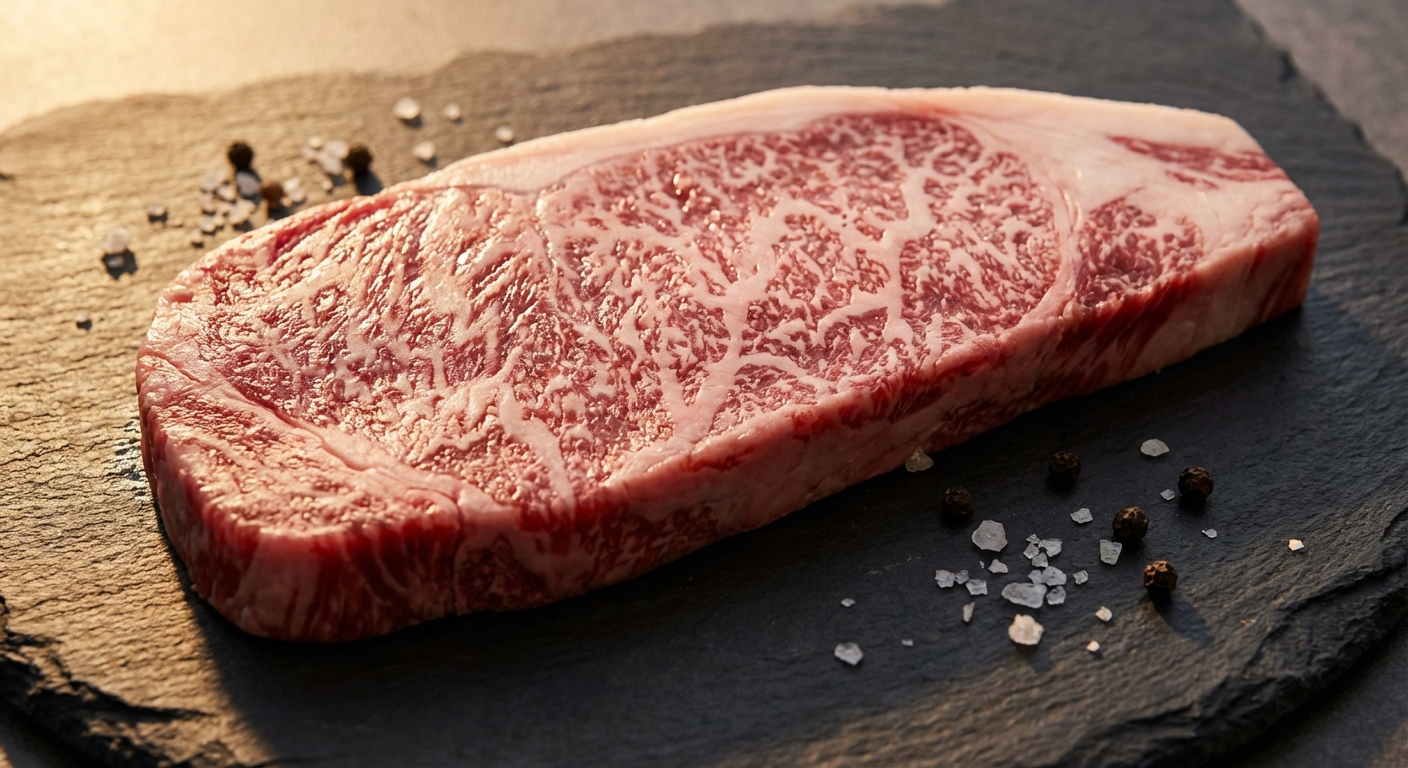
I've spent twenty years importing and evaluating Japanese Wagyu, and the single most common question I hear is: "What does A5 actually mean?" It's a fair question — the Japanese grading system is elegant but not intuitive, and the marketing around A5 has created more confusion than clarity.
Let me break it down with the precision it deserves.
The Japanese Grading System: Two Components
The grade "A5" combines two independent evaluations performed by the Japanese Meat Grading Association (JMGA) on every beef carcass processed in Japan:
The letter (A, B, or C) is the yield grade — how much usable meat the carcass produces relative to its total weight. A means above-average yield (72%+), B means average (69-72%), C means below-average (under 69%). This matters to processors who buy whole carcasses. For you as a consumer buying individual steaks, the yield grade is largely irrelevant.
The number (1 through 5) is the quality grade, and this is where it gets interesting. The quality grade is determined by four factors, and the overall score equals the lowest score among them:
- BMS (Beef Marbling Standard): Scored 1-12. Must be BMS 8-12 for a quality grade of 5.
- Meat color and brightness: Scored on a standardized chart. Must fall within the ideal range.
- Firmness and texture: The muscle density and grain quality.
- Fat color and quality: Should be white to slightly cream. Yellowed fat scores lower.
Here's the critical insight: A5 encompasses BMS 8 through BMS 12 — a massive range. A BMS 8 striploin and a BMS 12 striploin are both "A5," but the marbling intensity, the eating experience, and the price can differ by 100% or more. This is why I always tell people: ask for the specific BMS score, not just the letter grade.
What Each BMS Level Actually Looks Like
I've evaluated thousands of carcasses across Japanese grading houses. Here's what the A5 range looks like in practice:
BMS 8: The entry point for A5. Excellent marbling by any standard — significantly more intramuscular fat than even the best USDA Prime. The meat is clearly well-marbled but still has distinct areas of red lean between fat deposits. Beautiful beef, and for many people, the ideal balance of marbling and meat flavor.
BMS 9-10: The sweet spot for most Wagyu enthusiasts. Marbling is dense and evenly distributed, creating the classic shimofuri (frost-falling) pattern. The meat has a silky, almost custard-like texture when cooked. This is where the "melt in your mouth" quality becomes unmistakable. At BMS 10, you're eating something that has no equivalent in any other beef-producing country.
BMS 11-12: The pinnacle. The cross-section of a BMS 12 ribeye looks more white than red — the marbling is so dense that the lean muscle appears as thin red threads within a matrix of intramuscular fat. This is extraordinarily rare (perhaps 3-5% of production in top prefectures) and extraordinarily expensive. The eating experience is intense — rich, buttery, and deeply umami — but a 3-4 ounce portion is genuinely all most people want. An 8 ounce BMS 12 steak would overwhelm almost any palate.
How A5 Compares to USDA Grading
The USDA grading system (Select, Choice, Prime) measures marbling on a different scale, and it caps out well below the Japanese system. Here's the rough equivalence:
| USDA Grade | Approximate BMS Equivalent |
|---|---|
| USDA Select | BMS 1-2 |
| USDA Choice (low) | BMS 3 |
| USDA Choice (upper) | BMS 4-5 |
| USDA Prime | BMS 5-6 |
| Beyond USDA Prime | BMS 7-12 |
The entire A5 range (BMS 8-12) sits above the USDA grading scale. There's simply no American equivalent — the system wasn't designed for this level of marbling because American cattle genetics don't produce it.
What A5 Does NOT Tell You
Knowing the limitations of the grade is as important as knowing what it means:
- It doesn't specify the cut. A5 ribeye and A5 round are graded on the same carcass, but the eating experience is completely different. The grade applies to the animal, not the individual muscle.
- It doesn't tell you the prefecture. A5 Wagyu can come from Miyazaki, Hyogo, Kagoshima, or any other producing region. Each has different flavor characteristics.
- It doesn't guarantee shimofuri quality. Two BMS 10 carcasses can have very different marbling patterns — one fine and weblike, the other coarse and clumpy. The BMS score measures quantity; the shimofuri quality is a separate consideration.
- It doesn't account for age, feeding regimen, or breed strain. All of these affect flavor, and none are captured in the A5 designation.
What A5 Wagyu Costs (And Why)
At U.S. retail, authentic Japanese A5 Wagyu typically costs:
- Striploin: $100-$180/lb depending on BMS and prefecture
- Ribeye: $120-$200+/lb
- Tenderloin: $130-$220/lb
- Chuck/shoulder cuts: $40-$80/lb
- Ground Wagyu: $25-$40/lb
These prices reflect the genuine cost of production. Japanese cattle are raised for 28-32 months (vs. 18-22 for American cattle), on expensive proprietary feed blends, with individual attention that's unthinkable in commodity production. Add export costs, import duties, cold-chain logistics, and the limited supply, and the pricing makes sense — even if it's painful at the register.
If you see "A5 Wagyu" at prices significantly below these ranges, investigate carefully. The Japanese A5 market has a fraud problem — re-labeled Australian Wagyu, inflated BMS claims, and products with no verifiable traceability are common. Always buy from sellers who can provide the animal's individual ID number from Japan's traceability database.
How to Eat A5 Wagyu
This is where most people go wrong. A5 Wagyu is not a "bigger, better steak" — it's a fundamentally different product that requires different handling:
- Portion size: 3-4 ounces per person is plenty. Seriously. The richness is intense, and eating an 8 oz A5 steak Western-style will likely leave you feeling overwhelmed.
- Preparation: Salt only. Maybe a touch of wasabi. No marinades, no heavy sauces, no compound butters. The beef IS the flavor.
- Cooking: Hot surface, brief sear, barely past rare. The internal fat renders at such a low temperature that you need less heat than you'd use for conventional beef. Many Japanese preparations — yakiniku, teppanyaki — cook thin slices for 15-30 seconds per side.
- Temperature: Room temperature rest for 15-20 minutes before cooking is essential. Cold A5 Wagyu won't render properly.
The best first-time A5 experience: buy a single striploin steak (BMS 9-10) from a trusted source like The Meatery's A5 Wagyu collection, slice it into 1/4-inch strips, sear each strip for 10-15 seconds per side on a screaming-hot cast iron pan with no oil, and eat immediately with a pinch of flaky sea salt. You'll understand the hype within the first bite.
Frequently Asked Questions
What does A5 mean in Wagyu grading?
A5 combines the yield grade (A = above-average meat yield) and quality grade (5 = highest quality score). The quality grade requires BMS 8-12 marbling plus top scores in meat color, fat color, and firmness. It's the highest possible grade in the Japanese system.
How much does A5 Wagyu cost?
Authentic Japanese A5 Wagyu typically costs $100-$200+ per pound for premium cuts (ribeye, striploin) at U.S. retail. Less premium cuts like chuck or ground can be $25-$80/lb. Prices vary by BMS score, prefecture, and cut.
Is all A5 Wagyu the same quality?
No. A5 encompasses BMS 8 through BMS 12 — a significant quality range. A BMS 12 steak is meaningfully different from BMS 8 in marbling intensity and price. Always ask for the specific BMS score when buying A5.
How should I cook A5 Wagyu?
Keep it simple: salt only, very hot surface, brief sear (15-30 seconds per side for thin slices). No oil needed — the marbling provides lubrication. Serve in small portions (3-4 oz per person). The goal is to barely render the fat, not to cook it through.
More Expert Guides
Hida Beef: The Complete Guide to Gifu Prefecture's Legendary Wagyu
Hida beef is one of Japan's most prestigious regional wagyu brands, raised in the mountain valleys of Gifu Prefecture. Often overshadowed by Kobe in Western markets, Hida-gyu is revered in Japan for its delicate sweetness and fine-grained marbling. Here's what makes it special.
12 min readA4 vs A5 Wagyu: The Complete Comparison Guide
A4 and A5 are both elite Japanese wagyu grades, but they deliver meaningfully different eating experiences. This guide breaks down exactly how they differ in marbling, flavor, texture, price, and when each grade is the better choice.
16 min readWagyu Sous Vide: The Complete Guide to Precision-Cooked Wagyu Beef
Learn how to sous vide wagyu beef for flawless results every time. Covers ideal temperatures for each cut, timing charts, vacuum sealing tips, finishing sear methods, and why precision cooking is the best way to honor expensive wagyu.