Wagyu Zabuton: The Best-Kept Secret in Japanese Beef
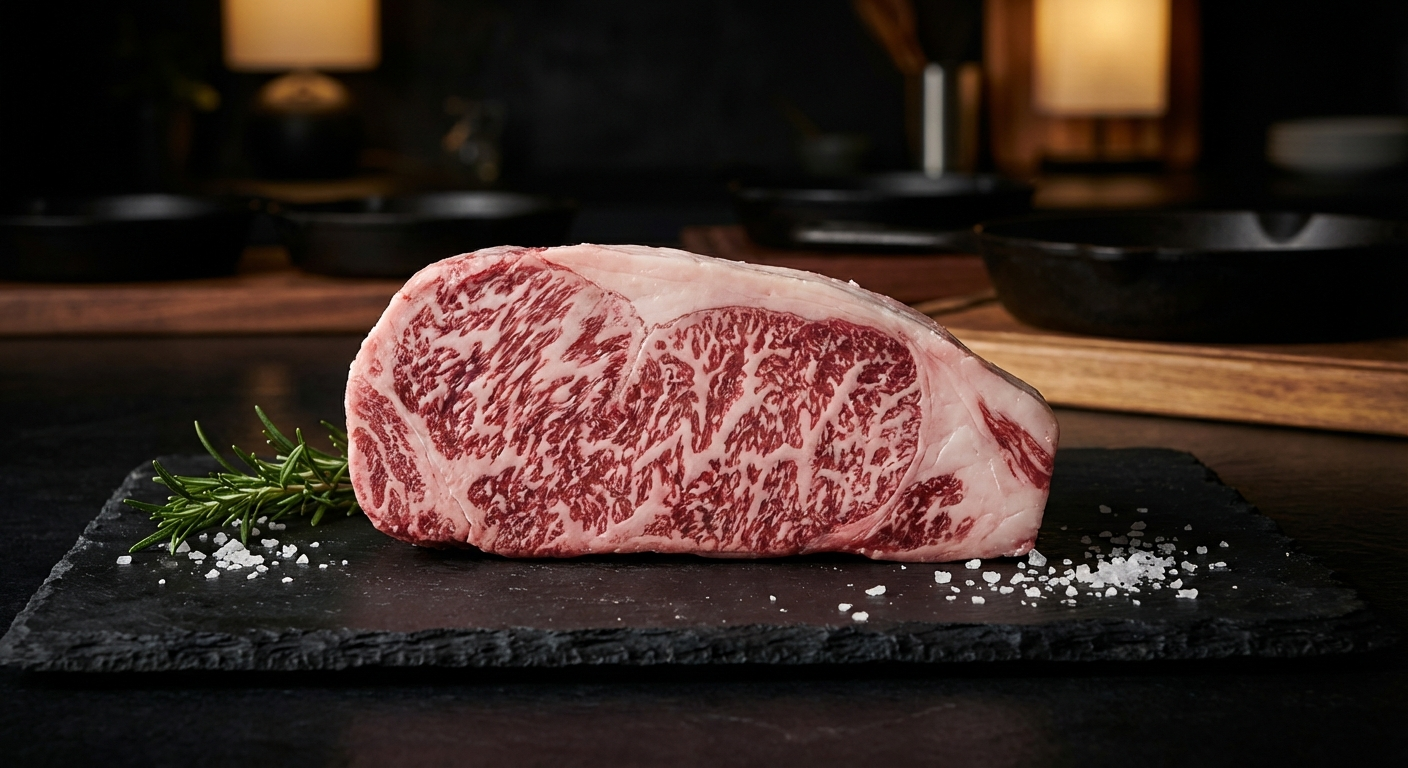
If you ask any wagyu importer what they personally eat most often, the answer probably isn't ribeye. It isn't striploin. It's zabuton — a flat, unassuming cut from the chuck that quietly delivers one of the most extraordinary eating experiences in all of beef.
The zabuton is the open secret of the wagyu world. In Japan, it commands serious respect at yakiniku restaurants and high-end butcher shops. In the United States, it's still relatively unknown — which means it's dramatically underpriced relative to its quality. That gap won't last forever, so consider this your inside guide.
What Is Wagyu Zabuton?
Zabuton (座布団) means "cushion" or "sitting mat" in Japanese — a reference to the cut's flat, roughly rectangular shape. In butchery terms, the zabuton is the chuck flap, sometimes labeled as chuck eye flap or chuck tender flap. It comes from the shoulder primal, sitting between the chuck eye roll and the shoulder clod.
In conventional beef, the chuck is workmanlike — flavorful but tough, better suited for braising and grinding than for premium steaks. In wagyu cattle, the chuck tells a different story entirely. The genetic predisposition for intramuscular fat that makes wagyu special doesn't stop at the rib — it extends throughout the animal, and the zabuton is one of the places where that marbling concentrates most dramatically.
When you look at an A5 zabuton cross-section, the marbling is staggering. Fine white threads of fat weave through every fiber of the deep red meat in a dense shimofuri pattern that rivals — and sometimes surpasses — what you see in ribeye from the same animal. The difference is that the zabuton costs 40-60% less.
Why Zabuton Is the Best Value in Wagyu
The economics of wagyu pricing are based primarily on which primal the cut comes from, not on actual marbling quality. Rib and loin cuts command the highest prices because of tradition, name recognition, and restaurant demand. Chuck cuts, regardless of their marbling, are priced lower because the chuck is historically the "working" primal.
This creates an opportunity for informed buyers:
| Cut | Typical BMS (A5) | Price/lb (A5) | Value Rating |
|---|---|---|---|
| Ribeye | 10-12 | $120-$200 | Premium |
| Striploin | 9-11 | $100-$180 | Good |
| Zabuton | 9-12 | $60-$100 | Exceptional |
| Short Rib | 8-10 | $30-$60 | Excellent |
| Flat Iron | 8-10 | $40-$70 | Very Good |
Look at those numbers. The zabuton matches or exceeds striploin in marbling while costing roughly half the price. It approaches ribeye territory in BMS scores while costing a third. For pure marbling-per-dollar, nothing in the wagyu world beats it.
Zabuton vs. Denver Steak: Clearing Up the Confusion
You'll sometimes see "zabuton" and "Denver steak" used interchangeably, especially in the American wagyu market. They're related but not identical.
The zabuton is specifically the chuck flap — a flat, well-marbled muscle that sits on top of the chuck primal. The Denver steak is cut from the serratus ventralis muscle, which lies underneath the shoulder blade. Both come from the chuck, both are exceptionally well-marbled in wagyu, and both are excellent eating. But the zabuton tends to be thinner and more uniform in shape, making it ideal for thin-slicing, while the Denver is slightly thicker and more steak-like in presentation.
In practice, if you're buying Japanese wagyu labeled "zabuton," you're getting the traditional chuck flap cut. If you're buying American wagyu labeled "Denver steak" or "zabuton," check with the seller — both cuts are excellent, but they handle slightly differently in the kitchen.
How Zabuton Is Eaten in Japan
In Japan, zabuton is primarily a yakiniku cut. At quality yakiniku restaurants — the tabletop grilling establishments where diners cook thin-sliced beef over charcoal — zabuton is one of the most popular and respected items on the menu.
The standard Japanese preparation:
- Slice the zabuton against the grain into strips roughly 1/4-inch thick and 3-4 inches long
- Grill or sear each strip for 10-15 seconds per side over high heat
- Dip briefly in tare (a sweet soy-based sauce) or eat with a touch of salt and fresh-grated wasabi
- Eat immediately — one piece at a time, while it's still sizzling
This approach is genius for several reasons. Thin slicing exposes maximum surface area to heat, creating extensive Maillard crust while keeping the interior barely warmed. The fat renders just enough to become silky and translucent without melting away entirely. And the small portion per piece prevents richness fatigue — you're always ready for the next bite.
Zabuton is also popular for sukiyaki, where its rich fat melts into the sweet soy broth, and for shabu-shabu, where quick-swishing through hot dashi produces an impossibly tender, barely-cooked slice.
How to Cook Wagyu Zabuton at Home
Method 1: Yakiniku-Style Flash Sear (Recommended)
This is my go-to preparation and the best way to experience zabuton for the first time.
Equipment: Cast iron skillet or carbon steel pan. No oil needed for A5.
- Partially freeze the zabuton (20-30 minutes in the freezer). This firms it up for clean, thin slicing.
- Slice against the grain into strips approximately 1/4-inch thick. You should get 12-16 slices from a typical 8 oz piece.
- Heat your pan to high — you want it smoking. No oil for A5; a thin film of avocado oil for American wagyu.
- Sear each strip for 10-15 seconds per side. You want color and crust on both sides with a warm, barely-cooked center. The fat should start to turn translucent.
- Eat immediately with a pinch of flaky sea salt, or dip in a small dish of soy sauce with fresh-grated wasabi.
The whole cooking process takes 3-4 minutes for a serving. It's fast, dramatic, and the results are extraordinary — each bite delivers a burst of rich, buttery beef flavor with a delicate seared crust.
Method 2: Whole Steak Sear
If you prefer a more traditional steak presentation, the zabuton works beautifully as a whole-seared piece.
- Bring to room temperature (20-30 minutes). Pat completely dry with paper towels.
- Season with flaky salt — nothing else for A5. Salt and pepper for American wagyu.
- Preheat cast iron over medium-high heat. No oil for A5.
- Sear for 60-90 seconds per side for a piece about 3/4-inch thick. Target internal temperature: 120-125°F (rare to medium-rare).
- Rest for 2-3 minutes on a wire rack.
- Slice against the grain into 1/4-inch pieces. Fan across a plate and finish with a final pinch of salt.
This method gives you a beautiful golden crust on the exterior with a warm, rosy center. The zabuton's flat shape means it cooks very evenly — there's less variation between the edge and center than you get with a thick ribeye.
Method 3: Sukiyaki Hot Pot
For a communal dining experience, zabuton is spectacular in sukiyaki.
- Slice paper-thin (1/8-inch or less). A partially frozen zabuton makes this much easier.
- Prepare the sukiyaki broth: combine soy sauce, mirin, sake, and sugar in a wide, shallow pot. Bring to a gentle simmer.
- Add vegetables first: napa cabbage, shiitake mushrooms, enoki, tofu, and scallions.
- Swish the zabuton slices through the simmering broth for 5-10 seconds — just until the meat changes color.
- Dip in beaten raw egg (optional but traditional) and eat immediately.
The zabuton's marbling melts into the broth, enriching it with extraordinary depth. Each piece of meat emerges tender, sweet, and coated with the caramelized soy glaze.
Buying Wagyu Zabuton: What to Look For
When shopping for wagyu zabuton, keep these guidelines in mind:
Japanese A5 Zabuton
- BMS score: Should be 8+ (anything labeled A5). Ask for the specific number — BMS 10+ zabuton is the sweet spot for value and quality.
- Prefecture: Miyazaki and Kagoshima produce excellent zabuton with strong, savory flavor profiles. Hyogo (Tajima/Kobe genetics) produces more delicate, refined specimens.
- Price reality: $60-$100/lb at U.S. retail. Below $50/lb for "A5 zabuton" warrants scrutiny.
- Traceability: As with any Japanese wagyu, request the 10-digit individual ID number.
American Wagyu Zabuton
- Genetics: Fullblood (100% wagyu) zabuton is exceptional — often BMS 7-9 equivalent. F1 crosses (50% wagyu) are good but won't match the marbling intensity.
- Price: $25-$45/lb for fullblood; $15-$25/lb for crosses.
- Source: Ask for the ranch or program name. Reputable American wagyu producers include Snake River Farms, Mishima Reserve, and Morgan Ranch.
For verified A5 zabuton with full traceability, browse The Meatery's Japanese A5 collection. Their chuck cuts rotate based on import availability, so check back regularly for zabuton when it's in stock.
Zabuton vs. Other Wagyu Cuts: How It Compares
Deciding between zabuton and other wagyu cuts comes down to what experience you're looking for:
Zabuton vs. Ribeye: Both have extraordinary marbling. Ribeye has the spinalis cap — arguably the richest single muscle on the animal. Zabuton has more uniform marbling throughout and costs significantly less. For pure enjoyment-per-dollar, zabuton wins. For the most dramatic single bite, the ribeye cap takes it.
Zabuton vs. Striploin: Striploin has a firmer, meatier texture with slightly less marbling. It presents more traditionally as a "steak." Zabuton is softer, richer, and better suited to thin-slicing preparations. If you want a knife-and-fork steak, go striploin. If you want the richest possible experience, go zabuton.
Zabuton vs. Short Rib: Both are value cuts with excellent marbling. Short rib (karubi) has a beefier, more assertive flavor and works brilliantly braised or grilled. Zabuton is more refined in texture and melts more readily on the palate. For yakiniku, both are outstanding.
Zabuton vs. Flat Iron: Similar price range. Flat iron (misuji) has a slightly mineral, iron-rich flavor and a distinctive grain. Zabuton has finer marbling and a more buttery flavor. Both are underrated, both are excellent value.
Serving Suggestions and Pairings
Zabuton's richness calls for accompaniments that cleanse and contrast:
- Steamed Japanese rice: The classic. Short-grain rice absorbs rendered fat and provides a neutral, starchy base that lets the beef shine.
- Pickled vegetables (tsukemono): The acidity and crunch cut through the richness perfectly. Pickled daikon, ginger, or cucumber all work beautifully.
- Fresh wasabi: A dab of real wasabi (not the neon-green paste) provides aromatic heat that lifts the beef's flavor without masking it.
- Simple salad: Lightly dressed greens with a yuzu or ponzu vinaigrette. The citrus acidity resets your palate between bites.
- Sake: A clean junmai daiginjo complements zabuton beautifully — the sake's subtle fruitiness pairs with the beef's sweetness.
What to avoid: heavy sauces, compound butters, aggressive marinades, or rich side dishes. Zabuton has all the richness you need. Your accompaniments should balance it, not compete.
Storing Wagyu Zabuton
If your zabuton arrives frozen (as most online-purchased wagyu does):
- In the freezer: Keeps for 6-12 months vacuum-sealed without quality loss. The high fat content actually makes wagyu more freezer-friendly than lean beef.
- Thawing: Refrigerator thaw for 24-36 hours in the vacuum packaging. Cold water bath (30-60 minutes) for faster thawing. Never microwave.
- Once thawed: Use within 3-5 days. Do not refreeze.
- Partial use: If you have a large piece, partially thaw, slice off what you need, and return the remainder to the freezer immediately. Partially frozen wagyu actually slices more cleanly than fully thawed.
The Bottom Line
Wagyu zabuton is the cut that insiders buy first. It delivers the full A5 experience — the marbling, the melt, the buttery richness — at a price point that makes it accessible for more than just special occasions. When you understand that zabuton from the same animal, with the same BMS score, costs half what ribeye costs, the value proposition becomes irresistible.
Start with a yakiniku-style preparation. Slice it thin, sear it fast, eat it with salt and rice. The first bite will make you wonder why you ever paid ribeye prices for the same quality of marbling. Welcome to the insider's choice.
For authentic Japanese A5 wagyu cuts including zabuton when available, explore The Meatery's curated A5 collection.
Frequently Asked Questions
What is wagyu zabuton?
Wagyu zabuton is the chuck flap cut from wagyu cattle, located in the shoulder (chuck) primal. The name "zabuton" means "cushion" or "flat pillow" in Japanese, referencing the cut's flat, rectangular shape. In A5 wagyu, the zabuton has marbling comparable to ribeye — often BMS 10-12 — but costs 40-60% less because it comes from the chuck rather than the rib or loin.
How much does wagyu zabuton cost?
Japanese A5 wagyu zabuton typically costs $60-$100 per pound at U.S. retail — roughly half the price of A5 ribeye ($120-$200/lb). American wagyu zabuton runs $25-$45 per pound. For the marbling you get, zabuton is widely considered the best value in premium wagyu.
How do you cook wagyu zabuton?
The best method is yakiniku-style: slice the zabuton into 1/4-inch strips and flash-sear each strip for 10-15 seconds per side on a screaming-hot cast iron pan. No oil needed for A5. Season with salt only. You can also sear a whole zabuton steak for 60-90 seconds per side, then slice thin to serve. Never cook past medium-rare.
Is wagyu zabuton the same as Denver steak?
They come from the same general area of the chuck but are not identical. The zabuton is specifically the chuck flap (also called the chuck eye flap), while the Denver steak is cut from the serratus ventralis muscle underneath the blade. In practice, U.S. retailers sometimes use the terms interchangeably for wagyu cuts from this region. Both are excellent, heavily marbled chuck cuts.
Why is wagyu zabuton so marbled?
The chuck flap sits between layers of the chuck primal in a position that naturally deposits high levels of intramuscular fat, especially in wagyu cattle bred for marbling. The muscle fibers are fine-grained and the fat distribution is remarkably even — in A5, the zabuton often matches or exceeds the marbling of cuts from the rib or loin.
More Expert Guides
Hida Beef: The Complete Guide to Gifu Prefecture's Legendary Wagyu
Hida beef is one of Japan's most prestigious regional wagyu brands, raised in the mountain valleys of Gifu Prefecture. Often overshadowed by Kobe in Western markets, Hida-gyu is revered in Japan for its delicate sweetness and fine-grained marbling. Here's what makes it special.
12 min readA4 vs A5 Wagyu: The Complete Comparison Guide
A4 and A5 are both elite Japanese wagyu grades, but they deliver meaningfully different eating experiences. This guide breaks down exactly how they differ in marbling, flavor, texture, price, and when each grade is the better choice.
16 min readWagyu Sous Vide: The Complete Guide to Precision-Cooked Wagyu Beef
Learn how to sous vide wagyu beef for flawless results every time. Covers ideal temperatures for each cut, timing charts, vacuum sealing tips, finishing sear methods, and why precision cooking is the best way to honor expensive wagyu.