Wagyu vs Angus: Which Premium Beef Is Worth Your Money?
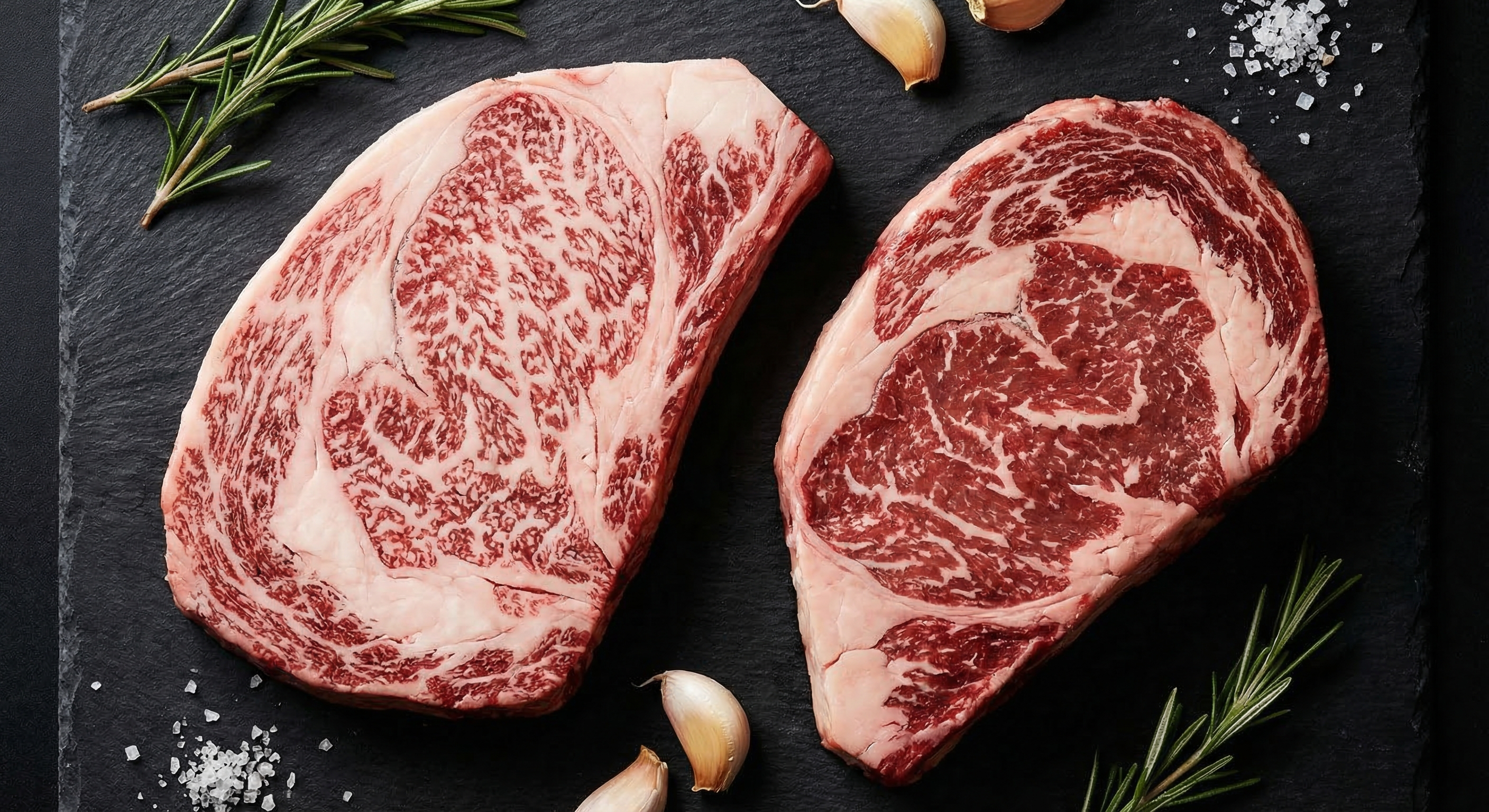
Wagyu and Angus sit at the top of the beef world, but comparing them is like comparing a Rolls-Royce to a Mercedes — both are excellent, but they’re built for different experiences. Wagyu delivers an intensely marbled, buttery indulgence you eat in small portions. Angus provides the quintessential beefy steak experience most Americans grew up loving. Understanding what separates them helps you spend your money where it matters most.
The Breeds: Origins and Genetics
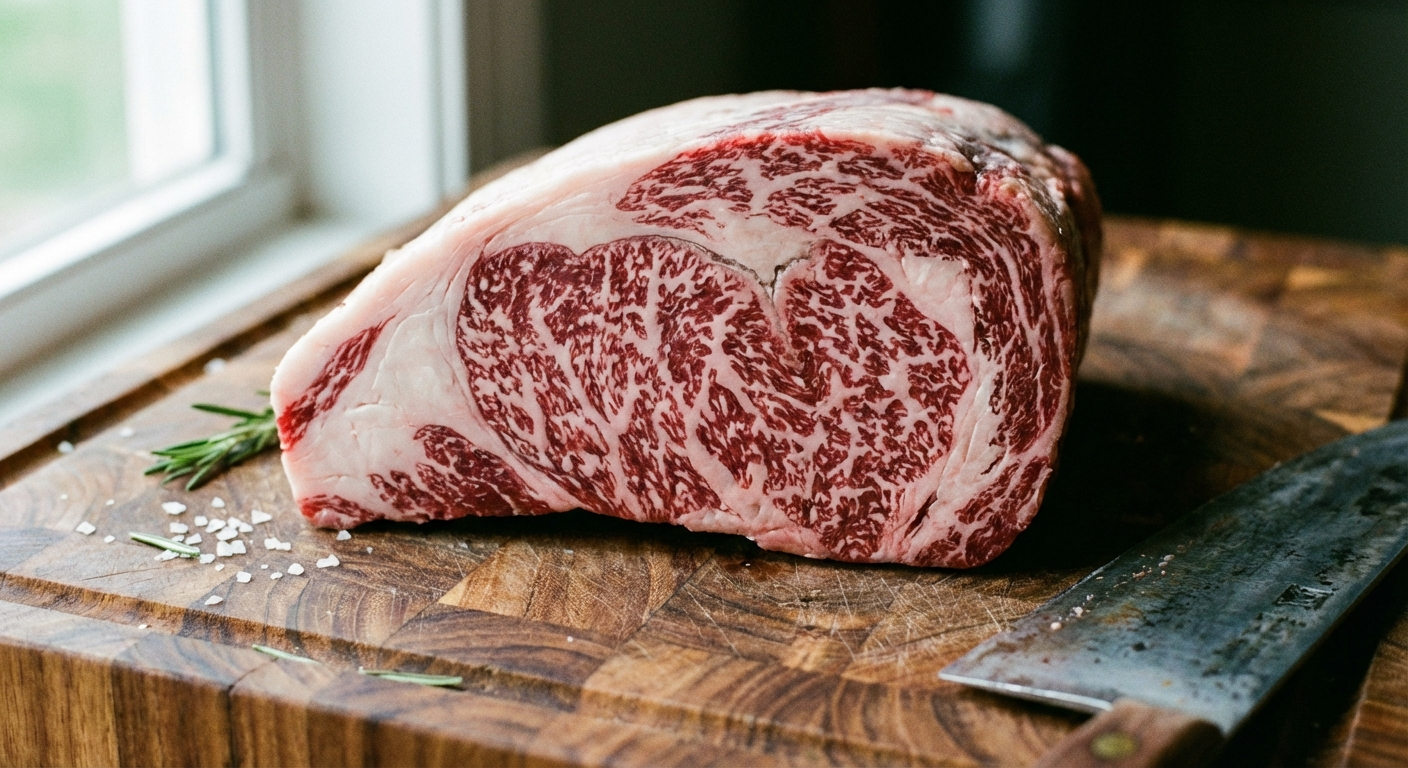
Wagyu means “Japanese cow” and refers to four breeds developed in Japan over centuries of selective breeding. The Japanese Black (Kuroge) breed accounts for about 90% of production and is responsible for the extreme marbling Wagyu is famous for. Japanese ranchers bred these cattle for draft work in mountainous terrain, inadvertently selecting for genetics that store fat within the muscle rather than around it.
Angus (Aberdeen Angus) originated in northeastern Scotland in the early 1800s. These naturally polled (hornless) cattle were bred for efficiency — fast growth, hardy temperament, and consistent marbling on grass or grain. Angus genetics dominate the American beef industry today, making up roughly 60% of the commercial herd. The breed’s reliability is its superpower: Angus consistently produces well-marbled, flavorful beef without the extreme management Japanese Wagyu requires.
The Crossbreed Factor
Most “American Wagyu” is actually a Wagyu-Angus cross — typically 50% Wagyu, 50% Angus. This hybrid captures some of Wagyu’s enhanced marbling with Angus’s growth efficiency and familiar beefy flavor. It’s a legitimate product, but it’s not the same as fullblood Japanese Wagyu. When this guide says “Wagyu,” we mean fullblood Japanese Wagyu unless noted otherwise.
Marbling: The Defining Difference
Marbling — the white flecks of intramuscular fat distributed throughout the lean meat — is where Wagyu and Angus diverge most dramatically.
Japan uses the Beef Marbling Standard (BMS) scale, which runs from 1 to 12. The USDA grades beef as Select, Choice, or Prime, with Prime being the highest. Here’s how they compare:
| Grade | BMS Score | Typical Source |
|---|---|---|
| USDA Select | BMS 1–2 | Standard supermarket beef |
| USDA Choice | BMS 3–4 | Upper-tier grocery, restaurants |
| USDA Prime | BMS 4–5 | Top Angus, steakhouses |
| Japanese A4 | BMS 6–8 | High-grade Japanese Wagyu |
| Japanese A5 | BMS 8–12 | Elite Japanese Wagyu |
The best Angus beef tops out around BMS 5. Japanese Wagyu starts where Angus ends and goes twice as high. At BMS 10–12, the steak looks almost white with fat — a sashi pattern so dense the lean meat appears as red islands in a sea of intramuscular fat.
This isn’t just a visual difference. The fat in Japanese Wagyu has a higher concentration of monounsaturated fatty acids (especially oleic acid), giving it a melting point below body temperature. The fat literally dissolves on your tongue. Angus fat, while flavorful, has a higher melting point and a more traditional texture.
Flavor and Eating Experience
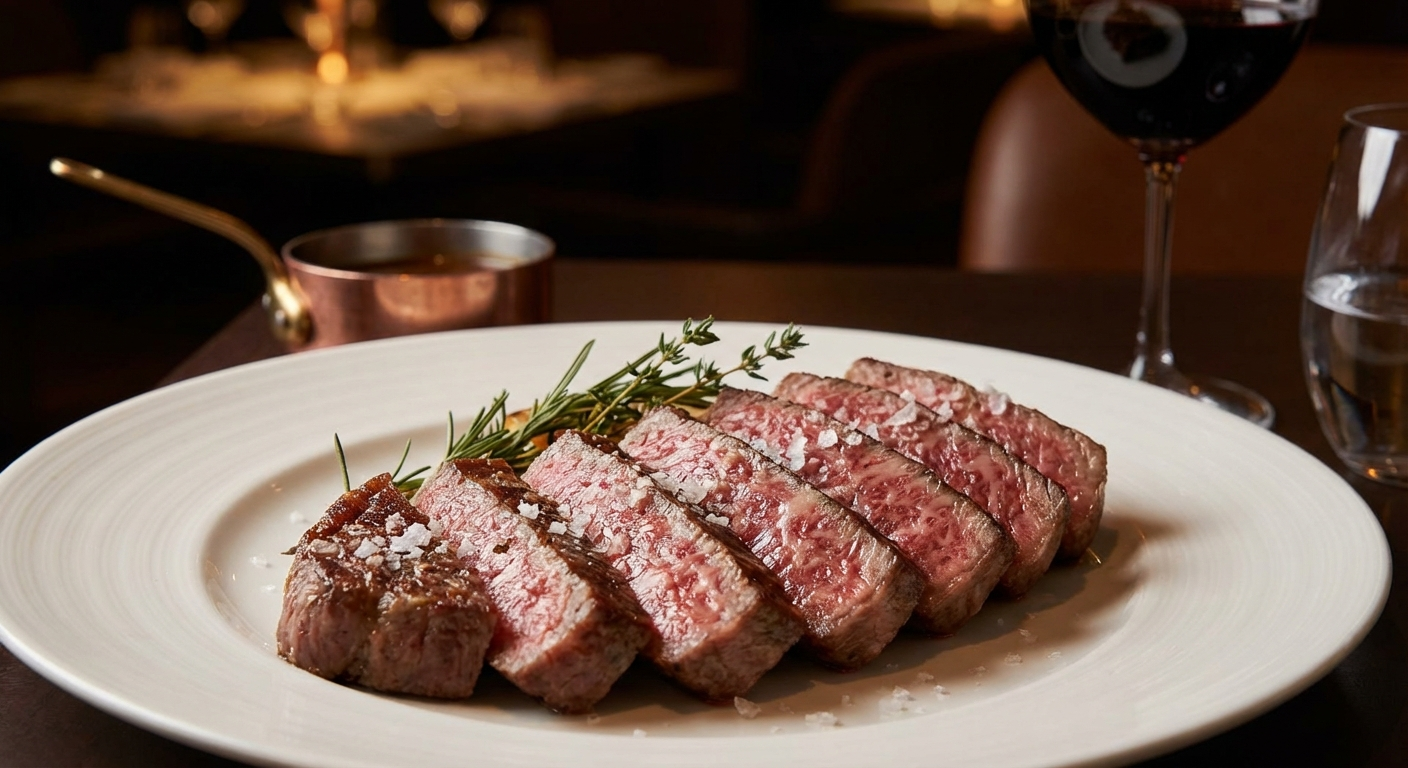
This is where personal preference matters more than any grading scale.
Wagyu flavor profile:
- Buttery, rich, almost sweet finish
- Umami-forward with a clean aftertaste
- Melt-in-your-mouth texture — minimal chew
- Best described as “luxurious” rather than “beefy”
- Extremely rich — 4 to 6 ounces is a full serving
Angus flavor profile:
- Bold, classic beef flavor with mineral notes
- Satisfying chew with tender texture (especially Prime grade)
- Clean finish that invites another bite
- Pairs naturally with traditional steak accompaniments
- Standard 8 to 16 ounce portions
Many first-time Wagyu eaters are surprised — it doesn’t taste like a “better version” of regular steak. It’s a fundamentally different eating experience. If you love the classic American steak dinner with a big, beefy ribeye and a loaded baked potato, Prime Angus might actually satisfy you more than A5 Wagyu. The Wagyu experience is about refinement and richness; the Angus experience is about hearty, satisfying beef flavor.
Price: What You’ll Actually Pay
Price is where reality sets in. Here’s what you’ll pay at retail in 2026:
| Cut | A5 Japanese Wagyu | USDA Prime Angus | American Wagyu (Cross) |
|---|---|---|---|
| Ribeye (per lb) | $150–$280 | $25–$45 | $50–$100 |
| NY Strip (per lb) | $120–$220 | $20–$38 | $40–$80 |
| Tenderloin (per lb) | $180–$320 | $30–$55 | $60–$120 |
| Ground (per lb) | $30–$50 | $6–$10 | $12–$20 |
Japanese A5 Wagyu costs roughly 5–8x more than equivalent Prime Angus cuts. But remember the portion difference: you eat 4–6 ounces of Wagyu versus 12–16 ounces of Angus. Per serving, the gap narrows to roughly 2–3x.
American Wagyu (the Wagyu-Angus cross) sits in the middle and represents the best value for most home cooks who want elevated marbling without the extreme price of imported Japanese beef.
How to Cook Each One
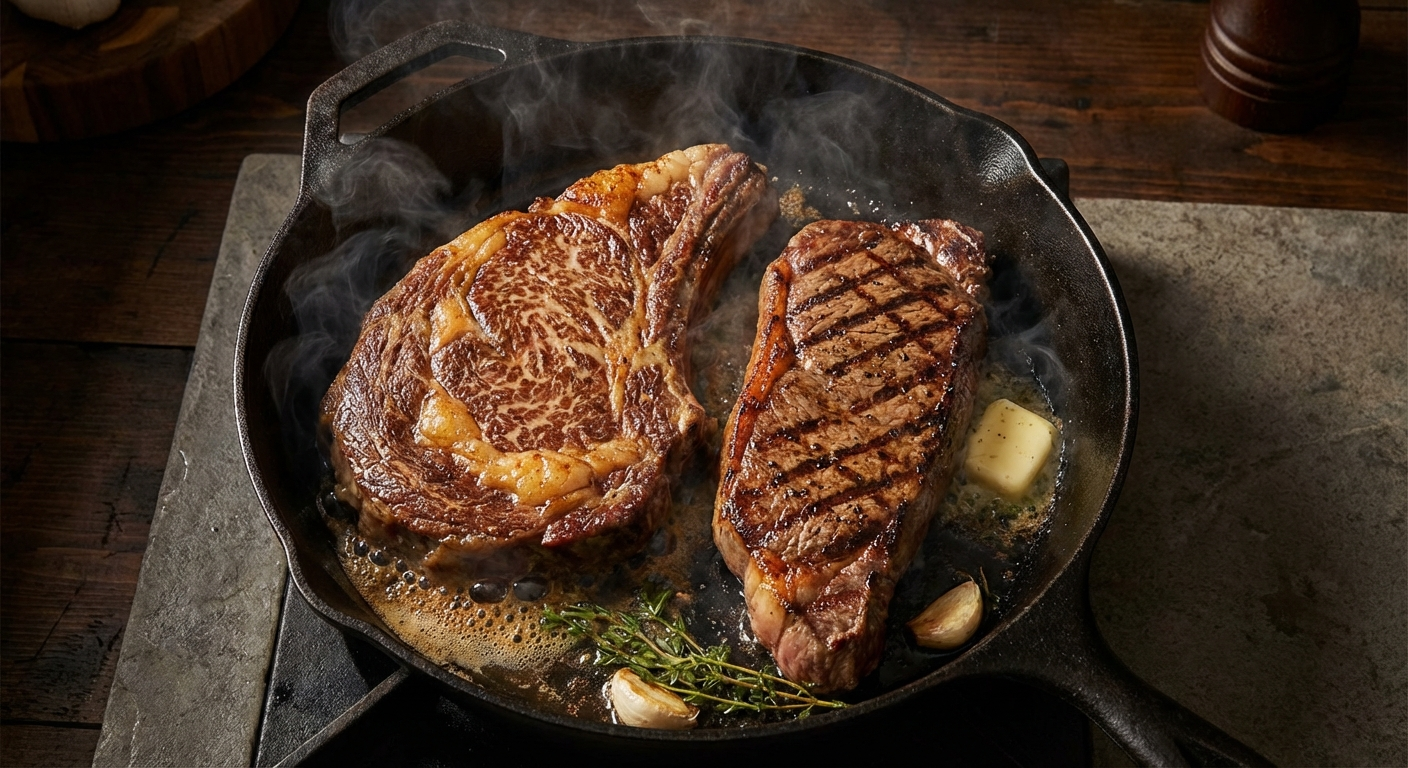
Different marbling levels demand different cooking approaches. Treat a Wagyu steak like an Angus and you’ll ruin an expensive piece of meat.
Cooking Wagyu
- Temperature: Medium-rare to medium (130–140°F internal). The abundant fat keeps it juicy even at medium, but going past that renders too much marbling out.
- Method: Screaming-hot cast iron or carbon steel pan. Sear 60–90 seconds per side. That’s it.
- Seasoning: Salt only. Maybe a finishing touch of flaky sea salt. The beef is the star.
- Thickness: Slice thin (1/4 to 1/2 inch) for yakiniku or tataki style, or cut thick (1 to 1.5 inches) for a traditional sear.
- Resting: 3–5 minutes. Don’t skip it.
- Avoid: Grilling over open flame (fat drips cause flare-ups), marinating (masks the flavor), cooking past medium (fat renders out, defeating the purpose).
Cooking Angus
- Temperature: Rare to medium-rare (120–135°F internal) for steaks. Angus has less intramuscular fat, so overcooking dries it out faster.
- Method: Versatile — cast iron, grill, reverse sear, sous vide all work beautifully. Angus handles high-heat grilling better because less fat drips.
- Seasoning: Salt and pepper is classic, but Angus takes well to rubs, compound butters, and sauces. Its bold flavor stands up to accompaniments.
- Thickness: Standard 1 to 2 inch steaks. No special slicing needed.
- Resting: 5–10 minutes for thick cuts.
- Best for: Grilling season, dinner parties, any time you want a classic steak experience with generous portions.
Nutrition: How They Stack Up
Wagyu’s extreme marbling means more calories and fat per ounce, but the type of fat tells a more nuanced story:
| Per 4 oz Serving (raw) | A5 Japanese Wagyu | USDA Prime Angus |
|---|---|---|
| Calories | ~350–400 | ~250–280 |
| Total Fat | ~28–32g | ~18–22g |
| Protein | ~18–20g | ~24–26g |
| Monounsaturated Fat | ~55–60% of total fat | ~40–45% of total fat |
| Oleic Acid | High (similar to olive oil) | Moderate |
Wagyu has more total fat but a higher ratio of monounsaturated fats — the same “good fats” found in olive oil and avocados. Its oleic acid content is notably higher than conventional beef. That said, the calorie-per-ounce density is significant. The saving grace is portion size: nobody eats a pound of A5 Wagyu in one sitting.
Angus, particularly lean cuts, delivers more protein per calorie. For everyday nutrition, Prime Angus is the more practical choice. For an occasional indulgence where the health profile of the fat is slightly better than it looks on paper, Wagyu holds its own.
When to Choose Wagyu vs Angus
Neither is objectively “better.” They serve different purposes:
Choose Japanese Wagyu when:
- It’s a special occasion — anniversary, birthday, celebration
- You want a unique culinary experience, not just a good steak
- You’re serving small, curated portions as part of a multi-course meal
- You appreciate the craftsmanship of Japanese cattle husbandry
- You’re comfortable spending $50–$100+ per person on the protein alone
Choose Prime Angus when:
- You want the classic steak dinner experience with generous portions
- You’re grilling for a group — backyard BBQ, dinner party
- You want excellent beef without the luxury price tag
- You prefer bold, traditional beef flavor over buttery richness
- You’re cooking regularly and need great beef at sustainable prices
Consider American Wagyu when:
- You want a middle ground — more marbling than Prime Angus, more familiar than A5
- You’re exploring Wagyu for the first time and want to ease in
- You want enhanced marbling at 2–3x Angus pricing instead of 6–8x
The Bottom Line
Wagyu and Angus aren’t competing for the same spot on your plate. Japanese Wagyu is a luxury ingredient — an experience you savor in small portions on special occasions. Prime Angus is the reliable, versatile, everyday premium beef that anchors American steak culture.
The best move for most beef lovers? Keep Prime Angus in your regular rotation for weeknight steaks and weekend grilling. Save Japanese Wagyu for the moments that deserve something extraordinary. And if you’re curious about what sits between them, American Wagyu bridges the gap at a price point that doesn’t require a special occasion to justify.
Whichever you choose, buy from reputable sources, cook it properly, and let the beef do the talking. Both Wagyu and Angus have earned their reputations — for very different reasons.
Frequently Asked Questions
Is Wagyu better than Angus?
Neither is objectively better — they deliver different eating experiences. Wagyu offers extreme marbling, buttery texture, and a rich, almost sweet flavor best enjoyed in small portions. Angus provides bold, classic beef flavor with satisfying chew in standard steak portions. The best choice depends on the occasion, your flavor preferences, and your budget.
Why is Wagyu so much more expensive than Angus?
Japanese Wagyu cattle require specialized breeding, longer feeding periods (28–30 months vs 18–22 for Angus), individual attention, and strict grading certification. Supply is limited — Japan produces a fraction of what the US Angus industry does. Import costs, tariffs, and high demand further drive prices to $150–$300+ per pound for A5 cuts.
Can you grill Wagyu like a regular Angus steak?
Not recommended for A5 Japanese Wagyu. The extreme marbling causes flare-ups on open grills and the fat renders too quickly. Use a screaming-hot cast iron pan for a quick sear instead. American Wagyu (the Angus cross) handles grilling better due to moderate marbling levels.
What is American Wagyu and how does it compare?
American Wagyu is typically a crossbreed of Japanese Wagyu bulls and Angus cows (usually 50/50). It offers more marbling than pure Angus (BMS 5–7 vs BMS 3–5) with a familiar beefy flavor. Priced at $50–$100 per pound for premium cuts, it bridges the gap between Prime Angus and imported Japanese Wagyu.
Is Wagyu healthier than Angus beef?
Wagyu has more total fat per ounce but a higher percentage of monounsaturated fatty acids, particularly oleic acid (the same healthy fat in olive oil). Per serving, however, Wagyu portions are smaller (4–6 oz vs 12–16 oz for Angus), which offsets the higher fat density. Neither is a health food, but Wagyu's fat profile is slightly more favorable than its total fat content suggests.
More Expert Guides
Wagyu Picanha: The Brazilian Cut That Transforms Japanese Beef
Picanha is Brazil's most prized cut. Add wagyu-level marbling and you get one of the most flavorful, juicy steaks available — with a built-in fat cap that bastes the meat as it cooks.
14 min readWagyu Tataki: The Complete Guide to Japan's Flash-Seared Beef Delicacy
Learn how to prepare authentic wagyu tataki—from choosing the right cut and mastering the flash-sear to slicing, plating, and making the perfect ponzu. A complete guide to Japan's most elegant rare beef preparation.
10 min readHow to Store Wagyu Beef: Refrigeration, Freezing & Thawing Done Right
Wagyu beef demands careful storage to protect the marbling you paid for. This guide covers refrigerator timing, vacuum sealing, freezer methods, and the only thawing techniques that preserve A5-level quality.