Wagyu Buying Guide: How to Shop Smart
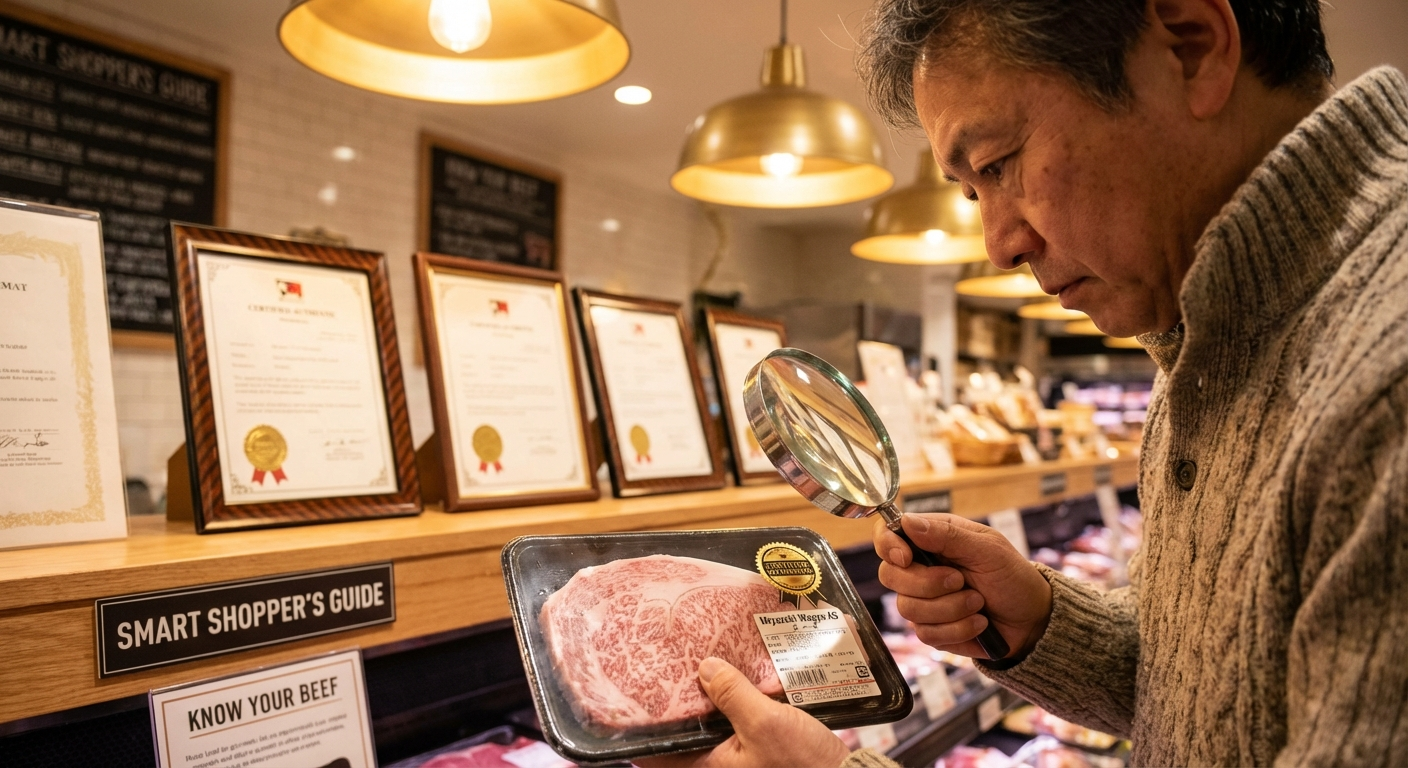
The Wagyu market is designed to confuse you. Vague labels, inconsistent terminology, and the absence of meaningful regulation in the U.S. mean that "Wagyu" on a package can mean almost anything. After twenty years in this business, I can tell you that informed buyers get dramatically better products for their money.
Here's how to shop smart.
The Five Questions to Always Ask
1. What's the Wagyu percentage?
Is it fullblood (100%), F1 cross (50%), or something in between? The percentage tells you more about expected quality than any marketing claim. Fullblood American Wagyu and authentic Japanese Wagyu are fundamentally different products from F1 crosses — and they should be priced accordingly.
2. What's the BMS or marbling score?
For Japanese Wagyu, ask for the specific BMS number (not just "A5"). For American Wagyu, ask for their internal marbling score or USDA grade. Sellers who know their product can answer this immediately. Those who can't are selling on label, not quality.
3. Where is it from?
For Japanese: which prefecture? For American: which ranch or program? For Australian: which brand? Geographic specificity is a mark of legitimate, traceable product.
4. Can you provide documentation?
Japanese Wagyu should come with traceability information (the 10-digit ID number). American Wagyu from registered programs should have American Wagyu Association documentation. If the seller can't provide any paper trail, proceed with caution.
5. What cut is this, specifically?
"Wagyu steak" is not a cut. Is it ribeye, striploin, flat iron, chuck? The cut matters enormously for both the eating experience and fair pricing. A seller who's vague about the specific cut is often hiding something.
Price Reality Check
These are reasonable price ranges for legitimate product. If you're seeing prices significantly below these, the product may not be what it claims:
| Product | Cut | Expected Price Range |
|---|---|---|
| Japanese A5 | Ribeye/Strip | $100-$200/lb |
| Japanese A5 | Chuck/Shoulder | $35-$70/lb |
| Japanese A5 | Ground | $25-$40/lb |
| American Fullblood | Ribeye/Strip | $40-$80/lb |
| American F1 Cross | Ribeye/Strip | $20-$40/lb |
| Australian Wagyu | Ribeye/Strip | $30-$70/lb |
Where to Buy
Online Specialty Retailers (Recommended)
The best selection and transparency. Look for retailers who display BMS scores, prefecture/source information, and provide traceability documentation. Shipping in insulated boxes with dry ice is standard. The better retailers guarantee delivery condition and will replace any product that arrives thawed or damaged.
Local Specialty Butchers
High-end butcher shops increasingly carry Japanese and American Wagyu. The advantage is that you can see the actual product before buying. Ask all five questions above — a knowledgeable butcher will answer them enthusiastically.
Japanese Grocery Stores
Japanese markets like Mitsuwa, H Mart (for Korean-Japanese cuts), and specialty importers sometimes carry authentic Japanese Wagyu, often in thin-sliced form for yakiniku or shabu-shabu. The pricing can be better than specialty retailers, but verify the source.
Avoid: Generic Restaurant "Wagyu"
Restaurant "Wagyu burgers," "Wagyu tacos," and similar preparations are overwhelmingly made from F1 crosses or lower. You're paying a 2-3x markup for the word "Wagyu" on a menu. If you want the real experience, buy retail and cook at home — you'll get significantly better product for the same money.
Seasonal Considerations
Wagyu availability and pricing can vary seasonally:
- Holiday seasons (November-January) see higher demand and sometimes higher prices, but also the best selection as importers stock up
- Summer grilling season sees increased demand for American Wagyu steaks
- Japanese New Year (late December) affects export schedules — inventory may dip in January-February
For the best selection and prices, buy mid-week and outside peak holiday periods. Many online retailers offer subscription programs or advance ordering that can reduce per-pound costs. For the best selection of verified A5 Wagyu with full traceability, check out authentic Japanese A5 Wagyu at The Meatery.
Frequently Asked Questions
Where is the best place to buy Wagyu online?
Look for specialty retailers who provide full traceability: BMS scores, prefecture of origin, individual ID numbers (for Japanese), and clear genetics information (for American). The Meatery, Holy Grail, and Crowd Cow are reputable for Japanese A5. Snake River Farms excels for American Wagyu.
How can I tell if Wagyu is real or fake?
Ask for the Wagyu percentage, BMS score, specific source (prefecture or ranch), and documentation. Legitimate sellers answer these questions readily. Red flags: vague sourcing, no BMS score, prices far below market rates, and "Kobe" claims without Kobe Beef Association authorization.
More Expert Guides
Hida Beef: The Complete Guide to Gifu Prefecture's Legendary Wagyu
Hida beef is one of Japan's most prestigious regional wagyu brands, raised in the mountain valleys of Gifu Prefecture. Often overshadowed by Kobe in Western markets, Hida-gyu is revered in Japan for its delicate sweetness and fine-grained marbling. Here's what makes it special.
12 min readA4 vs A5 Wagyu: The Complete Comparison Guide
A4 and A5 are both elite Japanese wagyu grades, but they deliver meaningfully different eating experiences. This guide breaks down exactly how they differ in marbling, flavor, texture, price, and when each grade is the better choice.
16 min readWagyu Sous Vide: The Complete Guide to Precision-Cooked Wagyu Beef
Learn how to sous vide wagyu beef for flawless results every time. Covers ideal temperatures for each cut, timing charts, vacuum sealing tips, finishing sear methods, and why precision cooking is the best way to honor expensive wagyu.