Wagyu Beef Cuts: A Complete Guide to Every Cut
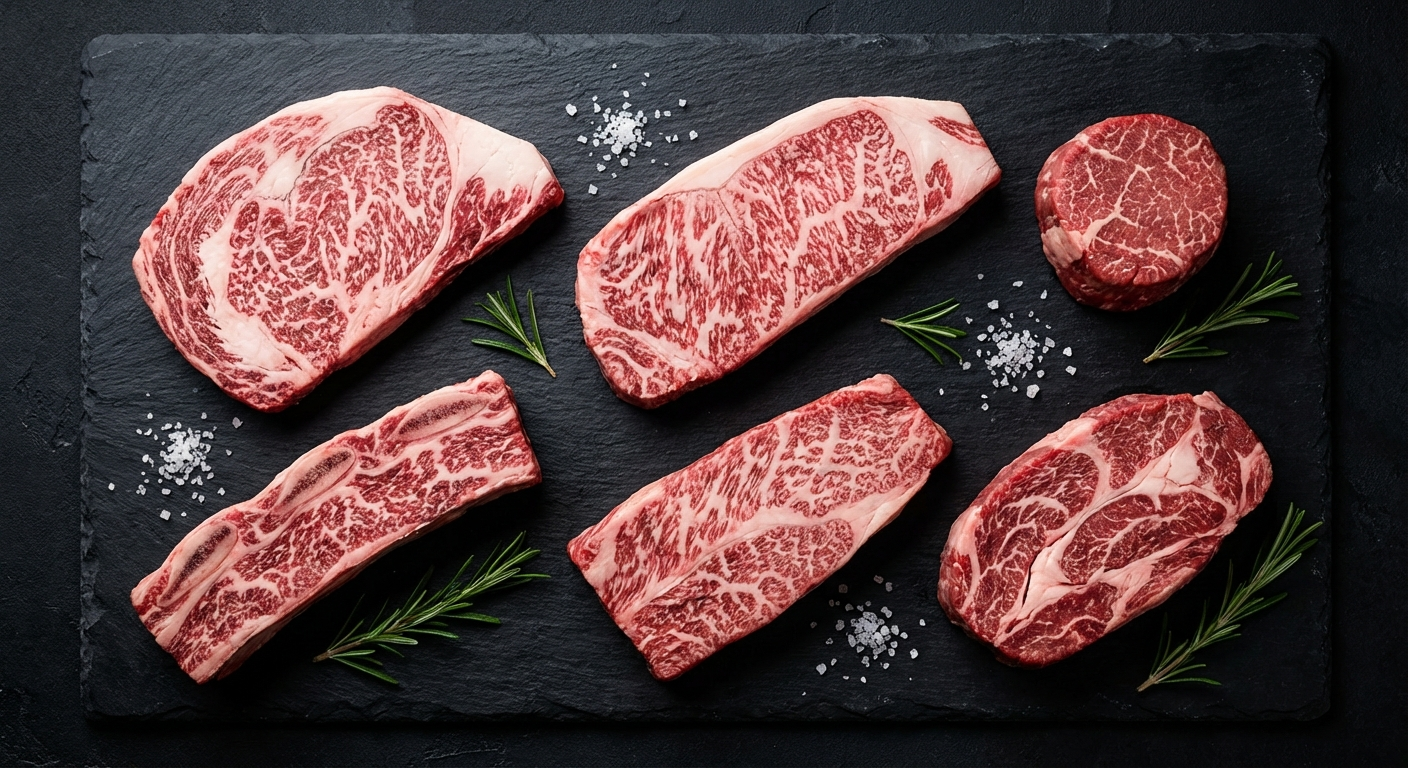
When most people think of wagyu beef, they picture a single, impossibly marbled steak. But wagyu cattle produce dozens of distinct cuts, each with different marbling patterns, textures, and ideal cooking methods. Knowing which cut to choose — and how to cook it — is the difference between a transcendent meal and an expensive mistake.
This guide covers every major wagyu beef cut you'll encounter, from premium steaks to underrated secondary cuts that deliver exceptional value.
Understanding Wagyu Cut Anatomy
Wagyu cattle are prized for their genetic predisposition to intramuscular fat (marbling). But marbling isn't distributed evenly across the animal. Cuts from the rib and loin sections — muscles that do less work — accumulate the most marbling. Working muscles like the shoulder and leg develop more flavor but carry marbling differently, often in broader seams rather than fine webs.
This matters because the same BMS (Beef Marbling Standard) score on a ribeye versus a chuck roll translates to very different eating experiences. The ribeye's fine, web-like marbling melts uniformly during cooking. The chuck roll's marbling concentrates in pockets that create bursts of richness between leaner bites.
Premium Loin and Rib Cuts
Wagyu Ribeye (Rib Rosu)
The ribeye is the crown jewel of wagyu cuts. Cut from ribs 6 through 12, it's actually three muscles — the longissimus dorsi (the eye), the spinalis dorsi (the cap), and the complexus. In wagyu cattle, each muscle develops distinct marbling patterns that create a complex eating experience impossible to find in any other cut.
The spinalis cap on a wagyu ribeye is arguably the single best bite of beef on the planet. It develops the highest concentration of intramuscular fat of any muscle, with BMS scores often exceeding the rest of the steak by 1-2 points.
- Marbling level: Highest of all cuts (BMS 8-12 in A5 grade)
- Best cooking method: Pan sear in a cast iron skillet, 90 seconds per side for thin-cut Japanese style; reverse sear for thick American cuts
- Texture: Buttery, almost custard-like when properly rendered
- Price range: $80-$180 per pound (Japanese A5); $30-$60 (American wagyu)
Wagyu Striploin (Sārloin)
The striploin sits just behind the rib section along the spine. It's a single muscle — the longissimus dorsi — which gives it a more uniform texture than the multi-muscle ribeye. Wagyu striploin develops incredibly fine, evenly distributed marbling that creates a cleaner beef flavor with less of the overwhelming richness of the ribeye.
Many wagyu purists actually prefer the striploin over the ribeye. The reasoning: at BMS 10+, the ribeye can be almost too rich to eat more than a few ounces. The striploin's slightly leaner profile lets you enjoy a larger portion while still experiencing world-class marbling.
- Marbling level: Very high (BMS 7-11 in A5 grade)
- Best cooking method: Hot sear on a teppan or cast iron; 2 minutes per side maximum for Japanese cuts
- Texture: Firmer bite than ribeye with a satisfying "snap" from the tighter grain
- Price range: $70-$160 per pound (Japanese A5); $25-$50 (American wagyu)
Wagyu Tenderloin (Hire / Filet Mignon)
The tenderloin runs along the inside of the spine beneath the striploin. It's the least-worked muscle on the animal, which makes it the most tender cut by far. In conventional beef, the tenderloin's weakness is flavor — it's mild to the point of blandness. In wagyu cattle, the tenderloin's generous marbling solves this entirely.
A wagyu filet mignon delivers the impossibly soft texture you expect from tenderloin, enhanced by a richness that regular tenderloin simply cannot match. It's the ideal cut for someone who wants wagyu's luxury without the intense fattiness of a ribeye.
- Marbling level: Moderate to high (BMS 6-9 in A5 grade)
- Best cooking method: Quick sear and rest; avoid overcooking past medium-rare or the fat renders out and leaves the meat dry
- Texture: Melt-in-your-mouth soft, almost no chew
- Price range: $90-$200 per pound (Japanese A5); $35-$70 (American wagyu)
Rib and Short Plate Cuts
Wagyu Short Ribs (Karubi)
Wagyu short ribs are one of the most versatile and flavorful cuts on the animal. Cut from the lower rib section (ribs 6-8 for plate short ribs), they carry heavy marbling throughout a matrix of meat, fat, and connective tissue that becomes incredibly succulent with proper cooking.
In Japanese cuisine, karubi (short rib) is the most popular cut for yakiniku (grilled barbecue). Sliced thin across the bone, wagyu short ribs cook in seconds over high heat, with the fat rendering instantly to create caramelized, smoky bites.
- Marbling level: High (significant intramuscular and intermuscular fat)
- Best cooking method: Thin-sliced for yakiniku or Korean BBQ; braised for 3-4 hours for Western preparations
- Texture: Rich and succulent with deep beefy flavor; thin-cut versions are crispy and fatty
- Price range: $40-$90 per pound (Japanese A5); $15-$35 (American wagyu)
Wagyu Flanken Ribs
Flanken-cut short ribs are sliced across the bones rather than between them, creating thin strips with small cross-sections of bone. This cut is standard in Korean BBQ (galbi) and is exceptional with wagyu beef. The thin cut exposes more surface area for marbling to render and caramelize.
- Marbling level: High
- Best cooking method: High-heat grill, 2-3 minutes per side; marinate briefly if desired
- Texture: Crispy exterior with a rich, juicy interior
- Price range: $30-$70 per pound (Japanese); $12-$30 (American wagyu)
Shoulder and Chuck Cuts
Wagyu Chuck Roll
The chuck roll is where informed wagyu buyers find exceptional value. This large muscle from the shoulder area develops surprising marbling in wagyu cattle — often approaching the levels seen in striploin at a fraction of the price. The trade-off is slightly more connective tissue and a less uniform texture.
Wagyu chuck roll is increasingly popular in high-end restaurants for wagyu burgers and as a more affordable steak option. When sliced into steaks (sometimes sold as "Denver steaks" or "chuck eye steaks"), the best sections rival striploin for marbling and flavor.
- Marbling level: Moderate to high (surprisingly well-marbled for a shoulder cut)
- Best cooking method: Sear as steaks for the center-cut sections; braise or slow-roast the ends
- Texture: More varied than loin cuts, with sections of tenderness interspersed with slightly chewier portions
- Price range: $30-$60 per pound (Japanese A5); $12-$25 (American wagyu)
Wagyu Zabuton (Denver Steak)
The zabuton — meaning "cushion" in Japanese — is cut from the chuck and is one of the most underrated wagyu cuts available. It's a flat, rectangular muscle that sits over the shoulder blade and develops exceptional marbling. In Japan, it's a prized yakiniku cut. In the American market, it's often sold as a Denver steak.
What makes zabuton special is its combination of rich marbling and beefy depth. It has more robust flavor than loin cuts while maintaining impressive tenderness. For value-conscious wagyu lovers, this is the cut to seek out.
- Marbling level: High (often rivals striploin)
- Best cooking method: Quick sear to medium-rare; excellent for yakiniku when thin-sliced
- Texture: Tender with a satisfying chew and intense beefy flavor
- Price range: $40-$80 per pound (Japanese A5); $18-$35 (American wagyu)
Wagyu Teres Major (Petite Tender)
The teres major is a small, cylindrical muscle from the shoulder blade that's sometimes called the "poor man's tenderloin" because of its remarkably soft texture. In wagyu cattle, this already-tender cut gains marbling that elevates it into something genuinely special. The challenge is finding it — most butchers fold it into ground beef or roasts because it's small and labor-intensive to extract.
- Marbling level: Moderate
- Best cooking method: Sear whole and slice into medallions; treat it like a mini tenderloin
- Texture: Extremely tender, second only to the actual tenderloin
- Price range: $25-$50 per pound (Japanese); $10-$22 (American wagyu)
Brisket and Belly Cuts
Wagyu Brisket
Wagyu brisket is becoming legendary in American barbecue circles. The intense intramuscular marbling means the flat — traditionally the trickiest part of a brisket to keep moist — stays juicy and tender throughout a long smoke. The point end becomes almost obscenely rich, with wagyu fat rendering into the bark for a flavor profile that regular brisket simply cannot match.
A full-packer wagyu brisket typically runs 12-18 pounds and is one of the most cost-effective ways to experience wagyu beef. The per-pound price is a fraction of steak cuts, and the results are transformative if you know how to manage a smoker.
- Marbling level: Moderate to high throughout; the point end is heavily marbled
- Best cooking method: Low and slow smoking at 225-250°F for 12-16 hours; rest for at least 2 hours
- Texture: Melt-in-your-mouth when properly smoked; the flat slices cleanly while the point pulls apart
- Price range: $15-$30 per pound (American wagyu); Japanese wagyu brisket is rarely exported whole
Wagyu Belly (Bara / Navel)
Wagyu belly is the beef equivalent of pork belly — a layered cut of meat and fat from the underside of the animal. In Japanese cuisine, it's sliced ultra-thin for shabu-shabu and sukiyaki, where brief cooking in hot broth renders the fat layers into silk. It's also increasingly popular for wagyu bacon and cured preparations.
- Marbling level: Very high (alternating layers of meat and fat)
- Best cooking method: Thin-sliced for hot pot; braised; cured for bacon; grilled thin for yakiniku
- Texture: Rich, layered, silky when sliced thin; crispy-tender when grilled
- Price range: $20-$50 per pound (Japanese A5 shabu slices); $8-$18 (American wagyu)
Round and Leg Cuts
Wagyu Top Round
Round cuts from the leg are the leanest sections of any beef animal, and wagyu is no exception. However, the marbling advantage of wagyu genetics means even the top round carries meaningful intramuscular fat — enough to make it genuinely enjoyable where conventional top round tends to be dry and tough.
Wagyu top round is excellent for tataki (seared and sliced thin), roast beef preparations, and Japanese-style shabu-shabu. It's also the preferred cut for high-quality wagyu jerky because the leaner profile dries evenly while the marbling adds richness.
- Marbling level: Low to moderate (lean by wagyu standards but well-marbled compared to conventional beef)
- Best cooking method: Sear rare and slice ultra-thin (tataki); slow roast for roast beef; thin-slice for shabu-shabu
- Texture: Firmer and leaner with a clean, beefy bite
- Price range: $20-$40 per pound (Japanese A5); $8-$15 (American wagyu)
Specialty and Value Cuts
Wagyu Tri-Tip
The tri-tip is a triangular muscle from the bottom sirloin that's become a barbecue favorite, particularly on the West Coast. Wagyu tri-tip takes this already-flavorful cut and adds marbling that makes it incredibly forgiving to cook. Even if you slightly overcook it, the intramuscular fat keeps it moist and tender.
- Marbling level: Moderate
- Best cooking method: Reverse sear or smoke to 125°F internal, then sear over high heat; slice against the grain (which changes direction through the cut)
- Texture: Beefy and satisfying with more chew than loin cuts
- Price range: $20-$40 per pound (American wagyu); rarely available as Japanese import
Wagyu Ground Beef
Don't overlook wagyu ground beef. It's made from trim and lesser cuts that still carry significant marbling, and it's the most accessible entry point to wagyu beef. A wagyu burger with 70/30 or 75/25 lean-to-fat ratio produces burgers with extraordinary richness and flavor — self-basting as they cook due to the quality of the fat.
- Marbling level: High (ground from well-marbled trim)
- Best cooking method: Smash burgers on a flat griddle; loose-packed patties on the grill; bolognese or meat sauce
- Texture: Incredibly juicy with a rich, buttery mouthfeel
- Price range: $12-$25 per pound (American wagyu); $30-$50 (Japanese A5 ground)
How to Choose the Right Wagyu Cut
Selecting the right cut depends on three factors: your cooking method, how much richness you want, and your budget.
For maximum luxury (special occasions): Go with ribeye or striploin. These deliver the quintessential wagyu experience with the highest marbling and most accessible cooking methods. Serve small portions (3-4 oz for Japanese A5) because the richness is intense.
For the best value: Chuck roll, zabuton, and short ribs offer impressive marbling at significantly lower prices. These cuts require slightly more cooking knowledge but reward you with exceptional flavor per dollar spent.
For entertaining groups: Brisket and tri-tip let you feed a crowd with wagyu beef without spending thousands. These larger cuts also showcase the impact of wagyu marbling on familiar preparations that everyone can appreciate.
For everyday cooking: Wagyu ground beef transforms weeknight burgers and pasta sauces into something genuinely special at a reasonable price point. It's also a great way to introduce someone to wagyu without the pressure of a $100 steak.
Frequently Asked Questions
Frequently Asked Questions
What is the most expensive wagyu beef cut?
The tenderloin (filet mignon) is typically the most expensive wagyu cut, followed closely by the ribeye. Japanese A5 tenderloin can reach $200+ per pound. However, the ribeye cap (spinalis) — when sold separately — commands even higher prices due to its unmatched marbling and limited availability.
What is the best wagyu cut for beginners?
Wagyu striploin or a thin-cut ribeye are ideal for beginners. The striploin is forgiving to cook and delivers the classic wagyu experience without being overwhelmingly rich. For a more budget-friendly introduction, try wagyu ground beef for burgers — it showcases wagyu quality at an accessible price point.
Are wagyu beef cuts different from regular beef cuts?
The physical cuts are the same — ribeye, striploin, brisket, etc. come from the same anatomical locations. The difference is marbling: wagyu genetics produce dramatically more intramuscular fat in every cut. This changes cooking times (shorter, since fat conducts heat), serving sizes (smaller for premium cuts), and even which cuts are considered desirable.
Can you smoke wagyu beef?
Absolutely. Wagyu brisket is considered the ultimate smoking experience by many pitmasters. The heavy marbling keeps the meat moist through long cooks and produces an incredibly tender result. Wagyu short ribs and chuck also smoke beautifully. Just monitor temperatures carefully — the higher fat content means wagyu can go from perfect to overcooked faster than conventional beef.
What wagyu cuts are best for grilling?
Thin-sliced short ribs (karubi), zabuton, and striploin are excellent for grilling. For Japanese-style grilling (yakiniku), any cut sliced to 3-5mm thickness works well over high heat. For American-style grilling with thicker cuts, ribeye and striploin are the standards. Avoid grilling tenderloin over open flame — its low fat content relative to other wagyu cuts makes it prone to drying out.
More Expert Guides
What Is Wagyu Beef? The Complete Guide to Grades, Origins & Quality
Discover wagyu beef origins, the difference between Japanese A5 and American wagyu, how BMS grading works, why marbling matters, proper cooking techniques, and what you should pay in 2026.
12 min readA5 Wagyu: Your Complete Buying & Authentication Guide (2026)
A5 wagyu represents the pinnacle of beef quality, but not all A5 is created equal. Learn how to authenticate real Japanese A5, decode BMS scores, find fair prices, and cook it perfectly at home.
14 min readA5 Wagyu Prefectures: Regional Guide to Japan's Best Beef
Discover the regional differences in Japanese A5 wagyu across 12 key prefectures. Learn which prefecture produces the flavor profile you'll love most.