The Complete Guide to Preparing Wagyu at Home
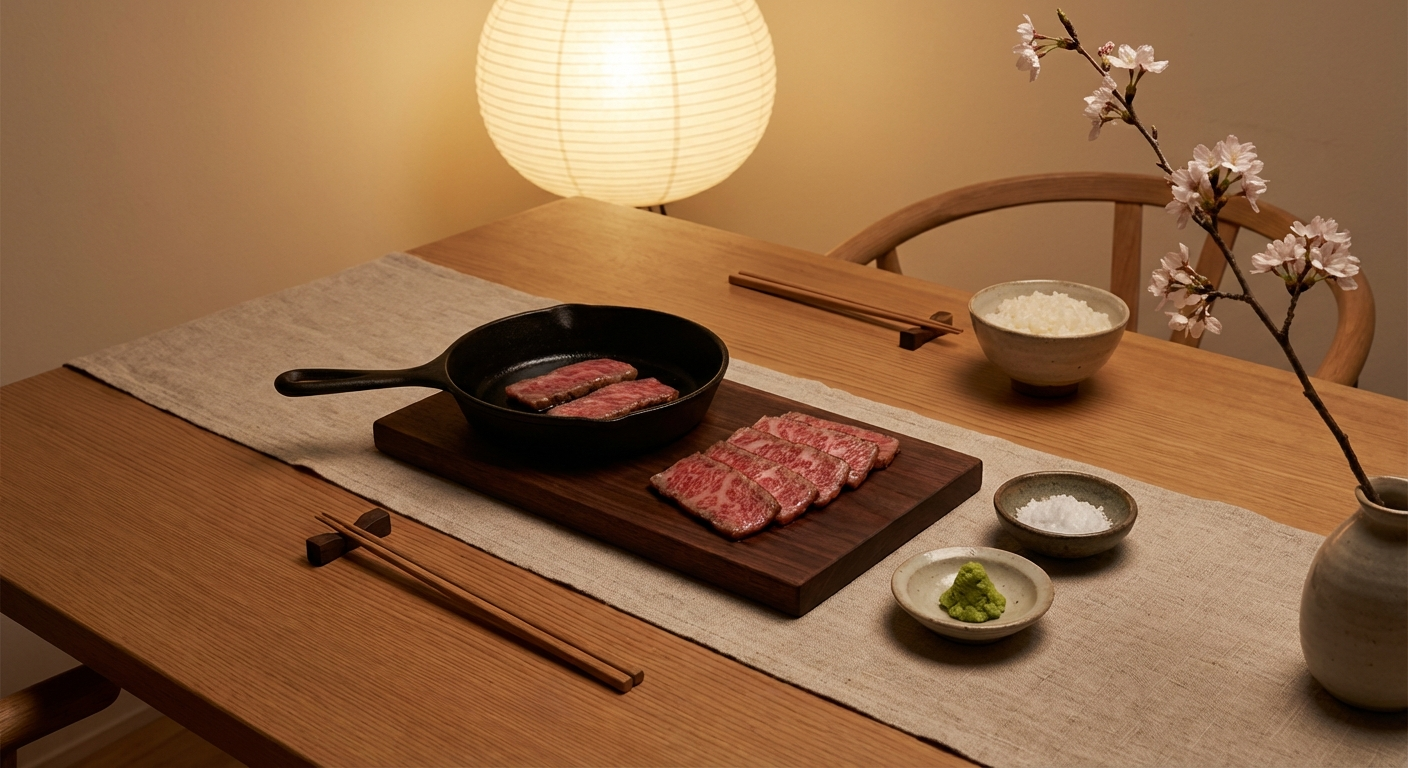
Most people experience their first Wagyu at a restaurant — a special occasion, someone else doing the cooking. But some of the best Wagyu I've ever eaten was prepared at home, in a regular kitchen, with basic equipment. You don't need a teppanyaki griddle or a charcoal yakiniku grill. You need a cast iron pan, good salt, and the knowledge I'm about to share.
Buying Wagyu for Home
Where to Buy
For authentic Japanese Wagyu, buy from specialized online retailers who provide full traceability — animal ID number, prefecture, BMS score, and processing date. The Meatery, Holy Grail Steak Co., and Crowd Cow are reputable sources. For American Wagyu, Snake River Farms and Morgan Ranch offer excellent fullblood programs.
Avoid generic "Wagyu" from grocery stores unless you can verify the genetics and grade. The word "Wagyu" on a supermarket label can mean anything from genuine fullblood to a 25% cross.
What to Buy First
For your first purchase, I recommend:
- Japanese A5 striploin (BMS 8-9): The best introduction to authentic Japanese Wagyu. Well-balanced marbling, easy to cook, and less expensive than ribeye.
- American fullblood ribeye: If you want a more traditional steak experience with Wagyu quality. Full-portion friendly.
- Japanese A5 chuck flap or zabuton: Incredible value — heavily marbled cuts from the chuck that cost $40-$60/lb instead of $150+ for loin cuts.
How Much to Buy
For Japanese A5: 3-4 oz per person for the main protein. If serving as part of a larger meal (with sides, starters, other courses), 2-3 oz is sufficient.
For American Wagyu: 6-8 oz per person for a steak dinner. These are richer than conventional beef but not so intense that small portions are necessary.
Storage and Thawing
Most online-purchased Wagyu arrives frozen. Proper thawing is critical:
- Best method: Refrigerator thawing, 24-36 hours. Place the vacuum-sealed package on a plate in the fridge.
- Acceptable: Cold water bath, 30-60 minutes. Keep in vacuum packaging, submerge in cold water, change water every 15 minutes.
- Never: Microwave defrost or room temperature thawing. Both create uneven temperature zones that compromise texture.
Once thawed, use within 3-5 days. Don't refreeze.
Cooking Methods by Cut
Striploin and Ribeye
These premium cuts deserve simple preparation. Cast iron, medium-high heat, no oil. Sear 60-90 seconds per side for a 3/4-inch steak. Rest 2-3 minutes. Slice and serve with flaky salt.
Tenderloin
Cut into 1-inch medallions. Sear each medallion 45-60 seconds per side. The tenderloin is the leanest premium cut — even in A5, it has less marbling than striploin or ribeye. It benefits from a slightly higher sear temperature.
Chuck Flap / Zabuton
These cuts from the chuck are heavily marbled and incredibly flavorful. They're less uniform in shape than loin cuts, which makes them perfect for the thin-slice yakiniku approach. Partially freeze, slice thin, flash-sear.
Ground Wagyu
Wagyu ground beef makes transcendent burgers. Form 6 oz patties (80/20 blend, no extra fat needed). Season with salt and pepper only. Cook on a hot flat surface — not a grill (too much fat loss). Medium-rare to medium. The fat renders into the patty, creating a burger that's juicy beyond anything from conventional ground beef.
Planning a Wagyu Dinner
For a memorable evening:
- Start light: Simple salad or clean soup. You want palates fresh for the main event.
- Serve Wagyu in courses: If you have A5, serve thin-sliced as a first course (2-3 pieces per person). Follow with American Wagyu or a conventional steak as the main course.
- Keep sides simple: Steamed rice, roasted vegetables, a clean green. Nothing that competes with the beef.
- Provide palate cleansers: Pickled ginger, light pickled vegetables, or a simple citrus sorbet between courses.
- End clean: Fresh fruit or a light dessert. Not chocolate cake — your guests' palates are already saturated with richness.
Common Mistakes
- Overcooking: The #1 mistake. Use a thermometer. Pull A5 at 115°F, American Wagyu at 120-125°F.
- Overcrowding the pan: Cook one steak at a time. The pan temperature drops when meat is added — overcrowding means steaming instead of searing.
- Skipping the rest: Even 2-3 minutes makes a difference. The juices redistribute and the carryover cooking finishes the interior.
- Over-seasoning: Salt is all you need. Maybe fresh wasabi or quality soy sauce on the side. Elaborate rubs and marinades mask the Wagyu flavor.
- Wrong portion size: Buying too much A5 and feeling obligated to eat it all. Less is genuinely more with this product.
Frequently Asked Questions
What equipment do I need to cook Wagyu at home?
A cast iron skillet, an instant-read thermometer, a sharp knife, and good salt. That's it. No special equipment needed. The cast iron provides even, high heat and can handle the rendered fat. The thermometer prevents overcooking.
How do I thaw frozen Wagyu properly?
Refrigerator thawing is best — 24-36 hours in the vacuum packaging on a plate. Cold water bath (30-60 min, changing water every 15 min) is acceptable. Never microwave or room-temperature thaw. Use within 3-5 days of thawing.
More Expert Guides
Wagyu Zabuton: The Best-Kept Secret in Japanese Beef
Wagyu zabuton is the most undervalued cut in the A5 world — extraordinary marbling, melt-in-your-mouth texture, and a price tag that makes ribeye look like a bad deal. Here is why insiders buy it first.
13 min readHida Beef: The Complete Guide to Gifu Prefecture's Legendary Wagyu
Hida beef is one of Japan's most prestigious regional wagyu brands, raised in the mountain valleys of Gifu Prefecture. Often overshadowed by Kobe in Western markets, Hida-gyu is revered in Japan for its delicate sweetness and fine-grained marbling. Here's what makes it special.
12 min readA4 vs A5 Wagyu: The Complete Comparison Guide
A4 and A5 are both elite Japanese wagyu grades, but they deliver meaningfully different eating experiences. This guide breaks down exactly how they differ in marbling, flavor, texture, price, and when each grade is the better choice.