Shimofuri: The Japanese Art of Wagyu Marbling
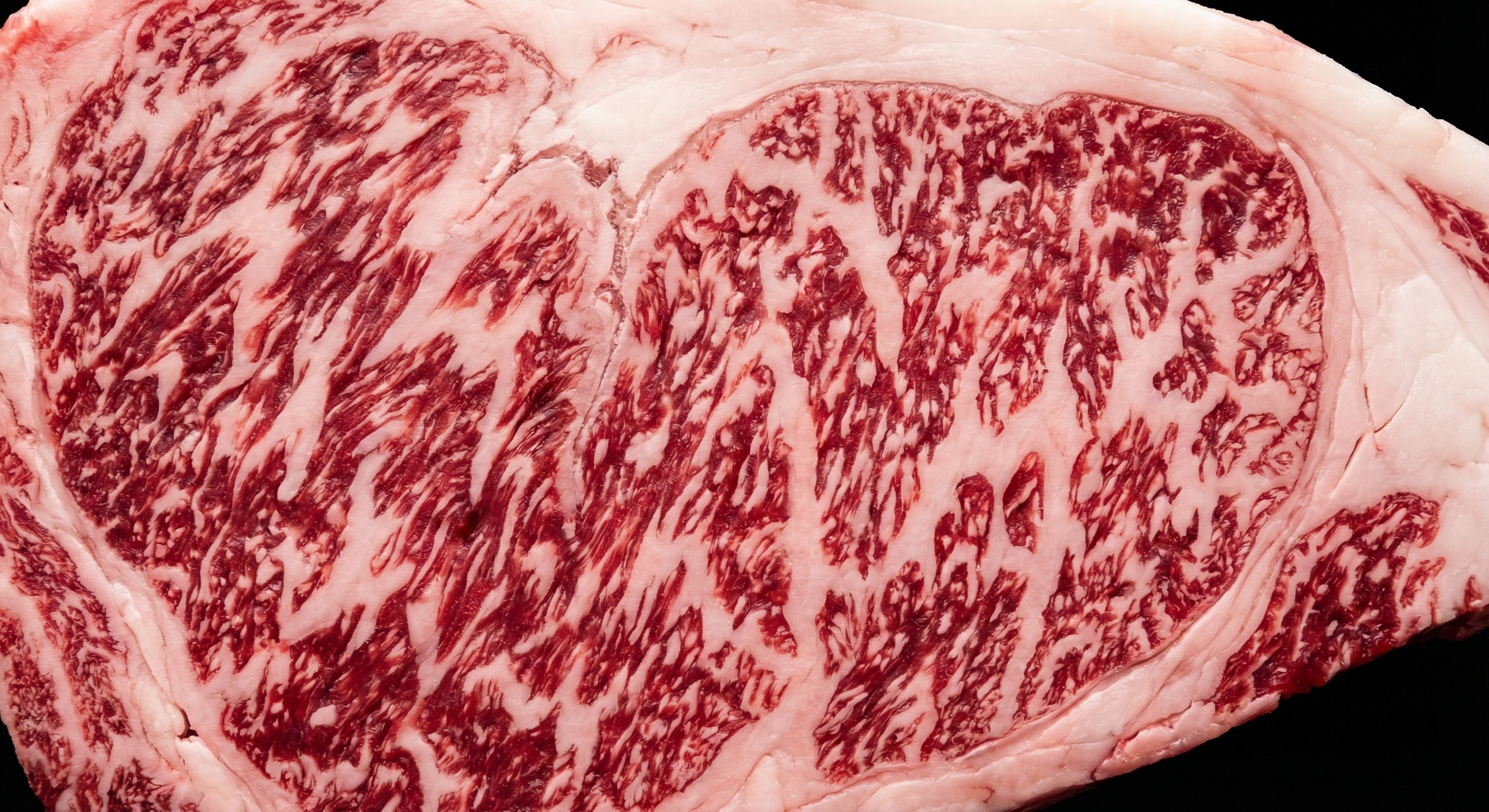
Shimofuri (—霍降り, literally “frost falling”) is the Japanese term for the intricate web of intramuscular fat that defines premium wagyu beef. The word paints a visual picture: fine white threads of fat distributed across red muscle like frost crystallizing on a winter morning.
In Japan, shimofuri is not just a description — it is the standard by which beef quality is measured. The density, fineness, and distribution of shimofuri marbling directly determine a cut’s BMS (Beef Marbling Standard) grade, its price, and its place in Japanese culinary culture.
What Shimofuri Looks Like
True shimofuri is visually distinct from the marbling you see in Western beef grades. Where USDA Prime beef shows broad streaks and pockets of white fat between muscle fibers, shimofuri consists of ultra-fine threads — almost hair-thin lines of fat woven uniformly through every part of the muscle.
At BMS 8 and above (the threshold for Japan’s A5 grade), shimofuri is so dense that the meat shifts from predominantly red to an almost pink-white appearance. The fat does not sit in clumps or bands — it infiltrates the muscle at a microscopic level, creating a uniform lacework pattern that is immediately recognizable.
The frost metaphor is apt. Just as frost covers a surface evenly rather than in patches, ideal shimofuri covers the entire cross-section of the muscle without bare spots or fat concentrations.
How Shimofuri Forms: Genetics and Environment
Shimofuri is not something that happens to any cow fed enough grain. It requires a specific genetic foundation combined with precise environmental conditions.
Genetics come first. Japanese Black cattle (Kuroge Washu) carry genes that promote intramuscular fat deposition at rates other breeds cannot match. Decades of selective breeding in Japan have refined this genetic predisposition. The SCDL and SCD genes, which regulate stearoyl-CoA desaturase activity, are key — they determine how efficiently the animal converts saturated fat to monounsaturated oleic acid, which gives wagyu fat its low melting point and buttery texture.
Then environment matters. Even genetically superior cattle will not develop peak shimofuri without:
- Extended feeding periods: Japanese wagyu are typically grain-finished for 600–900 days (compared to 120–150 days for American beef). This extended period allows slow, steady intramuscular fat accumulation.
- Low-stress environments: Cortisol from stress promotes subcutaneous (external) fat rather than intramuscular fat. Japanese ranchers keep herds small and handling calm to favor shimofuri development.
- Controlled diet: A precise mix of grain (primarily rice straw and barley in Japan) fuels fat deposition without the rapid weight gain that produces coarse marbling.
The result is fat that deposits slowly, evenly, and finely — the defining characteristics of shimofuri.
Shimofuri and the BMS Scale
Japan’s Beef Marbling Standard (BMS) is essentially a shimofuri measurement system. Trained graders evaluate the ribeye cross-section at the 6th–7th rib and assign a BMS number from 1 to 12 based on the density and quality of shimofuri patterning.
- BMS 1–2: Minimal marbling, little visible shimofuri
- BMS 3–4: Moderate marbling, some shimofuri pattern emerging (Japanese B3–B4 grade)
- BMS 5–7: Clear shimofuri throughout, fine distribution (Japanese A3–A4 grade)
- BMS 8–12: Dense, uniform shimofuri covering the entire cut (Japanese A5 grade)
The jump from BMS 7 to BMS 8 is where shimofuri transitions from “heavily marbled beef” to the snowflake pattern that characterizes world-class wagyu. At BMS 10–12, shimofuri is so uniform that there are no visible “lean spots” on the cross-section at all.
It is worth noting that BMS is not the only factor in Japanese beef grading. Yield grade (A, B, or C), meat color, fat color, and firmness also contribute. But shimofuri — measured through BMS — is the dominant factor that separates ordinary beef from A5 wagyu.
Why Shimofuri Affects Flavor and Texture
The fine distribution of shimofuri is what creates wagyu’s signature eating experience. Here is why the pattern matters as much as the quantity of fat:
Lower melting point: Shimofuri fat is high in oleic acid (monounsaturated fat), which melts at approximately 77°F — below human body temperature. This is why high-BMS wagyu literally melts on your tongue. Conventional beef fat melts at 104–113°F, which requires chewing to release flavor.
Even heat distribution: During cooking, the fine fat threads conduct heat uniformly through the muscle. This creates the paradox of wagyu cooking: despite high fat content, the meat cooks gently and evenly because the fat acts as a thermal buffer. Overcooking is harder (though still possible) because the fat prevents localized hot spots.
Umami amplification: The Maillard reaction between amino acids and sugars produces umami compounds. Shimofuri provides a vast surface area of fat-muscle interface where these reactions occur, intensifying savory flavor beyond what lean meat can achieve.
Textural dissolution: Fine shimofuri breaks down completely during chewing, leaving no gristle or chewy fat pockets. Coarse marbling (broad fat streaks) can leave waxy or chewy bits that are texturally distracting. Shimofuri — when properly developed — disappears entirely on the palate.
Shimofuri vs Western Marbling: Key Differences
Western beef grading systems (USDA, AUS-MEAT) measure marbling quantity but do not evaluate marbling fineness the way Japanese grading does. This creates a meaningful distinction:
- USDA Prime beef can achieve BMS 4–5, with visible marbling. But the fat distribution is typically coarser — broader streaks rather than fine threads. This is marbling, but it is not shimofuri.
- American wagyu (F1 crosses) often shows finer marbling than conventional Prime, approaching shimofuri in the best specimens. But the 50% non-wagyu genetics limits how fine the distribution can get.
- Australian wagyu at AUS-MEAT 9+ can develop shimofuri-level fineness, especially from fullblood or high-percentage wagyu genetics with extended feeding programs.
The practical takeaway: if you want true shimofuri, look for Japanese A5 or high-grade fullblood Australian wagyu. F1 crosses and conventional Prime, no matter how well-marbled, produce a different pattern.
Shimofuri in Japanese Culinary Tradition
In Japan, shimofuri is not just a grading metric — it is a culinary concept that shapes how beef is prepared and served.
Sukiyaki and shabu-shabu are built around shimofuri. Paper-thin slices of highly marbled beef are briefly cooked in hot liquid, allowing the shimofuri fat to melt and flavor the broth while the meat stays tender. These dishes would not work with lean beef.
Yakiniku (Japanese BBQ) showcases shimofuri over direct flame, where the melting fat creates caramelization and smoke that build flavor complexity.
Sushi-style preparations (wagyu nigiri, tataki) serve shimofuri-rich beef raw or barely seared, letting the fat’s low melting point and clean flavor speak for itself without any cooking intervention.
In each case, shimofuri is not a background trait — it is the feature being showcased. Japanese cuisine treats high-shimofuri beef as an ingredient that requires minimal intervention and maximum respect.
How to Evaluate Shimofuri When Buying
When shopping for wagyu with premium shimofuri, look for these indicators:
- BMS score: Insist on a verified BMS number. BMS 8+ guarantees genuine shimofuri. Below BMS 6, you are getting standard marbling.
- Visual uniformity: True shimofuri covers the entire cut evenly. If you see bare patches of red surrounded by fat clumps, that is coarse marbling, not shimofuri.
- Fat color: Shimofuri fat in Japanese wagyu should be white to slightly cream-colored. Yellow fat indicates grass finishing or lower-grade genetics.
- Certification: Japanese wagyu with genuine shimofuri comes with traceability documentation — a 10-digit ID number linking the cut to a specific animal, farm, and prefecture.
Reputable retailers like The Meatery provide BMS scores and certification details for their Japanese A5 wagyu, giving you confidence that the shimofuri you see is the real thing.
Frequently Asked Questions
What does shimofuri mean in English?
Shimofuri literally translates to "frost falling" in Japanese. It describes the fine, web-like pattern of intramuscular fat in premium wagyu beef, which resembles frost crystals forming on a surface.
What BMS score is needed for true shimofuri?
BMS 8 and above (Japanese A5 grade) is where shimofuri becomes the dominant visual characteristic of the meat. Below BMS 6, the marbling is present but lacks the fine, uniform distribution that defines genuine shimofuri.
Can non-Japanese wagyu have shimofuri?
High-grade fullblood Australian wagyu (AUS-MEAT 9+) can develop shimofuri-quality marbling with extended feeding programs. F1 crosses (American wagyu) show finer marbling than conventional beef but typically do not achieve true shimofuri fineness.
Why does shimofuri fat melt in your mouth?
Shimofuri fat is rich in oleic acid (monounsaturated fat), which melts at approximately 77 degrees Fahrenheit, well below body temperature. This is why high-BMS wagyu seems to dissolve on your tongue without chewing.
More Expert Guides
Wagyu Fat Melting Point: Why It Melts at Lower Temperatures Than Regular Beef
Wagyu beef fat melts at significantly lower temperatures than conventional beef — sometimes as low as 77°F. This guide explains the science behind it and why it transforms everything from flavor to cooking technique.
14 min readWagyu Ribeye Steak: The Complete Guide to Buying, Cooking, and Enjoying
Wagyu ribeye is the crown jewel of steak cuts — extraordinary marbling wrapped around the most flavorful primal on the animal. Here's how to buy, cook, and serve it without wasting a single bite.
12 min readHalal Wagyu Beef: Everything You Need to Know Before You Buy
Halal wagyu combines the extraordinary marbling of wagyu genetics with Islamic slaughter standards. Here is how to find it, verify certification, and choose the right cuts.