Olive Wagyu: The Complete Guide to the World's Rarest Beef
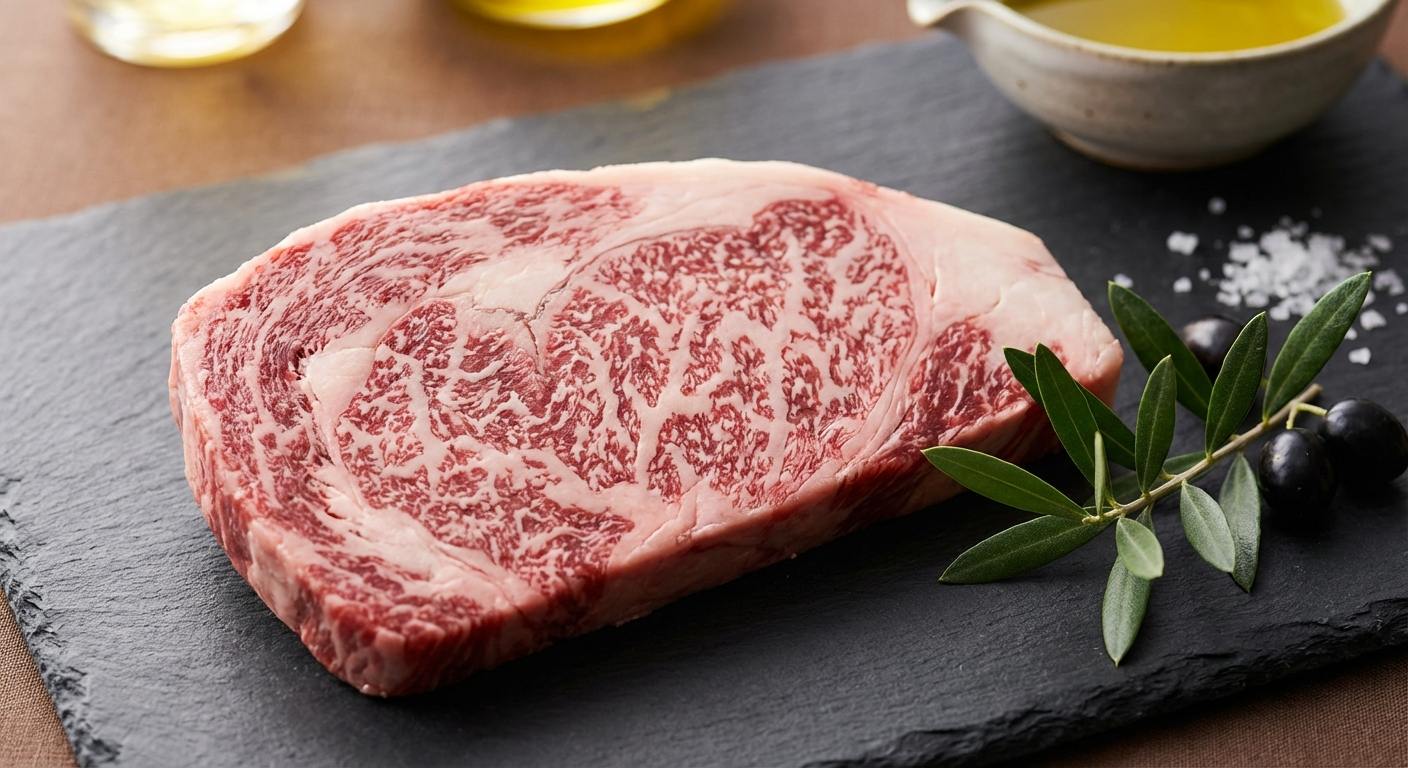
In the world of Japanese Wagyu, where exclusivity is already the norm, one variety stands apart as genuinely rare: olive wagyu. Produced exclusively on Shodoshima, a small island in the Seto Inland Sea off Kagawa Prefecture, olive wagyu comes from cattle finished on a diet supplemented with toasted olive pressings — the dried remnants of olives after oil extraction. Fewer than 2,000 head are raised annually, making it the rarest commercially available wagyu in existence.
What began as an agricultural experiment in 2006 has become one of Japan's most sought-after culinary experiences. The olive feed doesn't just add marketing cachet — it genuinely changes the beef's fat composition, creating a distinctly lighter, more nuanced flavor that sets it apart from conventional Japanese A5 wagyu. Having evaluated olive wagyu alongside Kobe, Miyazaki, and Matsusaka, I can say the difference is real and measurable.
What Is Olive Wagyu?
Olive wagyu — officially branded as Sanuki Olive Wagyu (讃岐オリーブ牛) — refers to Japanese Black (Kuroge Washu) cattle raised in Kagawa Prefecture and finished on a diet that includes dried, roasted olive pressings. The "olive" in the name isn't a gimmick: the feed supplement is derived from the olive oil production industry that Shodoshima has been known for since the early 1900s.
Kagawa is Japan's smallest prefecture by area, and Shodoshima — the primary production island — is just 153 square kilometers. This geographic limitation is the primary reason olive wagyu production can never scale significantly. There simply isn't enough land, enough olive waste, or enough ranching infrastructure to support large herds.
The cattle themselves are genetically identical to other Japanese Black wagyu raised across Japan. What makes olive wagyu different is exclusively the finishing diet and the micro-terroir of Shodoshima's Mediterranean-like climate — warm, humid, with mild winters that reduce stress on cattle during the critical fattening phase.
The Origin Story: From Olive Waste to Premium Beef
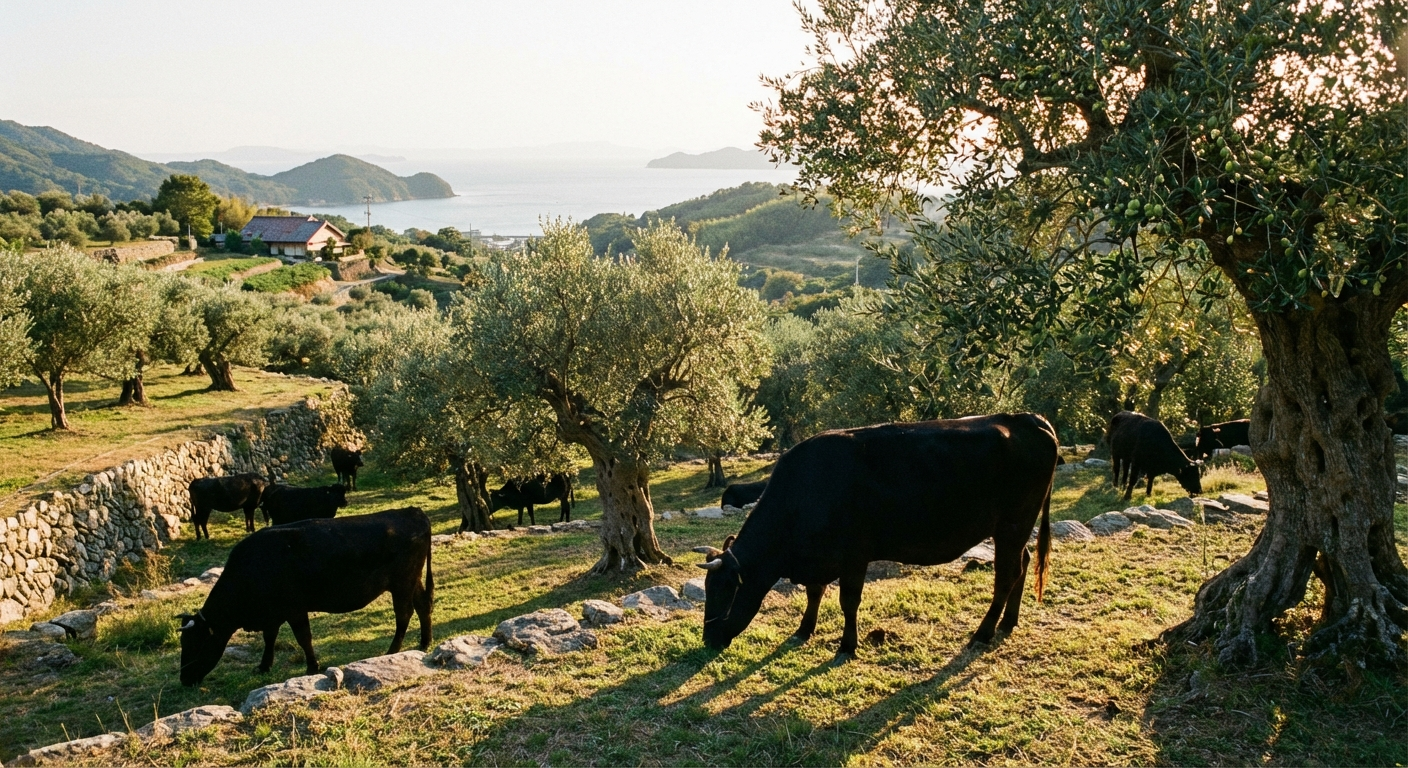
The story of olive wagyu begins with a problem: what to do with the tons of olive pressings left over after Shodoshima's olive oil production. In 2006, a Kagawa Prefecture cattle rancher named Masaki Ishii began experimenting with incorporating dried olive waste into his cattle's feed ration. The idea wasn't entirely novel — European and Mediterranean farmers have fed olive byproducts to livestock for centuries — but no one had tried it with wagyu cattle before.
Ishii spent years refining the process. Raw olive pressings are too bitter and acidic for cattle. The breakthrough came when he discovered that slowly roasting the pressings at specific temperatures caramelized the bitter compounds and created a feed supplement that cattle would readily consume. The roasting process also concentrated the oleic acid and antioxidant content of the olive waste.
By 2010, the first olive wagyu beef was commercially available in small quantities within Kagawa Prefecture. The A5-graded results drew immediate attention from Japanese food critics who noted a perceptible difference in the fat's texture and flavor. By 2014, olive wagyu had won the top prize at the Japanese Fats and Oils Society competition, with judges noting the beef's unusually high oleic acid content.
Why Olive Feed Changes the Beef
The science behind olive wagyu's distinctive quality centers on oleic acid — a monounsaturated omega-9 fatty acid that is the primary fat in olive oil. When cattle consume roasted olive pressings during their final feeding phase (typically the last 2–3 months before processing), the oleic acid content in their intramuscular fat increases measurably.
Oleic Acid and Fat Quality
Standard Japanese A5 wagyu already has high oleic acid content — typically 48–55% of total fatty acids. Olive wagyu pushes this to 62–65%, a significant increase that has tangible effects on the eating experience:
- Lower melting point: Higher oleic acid means the fat literally melts at a lower temperature. Olive wagyu fat begins melting at body temperature, which is why it seems to dissolve on your tongue rather than coating your palate.
- Lighter mouthfeel: Despite extreme marbling scores, olive wagyu feels less heavy than comparably graded conventional wagyu. You can eat a larger portion without the richness fatigue that often accompanies A5 beef.
- Slightly sweet, nutty finish: The olive-derived compounds create subtle flavor notes — a faint nuttiness and sweetness that you won't find in other wagyu varieties. It's not olive-flavored; it's more that the overall flavor profile skews gentler and more complex.
Antioxidant Benefits
Olive pressings are rich in polyphenols, particularly oleuropein and hydroxytyrosol — powerful antioxidants. Research published by Kagawa University found that olive wagyu beef contains measurably higher antioxidant levels than conventional wagyu, which may contribute to longer shelf stability and the fat's resistance to oxidation (the process that causes beef fat to develop off-flavors over time).
How Olive Wagyu Is Produced
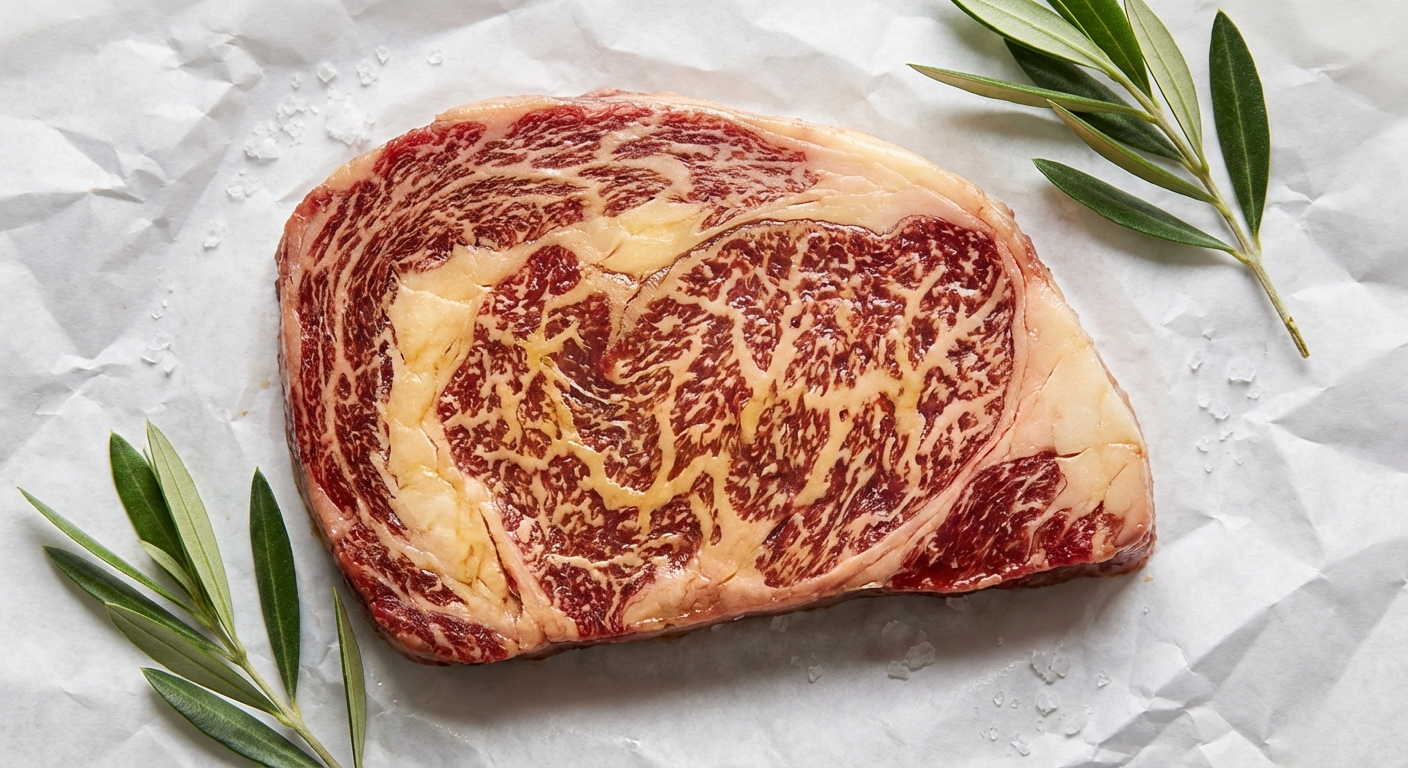
The production process for olive wagyu follows the same general outline as all Japanese wagyu — extended raising period, careful feeding, minimal stress — but with several Shodoshima-specific elements that make it unique.
Raising Period
Olive wagyu cattle are raised for approximately 28–30 months total. The first 8–10 months are spent with the mother on pasture, followed by a gradual transition to a grain-based diet. The olive supplement is introduced during the final 2–3 months of the feeding period, once the cattle have already developed their base marbling structure.
The Olive Feed Process
Each day, olive wagyu cattle consume roughly 200–300 grams of roasted olive pressings mixed into their regular feed ration. The pressings are collected from Shodoshima's olive oil producers, dried, then roasted at controlled temperatures for several hours. The roasting is critical — under-roasted pressings are rejected by cattle due to bitterness, while over-roasted pressings lose their beneficial fatty acid and antioxidant profile.
The feed supplement represents a small fraction of the total diet (which still consists primarily of grain, rice straw, and other conventional wagyu feed components), but its effects on fat composition are disproportionately significant.
Scale and Exclusivity
Only a handful of ranchers in Kagawa Prefecture are certified to produce olive wagyu — the exact number fluctuates but typically ranges from 15 to 20 operations. Combined annual production is approximately 1,500–2,000 head, compared to roughly 500,000 wagyu cattle processed across Japan each year. This means olive wagyu represents less than 0.4% of Japan's total wagyu output.
The Kagawa Prefecture Olive Wagyu Promotion Council controls certification, branding, and quality standards. Not every Kagawa-raised wagyu qualifies — cattle must meet minimum olive feed intake requirements and achieve at least a quality grade of 4 to carry the olive wagyu designation.
How Olive Wagyu Compares to Other Premium Wagyu
The natural question is: how does olive wagyu stack up against the other elite wagyu regions? Here's how it compares across the metrics that matter most.
Olive Wagyu vs. Kobe Beef
Kobe beef comes from Tajima-gyu cattle raised in Hyogo Prefecture and is probably the most famous wagyu brand globally. Both are A5-grade Japanese Black cattle, but the eating experience differs notably. Kobe beef has a more intense, deeply beefy umami character with rich, buttery fat. Olive wagyu is lighter, more nuanced, with that characteristic gentle sweetness. If Kobe is a bold Cabernet, olive wagyu is an elegant Pinot Noir.
Olive Wagyu vs. Miyazaki Wagyu
Miyazaki wagyu is Japan's most consistently award-winning beef, with supreme marbling density. The two are more similar than either is to Kobe — both tend toward the "refined" end of the wagyu spectrum. But Miyazaki's fat has a more traditionally rich wagyu character, while olive wagyu's higher oleic acid creates that distinctly lighter, almost silky mouthfeel.
Olive Wagyu vs. Matsusaka Beef
Matsusaka beef from Mie Prefecture is raised exclusively from virgin female cattle (heifers), which produces exceptionally tender, delicately flavored beef. Matsusaka and olive wagyu share a refinement that distinguishes them from bolder varieties, but Matsusaka achieves this through genetics and gender selection, while olive wagyu achieves it through feed chemistry. Both are excellent choices for people who find standard A5 wagyu overwhelming.
How to Cook Olive Wagyu
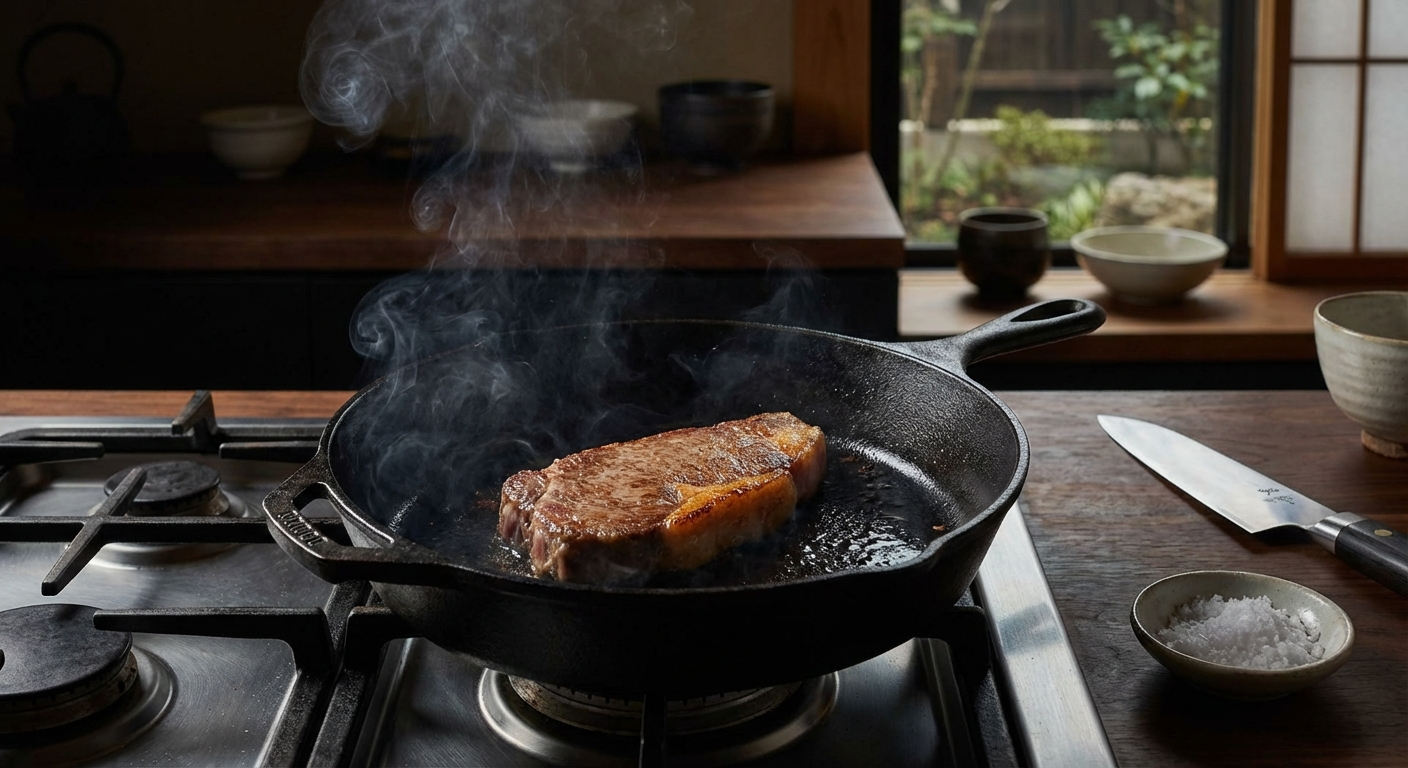
Cooking olive wagyu follows the same principles as cooking any A5 wagyu, with one key advantage: because the fat is lighter and less cloying, you can serve slightly larger portions than you would with conventional A5 without overwhelming diners.
Best Cooking Methods
- Hot sear (recommended): Heat a cast iron pan until smoking. No added oil — the beef's own fat provides more than enough. Sear 60–90 seconds per side for a 1-inch thick steak. Target 120–125°F internal for rare to medium-rare.
- Yakiniku-style: Slice thin (3–4mm) and grill over high heat for 10–15 seconds per side. This is arguably the best way to appreciate olive wagyu's subtle flavor notes, as the thin slices melt instantly.
- Teppanyaki: A flat steel griddle heated to around 500°F works beautifully. Cut into bite-sized cubes and sear all sides. Finish with a pinch of flake salt.
- Shabu-shabu: Paper-thin slices swished briefly in hot dashi broth. The lighter fat of olive wagyu is particularly well-suited to shabu-shabu because it doesn't coat the broth as heavily as conventional wagyu.
Portion Sizing
For conventional A5 wagyu, I typically recommend 3–4 oz per person as a standalone course. With olive wagyu, you can comfortably push to 4–5 oz without the richness becoming oppressive. The higher oleic acid content means the fat is more easily metabolized, so the heavy, satiated feeling sets in later.
Seasoning
Salt only — ideally a good flake salt like Maldon or Japanese shio. Olive wagyu's subtle nutty-sweet notes are delicate enough that even black pepper can overpower them. If you want to pair with a condiment, fresh wasabi (not the neon-green paste) or a tiny dab of yuzu kosho complement without competing.
How to Buy Authentic Olive Wagyu
Given its extreme rarity, buying authentic olive wagyu requires some diligence. Here are the key things to look for and watch out for.
Authentication Markers
Genuine olive wagyu carries multiple layers of certification:
- The standard JMGA grade stamp (A5, A4, etc.) applied to all Japanese wagyu
- A 10-digit individual identification number that can be traced through Japan's national cattle tracking system
- The Sanuki Olive Wagyu brand mark, which is controlled by the Kagawa Prefecture promotion council
- A certificate of authenticity from the rancher, which legitimate importers will provide
If a seller cannot provide the individual ID number and Kagawa Prefecture certification, be skeptical. The rarity of olive wagyu makes it a frequent target for misrepresentation.
Pricing
Olive wagyu commands a significant premium over standard A5 Japanese wagyu. Expect to pay roughly $150–250 per pound for A5-graded olive wagyu ribeye or striploin in the US market (as of 2026). This is approximately 30–50% more than comparable A5 from Miyazaki or Kagoshima, and roughly on par with top-tier Kobe beef pricing.
Deals that seem too good to be true almost certainly are. If someone is selling "olive wagyu" at prices comparable to regular A5 Japanese wagyu, it's likely standard Kagawa wagyu (which does exist and is fine beef, but is not the same as olive-fed wagyu) or outright mislabeling.
Where to Find It
In the US, olive wagyu is available through a small number of authorized importers. Most high-end Japanese restaurants in cities like New York, Los Angeles, and Las Vegas will occasionally feature it as a special. Online, look for importers who specialize in Japanese wagyu and can provide full traceability documentation. Our guide to buying wagyu online covers the key trusted retailers.
Is Olive Wagyu Worth the Premium?
This is the question every wagyu enthusiast eventually asks. My honest assessment: it depends on what you value.
Yes, if: You appreciate subtlety over intensity, you've tried multiple A5 wagyu varieties and want to explore the full spectrum, or you're looking for the wagyu that's easiest for first-timers to enjoy without the "too rich" reaction that conventional A5 sometimes triggers.
Maybe not, if: You prefer bold, intensely beefy flavor profiles (Kobe or Miyazaki will satisfy you more), you're buying for a group that won't appreciate the nuance, or the 30–50% premium over equally excellent A5 wagyu from other regions doesn't fit your budget.
What I can say definitively is that olive wagyu is not marketing hype. The oleic acid difference is measurable, the flavor profile is genuinely distinct, and the production limitations are real. Whether that distinction justifies the premium is a personal call — but you're paying for something legitimate, not a story.
Frequently Asked Questions
What makes olive wagyu different from regular wagyu?
Olive wagyu cattle are finished on a diet supplemented with roasted olive pressings from Shodoshima Island's olive oil production. This increases the oleic acid content in the beef's fat to 62–65% (vs. 48–55% for conventional wagyu), creating a lighter mouthfeel, lower melting point, and subtle nutty-sweet flavor notes not found in other wagyu varieties.
How rare is olive wagyu?
Only about 1,500–2,000 olive wagyu cattle are processed annually, produced by roughly 15–20 certified ranchers in Kagawa Prefecture. This represents less than 0.4% of Japan's total wagyu production, making it the rarest commercially available wagyu in the world.
How much does olive wagyu cost?
A5-graded olive wagyu ribeye or striploin typically costs $150–250 per pound in the US market (2026 pricing). This is approximately 30–50% more than comparable A5 wagyu from other Japanese prefectures like Miyazaki or Kagoshima.
How should I cook olive wagyu?
Sear on a screaming-hot cast iron pan with no added oil for 60–90 seconds per side, targeting 120–125°F internal temperature. Season with salt only to preserve the delicate nutty-sweet notes. Yakiniku-style thin slicing (10–15 seconds per side over high heat) is also excellent and arguably the best way to appreciate the subtle flavor differences.
Is olive wagyu healthier than regular wagyu?
Olive wagyu has higher levels of oleic acid (a heart-healthy monounsaturated fat also found in olive oil) and measurably higher antioxidant content from the olive polyphenols in the feed. While all A5 wagyu is high in oleic acid compared to conventional beef, olive wagyu pushes these levels even higher. However, it's still a rich, highly marbled beef — moderation applies.
More Expert Guides
What Is Wagyu Beef? The Complete Guide to Grades, Origins & Quality
Discover wagyu beef origins, the difference between Japanese A5 and American wagyu, how BMS grading works, why marbling matters, proper cooking techniques, and what you should pay in 2026.
12 min readA5 Wagyu: Your Complete Buying & Authentication Guide (2026)
A5 wagyu represents the pinnacle of beef quality, but not all A5 is created equal. Learn how to authenticate real Japanese A5, decode BMS scores, find fair prices, and cook it perfectly at home.
14 min readA5 Wagyu Prefectures: Regional Guide to Japan's Best Beef
Discover the regional differences in Japanese A5 wagyu across 12 key prefectures. Learn which prefecture produces the flavor profile you'll love most.