Kobe vs Wagyu: Understanding the Difference
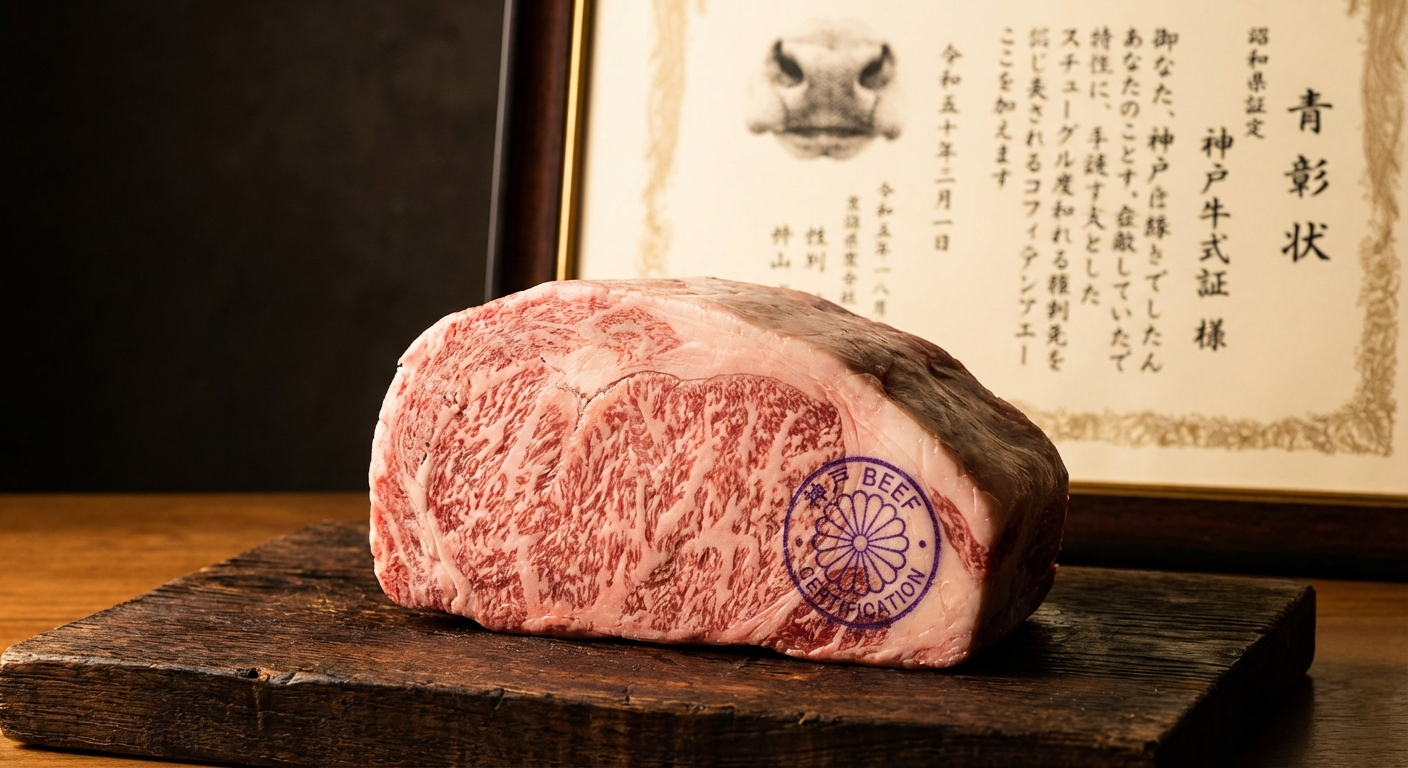
This is one of the most common misconceptions in the food world: people use "Kobe" and "Wagyu" interchangeably, as if they mean the same thing. They don't. Kobe beef is a specific type of Wagyu — like how Champagne is a specific type of sparkling wine. All Kobe is Wagyu, but the vast majority of Wagyu is not Kobe.
What Makes Kobe Beef Kobe
To carry the Kobe designation, beef must meet every one of these requirements:
- Breed: Purebred Tajima-gyu cattle (a strain of Japanese Black)
- Born in Hyogo Prefecture
- Raised entirely in Hyogo Prefecture
- Slaughtered at approved facilities in Kobe, Nishinomiya, Sanda, Kakogawa, or Himeji
- BMS 6 or higher and quality grade 4 or 5
- Carcass weight limits: 470 kg or less for steers
That's six simultaneous requirements. Miss any one and the beef cannot be called Kobe.
The Scale Problem
Here's the math that should make you suspicious of most "Kobe" claims: only 3,000-5,000 head qualify as Kobe beef annually. That's the entire global supply. A fraction is exported. Meanwhile, hundreds of U.S. restaurants claim to serve "Kobe beef" — as burgers, sliders, hot dogs, and tacos.
The Kobe Beef Marketing & Distribution Promotion Association maintains a list of authorized retailers and restaurants. In the entire United States, there are fewer than 50 authorized establishments. If the restaurant isn't on that list, their "Kobe" is not authentic Kobe.
What's Usually Behind the "Kobe" Label
When you see "Kobe" on a U.S. menu, it's typically one of:
- American Wagyu crossbred: F1 Wagyu × Angus from the U.S. — good beef, but not Kobe by any stretch
- Australian Wagyu: Possibly with Tajima genetics, raised in Australia
- Generic marketing: Regular beef with "Kobe" slapped on the menu to justify a premium price
- "Kobe-style": A term with no legal meaning, used to evoke Kobe without technically claiming it
The term "Kobe" has no legal protection in the United States. Anyone can put it on a menu or label without consequence. This is fundamentally different from Japan, where misusing the Kobe designation carries severe penalties.
How to Verify Authentic Kobe
If you're considering a purchase that claims to be authentic Kobe beef:
- Check the Kobe Beef Association's website for the list of authorized distributors and restaurants in your country
- Ask for the 10-digit individual ID number from the Japanese traceability system
- Look for the chrysanthemum stamp — the official Kobe beef certification mark
- Verify the price. Authentic Kobe beef at U.S. retail typically costs $150-$300+ per pound for premium cuts. "Kobe" burgers at $20 are not authentic.
Is Kobe Actually the "Best" Wagyu?
Here's where my specialist hat goes on: Kobe is exceptional, but it's not objectively the "best" Wagyu. It's the most famous — largely due to decades of mystique building and its early introduction to Western food culture.
In blind tastings, experienced judges cannot consistently distinguish Kobe from other top-tier Japanese Wagyu at similar BMS levels. Miyazaki has won three consecutive Wagyu Olympics. Matsusaka commands higher prices in Japan. Many Japanese connoisseurs consider Omi the most refined.
What Kobe has is a specific, identifiable character — fine marbling, delicate sweetness, clean finish — that comes from the isolated Tajima genetics and the Hyogo terroir. If that character appeals to you, Kobe is worth seeking out. But don't assume it's automatically superior to all other Wagyu — that's marketing, not reality.
The Bottom Line
Be skeptical of "Kobe" claims. Appreciate that authentic Kobe is a rare, carefully controlled product that represents the best of a specific tradition. But don't overlook the excellence of Wagyu from other prefectures — you may find that Miyazaki or Kagoshima suits your palate better, at a more accessible price. For verified Japanese A5 Wagyu from top prefectures, shop The Meatery's curated selection.
Frequently Asked Questions
Is "Kobe beef" at American restaurants real?
Almost never. Only about 50 establishments in the entire U.S. are authorized to sell authentic Kobe beef. The Kobe Beef Association maintains a public list. If the restaurant isn't on it, the "Kobe" is likely American Wagyu crossbred or conventional beef with a premium label.
What does "Kobe-style" mean?
"Kobe-style" has no legal or technical meaning. It's a marketing term used to evoke Kobe beef without claiming authenticity. It usually refers to American Wagyu or crossbred beef that has higher marbling than conventional cattle.
More Expert Guides
Wagyu Zabuton: The Best-Kept Secret in Japanese Beef
Wagyu zabuton is the most undervalued cut in the A5 world — extraordinary marbling, melt-in-your-mouth texture, and a price tag that makes ribeye look like a bad deal. Here is why insiders buy it first.
13 min readHida Beef: The Complete Guide to Gifu Prefecture's Legendary Wagyu
Hida beef is one of Japan's most prestigious regional wagyu brands, raised in the mountain valleys of Gifu Prefecture. Often overshadowed by Kobe in Western markets, Hida-gyu is revered in Japan for its delicate sweetness and fine-grained marbling. Here's what makes it special.
12 min readA4 vs A5 Wagyu: The Complete Comparison Guide
A4 and A5 are both elite Japanese wagyu grades, but they deliver meaningfully different eating experiences. This guide breaks down exactly how they differ in marbling, flavor, texture, price, and when each grade is the better choice.