Kagoshima Wagyu: The Complete Guide to Japan's Wagyu Olympics Champion
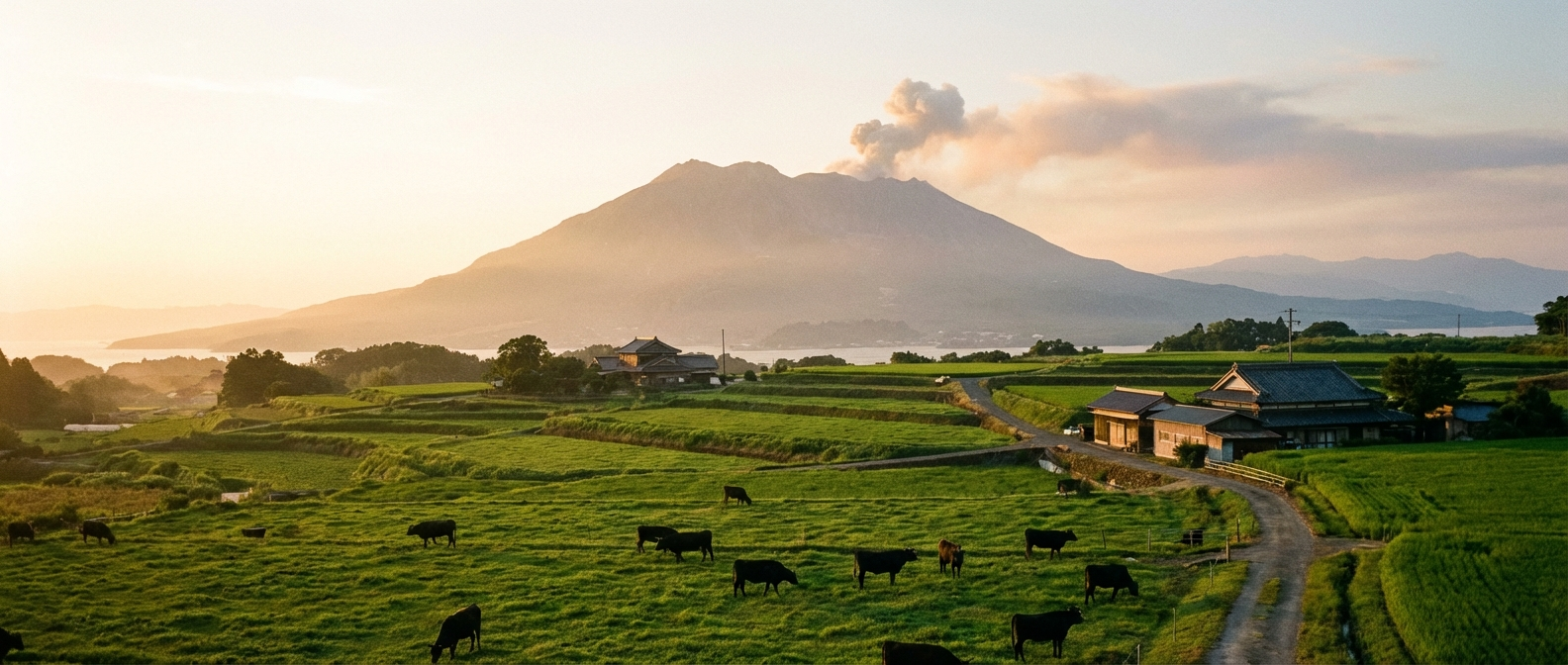
When most Western buyers think about premium Japanese wagyu, the same names surface: Kobe, Matsusaka, Miyazaki. But there's a prefecture that outproduces them all, has won Japan's most prestigious beef competition twice in a row, and remains surprisingly under-discussed outside of Japan. That prefecture is Kagoshima.
Located at the southern tip of Kyushu island, Kagoshima is Japan's single largest wagyu-producing prefecture — responsible for roughly 20% of the nation's total wagyu output. More importantly, Kagoshima beef (Kagoshima Gyu, 鹿児島牛) took the overall championship at the Wagyu Olympics in both 2017 and 2022, defeating every other prefecture in Japan's most rigorous cattle competition. This isn't a fluke. It's the result of volcanic soil, sophisticated breeding programs, and a climate that's almost custom-designed for raising exceptional cattle.
Why Kagoshima Is Japan's Wagyu Powerhouse
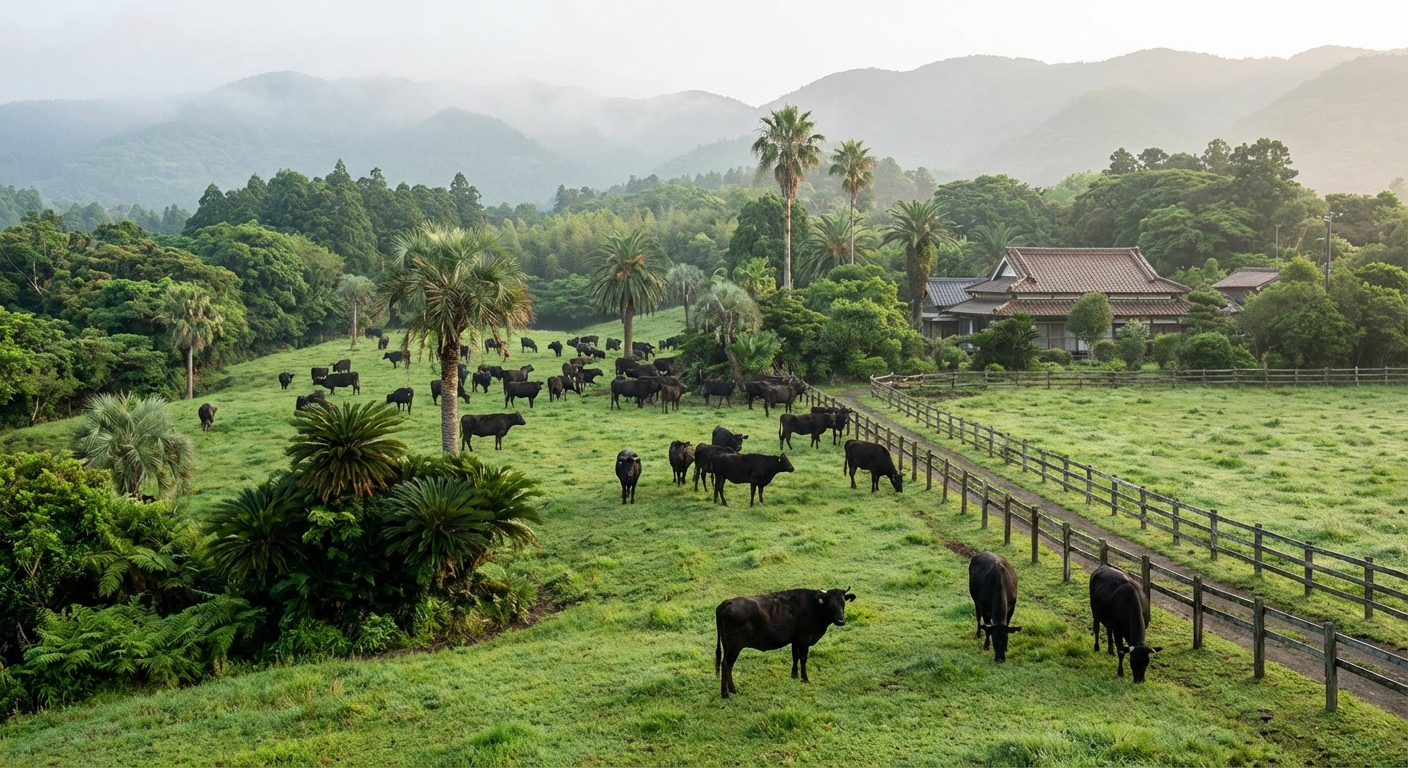
Kagoshima's dominance in Japanese wagyu isn't a recent development. The prefecture has been Japan's top wagyu producer by volume for decades, with over 330,000 head of cattle — more than any other prefecture in the country. To put that in perspective, Hyogo Prefecture (home of Kobe beef) maintains roughly 60,000 head. Kagoshima produces more than five times as much wagyu as the Kobe region.
But volume alone doesn't make great beef. What sets Kagoshima apart is the combination of three factors that work together: geography, genetics, and feeding expertise.
Geography: Volcanic Soil and Subtropical Climate
Kagoshima sits directly across the bay from Sakurajima, one of Japan's most active volcanoes. Centuries of volcanic eruptions have deposited mineral-rich ash across the prefecture's farmland, creating soil that produces exceptionally nutritious grasses and feed crops. The volcanic minerals — particularly potassium, phosphorus, and trace elements — translate directly into higher-quality feed for the cattle.
The climate matters equally. Kagoshima's subtropical conditions mean mild winters and warm, humid summers. Cattle experience minimal cold stress, which is significant because temperature stress directly affects fat deposition and meat quality. The warm, stable climate allows cattle to metabolize feed more efficiently, channeling energy into intramuscular fat development rather than maintaining body temperature.
Genetics: The Kuroge Washu Breeding Program
All Kagoshima wagyu is Japanese Black (Kuroge Washu), the same breed that produces Kobe, Matsusaka, and Miyazaki wagyu. But breed alone doesn't determine quality — bloodline selection does. Kagoshima's prefectural breeding program maintains elite sire bulls whose offspring consistently produce BMS scores of 10 and above.
Key sire lines include descendants of legendary bulls like Yasufuku and Kitatsurumi, whose genetics emphasize both high marbling and desirable fat composition. Kagoshima's breeders also focus heavily on oleic acid content — the monounsaturated fatty acid that gives high-quality wagyu its distinctively sweet, buttery flavor and lower melting point. This focus on fat quality, not just fat quantity, is what separates elite wagyu programs from merely good ones.
What's particularly interesting about Kagoshima's genetics is their influence on the broader Japanese wagyu industry. Many of the elite bloodlines used across Japan — including in Hida and other prefectures — trace back to Kagoshima breeding stock. The prefecture functions as a genetic reservoir for the entire national herd.
Feeding: The 28-Month Standard
Kagoshima cattle are typically raised for 28 to 30 months, with the final 15 to 18 months on a carefully managed grain-based diet supplemented with rice straw, corn, barley, and proprietary feed blends. The feeding period is designed to maximize intramuscular fat deposition while maintaining the muscle structure that gives the beef its texture.
Many Kagoshima producers incorporate locally grown sweet potato vines (imo-zuru) into their feed programs — a practice unique to the region. Sweet potato cultivation is a major agricultural industry in Kagoshima (the prefecture produces more sweet potatoes than any other in Japan), and the vine byproducts contain beta-carotene and other compounds believed to contribute to the distinctively white, clean fat color that Kagoshima beef is known for.
The Wagyu Olympics: Kagoshima's Back-to-Back Victories
Every five years, Japan holds the Zenkoku Wagyu Noryoku Kyoshinkai (全国和牛能力共進会) — commonly known as the "Wagyu Olympics." This is the most prestigious beef cattle competition in the world, drawing entries from every wagyu-producing prefecture in Japan. Thousands of cattle are evaluated across 11 categories, including carcass quality, marbling, fat quality, meat color, and overall conformation.
In 2017, Kagoshima cattle won the competition's highest honors, including the coveted Prime Minister's Award. Then in 2022, when the competition was actually hosted in Kagoshima Prefecture, local cattle again took the top prize — a back-to-back championship that cemented the prefecture's status as Japan's premier wagyu region.
The 2022 victory was particularly significant because it came in the fat quality evaluation category, where judges assess oleic acid content and overall fat composition. This metric aligns with modern understanding of wagyu fat quality — the idea that the best wagyu isn't just the most marbled, but has the highest proportion of desirable fatty acids that melt at lower temperatures and deliver richer umami flavor.
How Kagoshima Wagyu Is Graded
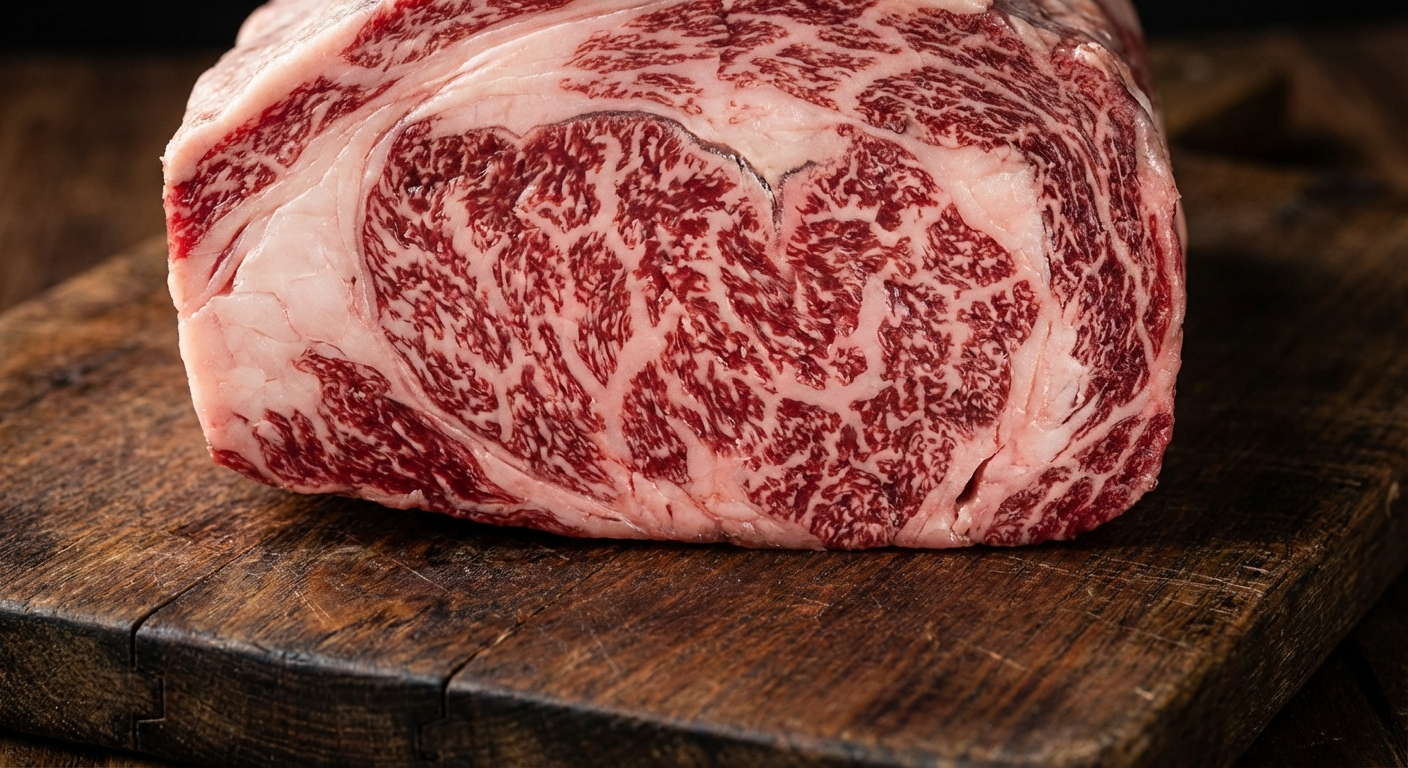
Kagoshima beef is graded by the Japan Meat Grading Association (JMGA) using the same system applied to all Japanese wagyu. The yield grade (A, B, or C) measures the ratio of usable meat to total carcass weight. The quality grade (1 through 5) evaluates marbling, meat color, firmness, fat color, and fat quality.
Within the A5 designation, the Beef Marbling Standard (BMS) provides further differentiation on a scale of 1 to 12, with BMS 8–12 falling within A5. Kagoshima's top cattle routinely score BMS 10 to 12, placing them at the absolute peak of the grading scale.
Beyond the national JMGA grade, Kagoshima beef that meets certain criteria can earn the prefecture's own brand certification. To qualify as certified Kagoshima Kuroge Wagyu (鹿児島黒牛), cattle must:
- Be purebred Japanese Black (Kuroge Washu)
- Be born and raised entirely within Kagoshima Prefecture
- Be fed for a minimum specified period at registered Kagoshima farms
- Achieve a JMGA quality grade of 4 or 5 (A4 or A5)
This brand certification provides an additional layer of traceability and quality assurance beyond the standard JMGA grade. Every certified Kagoshima wagyu carcass receives a 10-digit identification number that allows buyers to trace the beef back to the specific farm and animal.
Flavor Profile: What Kagoshima Wagyu Tastes Like
Kagoshima wagyu has a flavor profile that's distinct from other premium Japanese beef regions, though the differences are subtle and require side-by-side comparison to fully appreciate. The key characteristics include:
Sweetness: Kagoshima beef is consistently described as having a sweet, almost confectionery quality to its fat. This comes from the high oleic acid content — the same compound responsible for the sweetness in olive oil. When properly rendered through brief searing, Kagoshima fat melts into a liquid that coats the palate with sustained sweetness rather than the heavier richness of some other wagyu regions.
Clean finish: Unlike some heavily marbled wagyu that can feel coating or cloying, Kagoshima beef tends to have a cleaner finish. The fat melts quickly and dissipates, leaving an umami afterglow without lingering greasiness. This is attributed to the lower melting point of Kagoshima fat — often below human body temperature — which means it dissolves almost instantly on the tongue.
Balanced umami: While Matsusaka beef is often described as the most intensely umami-forward wagyu, Kagoshima hits a middle register that balances umami depth with the beef's natural sweetness. This makes it more approachable for diners who find extremely rich wagyu overwhelming.
Kagoshima vs Other Premium Wagyu Regions
How does Kagoshima compare to the other famous wagyu prefectures? Here's how the major regions differ:
Kagoshima vs Kobe: Kobe beef has the stronger global brand name, but Kagoshima surpasses it in competition results and production volume. Kobe's Tajima cattle lineage produces excellent beef, but the herd size is limited (roughly 3,000 certified Kobe cattle per year vs. Kagoshima's massive output). Flavor-wise, Kobe tends toward nuttier, more mineral-forward notes, while Kagoshima leans sweeter.
Kagoshima vs Miyazaki: These two prefectures are fierce rivals and geographic neighbors on Kyushu island. Miyazaki dominated the Wagyu Olympics from 2007–2012, then Kagoshima took over in 2017–2022. The two are remarkably similar in quality, with Miyazaki perhaps having a slight edge in consistency of marbling distribution and Kagoshima excelling in fat quality metrics.
Kagoshima vs Matsusaka: Matsusaka is the luxury option — virgin heifers only, beer-fed (according to legend), and intensely rich. Kagoshima offers comparable quality at typically lower prices due to higher production volume. Matsusaka is more umami-dense; Kagoshima is more balanced.
Kagoshima vs Omi: Omi beef from Shiga Prefecture is Japan's oldest wagyu brand (400+ year history). It tends to have slightly firmer texture and more pronounced beef flavor. Kagoshima is richer in marbling and sweeter in profile.
How to Cook Kagoshima Wagyu
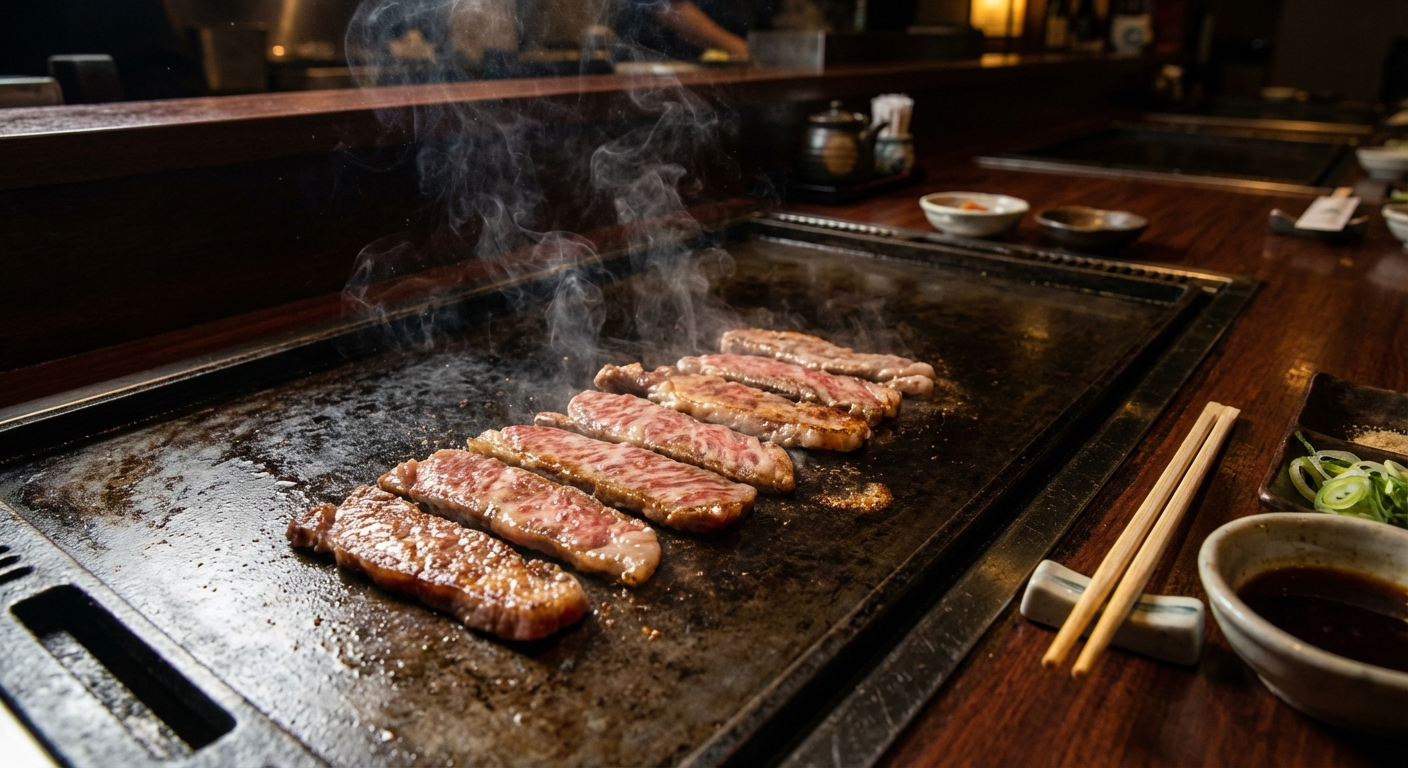
The cooking principles for Kagoshima wagyu are the same as for any A5 Japanese wagyu: brief, intense heat to render the surface fat while keeping the interior at medium-rare (125–130°F). A few specific recommendations:
Thin slicing (recommended for A5): Cut steaks into 1/4-inch slices and sear each piece for 15–20 seconds per side on a screaming-hot, dry surface. This maximizes the surface crust-to-interior ratio and prevents the richness from becoming overwhelming. Kagoshima A5 is ideally suited for yakiniku and teppanyaki preparations for this reason.
Thick steak approach: If cooking a full steak (1–1.5 inches thick), sear 90 seconds per side on a dry cast iron pan at maximum heat. Rest 5 minutes before slicing against the grain. Use no oil — the intramuscular fat provides all the cooking fat you need. Pair with a simple finish of flaky sea salt and perhaps a small amount of freshly grated wasabi.
Hot pot preparations: Kagoshima's balanced richness makes it excellent for shabu-shabu and sukiyaki. Slice paper-thin (1/8 inch) and swish through boiling broth for 5–10 seconds. The quick cooking preserves the delicate sweetness of the fat while allowing the broth to carry the umami.
What to avoid: Don't cook Kagoshima A5 past medium-rare. Don't add oil or butter. Don't use heavy marinades or strong sauces that would mask the subtle sweetness. Keep it simple — great wagyu doesn't need help.
How to Buy Authentic Kagoshima Wagyu
Buying authentic Kagoshima wagyu requires the same vigilance as any premium Japanese beef purchase. Here's what to look for:
Certification marks: Authentic Kagoshima Kuroge Wagyu carries both the JMGA grade stamp and the Kagoshima Prefecture brand certification seal. The prefecture seal features the distinctive Kagoshima logo and the 10-digit traceability number.
Traceability: Every cut of certified Kagoshima beef can be traced back to a specific animal through Japan's national cattle tracing system. Reputable sellers will provide this traceability number, which you can verify through the Japanese government's cattle identification database.
Trusted importers: In the United States, look for importers who specialize in Japanese wagyu and can provide full documentation of origin. The best online wagyu retailers will specify the prefecture of origin, JMGA grade, and BMS score for every cut they sell.
Price expectations: Kagoshima A5 typically costs slightly less than Kobe or Matsusaka A5, owing to the higher production volume. Expect to pay $120–$200 per pound for A5 ribeye, $150–$250 for A5 striploin, and $180–$300 for A5 tenderloin, depending on BMS score and retailer. These prices are for genuine Japanese-origin Kagoshima beef — not Australian or American wagyu.
Kagoshima's Unique Wagyu Experiences
If you're visiting Japan, Kagoshima Prefecture offers several unique wagyu dining experiences unavailable elsewhere:
Tenmonkan district restaurants: Kagoshima City's main dining district features dozens of restaurants specializing in local Kuroge wagyu. Many offer teppanyaki courses where you can watch the chef prepare certified Kagoshima A5 tableside, often paired with local shochu (sweet potato spirit — Kagoshima is Japan's shochu capital).
Farm visits: Several Kagoshima ranches offer guided tours where you can see the cattle, learn about the breeding and feeding programs, and purchase beef directly. The prefecture actively promotes "agritourism" as a way to connect consumers with the source of their beef.
Sakurajima pairing: Some high-end restaurants in Kagoshima serve wagyu alongside vegetables grown in Sakurajima's volcanic ash soil — radishes, komatsuna greens, and sweet potatoes — creating a complete "terroir" dining experience where every ingredient reflects the volcanic landscape.
Frequently Asked Questions
Frequently Asked Questions
Is Kagoshima wagyu better than Kobe beef?
In competition results, yes — Kagoshima has won the Wagyu Olympics (Japan's most prestigious beef competition) in 2017 and 2022, while Kobe has not won in recent competitions. However, "better" depends on personal taste. Kobe has nuttier, more mineral notes while Kagoshima is sweeter with higher oleic acid content. Both are A5 quality. Kobe has stronger brand recognition; Kagoshima offers comparable quality at typically lower prices due to higher production volume.
Why is Kagoshima wagyu less well-known than Kobe?
Marketing and history. Kobe beef was among the first Japanese wagyu brands marketed internationally, building decades of brand recognition before other regions entered the export market. Kagoshima focused on volume production and domestic sales. Despite being Japan's largest wagyu producer with back-to-back Wagyu Olympics victories, the "Kagoshima" brand name simply hasn't had the same international marketing push as "Kobe."
What BMS score does Kagoshima wagyu typically achieve?
Kagoshima's top cattle routinely score BMS 10 to 12, which is the highest range within the A5 grade. Not all Kagoshima wagyu reaches these levels — cattle graded A3 or A4 are also produced. When buying, look specifically for the JMGA grade (A5) and BMS score. BMS 10+ represents the cream of Kagoshima's output.
How much does Kagoshima A5 wagyu cost?
Expect to pay $120–$200 per pound for Kagoshima A5 ribeye, $150–$250 for A5 striploin, and $180–$300 for A5 tenderloin in the US market. Prices vary by BMS score, retailer, and cut. Kagoshima A5 typically costs 10–20% less than equivalent Kobe A5, making it arguably the best value in premium Japanese wagyu.
What is the Wagyu Olympics and why does it matter?
The Zenkoku Wagyu Noryoku Kyoshinkai (Wagyu Olympics) is Japan's national beef cattle competition held every five years. It evaluates thousands of cattle from every wagyu-producing prefecture across 11 categories including marbling, fat quality, meat color, and overall conformation. Winning the top prize — the Prime Minister's Award — is considered the highest honor in the Japanese beef industry. Kagoshima won in both 2017 and 2022.
Can I visit Kagoshima wagyu farms?
Yes, several Kagoshima ranches offer guided tours where you can see the cattle and learn about breeding and feeding programs. Kagoshima Prefecture actively promotes agritourism. The best time to visit is spring (March–May) or autumn (September–November) when the climate is most comfortable. Many tours include tastings of certified Kagoshima beef and can be arranged through local tourism offices.
More Expert Guides
Wagyu Zabuton: The Best-Kept Secret in Japanese Beef
Wagyu zabuton is the most undervalued cut in the A5 world — extraordinary marbling, melt-in-your-mouth texture, and a price tag that makes ribeye look like a bad deal. Here is why insiders buy it first.
13 min readHida Beef: The Complete Guide to Gifu Prefecture's Legendary Wagyu
Hida beef is one of Japan's most prestigious regional wagyu brands, raised in the mountain valleys of Gifu Prefecture. Often overshadowed by Kobe in Western markets, Hida-gyu is revered in Japan for its delicate sweetness and fine-grained marbling. Here's what makes it special.
11 min readIs Wagyu Worth It? A Honest Cost-to-Experience Breakdown
Wagyu commands premium prices, but is it actually worth it? After 20 years in the beef industry, here's an honest breakdown of what you're paying for, when wagyu delivers genuine value, and when you're better off with other options.