Is Wagyu Beef Healthy? Nutrition Facts, Fat Profile & What the Science Says
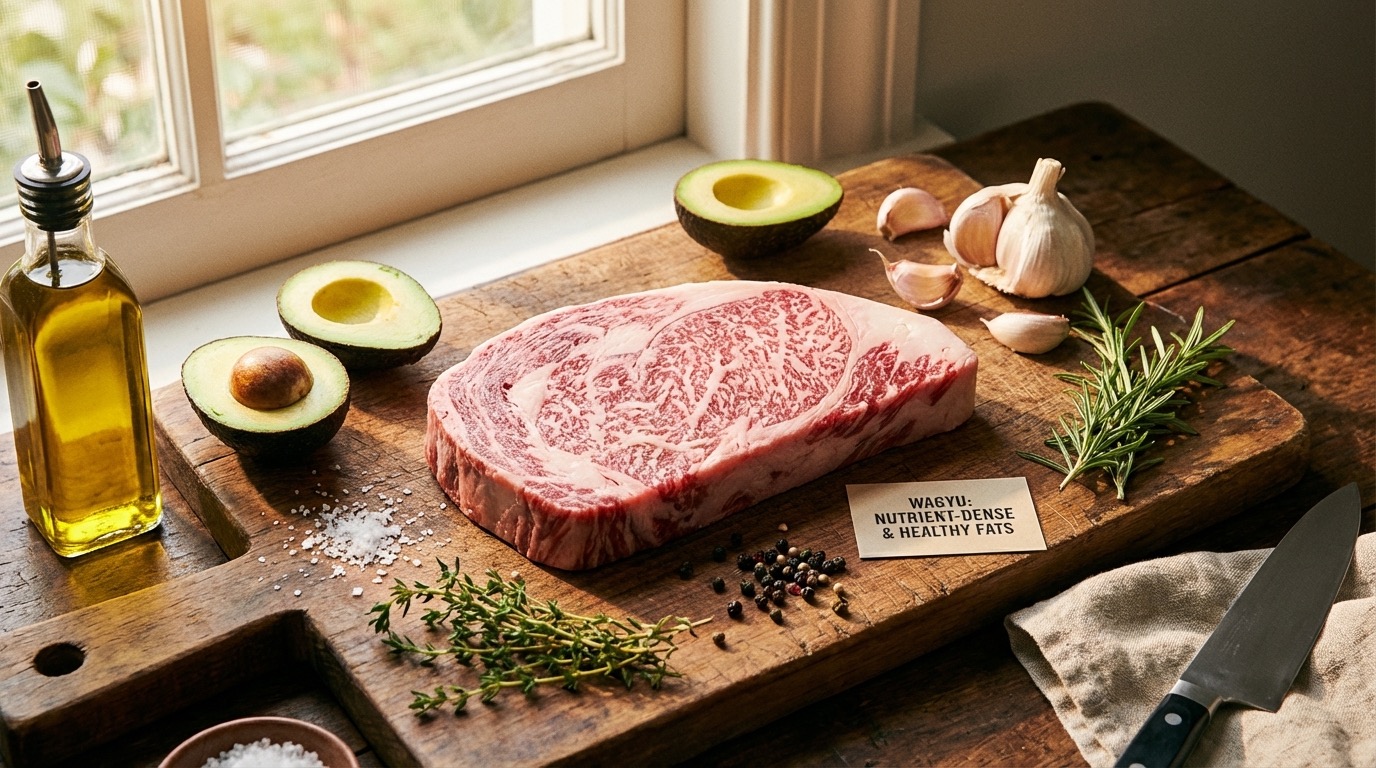
Here's the paradox that confuses everyone: wagyu beef has more fat than conventional beef, yet its fat profile is arguably healthier. That sounds like marketing spin, but the science backs it up — with some important caveats.
I've spent twenty years working with Japanese wagyu, and the nutrition question comes up constantly. People see a BMS 10 ribeye that's 50% intramuscular fat and assume it must be terrible for you. The reality is more complicated and more interesting than that assumption.
Let me walk you through what we actually know.
Wagyu Fat Is Not Regular Beef Fat
The composition of wagyu fat is fundamentally different from conventional beef fat. This isn't marketing — it's biochemistry.
Monounsaturated Fat (The Good Kind)
Wagyu beef contains significantly higher levels of monounsaturated fatty acids (MUFAs) than conventional beef. The dominant MUFA in wagyu is oleic acid — the same fatty acid that makes olive oil a staple of the heart-healthy Mediterranean diet.
The numbers are striking:
- Wagyu beef: 45-55% of total fat is monounsaturated (oleic acid dominant)
- Conventional beef: 35-40% monounsaturated
- Olive oil: ~73% monounsaturated
Wagyu doesn't match olive oil's MUFA percentage, but it's significantly closer to olive oil than conventional beef is. This matters because oleic acid has well-documented health benefits:
- Associated with reduced LDL ("bad") cholesterol
- May increase HDL ("good") cholesterol
- Anti-inflammatory properties
- Linked to improved insulin sensitivity in some studies
The higher MUFA content is also why wagyu fat melts at a lower temperature (around 77°F/25°C) compared to conventional beef fat (~104°F/40°C). That low melting point is what creates wagyu's signature buttery texture — and it's a direct result of the fat composition that makes it nutritionally distinct.
Conjugated Linoleic Acid (CLA)
Wagyu beef contains higher levels of conjugated linoleic acid (CLA) than conventional beef. CLA is an omega-6 fatty acid that has been studied for potential benefits including:
- Reduced body fat in some clinical studies
- Anti-inflammatory effects
- Potential anti-carcinogenic properties (primarily demonstrated in animal studies)
- Improved immune function
The research on CLA is promising but not conclusive. Most studies showing significant effects use supplemental CLA doses higher than you'd get from diet alone. Still, wagyu's higher CLA content is a nutritional advantage over conventional beef.
Omega Fatty Acid Ratio
Wagyu beef has a more favorable ratio of omega-6 to omega-3 fatty acids compared to grain-finished conventional beef. The ideal dietary ratio is debated, but lower ratios (closer to 1:1 or 4:1) are generally associated with reduced inflammation. Wagyu's ratio is typically better than conventional grain-fed beef, though grass-fed beef of any breed generally has the best omega ratio.
Wagyu Nutrition Facts: What's in a Serving
Here's the approximate nutritional profile of a 4 oz (113g) serving of cooked Japanese A5 wagyu ribeye compared to USDA Prime ribeye:
| Nutrient | A5 Wagyu Ribeye (4 oz) | USDA Prime Ribeye (4 oz) |
|---|---|---|
| Calories | ~350-400 | ~280-320 |
| Total Fat | ~28-32g | ~20-24g |
| Saturated Fat | ~10-12g | ~9-11g |
| Monounsaturated Fat | ~14-17g | ~8-10g |
| Protein | ~22-24g | ~26-28g |
| Iron | ~2.5mg (14% DV) | ~2.8mg (16% DV) |
| Zinc | ~5mg (45% DV) | ~5.5mg (50% DV) |
| B12 | ~2.5μg (100%+ DV) | ~2.8μg (100%+ DV) |
Key takeaways:
- Wagyu has more total fat and calories per serving — but remember, the recommended serving size is smaller (3-4 oz vs. 8-12 oz for conventional steak)
- The type of fat skews healthier — more monounsaturated, proportionally less saturated
- Protein is slightly lower per ounce due to the higher fat content
- Micronutrient density (iron, zinc, B12) is comparable
The Portion Size Factor
This is the most overlooked aspect of wagyu nutrition. When people compare wagyu to conventional beef, they often compare equal portions. But nobody eats 12 oz of A5 wagyu — the richness makes it physically uncomfortable.
A proper serving of A5 wagyu is 3-4 oz per person. A proper serving of conventional steak is 8-12 oz. When you compare the amounts people actually eat:
| Metric | A5 Wagyu (3.5 oz serving) | USDA Prime (10 oz serving) |
|---|---|---|
| Calories | ~310-350 | ~700-800 |
| Total Fat | ~25-28g | ~50-60g |
| Saturated Fat | ~9-10g | ~22-28g |
| Protein | ~19-21g | ~65-70g |
In realistic serving sizes, a wagyu dinner delivers fewer total calories, less total fat, and less saturated fat than a conventional steak dinner — with a higher percentage of beneficial monounsaturated fats.
What the Research Actually Says
Let me be honest about the state of the science:
What's Well-Established
- Wagyu fat composition is different. Multiple studies confirm higher MUFA and oleic acid content compared to conventional breeds. This is genetic — wagyu cattle deposit fat differently at the molecular level.
- Oleic acid has health benefits. The cardiovascular benefits of oleic acid are well-documented across decades of nutrition research, primarily through studies on olive oil and the Mediterranean diet.
- The fat melting point is lower. This correlates directly with higher unsaturated fat content.
What's Promising but Not Proven
- Wagyu specifically improving cholesterol. While oleic acid improves cholesterol markers, there aren't large-scale clinical trials specifically testing wagyu beef's effect on cardiovascular health.
- CLA benefits at dietary levels. Most CLA research uses supplemental doses. The amount you'd get from eating wagyu, while higher than conventional beef, may not reach therapeutic thresholds.
- Wagyu as "heart-healthy." This claim appears frequently in marketing but overstates the current evidence. Wagyu has a healthier fat profile than conventional beef — but calling any high-fat red meat "heart-healthy" stretches the science.
What's Misleading
- "Wagyu fat is the same as olive oil." No. Wagyu fat has higher MUFA content than conventional beef fat, and oleic acid is present in both wagyu fat and olive oil, but the overall composition is not the same. Olive oil is ~73% MUFA with negligible saturated fat. Wagyu is ~50% MUFA with significant saturated fat.
- "Wagyu is low in cholesterol." Wagyu beef contains dietary cholesterol comparable to other beef. While dietary cholesterol's impact on blood cholesterol is less significant than previously believed, wagyu isn't cholesterol-free.
Wagyu vs. Other Proteins: How It Stacks Up
| Protein Source | Key Advantage | Key Disadvantage |
|---|---|---|
| Wagyu Beef | High MUFA, iron, zinc, B12, CLA | High total fat and calories per ounce |
| Conventional Beef | High protein, iron, zinc, B12 | Lower MUFA ratio, higher saturated fat ratio |
| Grass-Fed Beef | Better omega ratio, CLA, leaner | Lower total MUFA than wagyu |
| Salmon | Omega-3s, vitamin D | Lower iron, potential mercury |
| Chicken Breast | Very lean, high protein | Low iron, minimal healthy fats |
No single protein source is "best" — variety matters. Wagyu's unique contribution to a balanced diet is its combination of high-quality protein, excellent micronutrients (iron, zinc, B12), and a fat profile that's notably healthier than other beef options.
Who Benefits Most from Choosing Wagyu
People who eat red meat regularly. If you're going to eat beef, wagyu's superior fat profile makes it a meaningfully better choice than conventional beef — especially if you honor the smaller portion sizes.
Those focused on fat quality over fat quantity. Wagyu is not a low-fat food. It's a better-fat food. If you follow a diet that emphasizes healthy fats (Mediterranean, certain keto approaches), wagyu fits well.
Athletes and active individuals. The combination of complete protein, iron, zinc, and B12 makes beef (including wagyu) excellent for recovery and performance. The higher caloric density of wagyu can be beneficial for those with high energy needs.
People who struggle with iron deficiency. Beef is one of the best sources of heme iron (the most bioavailable form). Wagyu is no exception.
Practical Nutrition Guidelines for Wagyu
If you're incorporating wagyu into a health-conscious diet:
- Respect the portion size. 3-4 oz of A5 wagyu is a complete serving. The smaller portion naturally limits calorie and fat intake.
- Balance with vegetables and whole grains. Serve wagyu with nutrient-dense sides — roasted vegetables, steamed rice, a bright salad. The Japanese model of wagyu as one component of a varied meal is nutritionally sound.
- Don't eat it daily. Wagyu is a luxury product nutritionally and financially. Enjoying it 1-2 times per month as part of a varied diet is the sweet spot.
- Consider American wagyu for regular consumption. American wagyu at BMS 6-8 offers many of the same fat-profile benefits with slightly more protein per serving and lower total fat. It's a good option for more frequent consumption.
- Save the rendered fat. Wagyu tallow is rich in oleic acid. Use it for cooking instead of seed oils — a small amount goes a long way.
The Bottom Line
Is wagyu beef healthy? Here's the honest answer:
Wagyu beef has a genuinely healthier fat profile than conventional beef. Higher monounsaturated fat, more oleic acid, more CLA, and a better omega ratio. These are real, measurable nutritional advantages supported by peer-reviewed research.
But it's still a high-fat red meat. It's not a health food in the way that vegetables, fish, or legumes are health foods. The most accurate framing: if you choose to eat beef, wagyu is one of the healthiest beef options available — especially when consumed in appropriate portions.
The Japanese dietary model provides the best template: small portions of exceptional-quality wagyu as part of a varied meal with abundant vegetables, rice, and fermented foods. That approach lets you enjoy wagyu's extraordinary flavor while capturing its nutritional advantages without overloading on calories or saturated fat.
Ready to try the difference? Explore authentic Japanese A5 Wagyu at The Meatery — every cut comes with full BMS documentation so you know exactly what you're getting.
Frequently Asked Questions
Is wagyu beef healthier than regular beef?
Wagyu beef has a healthier fat profile than conventional beef — higher in monounsaturated fats (especially oleic acid), conjugated linoleic acid (CLA), and a better omega-6 to omega-3 ratio. However, it is higher in total fat and calories per ounce. When consumed in appropriate portions (3-4 oz), wagyu can be a nutritionally superior beef choice.
Is wagyu beef fat the same as olive oil?
No. Both contain oleic acid (a monounsaturated fat), but the overall composition is different. Olive oil is ~73% monounsaturated fat with minimal saturated fat. Wagyu fat is ~45-55% monounsaturated with significant saturated fat. Wagyu has a healthier fat profile than conventional beef, but it is not nutritionally identical to olive oil.
How many calories are in wagyu beef?
A 4 oz serving of cooked A5 wagyu ribeye contains approximately 350-400 calories, compared to 280-320 calories for USDA Prime ribeye. However, the recommended serving size for A5 wagyu is smaller (3-4 oz vs 8-12 oz), so a typical wagyu meal may contain fewer total calories than a conventional steak dinner.
Is wagyu good for building muscle?
Yes. Wagyu beef provides complete protein with all essential amino acids, plus iron, zinc, and B12 — all important for muscle building and recovery. A 4 oz serving provides 22-24g of protein. Athletes with high caloric needs may benefit from wagyu's higher energy density.
Can wagyu beef lower cholesterol?
Wagyu's high oleic acid content is associated with improved cholesterol markers in general nutrition research. However, no large-scale clinical trials have specifically tested wagyu beef's effect on cholesterol. The evidence is promising but not conclusive enough to make definitive health claims.
More Expert Guides
What Is Wagyu Beef? The Complete Guide to Grades, Origins & Quality
Discover wagyu beef origins, the difference between Japanese A5 and American wagyu, how BMS grading works, why marbling matters, proper cooking techniques, and what you should pay in 2026.
12 min readA5 Wagyu: Your Complete Buying & Authentication Guide (2026)
A5 wagyu represents the pinnacle of beef quality, but not all A5 is created equal. Learn how to authenticate real Japanese A5, decode BMS scores, find fair prices, and cook it perfectly at home.
14 min readA5 Wagyu Prefectures: Regional Guide to Japan's Best Beef
Discover the regional differences in Japanese A5 wagyu across 12 key prefectures. Learn which prefecture produces the flavor profile you'll love most.