Hida Beef: The Complete Guide to Gifu Prefecture's Legendary Wagyu
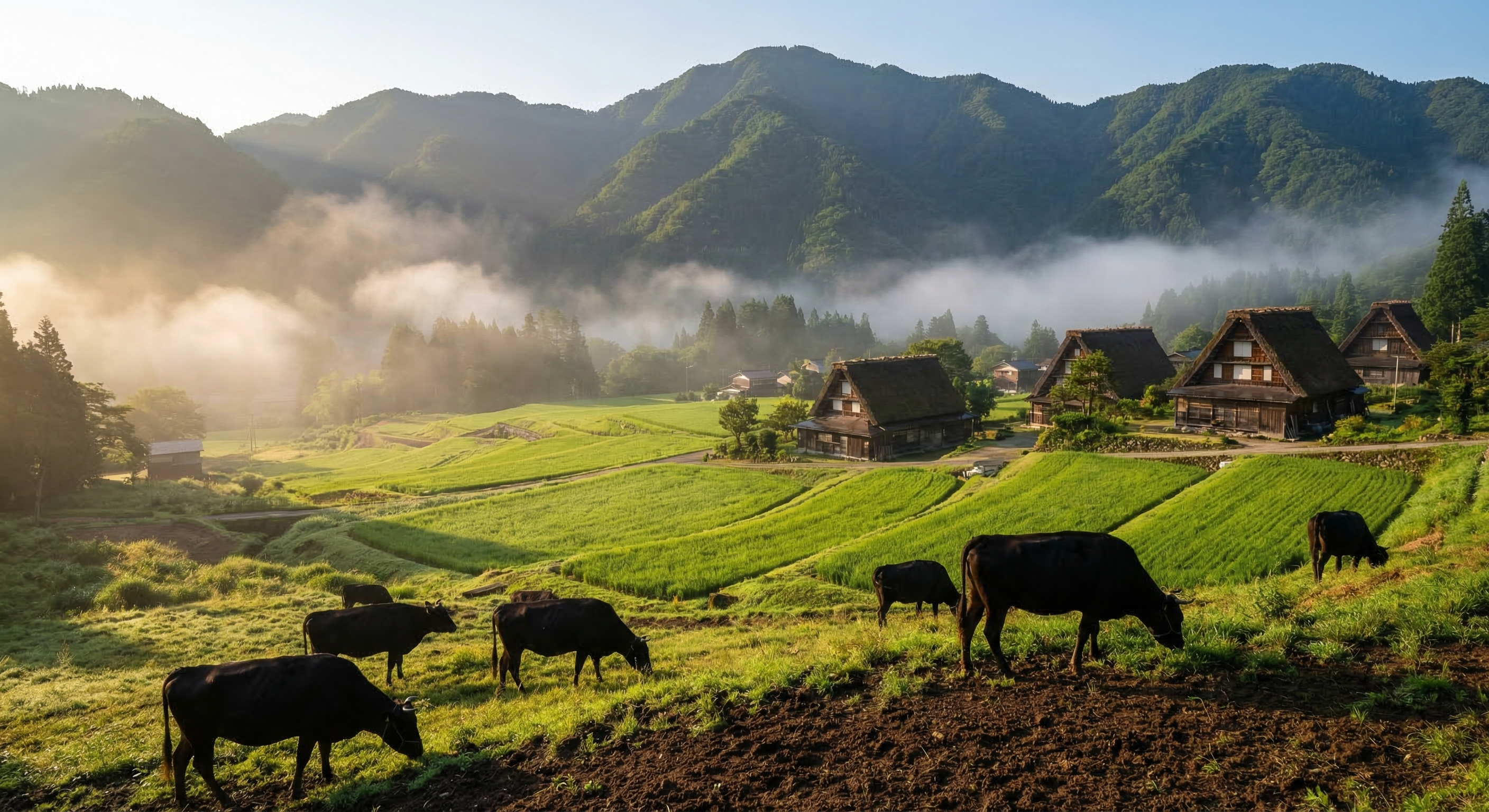
If you ask most Japanese food enthusiasts to name the top wagyu brands, you'll hear Kobe, Matsusaka, and maybe Miyazaki. But ask someone from central Japan — particularly anyone who has visited the historic mountain town of Takayama — and they'll immediately add one more: Hida beef. Raised in the alpine valleys of Gifu Prefecture, Hida-gyu (飛騨牛) is one of Japan's most celebrated regional wagyu brands, consistently producing A5-grade beef with a flavor profile that stands apart from every other prefecture.
What makes Hida beef remarkable isn't just the marbling — which is extraordinary — but the specific character of its fat. The cool mountain climate, pristine water from the Japanese Alps, and Gifu's distinctive feeding traditions produce a wagyu with an exceptionally clean, sweet finish that lingers without heaviness. After evaluating wagyu from every major producing region in Japan, I consider Hida one of the most underappreciated brands in the international market.
What Is Hida Beef?
Hida beef (飛騨牛, Hida-gyu) is a branded wagyu from Gifu Prefecture in central Japan. The name "Hida" refers to the historic Hida Province, which encompasses the mountainous northern portion of modern Gifu — an area dominated by the Japanese Alps and known internationally for the UNESCO World Heritage site of Shirakawa-go.
To qualify as Hida beef, the cattle must meet strict certification requirements established by the Hida Beef Brand Promotion Council:
- Breed: Purebred Japanese Black (Kuroge Washu) cattle
- Raising location: Raised in Gifu Prefecture for at least 14 months — the longest period of any qualifying phase
- Feeding period: Fattened for a minimum of 14 months within the prefecture
- Grade: Must receive a meat quality grade of 3, 4, or 5 from the Japan Meat Grading Association (JMGA)
- Yield: Yield grade of A or B
While grades 3-5 qualify as Hida beef, the vast majority of what reaches premium retail channels — and virtually everything exported — is A4 or A5 grade, with BMS scores of 8 and above.
What Makes Hida Beef Different
The Alpine Environment
Gifu Prefecture sits in the heart of Japan's mountainous interior. The Hida region — where most cattle are raised — experiences dramatic temperature swings between summer and winter, with cold, snowy winters and mild summers. This climate is fundamentally different from the subtropical conditions of Miyazaki or the coastal mildness of Hyogo (Kobe).
The cold winters are significant for wagyu production. Lower temperatures encourage cattle to develop a thicker layer of subcutaneous fat, but more importantly, the stress-free indoor housing during winter months — combined with carefully managed feeding — promotes the slow, even deposition of intramuscular fat. The cattle are sheltered in well-ventilated barns with individual stalls, given ample bedding, and kept on strict schedules to minimize stress.
The water is equally important. Gifu's mountain rivers carry snowmelt from the Japanese Alps — some of the cleanest water in Japan. The mineral content of this water, which cattle drink daily and which irrigates the rice paddies producing their straw feed, subtly influences the flavor of the beef. Japanese producers consider water quality a critical variable in wagyu production, and Gifu's alpine water is consistently cited as one of the region's advantages.
Genetic Heritage
Hida beef's genetic story is fascinating. The modern Hida wagyu program traces much of its bloodline to a single legendary sire bull: Yasufuku-go (安福号). Born in 1980 in Gifu Prefecture, Yasufuku became one of the most influential breeding bulls in Japanese wagyu history. His genetics consistently produced offspring with exceptional marbling quality and fine fat distribution.
What's remarkable is that Yasufuku's influence extends far beyond Gifu. His genetic lineage appears in the breeding programs of multiple prefectures, including Miyazaki. But in Gifu, the concentration of Yasufuku-descended cattle is particularly high, creating a genetic consistency that gives Hida beef its distinctive character.
The prefecture has continued to refine its breeding program with successive generations of elite sire bulls, each selected for their ability to produce offspring with fine-grained marbling, excellent fat quality, and the sweet flavor profile that defines Hida beef.
Feeding and Management
Hida wagyu cattle are raised for approximately 28-32 months — consistent with other premium Japanese wagyu programs. The feeding regimen typically progresses through three phases:
- Growing phase (8-10 months): Calves are weaned and transitioned to a mixed diet of roughage and grain. The goal is building skeletal frame and basic muscle structure.
- Development phase (10-15 months): Increased grain concentration to promote muscle growth. Rice straw remains a key roughage source, providing the fiber needed for healthy rumen function.
- Finishing phase (15-20 months): High-energy grain-based diet designed to maximize intramuscular fat deposition. Local producers often supplement with proprietary blends that may include barley, corn, wheat bran, and soybean meal. Some Hida producers are known to include local sake lees in their feed, which is believed to improve fat quality and appetite.
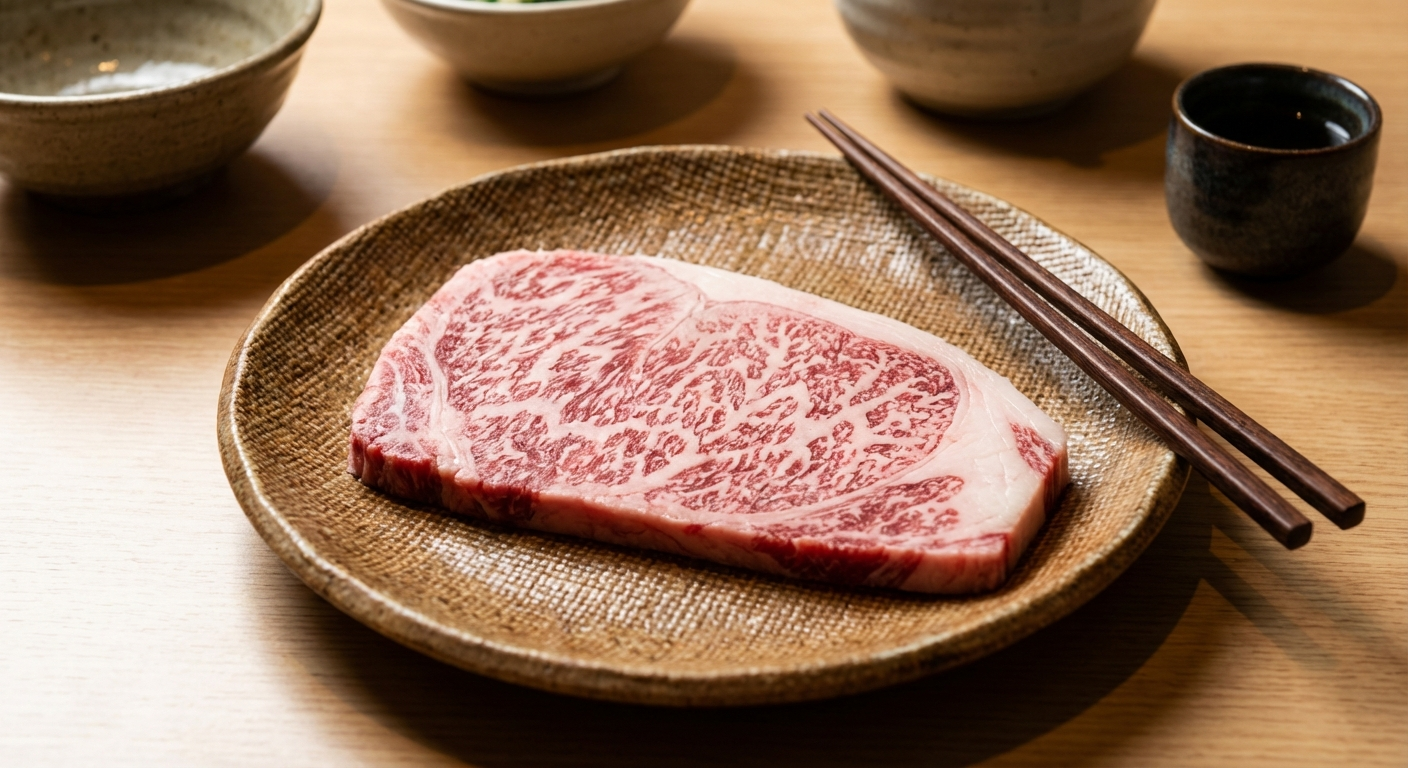
The extended finishing period, combined with Gifu's climate, produces the slow, patient fat deposition that gives Hida beef its characteristically fine marbling. Unlike coarser marbling patterns where fat deposits in visible streaks, Hida beef at A5 level often displays an almost web-like shimofuri pattern — gossamer-thin threads of fat distributed with remarkable uniformity.
Hida Beef's Flavor Profile
Every wagyu-producing prefecture has a distinctive taste signature, and Hida's is one of the most refined. Here's how it compares:
The fat: Hida beef fat has an exceptionally low melting point — even by wagyu standards. The fat begins to dissolve almost immediately on the tongue, releasing a clean, sweet flavor with none of the waxy coating that can occur with higher-melting-point fats. The oleic acid content is characteristically high, contributing to both the low melting point and the sweet, clean finish.
The lean: The meat itself has a delicate, almost subtle beefy flavor — less assertive than Miyazaki, more understated than Kagoshima. There's a sweetness to the lean that harmonizes with the fat rather than contrasting with it.
The overall experience: If Kobe is the Burgundy of wagyu (refined, elegant, floral), and Miyazaki is the Barossa Shiraz (bold, rich, powerful), then Hida is a great Mosel Riesling — deceptively delicate, with a purity and precision that reveals itself in layers. The first bite is gentle; the aftertaste is where Hida's complexity emerges.
How Hida Beef Compares to Other Premium Brands
Understanding Hida in the context of Japan's other famous wagyu brands helps appreciate what makes it distinctive:
Hida vs Kobe
Kobe beef and Hida beef share more in common than many people realize. Both trace significant genetics back to Tajima bloodlines, and both produce characteristically fine-grained marbling. The key differences are environmental: Kobe cattle are raised in the relatively mild coastal climate of Hyogo Prefecture, while Hida cattle endure alpine conditions. This produces subtle but detectable differences in fat quality — Hida tends to have a slightly cleaner, lighter finish, while Kobe has a more floral, delicate sweetness.
Price-wise, Hida is generally more accessible than Kobe. The limited production of certified Kobe (3,000-5,000 head annually) and its global fame create significant price premiums. Hida produces more volume and carries less brand markup — making it excellent value for comparable quality.
Hida vs Miyazaki
Miyazaki produces bolder, more assertive wagyu with heavier marbling and deeper umami. Hida is more subtle and refined. If you prefer power and intensity in your wagyu, Miyazaki is your pick. If you prefer elegance and nuance, Hida is exceptional.
Hida vs Matsusaka
Matsusaka beef — raised exclusively from virgin heifers fed for 900+ days — is the most luxurious and expensive wagyu in Japan. The ultra-soft, almost pudding-like texture of Matsusaka is unique. Hida doesn't match Matsusaka's extreme richness but offers a more balanced, approachable eating experience at a fraction of the price.
Hida vs Omi
Omi beef from Shiga Prefecture is often considered Hida's closest comparable — both are "connoisseur's wagyu" with balanced profiles that favor finesse over power. Omi has a slightly longer history (400+ years of branded production) and a devoted following. Side by side, Hida tends to have a touch more sweetness, while Omi has a cleaner, more mineral finish.
How Hida Beef Is Graded and Certified
Like all Japanese wagyu, Hida beef is graded by the JMGA using the standard yield grade (A/B/C) and quality grade (1-5) system. The Hida Beef Brand Promotion Council then applies its own certification requirements on top of the JMGA grade.
Certified Hida beef receives:
- The Hida-gyu certification seal — a distinctive brand mark applied to the carcass
- A certificate of authenticity with the animal's 10-digit individual ID number
- Full traceability documentation linking back to Japan's national cattle database
Within the Hida brand, there are quality tiers. "Tokusen Hida-gyu" (特選飛騨牛, "specially selected Hida beef") is reserved for A5-grade cattle, representing the top tier of an already premium product. When buying Hida beef internationally, look for this designation for the highest quality.
Where to Experience Hida Beef
In Japan
The town of Takayama (高山) in Gifu Prefecture is the epicenter of Hida beef culture. Often called "Little Kyoto" for its preserved Edo-period streets, Takayama offers dozens of restaurants specializing in Hida-gyu. The experience of eating A5 Hida beef in Takayama — served as teppanyaki, yakiniku, or even as Hida beef sushi — is one of Japan's great food experiences.
Other Gifu cities with excellent Hida beef restaurants include Gujo and Gero (known for its hot springs). Tokyo's premium wagyu restaurants also frequently feature Hida beef, though at higher prices.
A unique Takayama experience: Hida beef sushi (飛騨牛にぎり寿司). Thin slices of lightly seared A5 Hida beef draped over seasoned rice and topped with a touch of soy sauce — sold as street food throughout the old town for around ¥700-1,000 per piece. It's an unforgettable introduction to the brand.
Buying Hida Beef Outside Japan
Hida beef is available through select Japanese wagyu importers in the United States, though it's less common than Miyazaki or Kagoshima. When shopping for authenticated Japanese A5 wagyu, check whether the prefecture of origin is listed — some importers carry Gifu-sourced beef specifically. The Meatery's Japanese A5 Wagyu collection offers authenticated wagyu with full prefecture documentation, making it easy to identify specific regional brands.
When buying online, verify:
- The individual 10-digit animal ID number
- The prefecture listed as Gifu (岐阜)
- The specific BMS score
- The JMGA grade certificate
How to Cook Hida Beef
The cooking principles for Hida beef are the same as for any premium Japanese A5 wagyu, but its particular characteristics reward specific approaches:
Best Methods for Hida Beef
Teppanyaki (recommended): Hida beef's delicate sweetness shines brightest when seared on a flat surface at medium-high heat. The even, gentle rendering of fat preserves the nuanced flavor that makes Hida distinctive. Cut into 1-inch cubes, sear on all six sides for 15-20 seconds each, and eat immediately with a pinch of salt.
Yakiniku: Thin-sliced Hida beef (1/4 inch) flash-seared over high heat is how most Japanese diners experience this brand. 10-15 seconds per side. The quick cook preserves the fat's low-melting-point delicacy.
Shabu-shabu: Paper-thin sliced Hida beef swished through hot dashi broth for 5-10 seconds, then dipped in ponzu or sesame sauce. This method highlights Hida's clean flavor and delicate texture. Many Takayama restaurants consider shabu-shabu the ideal preparation for showcasing Hida beef's purity.
Sukiyaki: Hida beef in a sweet soy-based broth with vegetables and tofu, dipped in raw beaten egg. The sweetness of the sukiyaki broth complements Hida beef's natural sweetness, creating a harmonious richness.
Cooking Tips Specific to Hida
- Keep portions small: 3-4 ounces per person for A5 Hida. The fat is so delicate that smaller bites allow you to appreciate the nuance.
- Salt only: Hida beef's subtle sweetness is easily masked by pepper, garlic, or sauces. Flaky sea salt is all you need.
- Don't overcook: Hida's low-melting-point fat renders faster than most wagyu. Pull steaks at 115-120°F for the best experience.
- Save the rendered fat: Hida wagyu tallow is exceptionally fragrant. Use it for fried rice or eggs.
Hida Beef and the Wagyu Olympics
While Miyazaki has dominated recent Wagyu Olympics competitions, Gifu Prefecture has consistently placed well — particularly in categories evaluating fat quality and overall carcass balance. The prefecture's breeding program, anchored by the Yasufuku genetic line, continues to produce cattle that score at the highest levels of the JMGA grading system.
Gifu's strategy has been less about chasing maximum BMS scores and more about optimizing overall quality — the balance of marbling fineness, fat color, meat color, and texture that produces the best eating experience. This approach may win fewer headlines than BMS 12 showpieces, but it produces remarkably consistent, refined beef.
The Future of Hida Beef
Hida beef is at an interesting inflection point. Domestically, it's firmly established as one of Japan's top-tier regional brands, with strong demand and premium pricing. Internationally, it remains relatively unknown compared to Kobe or Miyazaki — which represents both a challenge and an opportunity.
For wagyu enthusiasts, Hida beef's current international profile means better availability and more reasonable pricing than comparable quality from more famous prefectures. As global awareness grows — driven partly by the increasing popularity of Takayama as a tourist destination — expect Hida beef to command more attention and, inevitably, higher prices in export markets.
My recommendation: if you're building your wagyu knowledge, make Hida beef a priority. It's one of Japan's finest regional brands, with a flavor profile that rewards attention and a price point that still reflects quality rather than pure brand premium. For authenticated Japanese A5 wagyu from top prefectures, explore The Meatery's collection.
Frequently Asked Questions
What is Hida beef?
Hida beef (Hida-gyu) is a premium branded wagyu from Gifu Prefecture in central Japan. It must be purebred Japanese Black cattle raised in Gifu for at least 14 months and graded A3-A5 by the Japan Meat Grading Association. Hida beef is known for its exceptionally fine marbling, delicate sweetness, and clean finish.
How does Hida beef compare to Kobe beef?
Both share Tajima genetic heritage and produce fine-grained marbling. Hida tends to have a slightly cleaner, lighter finish, while Kobe has a more floral sweetness. Hida is generally more accessible and affordable than Kobe due to higher production volume and less brand premium. Quality-wise, they are comparable at the same BMS level.
Where is Hida beef from?
Hida beef comes from the Hida region of Gifu Prefecture in central Japan, an alpine area in the shadow of the Japanese Alps. The historic town of Takayama is the cultural center of Hida beef production and the best place to experience it in restaurants.
Is Hida beef A5?
Hida beef can be graded A3 through A5. The highest quality tier is "Tokusen Hida-gyu" (specially selected Hida beef), reserved for A5-grade cattle with BMS 8-12. Most Hida beef exported internationally is A4 or A5 grade.
More Expert Guides
A4 vs A5 Wagyu: The Complete Comparison Guide
A4 and A5 are both elite Japanese wagyu grades, but they deliver meaningfully different eating experiences. This guide breaks down exactly how they differ in marbling, flavor, texture, price, and when each grade is the better choice.
16 min readWagyu Sous Vide: The Complete Guide to Precision-Cooked Wagyu Beef
Learn how to sous vide wagyu beef for flawless results every time. Covers ideal temperatures for each cut, timing charts, vacuum sealing tips, finishing sear methods, and why precision cooking is the best way to honor expensive wagyu.
13 min readWagyu New York Strip: The Complete Guide to Buying, Cooking, and Enjoying
Wagyu New York strip delivers the perfect balance between rich marbling and clean beefy flavor. Here's how to choose the right grade, cook it perfectly, and get the most from this premium cut.