Dry Aged Wagyu Beef: What Happens, How It Tastes, and Is It Worth It?
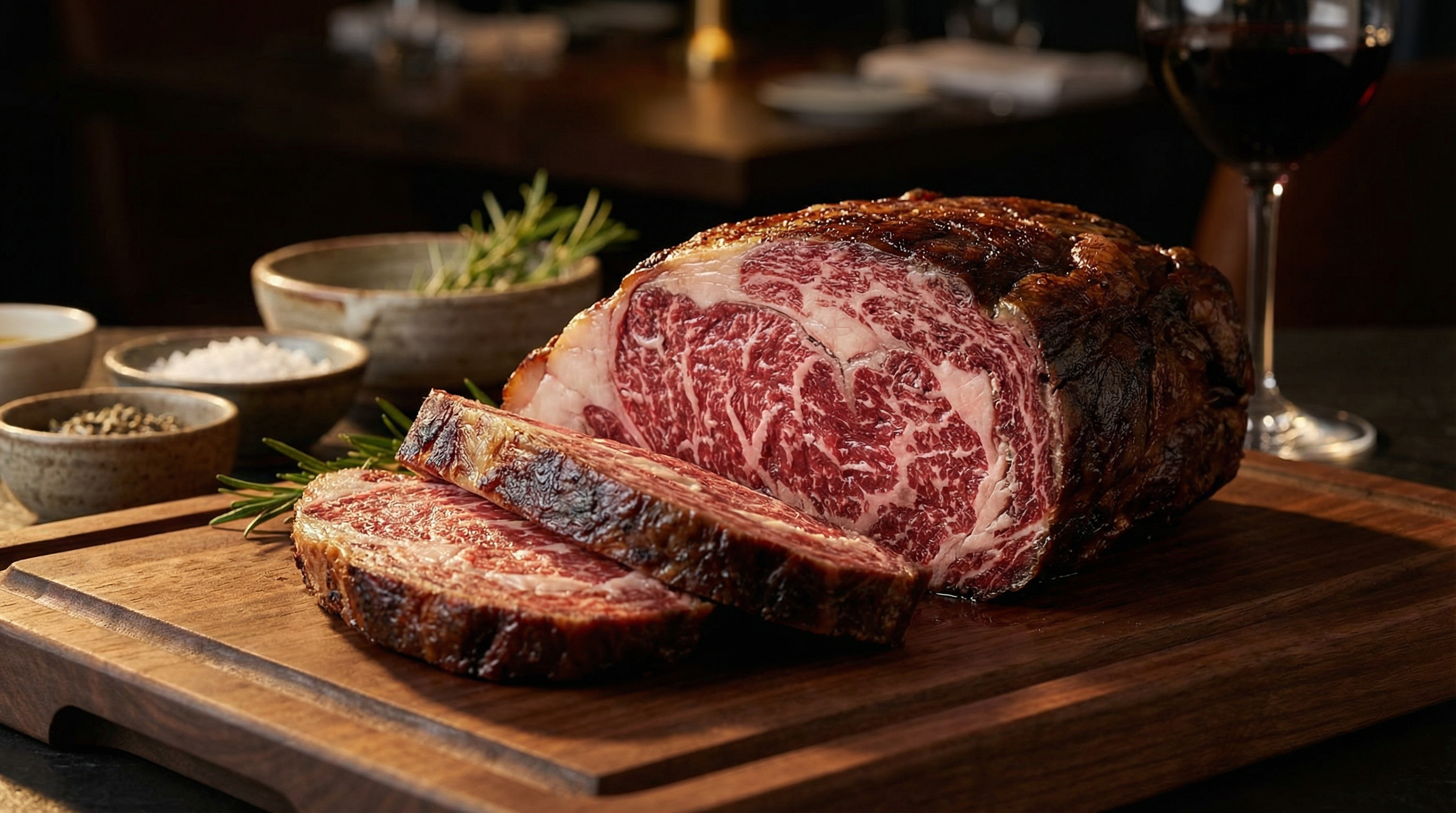
Dry aging regular beef transforms it into something extraordinary. So what happens when you dry age beef that's already extraordinary? Dry aged wagyu is one of the most polarizing products in the premium beef world — some call it the pinnacle of steak, while others argue you're aging past the point of diminishing returns.
Having tasted dry aged wagyu at various stages from 21 to 120 days, I can tell you the answer is nuanced. Here's the complete picture — the science, the flavor, the economics, and the honest truth about whether it's worth the price.
What Is Dry Aging?
Dry aging is a controlled decomposition process. Whole primals or sub-primals of beef are placed in a temperature- and humidity-controlled environment — typically 34–38°F with 80–85% relative humidity — and left exposed to air for weeks or months.
Three things happen simultaneously during dry aging:
- Moisture evaporation: The beef loses 15–30% of its original weight as water evaporates from the surface, concentrating the remaining flavors and creating a denser, more intensely beefy taste
- Enzymatic breakdown: Natural enzymes (primarily calpains and cathepsins) break down muscle proteins and connective tissue, dramatically increasing tenderness
- Microbial activity: Beneficial molds — primarily Thamnidium elegans — colonize the surface and produce enzymes that further tenderize the meat and develop complex, nutty flavors
The outer layer forms a hard, dark crust called the pellicle. This dried exterior is trimmed away before the steak reaches your plate, which contributes to the yield loss and higher price.
How Dry Aging Affects Wagyu Specifically
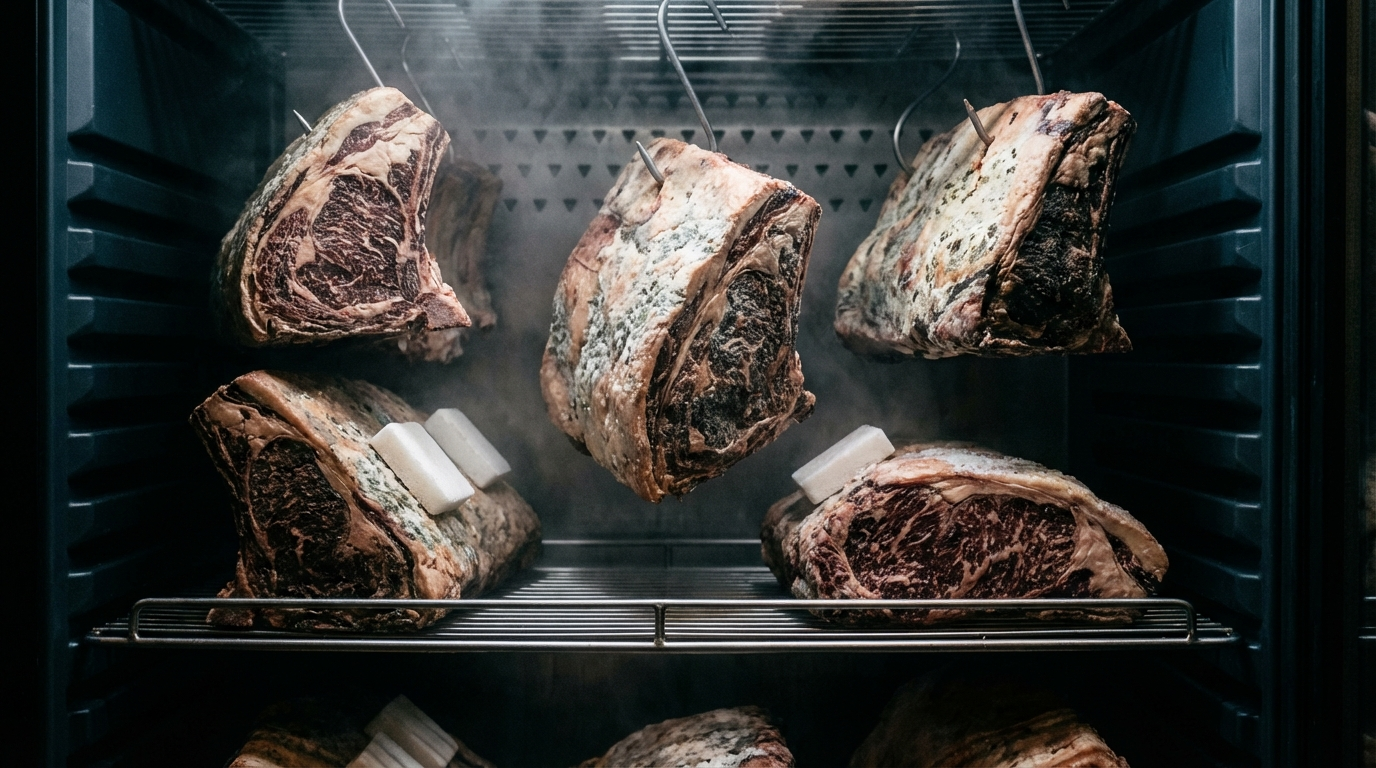
Wagyu beef responds differently to dry aging than conventional beef, and understanding why requires knowing what makes wagyu unique in the first place.
Wagyu cattle are genetically predisposed to deposit intramuscular fat (marbling) at levels far exceeding other breeds. A5 Japanese wagyu can reach BMS 10–12, meaning the muscle fibers are thoroughly webbed with monounsaturated fat — particularly oleic acid, the same heart-healthy fat found in olive oil.
This high fat content changes the dry aging equation in several important ways:
Fat Protects Against Excessive Moisture Loss
The extensive intramuscular fat in wagyu acts as a natural moisture barrier during aging. While a USDA Choice steak might lose 25–30% of its weight over 45 days, a well-marbled wagyu cut typically loses only 15–20%. The fat doesn't evaporate — water does. The result is a better yield and a final product that retains more of its buttery richness.
Enzymes Work Differently in Fat-Rich Meat
The enzymatic breakdown during aging primarily targets muscle proteins. In wagyu, the ratio of fat to muscle means the enzymes have proportionally less protein to break down relative to the total mass. The tenderness improvement is less dramatic because wagyu is already remarkably tender — the fat itself contributes to a soft, melt-in-your-mouth texture before aging even begins.
Where you notice the enzyme work is in the connective tissue surrounding the fat deposits. Aging breaks down the collagen sheaths between fat and muscle, allowing the marbling to integrate even more seamlessly when the steak is cooked.
Flavor Concentration Is More Pronounced
This is where dry aged wagyu truly separates itself. The flavor compounds in wagyu fat are already more complex than conventional beef — higher concentrations of volatile fatty acids, lactones, and Maillard precursors. When you concentrate these through moisture loss, the resulting flavor profile is extraordinary: deep umami, butterscotch notes, a nuttiness that borders on aged cheese, and a beef intensity that lingers for minutes after each bite.
Dry Aged Wagyu Flavor Timeline
The length of aging dramatically changes the flavor profile. Here's what to expect at each major milestone, specifically for wagyu beef (these timelines differ from conventional beef due to the fat content):
21–28 Days: The Starting Point
Most dry aged wagyu you'll find commercially falls in this range. At 21 days, the enzymatic tenderization is well underway but the funky aged flavors haven't fully developed. You'll taste a cleaner, more concentrated version of fresh wagyu — deeper beef flavor, slightly more butter notes from the concentrated fat, and noticeably improved texture in any remaining connective tissue.
This is the sweet spot if you want enhanced wagyu without the acquired-taste element. The marbling character still dominates, and the aging plays a supporting role.
30–45 Days: The Sweet Spot
Between 30 and 45 days is where most dry aging enthusiasts prefer their wagyu. The nutty, slightly funky flavors emerge alongside the concentrated beef and butter notes. The texture is noticeably silkier — the collagen breakdown has reached a point where the fat and muscle fibers feel completely unified.
You'll notice a distinct aroma when the steak is cooking that fresh wagyu doesn't have — something between roasted nuts and aged parmesan. The Maillard reaction during searing produces a crust with more complexity because the amino acids and sugars have been concentrated and partially transformed by the aging process.
60–90 Days: The Bold Statement
At 60+ days, dry aged wagyu enters acquired-taste territory. The blue cheese and funky notes become prominent. The fat takes on an almost caramelized quality when rendered — sweeter, with a deep golden color that fresh wagyu fat doesn't achieve.
The texture at this stage is remarkable. The beef practically dissolves on the tongue. But the trade-off is significant: the pellicle is thick, yield loss is 25–35%, and the price reflects it. You're paying a premium on what was already premium beef.
90–120+ Days: The Extreme
Extended dry aging beyond 90 days is rare for wagyu and controversial among chefs. The funk factor is intense — some describe it as a controlled rot, others as a transcendent umami explosion. The wagyu character (buttery, sweet, melt-in-mouth) gets partially overshadowed by the aging character (funky, nutty, sharp).
If you love strong cheese, fermented foods, and extreme flavor experiences, 90+ day dry aged wagyu might be your holy grail. For most people, it's too far. The wagyu you're paying for gets lost in the aging.
Dry Aged vs. Wet Aged Wagyu
Most wagyu beef sold commercially is wet aged — sealed in vacuum packaging and aged in its own juices during refrigerated transit and storage. Virtually all Japanese A5 wagyu that reaches the US has been wet aged for 2–4 weeks by the time it arrives.
The differences between dry and wet aging are significant:
- Flavor: Dry aging develops complex, nutty, funky notes. Wet aging enhances the existing flavor profile without adding new dimensions — the beef tastes like a more tender version of itself
- Tenderness: Both methods improve tenderness through enzymatic activity. Dry aging has a slight edge because the moisture loss concentrates the effect, but the practical difference is small in highly marbled wagyu
- Texture: Dry aged wagyu has a denser, more concentrated mouthfeel. Wet aged wagyu retains more moisture and can feel slightly more juicy but less intense
- Cost: Dry aging costs more due to 15–30% weight loss, dedicated aging space, and labor for trimming. Wet aging is essentially free — it happens during shipping
- Yield: Wet aging loses almost nothing. Dry aging requires trimming the pellicle, removing 15–30% of the original weight before the steak is even portioned
Neither method is objectively better. Wet aged wagyu showcases the pure character of the beef and its marbling. Dry aged wagyu transforms that character into something more complex but further removed from the original product.
Can You Dry Age Wagyu at Home?
Yes, but it requires proper equipment and understanding of the risks. Home dry aging has become increasingly popular with the availability of dedicated dry aging refrigerators and bags.
Dedicated Dry Aging Refrigerators
Purpose-built units from brands like SteakAger, Dry Ager, and others maintain precise temperature (34–38°F), humidity (80–85%), and airflow. These are the safest option for home dry aging and produce results closest to professional butcher shops.
For wagyu specifically, you want to err on the lower end of the humidity range (78–82%) because the high fat content means less surface area needs protection from excessive drying. Higher humidity with wagyu can encourage unwanted mold species.
Dry Aging Bags
UMAI-style dry aging bags are a more accessible option. These breathable membrane bags allow moisture to escape while keeping contaminants out. They work well in a standard home refrigerator, though results are less consistent than dedicated units.
For wagyu, dry aging bags are a reasonable starting point. The process is simpler, the risk of spoilage is lower, and you can achieve good results at 28–35 days without the infrastructure investment.
Important Safety Considerations
- Start with whole sub-primals: Never try to dry age individual wagyu steaks — they don't have enough mass to survive the moisture loss. A whole ribeye primal (bone-in, 15+ pounds) or strip loin is ideal
- Monitor for off-odors: Aged beef smells funky, but it should never smell putrid, sour, or like ammonia. Trust your nose — if it smells genuinely bad, it is
- Expect the pellicle: The dark, hard outer layer is normal. Don't panic when your expensive wagyu turns dark and crusty — that's the process working
- Don't over-age your first attempt: Start with 21–28 days. You can always go longer next time, but you can't un-age beef that's gone too far for your palate
Where to Buy Dry Aged Wagyu
Finding quality dry aged wagyu requires knowing what to look for and where to shop.
What to Look For
- Specific aging duration: Reputable sellers state the exact number of days aged, not vague terms like "aged" or "specially aged"
- Grade and origin clarity: You should know whether it's Japanese A5, Australian Fullblood, or American wagyu — and the grade should be stated
- Whole muscle aging: The best dry aged wagyu is aged as a whole primal and cut to order. Pre-cut steaks that are then "aged" in a bag are wet aged, not dry aged
- Trim transparency: Good butchers will tell you their yield after trim. If they're vague about it, they may be selling under-trimmed steaks with pellicle residue
Expected Pricing
Dry aged wagyu commands significant premiums over fresh equivalent cuts:
- Dry aged American wagyu ribeye (30 days): $80–120/lb (vs. $50–80/lb fresh)
- Dry aged Australian wagyu ribeye (45 days): $100–160/lb (vs. $60–100/lb fresh)
- Dry aged Japanese A5 (rare, 30–45 days): $200–350/lb (vs. $150–250/lb fresh)
The premium reflects the yield loss (you're paying for beef that was trimmed away), the aging space and time, and the expertise required to manage the process for high-value cuts where mistakes are costly.
How to Cook Dry Aged Wagyu
Dry aged wagyu requires slight adjustments to your cooking approach compared to fresh wagyu:
- Lower heat, longer sear: The reduced moisture content means the surface browns faster. Use medium-high heat rather than screaming hot to build an even crust without burning the concentrated sugars on the surface
- Skip the oil: Between the intramuscular fat and the concentrated surface fats, dry aged wagyu provides more than enough fat for searing. Additional oil can actually create a greasy result
- Rest longer: The denser structure of dry aged wagyu benefits from a slightly longer rest — 8–10 minutes for a thick-cut steak. The concentrated juices need time to redistribute
- Season simply: Coarse salt and black pepper. The entire point of dry aging is flavor development — heavy seasoning or marinades defeat the purpose
- Serve thinner slices: The concentrated flavor and richness of dry aged wagyu is intense. Thinner slices allow each bite to be fully appreciated without overwhelming the palate
Internal temperature targets remain the same as fresh wagyu: rare to medium-rare (120–130°F) for Japanese A5 and highly marbled cuts, medium-rare to medium (130–140°F) for American and Australian wagyu with moderate marbling.
Is Dry Aged Wagyu Worth It?
This is the question everyone asks, and the honest answer depends on what you value in a steak.
Dry aged wagyu is worth it if:
- You already love dry aged beef and want to experience the pinnacle of the category
- You appreciate funky, complex, umami-heavy flavors
- You're serving a special occasion where the steak itself is the event
- You've had enough fresh wagyu to know what you're building on
Dry aged wagyu is probably not worth it if:
- You haven't tried fresh wagyu yet — start there first to understand the baseline
- You prefer clean, pure beef flavor without the funky aged notes
- You're cooking for guests who might not appreciate (or even enjoy) the aged character
- Budget is a concern — the premium-on-premium pricing means a single dinner can easily exceed $300 for two people
My recommendation: try a 30-day dry aged American wagyu ribeye first. It's the most accessible entry point — enough aging to taste the difference, a grade and origin that takes well to the process, and a price point that doesn't require a second mortgage. If you love it, work your way up in aging duration and wagyu grade from there.
Frequently Asked Questions
How long should you dry age wagyu beef?
30–45 days is the sweet spot for most wagyu beef. This duration develops nutty, complex flavors while preserving the buttery marbling character wagyu is known for. Going beyond 60 days introduces strong funky notes that can overpower the wagyu flavor.
Does dry aging wagyu make it more tender?
Yes, but the improvement is less dramatic than with conventional beef. Wagyu is already extremely tender due to its high intramuscular fat content. Dry aging breaks down connective tissue further and helps fat integrate more seamlessly with the muscle fibers.
Can you dry age A5 wagyu?
You can, but it's controversial. A5 wagyu is already at peak tenderness and has an intensely rich flavor profile. Dry aging concentrates and transforms that flavor, which some chefs consider unnecessary or even counterproductive. If you try it, 21–30 days is sufficient.
Why is dry aged wagyu so expensive?
Dry aged wagyu carries a double premium: the base cost of wagyu beef plus the 15–30% weight loss from the aging process. Add dedicated aging space, weeks of refrigeration, and the expertise required to properly manage high-value cuts, and prices typically run 40–60% above fresh equivalent cuts.
What does dry aged wagyu taste like?
Dry aged wagyu combines the buttery richness and umami depth of wagyu with the nutty, slightly funky complexity of dry aging. At 30–45 days, expect notes of roasted nuts, aged parmesan, butterscotch, and an intensely concentrated beef flavor that lingers on the palate.
More Expert Guides
What Is Wagyu Beef? The Complete Guide to Grades, Origins & Quality
Discover wagyu beef origins, the difference between Japanese A5 and American wagyu, how BMS grading works, why marbling matters, proper cooking techniques, and what you should pay in 2026.
12 min readA5 Wagyu: Your Complete Buying & Authentication Guide (2026)
A5 wagyu represents the pinnacle of beef quality, but not all A5 is created equal. Learn how to authenticate real Japanese A5, decode BMS scores, find fair prices, and cook it perfectly at home.
14 min readA5 Wagyu Prefectures: Regional Guide to Japan's Best Beef
Discover the regional differences in Japanese A5 wagyu across 12 key prefectures. Learn which prefecture produces the flavor profile you'll love most.