How to Cook A5 Wagyu: A Specialist's Guide
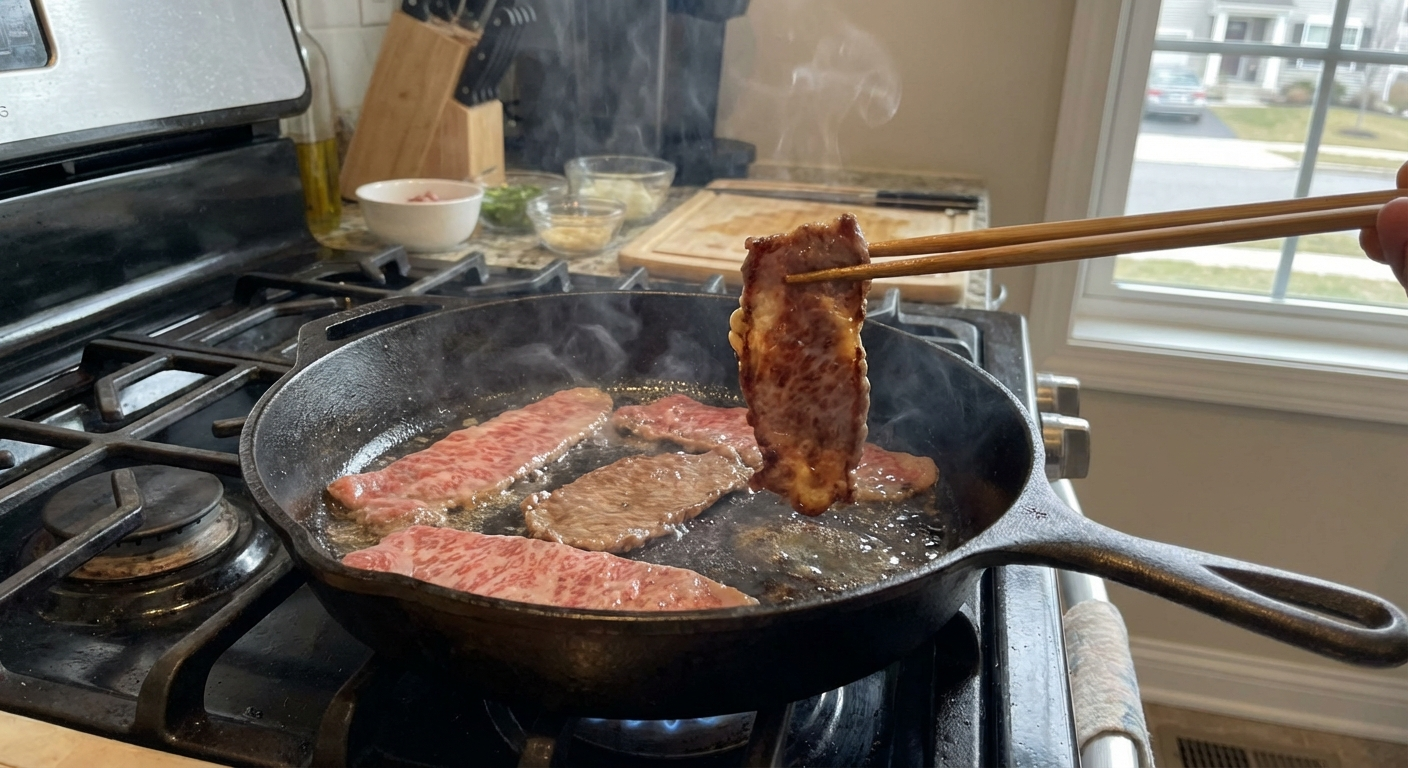
I've watched people spend $150 on a piece of A5 Wagyu and then cook it the same way they'd cook a USDA Choice ribeye. The result is always disappointing — a greasy, overcooked mess that doesn't remotely justify the price. A5 Wagyu is a fundamentally different product that requires fundamentally different handling.
Here's exactly how to cook it properly, based on twenty years of working with this beef.
Rule #1: Portion Size Is Everything
This is the biggest adjustment for American diners. A 12-ounce steak is a normal portion for conventional beef. For A5 Wagyu, 3-4 ounces per person is the right amount.
The math is simple: A5 Wagyu at BMS 9+ is roughly 50% intramuscular fat by visual assessment. That's five times more fat than USDA Prime. Eating a full-sized A5 steak is like eating a stick of the world's most expensive butter. Your palate fatigues, your stomach rebels, and you've wasted money on beef you couldn't enjoy.
Buy a single 8-12 oz steak and share it between 2-4 people. The experience is better when it's a few extraordinary bites rather than an overwhelming quantity.
Rule #2: Let It Come to Room Temperature
Remove the Wagyu from the refrigerator 30-45 minutes before cooking. This is important for all steak, but critical for A5. Cold A5 Wagyu won't render its intramuscular fat properly — and proper rendering is the entire point. The fat needs to be warm enough to begin softening before the surface hits the heat.
Pat it completely dry with paper towels. Season with salt only — high-quality flaky sea salt (Maldon is perfect). Nothing else. The beef has more flavor than any seasoning you could add.
The Three Best Methods
Method 1: Cast Iron Sear (My Recommended Starting Point)
Equipment: Cast iron skillet, no oil needed.
- Preheat cast iron over medium-high heat (not maximum — A5 doesn't need the same brutal heat as conventional steak)
- Place the steak in the dry pan. No oil. The marbling will provide all the lubrication within seconds
- Sear for 60-90 seconds per side for a 3/4-inch thick steak. You want golden-brown crust with a warm, rosy interior
- Remove and rest for 2-3 minutes on a cutting board
- Slice against the grain into 1/4-inch pieces
- Serve immediately with flaky salt
The internal temperature should be 115-125°F (rare to medium-rare). A5 Wagyu should never go past medium-rare. At medium or above, the fat renders out completely and you're left with a tough, dry, expensive disappointment.
Method 2: Yakiniku-Style (Thin Slice and Flash Sear)
This is how most Wagyu is eaten in Japan, and for good reason — it's the best way to experience multiple bites without flavor fatigue.
- Partially freeze the steak (30 minutes in the freezer) for easier slicing
- Slice into strips about 1/4-inch thick
- Heat cast iron or carbon steel pan to high heat
- Sear each slice for 10-15 seconds per side — just enough for color
- Eat immediately — dipped in a tiny amount of soy sauce, a dot of wasabi, or just with salt
This method gives you 15-20 perfect bites from a single steak, each one a brief, intense burst of Wagyu flavor. It's my personal favorite way to eat A5 at home.
Method 3: Teppanyaki-Style (Cubed)
Cut the steak into 1-inch cubes. Sear each cube on all six sides in a hot pan — about 15-20 seconds per side. The goal is a crust on every surface with a barely-warm center. Eat each cube in one or two bites.
What NOT to Do
- Don't grill over open flame. The fat drips into the fire, causing flare-ups. You'll get charred outside and raw inside. Use a flat surface.
- Don't use oil or butter. The marbling IS the fat. Adding more fat is redundant and makes it greasier.
- Don't cook past medium-rare. At medium, the intramuscular fat renders out of the meat. You'll have a tough steak sitting in a puddle of expensive liquid fat.
- Don't marinate it. Would you marinate a $200 bottle of wine? The flavor of A5 Wagyu is the point. Let it speak.
- Don't serve it with heavy sauces. A5 Wagyu with béarnaise or chimichurri is like putting ketchup on sushi — it buries the thing you're paying for.
Accompaniments That Work
- Flaky sea salt — the only essential
- Fresh wasabi — a small dab provides aromatic heat that complements the richness
- Ponzu — a few drops of citrus-soy for contrast
- Pickled ginger — cleanses the palate between bites
- Simple steamed rice — absorbs rendered fat and provides neutral contrast
The principle: the accompaniments should cleanse and reset your palate, not compete with the beef.
Save the Rendered Fat
When you cook A5 Wagyu — whether you sourced it from a trusted A5 Wagyu retailer or a local specialty shop — rendered fat will pool in the pan. This is liquid gold — literally Wagyu beef tallow with extraordinary flavor. Pour it into a small jar and refrigerate. Use it to cook vegetables, fried rice, eggs, or anything that benefits from rich, beefy fat. A tablespoon of A5 rendered fat transforms scrambled eggs into something magnificent.
Frequently Asked Questions
What temperature should A5 Wagyu be cooked to?
Rare to medium-rare: 115-125°F internal temperature. A5 Wagyu should never go past medium-rare. The extreme marbling needs to remain within the meat — at higher temperatures, the fat renders out completely and the texture becomes tough and dry.
Do I need oil to cook A5 Wagyu?
No. A5 Wagyu is roughly 50% intramuscular fat — it provides all the lubrication needed. Adding oil or butter makes the cooking surface too greasy and prevents proper crust formation. Cook in a dry pan.
How much A5 Wagyu per person?
3-4 ounces per person is the right portion. The richness is extraordinary — most people find 4 oz deeply satisfying and 8 oz overwhelming. Buy one 8-12 oz steak and share it.
More Expert Guides
Hida Beef: The Complete Guide to Gifu Prefecture's Legendary Wagyu
Hida beef is one of Japan's most prestigious regional wagyu brands, raised in the mountain valleys of Gifu Prefecture. Often overshadowed by Kobe in Western markets, Hida-gyu is revered in Japan for its delicate sweetness and fine-grained marbling. Here's what makes it special.
12 min readA4 vs A5 Wagyu: The Complete Comparison Guide
A4 and A5 are both elite Japanese wagyu grades, but they deliver meaningfully different eating experiences. This guide breaks down exactly how they differ in marbling, flavor, texture, price, and when each grade is the better choice.
16 min readWagyu Sous Vide: The Complete Guide to Precision-Cooked Wagyu Beef
Learn how to sous vide wagyu beef for flawless results every time. Covers ideal temperatures for each cut, timing charts, vacuum sealing tips, finishing sear methods, and why precision cooking is the best way to honor expensive wagyu.