A5 Wagyu: The Ultimate Guide to Japan's Highest Grade
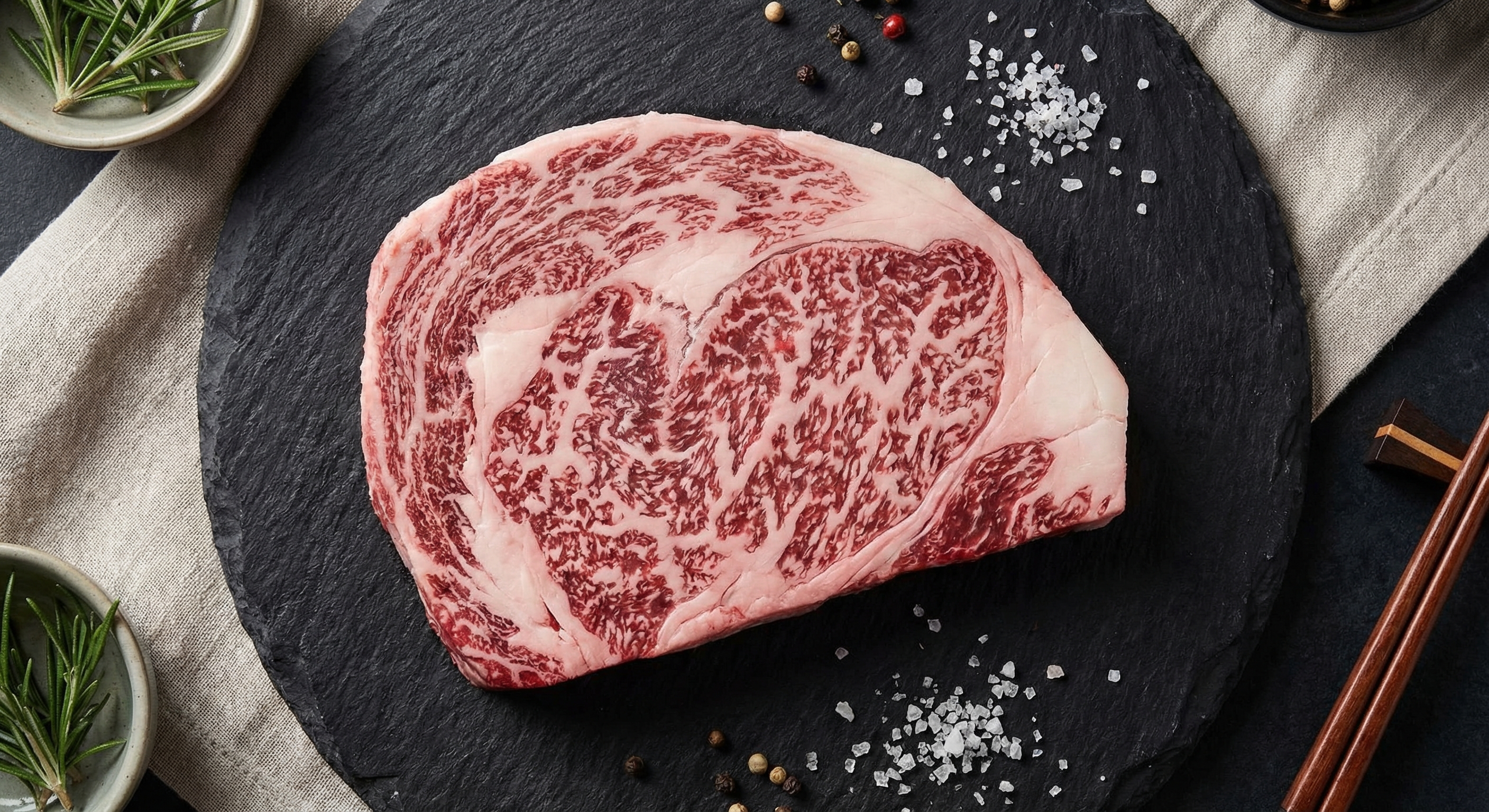
A5 wagyu represents the absolute pinnacle of beef grading in Japan. It's the highest possible designation in the Japanese Meat Grading Association (JMGA) system, awarded only to cattle that achieve perfect scores in yield grade (A) and exceptional ratings across four quality factors: marbling, meat color, fat color, and firmness.
The "A" denotes yield grade—the usable meat percentage from the carcass. The "5" represents the quality grade, scored from 1 to 5 based on the Beef Marbling Standard (BMS), color standards, and texture evaluation.
Less than 10% of Japanese wagyu earns the A5 designation. The vast majority of cattle grade at A3 or A4, making authentic A5 wagyu extraordinarily rare even in Japan.
This extreme selectivity explains A5's legendary status. When you encounter genuine A5 wagyu, you're experiencing beef that passed the most rigorous quality standards in the world.
The A5 Grading System Explained
Japan's beef grading system operates on two independent scales that combine to create designations like A5, A4, B3, etc.
Yield Grade (First Letter: A, B, or C)
Yield grade measures carcass efficiency—how much usable meat comes from the animal:
- A: ≥72% yield (highest)
- B: 69-72% yield
- C: <69% yield
Most premium wagyu achieves A grade, though B-grade A5 exists (labeled B5). The quality rating matters far more than yield for eating experience.
Quality Grade (Number: 1-5)
Quality grade combines four distinct factors, each evaluated independently:
- Beef Marbling Standard (BMS): Fat distribution scored from 1-12
- BMS 8-12 = Grade 5
- BMS 5-7 = Grade 4
- BMS 3-4 = Grade 3
- Meat Color & Brightness: Scored 1-7 using standardized color cards
- Ideal: bright cherry-red (scores 3-5)
- Fat Color & Luster: Scored 1-7
- Premium: pure white with glossy appearance (scores 3-4)
- Firmness & Texture: Subjective assessment of meat density
The lowest score among the four factors determines the final quality grade. Even if a carcass scores BMS 12 (perfect marbling), poor meat color or soft texture can downgrade it to A4 or lower.
This explains why achieving A5 is so difficult—the beef must excel in every category simultaneously.
BMS Score: The Marbling That Defines A5
The Beef Marbling Standard (BMS) is the most critical factor in wagyu grading and the primary driver of A5's extraordinary eating experience.
BMS Scoring Scale
BMS uses a 12-point scale with standardized plastic reference cards showing increasing marbling density:
- BMS 1-2: Minimal marbling (commodity beef)
- BMS 3-4: Light marbling (Grade 3)
- BMS 5-7: Moderate to good marbling (Grade 4)
- BMS 8-12: Exceptional marbling (Grade 5)
What BMS 10-12 Actually Looks Like
At BMS 10+, the marbling is so dense that white fat and red meat appear nearly equal in volume. The intricate webbing of intramuscular fat creates the signature "snowflake" pattern that defines elite A5 wagyu.
This level of marbling requires specific genetics (Japanese Black cattle), controlled feeding programs (high-energy grain diets for 600+ days), and ideal growing conditions. Most wagyu peaks at BMS 6-8; reaching BMS 10+ demands exceptional genetics and expert husbandry.
Why Marbling Matters
BMS directly correlates with tenderness, juiciness, and flavor intensity. Intramuscular fat:
- Melts at low temperatures (around 77°F/25°C)
- Bastes the meat internally during cooking
- Delivers rich, buttery mouthfeel
- Concentrates umami compounds
A5 wagyu with BMS 10-12 essentially self-bastes, creating incomparable tenderness even with minimal cooking.
A5 vs A4: What's the Real Difference?
The gap between A5 and A4 wagyu is smaller than marketing suggests—but still significant.
Marbling Threshold
The primary difference is BMS score:
- A4: BMS 5-7 (good to very good marbling)
- A5: BMS 8-12 (excellent to exceptional marbling)
A top-tier A4 (BMS 7) has more marbling than many steakhouse "prime" ribeyes. The jump to A5 (BMS 8) represents a noticeable but not transformative increase.
However, BMS 12 A5 versus BMS 5 A4 is a massive difference—comparable to standard choice beef versus prime.
Other Quality Factors
Remember: achieving A5 requires meeting strict standards across meat color, fat color, and texture. An A4 designation might indicate:
- Slightly lower marbling (BMS 7)
- Or exceptional marbling (BMS 11) but slightly off-color fat or meat
- Or perfect marbling but marginally soft texture
Price vs. Value
A5 commands 50-100% price premiums over A4. For BMS 8-9 A5, the premium may not justify the cost difference—A4 BMS 7 offers comparable eating quality at better value.
BMS 10-12 A5 is worth the premium for special occasions. The marbling density creates a genuinely different eating experience.
A5 Wagyu by Prefecture: Regional Differences
Japan's prefectures produce distinct A5 wagyu styles based on local genetics, climate, and feeding programs.
Kobe (Hyogo Prefecture)
The most famous wagyu brand worldwide. Strict certification requirements beyond A5 grading:
- Must be Tajima cattle strain (pure Japanese Black)
- BMS 6+ minimum (most Kobe grades A5 BMS 10+)
- Born, raised, and processed in Hyogo Prefecture
- Carcass weight restrictions (470kg or less)
Kobe beef represents less than 0.1% of Japanese beef production. Intense marbling, buttery texture, subtle sweetness.
Matsusaka (Mie Prefecture)
Often rivals or exceeds Kobe in marbling density. Matsusaka producers focus exclusively on virgin female cattle (heifers), believing this produces the finest fat quality.
Known for exceptionally low melting point fat and delicate, sweet flavor. Slightly softer texture than Kobe.
Ohmi (Shiga Prefecture)
Japan's oldest wagyu brand (over 400 years). Leaner than Kobe/Matsusaka but still typically grades A5.
Firmer texture, more pronounced beef flavor, slightly less buttery. Appeals to diners who find ultra-marbled A5 too rich.
Miyazaki
Champion of the Wagyu Olympics (Zenkoku Wagyu Noryoku Kyoshinkai) multiple times. Consistent A5 quality, excellent value.
Balanced marbling (typically BMS 9-10), good beef-to-fat ratio, clean finish.
Other Notable Regions
- Hida (Gifu): High-altitude raising, firm texture
- Kagoshima: Large-scale production, reliable quality
- Yamagata: Concentrated umami flavor
How to Buy Authentic A5 Wagyu
Authentic A5 wagyu requires careful sourcing due to widespread mislabeling and "American wagyu" confusion.
Verify Authenticity
- Request Japanese grading certificates: Legitimate importers provide JMGA documentation with lot numbers, grading inspector seals, and specific BMS scores.
- Check for prefecture/brand certification: Kobe, Matsusaka, and other premium brands have authentication systems (Kobe has individual nose-print tracking).
- Understand labeling laws: In the US, "wagyu" is not regulated. "American wagyu" is typically crossbred (50-93.75% Japanese genetics) and does not follow Japanese grading.
Trusted Sources
- Specialized importers: Crowd Cow, Holy Grail Steak Co., Snake River Farms (Japanese line, not American wagyu)
- High-end butchers: Verify they import direct from Japan with certificates
- Japanese markets: Mitsuwa, Nijiya (fresh A5, limited selection)
Pricing Reality Check
Authentic A5 wagyu costs $150-400/lb retail depending on:
- Cut (strip/ribeye most expensive)
- BMS score (BMS 12 commands premiums)
- Prefecture (Kobe/Matsusaka = highest prices)
If A5 wagyu is under $100/lb, it's likely mislabeled domestic wagyu or lower grade.
Best Cuts for A5
- Ribeye (rib eye roll): Highest marbling, most tender
- Strip (short loin): Slightly firmer, pronounced beef flavor
- Tenderloin: Very tender, leaner (relatively speaking)
- Chuck eye: Budget-friendly alternative, excellent marbling
Avoid heavily exercised cuts (sirloin, round) even in A5—the marbling doesn't compensate for tougher muscle structure.
Cooking A5 Wagyu: Techniques for Maximum Flavor
A5 wagyu's extreme marbling demands different cooking approaches than conventional steaks.
The Fat Problem
BMS 10-12 A5 contains 40-50% intramuscular fat by weight. Cooking it like a standard steak results in greasy, overwhelming richness.
Best Cooking Methods
1. Japanese Yakiniku Style (Thin Slices on High Heat)
Cut A5 into 1/4-inch slices, sear 30-45 seconds per side on very high heat. The thin cut:
- Renders excess fat
- Creates crispy edges
- Prevents overwhelming richness
- Allows multiple small bites instead of dense portions
2. Shabu-Shabu (Hot Pot)
Paper-thin slices (shaved on meat slicer) swished through simmering broth for 10-15 seconds. The gentle poaching:
- Renders fat into the broth
- Preserves delicate flavor
- Controls portion sizes
3. Western-Style Steak (Modified Approach)
If cooking A5 as a full steak:
- Keep portions small (3-4 oz max)
- Target medium-rare (130-135°F internal)
- Rest 5+ minutes to allow fat to redistribute
- Sear hard and fast (cast iron, 500°F+)
Temperature Targets
- Rare (120-125°F): Too cool; fat doesn't render properly
- Medium-Rare (130-135°F): Ideal; marbling melts, meat stays tender
- Medium (140°F+): Avoid; fat renders out completely, dry texture
Serving Size Reality
4 oz of BMS 12 A5 wagyu is genuinely rich. Serve smaller portions than standard steaks—think of it as a delicacy rather than a meal centerpiece.
Pair with acidic components (ponzu, pickled vegetables, light vinegar sauces) to cut richness.
Common A5 Wagyu Questions
Is A5 wagyu worth the price?
For special occasions, yes—if you purchase BMS 10-12 from reputable sources. BMS 8-9 A5 offers diminishing returns versus top-tier A4.
Budget-conscious approach: Buy A4 BMS 7 for regular wagyu indulgence, save A5 BMS 12 for once-a-year experiences.
Can I dry-age A5 wagyu?
Not recommended. Dry-aging concentrates flavor through moisture loss and enzymatic breakdown, but A5's extreme marbling:
- Prevents proper moisture evaporation (fat doesn't dry)
- Risks rancidity in intramuscular fat
- Masks the delicate sweet flavor with funk
A5 is best fresh or flash-frozen.
What's the difference between A5 and Kobe?
Kobe is a specific brand of A5 wagyu from Hyogo Prefecture with additional certification requirements. All Kobe beef is A5 (or occasionally A4), but most A5 wagyu is not Kobe.
Think of it like Champagne (region-specific) versus sparkling wine (general category).
Is A5 wagyu healthy?
A5 wagyu fat contains higher ratios of monounsaturated fat and omega-3/omega-6 than conventional beef, but it's still 40-50% fat by weight.
"Healthier than regular steak" doesn't mean "healthy"—treat it as an indulgence, not a daily protein source.
How should I store A5 wagyu?
Fresh A5: refrigerate 32-34°F, use within 3-5 days.
Frozen A5: Vacuum-sealed, -10°F or colder, up to 6 months. Thaw slowly in refrigerator (24-48 hours).
Never refreeze thawed wagyu—the ice crystals rupture fat cells and destroy texture.
Frequently Asked Questions
What does A5 wagyu mean?
A5 is the highest grade in Japan's beef grading system. The "A" represents yield grade (usable meat percentage ≥72%), and "5" represents quality grade based on marbling (BMS 8-12), meat color, fat color, and texture. Less than 10% of Japanese wagyu achieves A5.
What is the difference between A4 and A5 wagyu?
The primary difference is marbling score: A4 has BMS 5-7, while A5 has BMS 8-12. A4 still offers excellent marbling—often more than USDA Prime beef. BMS 10-12 A5 provides a noticeably richer eating experience than A4, but BMS 8-9 A5 is closer to top-tier A4.
How much does A5 wagyu cost?
Authentic A5 wagyu costs $150-400/lb retail in the US. Prices vary by cut (ribeye and strip are most expensive), BMS score (BMS 12 commands premiums), and prefecture (Kobe and Matsusaka are priciest). If A5 is under $100/lb, it's likely mislabeled domestic wagyu.
Is A5 wagyu better than Kobe beef?
Kobe is a specific brand of A5 wagyu from Hyogo Prefecture with additional certification requirements. All Kobe beef is A5, but not all A5 is Kobe. Kobe represents less than 0.1% of Japanese beef production and is considered among the finest A5 available.
Can you cook A5 wagyu like a regular steak?
Not recommended. A5 contains 40-50% intramuscular fat, making it overwhelming if cooked as a full steak. Best methods: thin-sliced yakiniku (30-45 seconds per side), shabu-shabu (10-15 seconds in broth), or small 3-4 oz steaks cooked to medium-rare (130-135°F).
More Expert Guides
Fullblood Wagyu vs Crossbred: What Actually Changes When You Mix the Genetics
The label says "wagyu" but the genetics tell a completely different story. Fullblood, purebred, F1, F2, crossbred — each generation changes the marbling, flavor, and price. Here is what actually happens when you mix wagyu genetics with other breeds.
14 min readKagoshima Wagyu: The Complete Guide to Japan's Wagyu Olympics Champion
Kagoshima Prefecture produces more wagyu cattle than any other region in Japan and won the prestigious Wagyu Olympics in both 2017 and 2022. Here's what makes Kagoshima beef special — and why it deserves a place alongside Kobe, Matsusaka, and Miyazaki in any wagyu conversation.
13 min readWagyu Zabuton: The Best-Kept Secret in Japanese Beef
Wagyu zabuton is the most undervalued cut in the A5 world — extraordinary marbling, melt-in-your-mouth texture, and a price tag that makes ribeye look like a bad deal. Here is why insiders buy it first.