A5 Wagyu Price Guide: What It Actually Costs in 2026
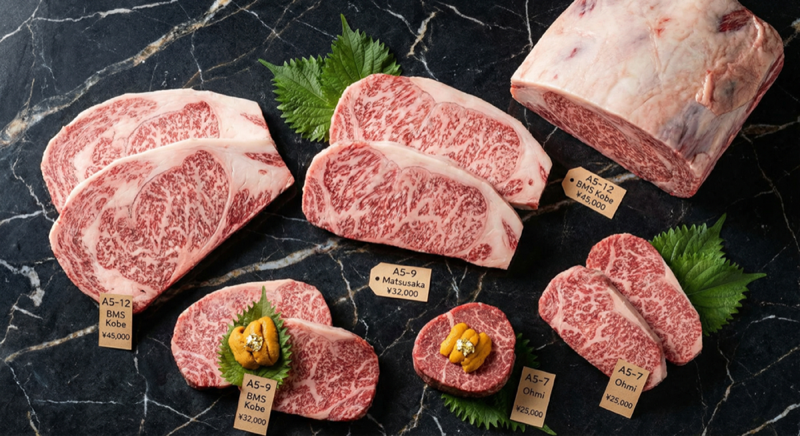
A5 Japanese Wagyu is the most expensive beef in the world. That's not marketing—it's a function of genetics, feed programs that last 2-3 years, and a grading system that only awards "A5" to the top tier of an already elite product.
But "expensive" is relative. A5 Wagyu ribeye costs less per serving than most people think, because you eat far less of it than conventional steak. A 6oz A5 portion is rich enough to share between two people. So while the per-pound price looks shocking, the per-plate cost is closer to a nice dinner out.
Here's what A5 Wagyu actually costs in 2026, cut by cut, and what drives those prices.
A5 Wagyu Price by Cut (2026 Market Prices)
These are real retail prices from reputable U.S. importers including The Meatery. Prices fluctuate with exchange rates (JPY/USD), supply from Japanese auctions, and seasonal demand.
Premium Steaks
- A5 Wagyu Ribeye: $120–$180 per pound. The most popular cut. Intense marbling, rich flavor, forgiving to cook. A single 12-14oz steak runs $100-$160.
- A5 Wagyu Strip (New York): $100–$150 per pound. Slightly leaner than ribeye with a firmer texture. Great for those who find ribeye too rich.
- A5 Wagyu Tenderloin (Filet): $130–$200 per pound. The most tender cut, but less marbled than ribeye. Commands a premium for texture.
Value Cuts
- A5 Wagyu Flat Iron: $80–$120 per pound. Excellent marbling for the price. One of the best entry points into A5.
- A5 Wagyu Chuck Flap: $60–$90 per pound. Heavily marbled, great for yakiniku-style thin slicing.
- A5 Wagyu Zabuton: $90–$130 per pound. The "Denver steak" of Wagyu. Incredibly tender with uniform marbling.
Specialty & Rare Cuts
- A5 Wagyu Tomahawk: $250–$400+ per steak. Showpiece cut, 2+ pounds with the long rib bone. For special occasions.
- A5 Wagyu Brisket: $50–$80 per pound. Rare to find as A5, but spectacular for low-and-slow cooking.
Why A5 Wagyu Costs What It Does
The price isn't arbitrary. Every dollar reflects a production process that is fundamentally different from conventional beef.
1. Genetics Are Controlled
Japanese Wagyu cattle (Kuroge Washu, or Japanese Black) have been selectively bred for over 100 years. The genetics that produce BMS 10-12 marbling don't exist in any other breed. Japan restricts the export of live Wagyu cattle and semen—the genetics stay in Japan.
2. Feed Programs Are Extreme
A typical American beef cow is raised for 18 months. A Japanese Wagyu cow is raised for 28-32 months on a carefully managed diet of grain, rice straw, and sometimes beer mash or sake lees. That's an extra year of feed costs per animal.
3. Scale Is Limited
Japan produces roughly 500,000 Wagyu cattle per year. The United States produces about 33 million cattle per year. The supply is naturally constrained, and only a fraction of Japanese Wagyu is exported.
4. Import Costs Add Up
Air freight from Japan, USDA inspection, cold chain logistics, import duties—these add $15-25 per pound before the retailer even sets a price.
5. Grading Eliminates Most Cattle
Not all Japanese Wagyu earns A5. The Japanese grading system evaluates marbling, color, firmness, and fat quality. Only cattle scoring BMS 8-12 earn Grade 5. Many Japanese Wagyu carcasses grade at A3 or A4—still excellent, but not A5.
A5 Wagyu vs American Wagyu: Price Comparison
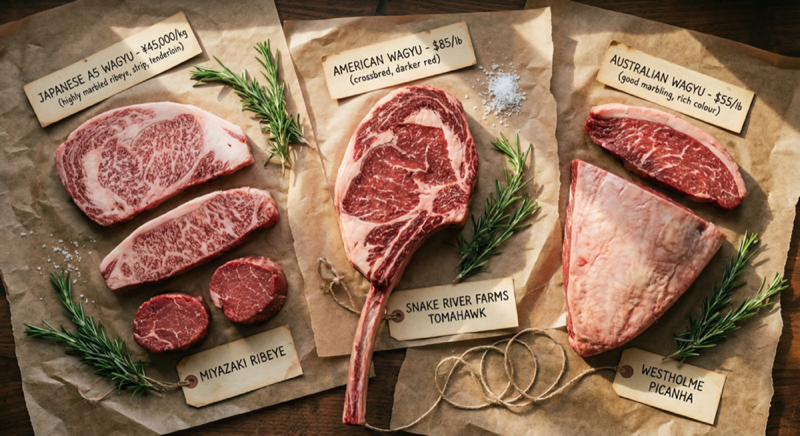
American Wagyu (Wagyu-Angus crossbreeds raised in the U.S.) costs significantly less:
- American Wagyu Ribeye: $40–$70 per pound
- American Wagyu Strip: $35–$60 per pound
- American Wagyu Tenderloin: $50–$80 per pound
That's roughly 40-60% less than Japanese A5. The marbling is lower (typically BMS 4-6 vs BMS 8-12), and the flavor profile is beefier with less of the buttery richness that defines A5. Both are excellent—they're just different experiences. Read our full comparison.
How to Get the Best Value on A5 Wagyu
Buy Value Cuts
Flat iron, chuck flap, and zabuton deliver A5-level marbling at 30-40% less than ribeye. The marbling is the same grade—you're just paying less for the cut's position on the animal.
Buy Larger Portions and Slice at Home
Many importers sell A5 in larger blocks (1-2 lbs) at a lower per-pound price than individually portioned steaks. Buy a block, freeze what you don't use, and slice to order.
Watch for Seasonal Sales
Prices often drop slightly in January (post-holiday surplus) and late summer. The Meatery's A5 collection regularly features rotating specials.
Consider A4 Wagyu
A4 Japanese Wagyu (BMS 6-7) delivers 80% of the A5 experience at roughly 25% less cost. The difference between A4 and A5 is subtle—most people can't distinguish them in a blind tasting. See our A5 vs A4 breakdown.
Where to Buy A5 Wagyu Online
Not all online retailers are trustworthy. Look for:
- Certificate of authenticity — Real A5 Wagyu comes with a Japanese government-issued certificate showing the animal's nose print, lineage, and grade.
- Specific prefecture listed — Miyazaki, Kagoshima, Hokkaido, etc. If they just say "Japanese A5" with no origin, be cautious.
- BMS score disclosed — Reputable sellers show the actual BMS score (8-12), not just "A5."
- Proper shipping — Overnight on dry ice. Never buy A5 that ships ground or 2-day.
The Meatery imports directly from certified Japanese farms with full traceability, nose-to-tail certificates, and overnight shipping on every order.
Is A5 Wagyu Worth the Price?
Yes—if you set expectations correctly. A5 Wagyu is not a "better steak." It's a different food experience. The fat-to-meat ratio is so high that eating an entire 16oz A5 ribeye would be overwhelming. You eat it in small portions, savoring each bite.
At $150 for a ribeye that feeds two people generously, A5 Wagyu costs about the same as a nice restaurant dinner—except you're eating the best beef on the planet in your own kitchen.
Start with a flat iron or zabuton from The Meatery's A5 collection to try it without the full ribeye price tag. Once you taste BMS 10+ marbling, you'll understand what the fuss is about.
Frequently Asked Questions
How much does A5 Wagyu cost per pound?
A5 Wagyu ranges from $60-$200 per pound depending on the cut. Ribeye runs $120-$180/lb, while value cuts like chuck flap start around $60-$90/lb.
Why is A5 Wagyu so expensive?
Three main factors: genetics (100+ years of selective breeding), extended feed programs (28-32 months vs 18 for conventional beef), and limited supply (Japan produces only ~500,000 Wagyu cattle per year). Import costs add another $15-25 per pound.
Is A5 Wagyu worth the money?
Yes, when you understand it is eaten in smaller portions than regular steak. A $150 A5 ribeye easily feeds two people, making the per-person cost comparable to a nice restaurant dinner.
What is the cheapest A5 Wagyu cut?
A5 Wagyu brisket ($50-$80/lb) and chuck flap ($60-$90/lb) are the most affordable A5 cuts. Flat iron ($80-$120/lb) offers the best balance of marbling and price for steak lovers.
Is American Wagyu cheaper than A5?
Yes, significantly. American Wagyu costs 40-60% less than Japanese A5. American Wagyu ribeye runs $40-$70/lb compared to $120-$180/lb for A5. The marbling and flavor profile differ—both are excellent but distinct.
More Expert Guides
What Is Wagyu Beef? The Complete Guide to Grades, Origins & Quality
Discover wagyu beef origins, the difference between Japanese A5 and American wagyu, how BMS grading works, why marbling matters, proper cooking techniques, and what you should pay in 2026.
12 min readA5 Wagyu: Your Complete Buying & Authentication Guide (2026)
A5 wagyu represents the pinnacle of beef quality, but not all A5 is created equal. Learn how to authenticate real Japanese A5, decode BMS scores, find fair prices, and cook it perfectly at home.
14 min readA5 Wagyu Prefectures: Regional Guide to Japan's Best Beef
Discover the regional differences in Japanese A5 wagyu across 12 key prefectures. Learn which prefecture produces the flavor profile you'll love most.