A5 Wagyu: Complete Buying Guide (2026)
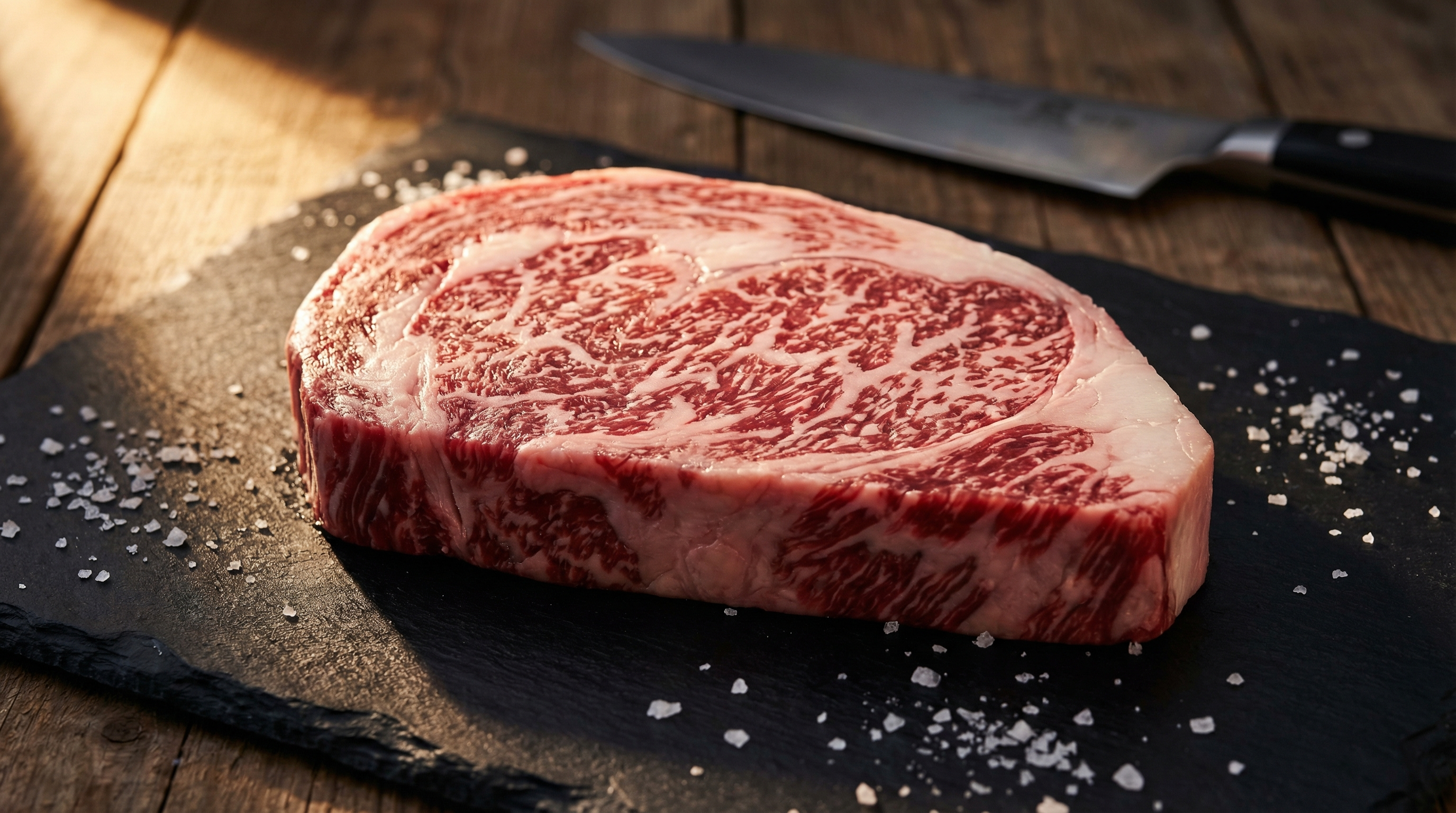
A5 Wagyu sits at the absolute apex of beef production worldwide. When you see "A5" on a label or menu, you're looking at beef that has passed Japan's most rigorous grading standards — a product that represents decades of genetic refinement, extended feeding programs, and exacting quality control. But the A5 designation is also widely misunderstood, frequently misused, and sometimes counterfeited.
After twenty years working with Japanese Wagyu — from sourcing at Japanese auctions to educating American consumers — I can tell you this: understanding what A5 actually means, how to buy it intelligently, and how to cook it properly transforms it from an expensive curiosity into one of the most remarkable food experiences available.
What Is A5 Wagyu?
A5 is the highest grade in the Japanese beef grading system, administered by the Japanese Meat Grading Association (JMGA). The grade combines two independent evaluations:
The letter (A) represents the yield grade — how much usable meat the carcass produces relative to its weight. "A" indicates above-standard yield (72%+ cutability). This matters to wholesalers buying entire carcasses; for consumers buying individual steaks, it's largely irrelevant. An A5 steak and a B5 steak from carcasses with identical quality scores will eat identically.
The number (5) is the quality grade, determined by four factors evaluated at the ribeye cross-section between the 6th and 7th ribs:
- BMS (Beef Marbling Standard): Scored 1-12. For Grade 5, BMS must be 8 or higher.
- Meat color and brightness: Evaluated against standardized color tiles.
- Firmness and texture: The muscle's density and grain quality.
- Fat color and quality: White to slightly cream fat is preferred; yellowed fat scores lower.
The overall quality grade equals the lowest score among these four factors. A carcass with BMS 12 marbling but substandard fat color would not receive Grade 5 — every component must meet the highest standard.
→ Deep dive: The Japanese Wagyu Grading System Explained
Understanding BMS Within A5
Here's the critical insight most people miss: A5 encompasses BMS 8 through BMS 12 — a massive quality and price range. A BMS 8 striploin and a BMS 12 striploin are both "A5," but the marbling intensity, eating experience, and price can differ by 100% or more.
What each BMS level looks like:
BMS 8-9: Excellent marbling by any global standard. The fat is evenly distributed throughout the muscle, creating the classic shimofuri (frost-falling) pattern. The beef is clearly well-marbled but still shows distinct areas of red lean between fat deposits. This is the entry point for A5 and, for many people, the ideal balance of richness and meat flavor.
BMS 10-11: Dense, pervasive marbling that creates a custard-like texture when cooked. At BMS 10, the cross-section shows more white than red. The eating experience is intensely buttery and rich — a 3-4 ounce portion is genuinely satisfying.
BMS 12: The pinnacle. A BMS 12 cross-section is predominantly white, with the lean muscle appearing as thin red threads within a matrix of intramuscular fat. This is extraordinarily rare (perhaps 3-5% of production even in top prefectures) and extraordinarily expensive. The richness is so intense that most people find 2-3 ounces to be a complete serving.
Always ask for the specific BMS score when buying A5. Sellers who provide it are confident in their product; those who don't often can't because the quality isn't what they're claiming.

A5 Wagyu Price Guide (2026)
Understanding realistic pricing protects you from both overpriced product and fraudulent claims. These are legitimate market prices for authentic A5 Wagyu at U.S. retail:
Premium Steaks
- Ribeye: $120-$200/lb depending on BMS and prefecture
- Striploin: $100-$180/lb
- Tenderloin: $130-$220/lb
Value Cuts
- Zabuton (Chuck Flap): $90-$130/lb
- Flat Iron: $80-$120/lb
- Chuck Roll: $60-$90/lb
- Short Rib (Karubi): $50-$80/lb
Specialty Items
- Ground Wagyu: $25-$40/lb
- Tomahawk Ribeye: $250-$400+ per steak
If you see A5 Wagyu priced significantly below these ranges, investigate carefully. The production costs, import logistics, and limited supply make deep discounting impossible for genuine product.
→ Complete A5 Wagyu Price Guide
Where to Buy A5 Wagyu
The A5 market has a significant authenticity problem. Here's how to buy intelligently:
What to Ask For
- The 10-digit individual ID number from Japan's traceability system. Legitimate A5 comes with documentation that includes this number, which can be verified on Japan's national database.
- The specific BMS score (not just "A5"). Reputable sellers display this prominently.
- The prefecture of origin. Authentic sellers specify whether it's from Miyazaki, Kagoshima, Hyogo, etc.
- Processing/export date. Fresher is better; beef that's been frozen for years degrades in quality.
Trusted Sources
For authentic Japanese A5 with full traceability, established online retailers with reputations to protect are your safest bet. Look for sellers who provide photos of actual product (not stock images), detailed product pages with BMS scores and prefecture information, and import documentation available on request.
The Meatery's Japanese A5 Wagyu collection offers verified product with individual animal ID numbers, BMS scores, and prefecture details on every listing.
Red Flags
- No traceability number available
- "A5 Wagyu" with no BMS score specified
- Prices dramatically below market rates
- Vague sourcing ("from Japan" without prefecture)
- No photos of actual product
→ How to Authenticate Japanese Wagyu
A5 Wagyu by Prefecture
Not all A5 tastes the same. Each major production region has developed distinct characteristics through selective breeding, local feed programs, and regional traditions:
Miyazaki Prefecture
Three-time consecutive Wagyu Olympics winner. Bold, robust flavor with heavy marbling. The most accessible authentic Japanese Wagyu internationally due to strong export volume. Excellent quality-to-price ratio.
Kagoshima Prefecture
Japan's largest producer by volume. Rich and savory with excellent marbling. Pioneering oleic acid certification for premium fat quality. Strong export availability keeps pricing slightly more accessible.
Hyogo Prefecture (Kobe)
The most famous name in Wagyu. Kobe beef comes exclusively from Tajima-gyu cattle with fine, delicate marbling and a sweet, almost floral flavor profile. Limited production (3,000-5,000 head annually) and high demand create premium pricing.
Mie Prefecture (Matsusaka)
Arguably the most luxurious Japanese Wagyu. Virgin heifers fed 900+ days produce extraordinarily soft, richly marbled beef with distinctive sweetness. Limited availability and the highest prices in Japan.
Shiga Prefecture (Omi)
Japan's oldest branded beef (400+ years). Well-balanced, harmonious flavor often described as "the connoisseur's choice." Excellent value relative to the Big Three heritage brands.
For first-time buyers, I recommend starting with Miyazaki or Kagoshima — widely available, consistently high quality, and excellent value. As your palate develops, explore Kobe for finesse and Matsusaka for richness.
→ Complete Guide to Japanese Wagyu Prefectures

How to Cook A5 Wagyu
A5 Wagyu requires fundamentally different handling than conventional beef. The extreme marbling changes everything about cooking technique.
The Critical Rules
1. Portion size: 3-4 oz per person for A5. The richness is intense — more than this becomes overwhelming. Buy a single 8-12 oz steak and share it between 2-4 people.
2. Temperature: Let the beef come to room temperature 30-45 minutes before cooking. Cold A5 won't render its fat properly.
3. Seasoning: Salt only. High-quality flaky sea salt applied right before cooking. No marinades, no heavy rubs. The beef IS the flavor.
4. No oil needed: A5 has enough intramuscular fat to lubricate itself. Cook in a dry, hot pan — the marbling will render immediately.
5. Don't overcook: Rare to medium-rare (115-125°F internal) is ideal. At medium and above, the fat renders out and you're left with expensive dried meat.
Best Cooking Method: Cast Iron Pan Sear
- Heat cast iron skillet over medium-high heat (not maximum — A5 doesn't need brutal heat)
- Pat steak completely dry, season with salt
- Place steak in dry pan — no oil
- Sear 60-90 seconds per side for 3/4-inch thickness
- Remove at 115-120°F internal temperature
- Rest 2-3 minutes on cutting board
- Slice against the grain into 1/4-inch pieces
- Serve immediately with flaky salt
Alternative: Yakiniku-Style (Thin Slice and Flash Sear)
This is how most A5 is eaten in Japan:
- Partially freeze steak (30 minutes in freezer) for easier slicing
- Slice into 1/4-inch strips
- Heat pan to high
- Flash-sear each slice 10-15 seconds per side
- Eat immediately with soy sauce, wasabi, or just salt
This method gives you 15-20 perfect bites from a single steak, each one a brief, intense burst of Wagyu flavor without palate fatigue.
→ Complete Expert Guide to Cooking Wagyu

A5 Wagyu vs American Wagyu
Both products have legitimate Wagyu genetics, but they produce fundamentally different eating experiences.
Japanese A5 Wagyu
- Genetics: 100% purebred Japanese Black (Kuroge), raised in Japan
- Marbling: BMS 8-12 (extreme intramuscular fat)
- Flavor: Sweet, buttery, intensely umami with clean finish
- Texture: Dissolves on the tongue, almost pudding-like
- Ideal portion: 3-4 oz per person
- Price: $100-$200/lb for premium cuts
American Wagyu
- Genetics: Typically 50% Wagyu × 50% Angus (F1 cross); some fullblood (100%) programs exist
- Marbling: BMS 4-9 equivalent (very high but not extreme)
- Flavor: Rich, beefy with Wagyu sweetness — amplified American steak
- Texture: Very tender with satisfying chew — feels like meat
- Ideal portion: 6-8 oz per person (traditional steak size)
- Price: $40-$80/lb for premium cuts
Neither is inherently "better" — they serve different purposes. A5 is a transcendent, small-portion luxury. American Wagyu is an exceptional full-sized steak at more accessible pricing.
→ Complete A5 vs American Wagyu Comparison
Best Value A5 Wagyu Cuts
Premium loin cuts (ribeye, striploin, tenderloin) command the highest prices, but several "value cuts" deliver the same A5-level marbling at significantly lower cost:
Zabuton (Chuck Flap)
$90-$130/lb vs. $120-$200/lb for ribeye. The zabuton comes from the chuck but has marbling rivaling the best ribeyes. In Japan, it's one of the most prized yakiniku cuts. The best-kept secret in A5 buying.
Flat Iron
$80-$120/lb. A shoulder cut that, in Wagyu, develops remarkable marbling. Slightly more assertive, mineral flavor than loin cuts. Excellent tenderness.
Short Rib (Karubi)
$50-$80/lb. The #1 yakiniku cut in Japan — heavily marbled, intensely flavorful, perfect for thin-slicing and flash-searing. Also excellent braised.
These cuts represent the smart money in A5 purchasing — delivering the full A5 experience at 30-50% less than the premium steaks.
Storing and Handling A5 Wagyu
Fresh vs. Frozen
Most A5 Wagyu arrives frozen from Japan — this is normal and preferred for international shipments. Properly frozen Wagyu maintains quality for 6-12 months.
Thawing Protocol
- Best: Refrigerator thaw, 24-36 hours in vacuum packaging
- Acceptable: Cold water bath, 30-60 minutes, changing water every 15 minutes
- Never: Microwave defrost or room temperature thawing
Storage After Thawing
Use within 3-5 days of thawing. Store in the coldest part of your refrigerator (usually the back, bottom shelf). Don't refreeze previously frozen Wagyu.
Common A5 Wagyu Questions
Is A5 Wagyu Worth the Price?
For a special occasion or culinary bucket-list experience — yes. The eating quality is genuinely unlike anything else in beef production. However, it's a luxury product for occasional indulgence, not everyday consumption. For regular high-quality steak dinners, American fullblood Wagyu or quality dry-aged beef offers better value.
Can I Grill A5 Wagyu?
I don't recommend it. The extreme marbling causes significant fat dripping, which creates flare-ups that char the exterior before the interior cooks properly. A flat surface (cast iron, griddle, teppanyaki) is far more reliable for A5.
What's the Difference Between A5 and A4?
The quality grade. A4 requires BMS 5-7 (lower marbling) plus high scores in color, texture, and fat quality. A4 is excellent Wagyu — often 80% of the A5 experience at 25% less cost. Many connoisseurs actually prefer A4 for more balance between marbling and meat flavor.
→ A5 vs A4 Wagyu Detailed Comparison
Is "Kobe Beef" the Same as A5 Wagyu?
No. Kobe beef is a type of Wagyu — specifically, purebred Tajima-gyu cattle born, raised, and processed in Hyogo Prefecture, meeting strict grading requirements (BMS 6+, quality grade 4-5). All Kobe is Wagyu; most Wagyu is not Kobe. Only 3,000-5,000 head qualify as Kobe annually.
→ Kobe vs Wagyu: Understanding the Difference
The Bottom Line on A5 Wagyu
A5 Wagyu represents the pinnacle of beef production — the result of a century of genetic refinement, extended feeding programs, and rigorous quality control. Understanding what the A5 designation actually measures, how to verify authenticity, and how to cook it properly transforms it from an expensive mystery into a genuinely remarkable culinary experience.
Key takeaways:
- A5 encompasses BMS 8-12 — always ask for the specific score
- Buy from sellers who provide traceability (10-digit ID number, prefecture, BMS)
- Expect to pay $100-$200/lb for premium cuts; value cuts offer A5 quality at lower prices
- Cook simply: salt only, hot pan, no oil, rare to medium-rare
- Portion size matters: 3-4 oz per person is satisfying
- Prefecture makes a difference — Miyazaki and Kagoshima offer the best combination of quality and accessibility
For verified Japanese A5 Wagyu with full traceability, explore The Meatery's curated A5 collection — every product includes animal ID, BMS score, and prefecture of origin.
Frequently Asked Questions
What does A5 Wagyu mean?
A5 is the highest grade in the Japanese beef grading system. The "A" indicates above-standard yield; the "5" indicates the highest quality score, requiring BMS 8-12 marbling plus top scores in meat color, fat color, and firmness. It represents the absolute pinnacle of beef production.
How much does A5 Wagyu cost?
Authentic Japanese A5 Wagyu costs $100-$200+ per pound for premium cuts (ribeye, striploin) at U.S. retail. Value cuts like chuck flap and flat iron cost $60-$130/lb. Ground A5 Wagyu runs $25-$40/lb. Prices vary by BMS score, prefecture, and cut.
Where can I buy authentic A5 Wagyu?
Buy from established online retailers who provide full traceability: the 10-digit individual ID number from Japan's traceability system, specific BMS score, and prefecture of origin. Avoid sellers who can't provide documentation or price significantly below market rates ($100-$200/lb for premium cuts).
Is all A5 Wagyu the same quality?
No. A5 encompasses BMS 8 through BMS 12 — a significant quality range. BMS 8 is excellent; BMS 12 is the absolute peak with dramatically more marbling and 100%+ price difference. Always ask for the specific BMS score when buying A5.
How should I cook A5 Wagyu?
Cook in a dry cast iron pan over medium-high heat for 60-90 seconds per side. Season with salt only. Target 115-125°F internal temperature (rare to medium-rare). Portion size should be 3-4 oz per person — A5 is too rich for traditional steak portions. Never cook past medium.
More Expert Guides
A5 Wagyu: The Ultimate Guide to Japan's Highest Grade
A5 wagyu represents the absolute pinnacle of beef grading in Japan. Less than 10% of Japanese wagyu earns this designation. Here's everything you need to know about A5 grading, BMS scores, prefecture differences, and how to buy authentic A5 beef.
13 min readFullblood Wagyu vs Crossbred: What Actually Changes When You Mix the Genetics
The label says "wagyu" but the genetics tell a completely different story. Fullblood, purebred, F1, F2, crossbred — each generation changes the marbling, flavor, and price. Here is what actually happens when you mix wagyu genetics with other breeds.
14 min readKagoshima Wagyu: The Complete Guide to Japan's Wagyu Olympics Champion
Kagoshima Prefecture produces more wagyu cattle than any other region in Japan and won the prestigious Wagyu Olympics in both 2017 and 2022. Here's what makes Kagoshima beef special — and why it deserves a place alongside Kobe, Matsusaka, and Miyazaki in any wagyu conversation.