A5 vs A4 Wagyu: Understanding the Difference in Grades
When shopping for Japanese Wagyu, you'll see grades like A5, A4, B5, or C4 attached to each cut. These letters and numbers aren't marketing—they're part of Japan's rigorous beef grading system that evaluates every carcass.
How Japanese Wagyu Grading Works
Japan uses a two-part grading system:
- Yield Grade (A, B, or C): How much usable meat the carcass produces relative to its weight.
- Quality Grade (1-5): Based on marbling (BMS), color, firmness, and fat quality.
The Letter: Yield Grade
- A = Above average yield (72%+ of carcass is usable meat)
- B = Average yield (69-72%)
- C = Below average yield (under 69%)
This matters to processors and distributors, not consumers. An A4 and B4 could taste identical—the "A" just means the cow had a better meat-to-bone ratio.
The Number: Quality Grade
The number (1-5) is what matters for eating quality. It's determined by the lowest score across four factors:
| Factor | What It Measures |
|---|---|
| Marbling (BMS) | Intramuscular fat distribution |
| Meat Color | Brightness of the lean meat |
| Firmness & Texture | Meat's structure and grain |
| Fat Color & Quality | Color and luster of fat |
Grade 5 requires excellence across all four.
BMS: The Marbling Scale
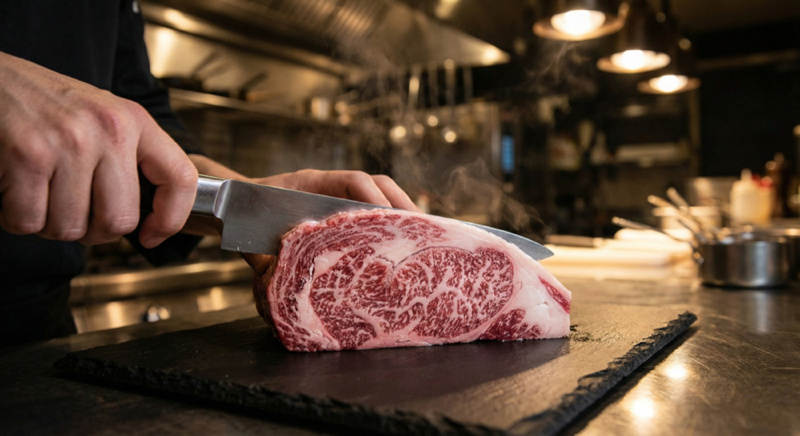
The Beef Marbling Standard (BMS) is a 1-12 scale:
| BMS Score | Grade | Description |
|---|---|---|
| 1-2 | 1 | Minimal marbling |
| 3-4 | 2 | Slight marbling |
| 5-7 | 3 | Moderate marbling |
| 8-9 | 4 | High marbling |
| 10-12 | 5 | Exceptional marbling |
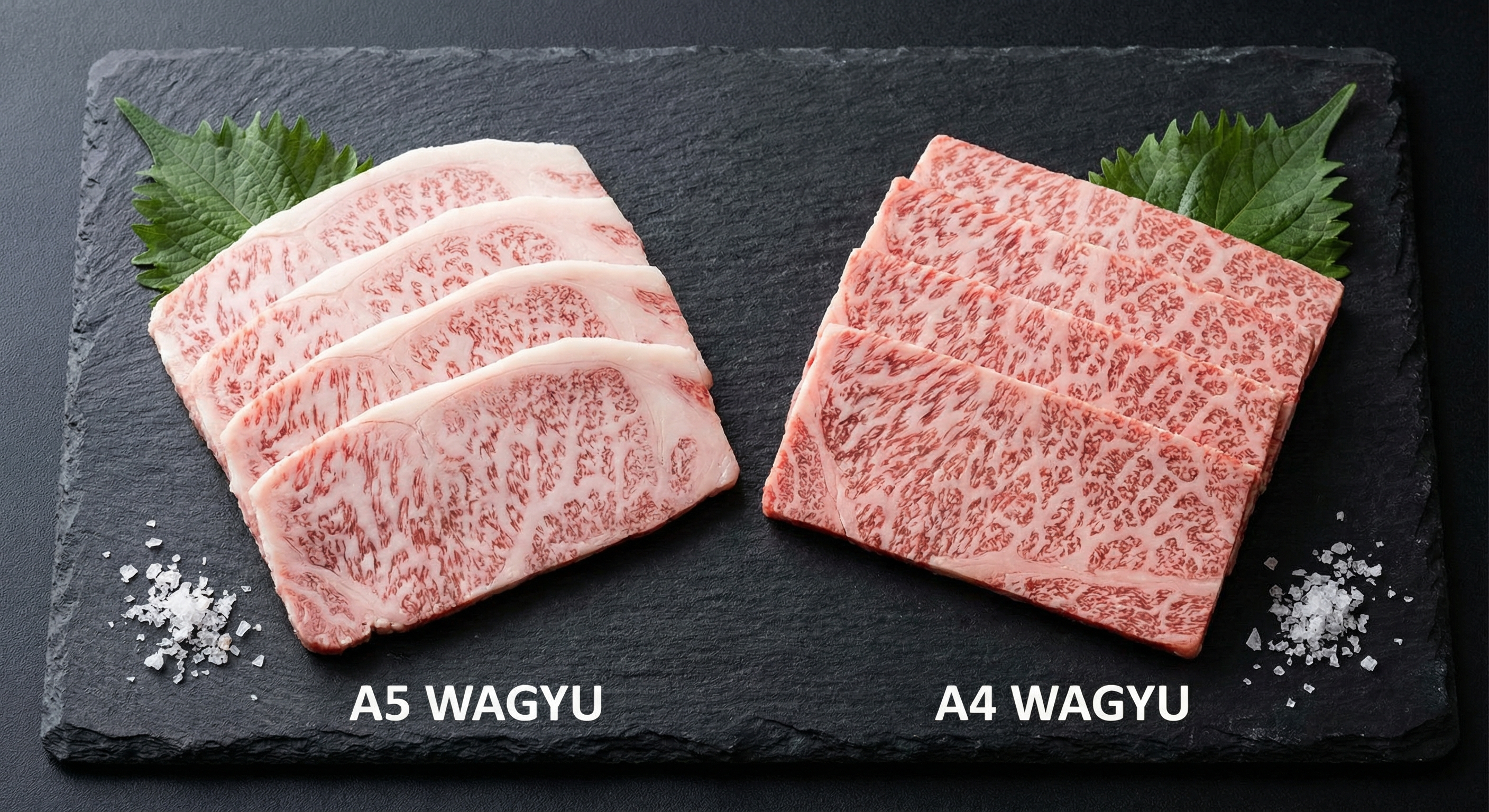
A5 requires BMS 8+, but most A5 you'll buy is BMS 10-12. A4 falls in BMS 8-9—still extraordinarily marbled compared to any American beef.
A5 vs A4: The Practical Differences
Marbling Intensity
A5 has more visible fat throughout the muscle. When you look at a cross-section, A5 appears almost white with thin red streaks, while A4 shows more balance between red and white.
Flavor Profile
- A5: Overwhelming richness. Best enjoyed in small portions (2-4 oz per person).
- A4: Rich but more approachable. You can eat larger portions without feeling overwhelmed.
Price Difference
A5 typically commands a 20-40% premium over A4. For a ribeye steak:
- A5 (BMS 10+): $150-$200 per lb
- A4 (BMS 8-9): $100-$140 per lb
Is A5 Always Better Than A4?
Not necessarily. It depends on your preferences:
Choose A5 when:
- You want the most extreme marbling experience
- Serving small portions as a tasting course
- It's a celebration where you want "the best"
Choose A4 when:
- You prefer more balance between fat and meat
- Serving larger portions
- Budget is a factor (A4 is still world-class)
- Introducing someone to Wagyu (A5 can be overwhelming)
The Bottom Line
A5 is the pinnacle of Japanese Wagyu—maximum marbling, maximum richness, maximum price. But A4 is still exceptional, offering 90% of the experience at a more accessible price point.
For most home cooks, A4 is the sweet spot: luxurious enough to feel special, approachable enough to enjoy in reasonable portions.
Ready to taste the difference? Explore our Japanese A5 Wagyu collection.
More Expert Guides
What Is Wagyu Beef? The Complete Guide to Grades, Origins & Quality
Discover wagyu beef origins, the difference between Japanese A5 and American wagyu, how BMS grading works, why marbling matters, proper cooking techniques, and what you should pay in 2026.
12 min readA5 Wagyu: Your Complete Buying & Authentication Guide (2026)
A5 wagyu represents the pinnacle of beef quality, but not all A5 is created equal. Learn how to authenticate real Japanese A5, decode BMS scores, find fair prices, and cook it perfectly at home.
14 min readA5 Wagyu Prefectures: Regional Guide to Japan's Best Beef
Discover the regional differences in Japanese A5 wagyu across 12 key prefectures. Learn which prefecture produces the flavor profile you'll love most.