A5 American Wagyu: What It Really Means and Where to Buy It
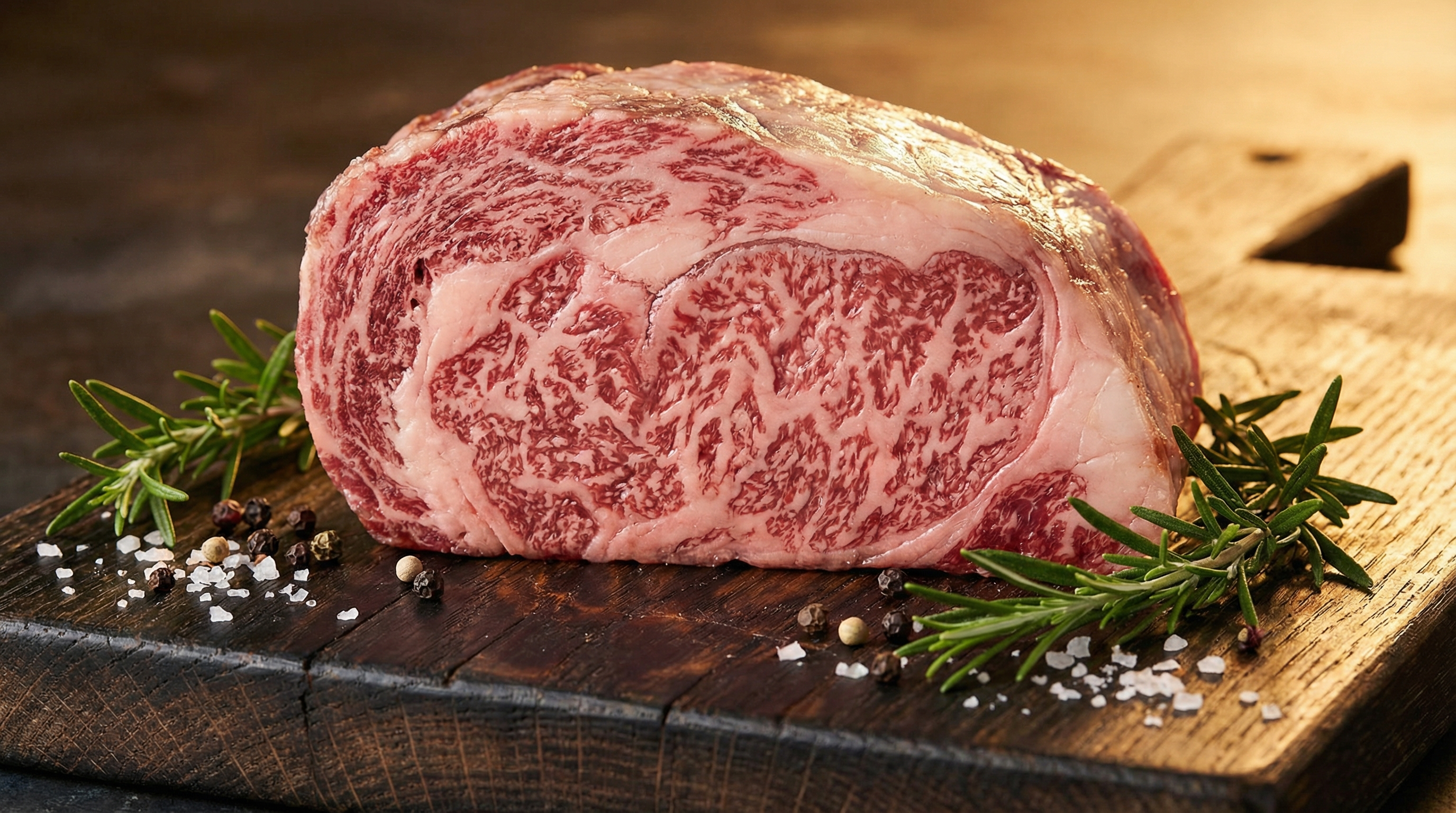
Search for "A5 American Wagyu" and you'll find hundreds of retailers claiming to sell it. But here's the thing most won't tell you: the A5 grade doesn't technically exist in the American beef grading system. It's a Japanese designation that's been borrowed — sometimes accurately, sometimes as pure marketing — to describe the highest-marbled American Wagyu beef.
That doesn't mean the product is fake. Some American Wagyu genuinely rivals Japanese A5 in marbling and richness. But understanding what you're actually buying requires knowing how grading works on both sides of the Pacific, what "full-blood" versus "crossbred" means for your steak, and which producers are transparent about their scores.
This guide cuts through the marketing noise and gives you the real picture.
What "A5" Actually Means in Wagyu Grading
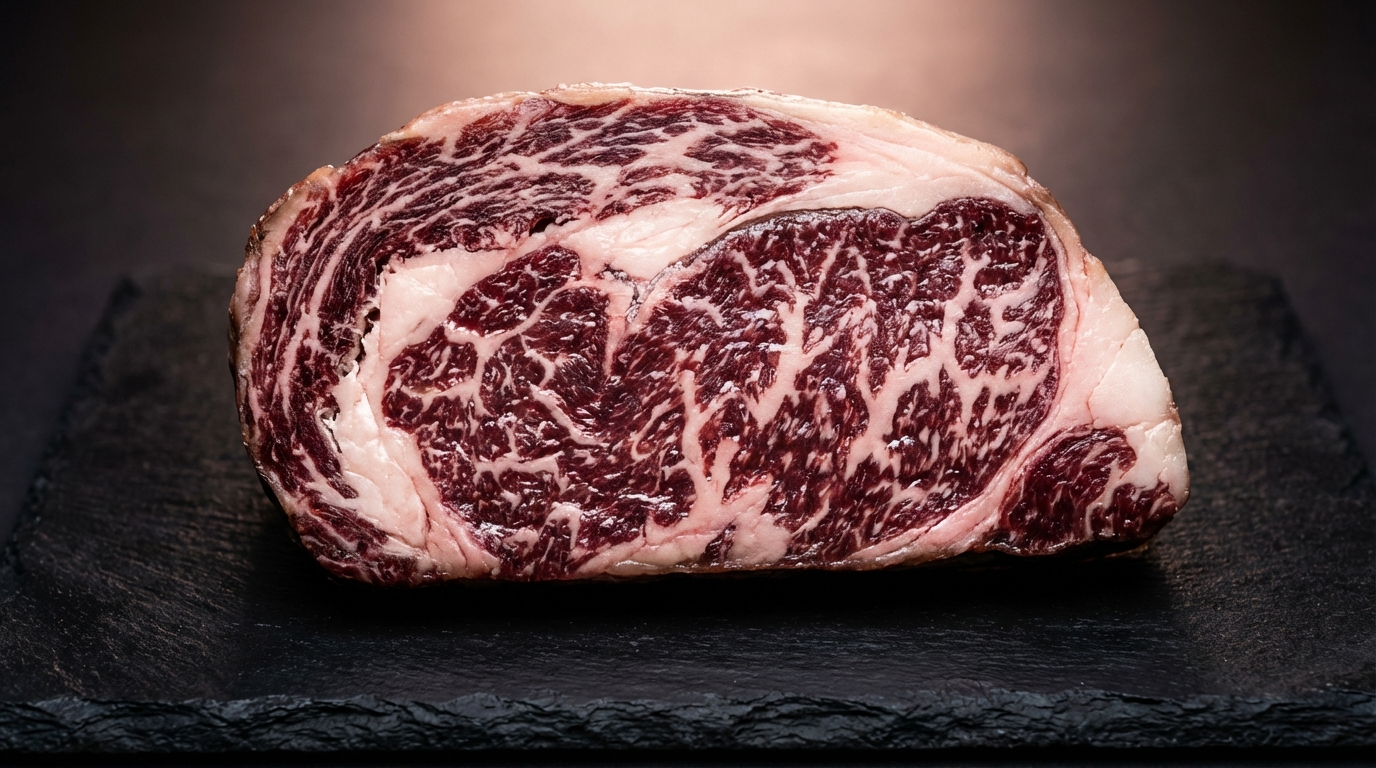
The A5 grade comes from Japan's Meat Grading Association (JMGA), which evaluates every carcass on two criteria:
- Yield grade (A, B, or C): How much usable meat the carcass produces. A = above average (72%+), B = average, C = below average.
- Quality grade (1-5): Based on four factors — marbling (BMS), meat color, firmness/texture, and fat color/quality. The lowest score among these four determines the overall quality number.
So "A5" means: above-average yield, highest quality across all four metrics. The marbling component uses the Beef Marbling Standard (BMS) scale of 1-12, and A5 requires BMS 8 or higher.
Here's the critical distinction: this grading system only exists in Japan. American beef is graded by the USDA using a completely different framework — Select, Choice, and Prime. USDA Prime, the highest grade, roughly corresponds to BMS 4-5 on the Japanese scale. That means even the best USDA Prime steak wouldn't crack A3 in Japan's system.
American Wagyu Grading: How It Actually Works
American Wagyu producers face a grading gap. The USDA system wasn't designed for highly marbled Wagyu beef — USDA Prime tops out where Japanese grading barely begins. A full-blood American Wagyu steak with BMS 10 marbling gets the same "Prime" stamp as a conventional Angus steak with BMS 5.
To differentiate their products, American producers have adopted several approaches:
- BMS scoring: Many reputable producers now list the actual BMS score (using the Japanese 1-12 scale) alongside the USDA grade. This is the most transparent approach.
- Internal grading tiers: Snake River Farms uses Black (BMS 6-8) and Gold (BMS 9+) designations. Other producers have similar proprietary tiers.
- "A5 equivalent" marketing: Some retailers label BMS 9-12 American Wagyu as "A5" or "A5 equivalent." This is technically inaccurate since the beef wasn't graded by JMGA, but the marbling level may genuinely match.
The takeaway: when you see "A5 American Wagyu," what you should really be asking is "what's the BMS score?" That number tells you more than any marketing label.
Full-Blood vs Crossbred: The Genetics Behind the Grade
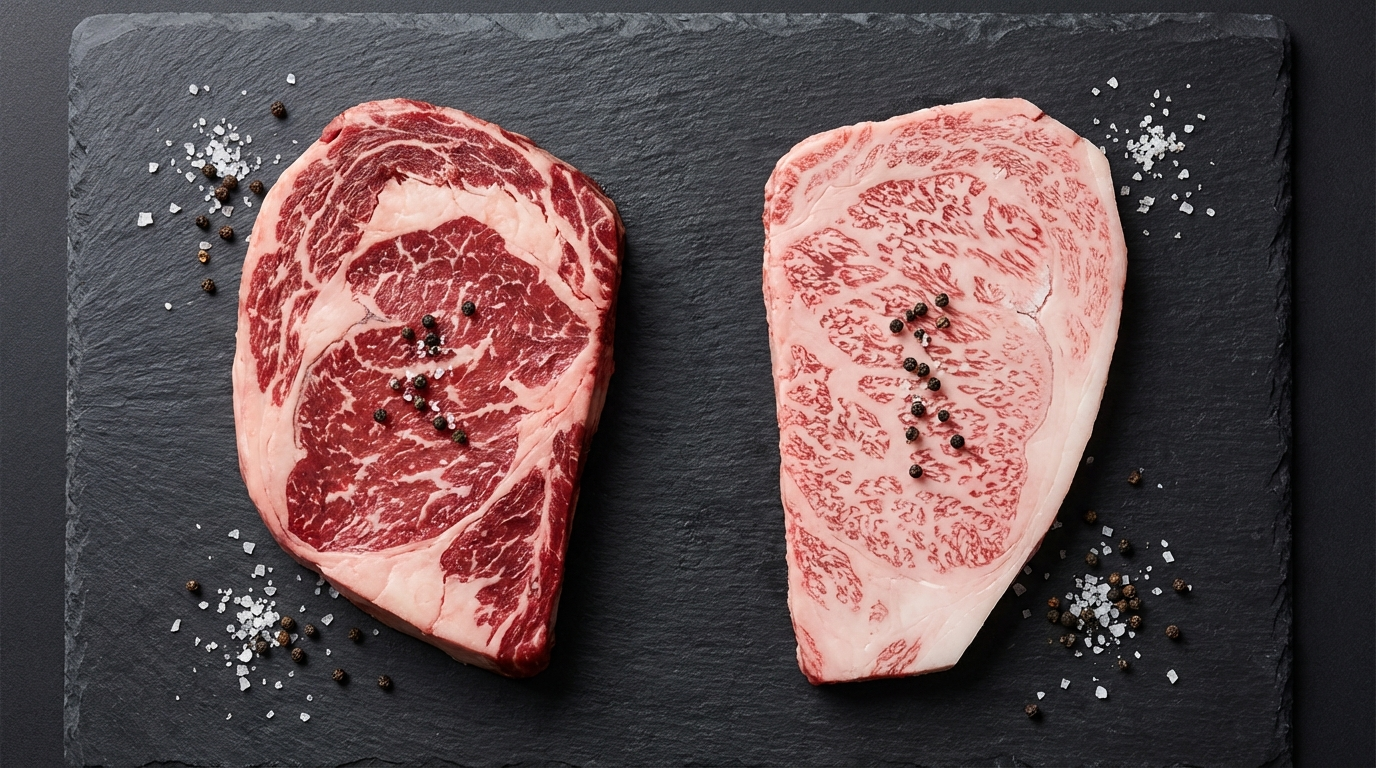
Not all American Wagyu is created equal, and genetics determine the ceiling for marbling potential:
Full-blood Wagyu (100% Japanese genetics): These animals descend entirely from Japanese Wagyu cattle — typically Tajima (Black), Kedaka (Brown/Red), or other Japanese strains. Full-blood animals can achieve BMS 9-12, rivaling Japanese A5. They represent less than 5% of the American Wagyu herd.
Purebred Wagyu (93.75%+ Wagyu genetics): Four or more generations of crossing back to full-blood Wagyu sires. These animals can reach BMS 7-10, with exceptional individuals hitting BMS 11.
Crossbred Wagyu (typically F1, 50% Wagyu): First-generation cross between Wagyu and another breed, usually Angus. This is the most common "American Wagyu" on the market. BMS scores typically range from 5-8 — well above USDA Prime but below true A5 territory.
When a retailer sells "A5 American Wagyu," the genetics matter enormously. A full-blood animal at BMS 10 is genuinely in A5 territory. A crossbred F1 marketed as "A5" is almost certainly misleading — the genetics don't support that level of marbling in most cases.
The Flavor Profile: What A5 American Wagyu Tastes Like
Top-tier American Wagyu (BMS 9+) delivers a distinctive eating experience that sits between conventional American beef and Japanese A5:
- More beef flavor than Japanese A5: American Wagyu cattle are typically raised on a combination of grass and grain, and many producers finish on corn-based diets. This produces a more robust, "beefy" flavor compared to the sweeter, more delicate profile of Japanese Wagyu finished on proprietary grain blends.
- Rich but not overwhelming: Japanese A5 can be almost too rich for American palates accustomed to larger portions. A5-level American Wagyu offers intense marbling with a flavor profile that supports 8-12 oz portions rather than the 2-4 oz servings typical of Japanese A5.
- Buttery mouthfeel with structure: The intramuscular fat melts at low temperatures, coating your palate, but the muscle fibers retain more structure than Japanese A5. You get richness without the almost mousse-like texture of extreme Japanese marbling.
- Clean finish: High-quality Wagyu fat has a higher percentage of monounsaturated fatty acids (particularly oleic acid), giving it a clean, non-greasy finish that distinguishes it from the heavier coating of conventional beef fat.
Think of it this way: Japanese A5 is the wagyu equivalent of foie gras — extraordinary in small amounts. A5-level American Wagyu is the wagyu equivalent of a perfect Prime steak turned up to 11 — familiar but elevated.
How to Cook A5 American Wagyu
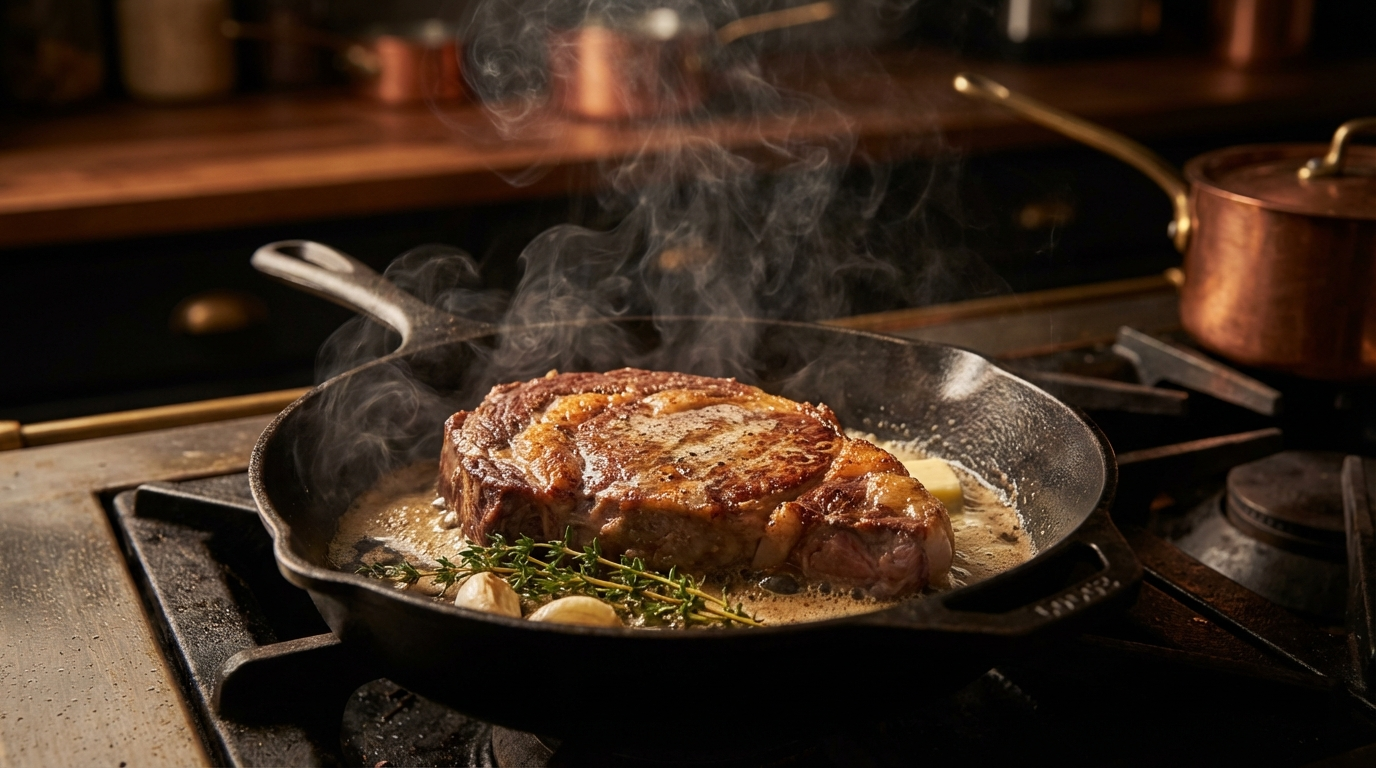
Cooking high-BMS American Wagyu requires adjustments from standard steak technique, but it's more forgiving than cooking Japanese A5:
Temperature: Pull the steak 5-8°F below your target doneness. The abundant intramuscular fat conducts heat efficiently, and carryover cooking is more pronounced in highly marbled beef. For medium-rare, pull at 120-122°F and rest to 128-130°F.
Searing method: Cast iron is ideal. Get the pan screaming hot (500°F+), add a thin film of high-smoke-point oil, and sear 90 seconds per side for a 1.5-inch steak. The fat in the meat will render and essentially self-baste, creating an extraordinary crust.
Seasoning: Keep it simple. Coarse salt and freshly cracked black pepper are all you need. The beef has so much natural flavor from the marbling that heavy seasoning or marinades work against you. Apply salt 45-60 minutes before cooking (dry brine) for the best crust.
Resting: Rest for at least 8-10 minutes on a wire rack. Wagyu loses more juices than conventional beef if cut too soon because the abundant liquid fat is still redistributing throughout the muscle fibers.
Portion size: BMS 9+ American Wagyu is rich. Plan 8-10 oz per person rather than the 12-16 oz portions typical for conventional steaks. Your guests will feel satisfied — the fat delivers a satiety signal that leaner beef doesn't.
What to avoid: Don't grill A5-level Wagyu over open flame unless you're managing flare-ups carefully. The high fat content causes significant dripping, which creates flame bursts that can char the exterior before the interior reaches temperature. Reverse sear (oven to 115°F, then sear) is the most reliable method for thick cuts.
Where to Buy: Sourcing Guide
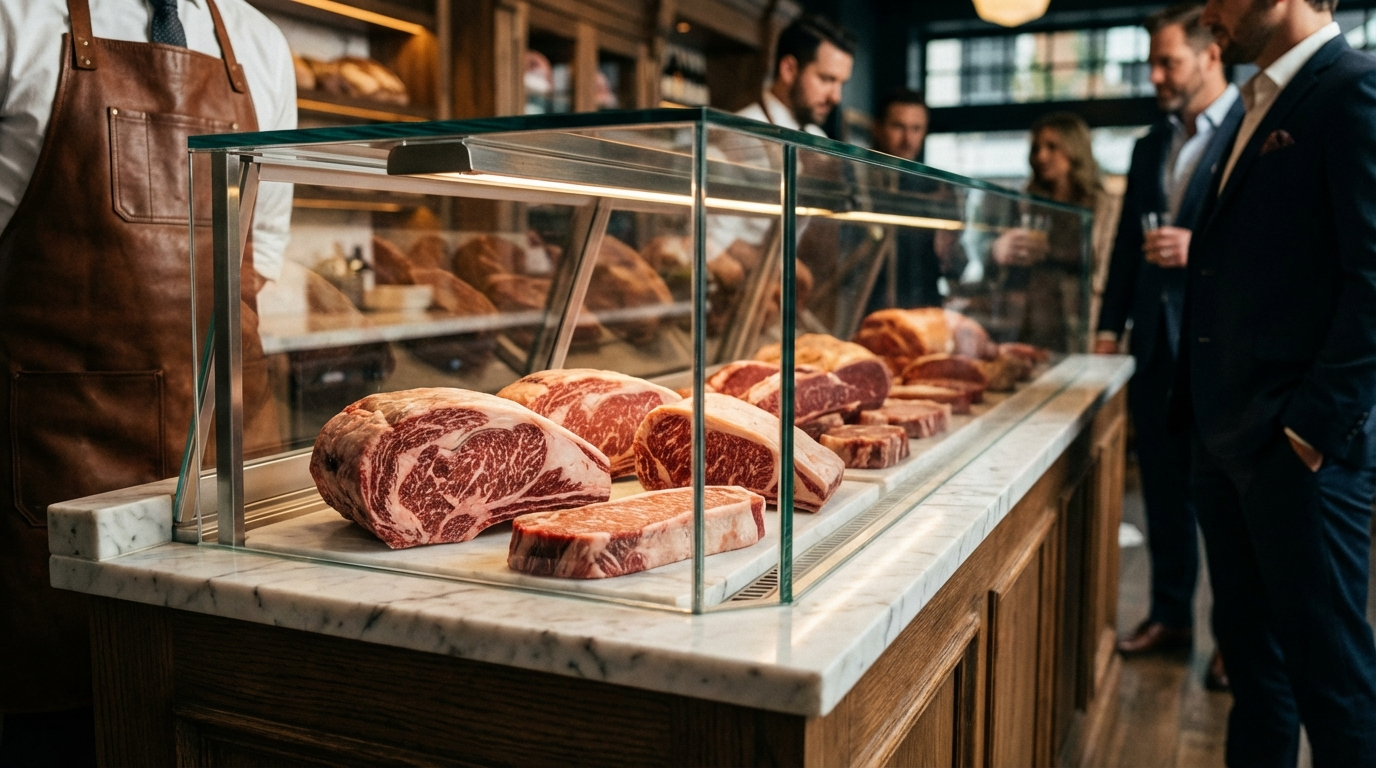
Finding genuinely high-BMS American Wagyu requires knowing where to look and what questions to ask:
Trusted online retailers:
- Snake River Farms: Their Gold label (BMS 9+) is consistently excellent full-blood and purebred Wagyu from their own herd in Idaho. Transparent about genetics and scoring.
- Crowd Cow: Aggregates multiple small producers with individual BMS scores listed per cut. Great for trying different producers and bloodlines.
- Holy Grail Steak Co.: Curates both Japanese and American Wagyu with detailed provenance information.
- Lone Mountain Wagyu: New Mexico ranch producing full-blood Wagyu from 100% Tajima genetics. Some of the highest BMS scores in American production.
- The Meatery: Curated selection of premium American Wagyu with detailed grading information and expert guidance on cut selection.
What to look for:
- Specific BMS score (not just "A5" or "highly marbled")
- Genetic disclosure — full-blood, purebred, or crossbred percentage
- Producer/ranch identification
- USDA inspection stamp (ensures food safety compliance)
- Aging method and duration (wet-aged or dry-aged)
Red flags to avoid:
- "A5 Wagyu" at suspiciously low prices ($30-50/lb for ribeye is almost certainly not BMS 9+)
- No BMS score or genetic information provided
- Stock photos instead of actual product images
- Vague origin claims like "premium Wagyu" without specifying the ranch or breeding program
Pricing: What to Expect
A5-equivalent American Wagyu (BMS 9-12) pricing by cut:
- Ribeye: $100–$180/lb (full-blood), $70–$120/lb (purebred)
- New York Strip: $90–$160/lb (full-blood), $60–$100/lb (purebred)
- Filet Mignon: $120–$200/lb (full-blood), $80–$140/lb (purebred)
- Brisket: $40–$80/lb (full-blood), $25–$50/lb (purebred)
- Ground Wagyu: $20–$35/lb regardless of bloodline
For context, Japanese A5 ribeye typically runs $200–$350/lb, and USDA Prime ribeye runs $25–$55/lb. A5-level American Wagyu occupies the middle ground — a significant investment but substantially less than importing from Japan.
The price premium reflects genuine production costs: full-blood Wagyu cattle take 28-36 months to reach harvest weight (vs. 18-22 months for conventional beef), eat more feed per pound of gain, and require specialized handling to prevent stress that damages marbling development.
Is A5 American Wagyu Worth It?
The honest answer depends on what you're after:
Worth it if: You want the most intensely marbled, flavorful steak experience available without importing from Japan. You appreciate the bolder American beef flavor combined with extreme marbling. You're cooking for a special occasion and want something genuinely extraordinary.
Better alternatives if: You're curious about Wagyu but don't want to commit $150+ for a single steak — try BMS 6-7 crossbred American Wagyu first ($40-70/lb for ribeye). If you want the authentic Japanese A5 experience specifically, American Wagyu won't replicate it — the flavor profiles are genuinely different.
The best move for most people: start with a high-quality crossbred American Wagyu (BMS 6-8) to calibrate your palate, then step up to full-blood BMS 9+ when you want to experience the top tier. Going straight to A5-level wagyu without the reference point means you might not fully appreciate what makes it special.
Frequently Asked Questions
Is A5 American Wagyu the same as Japanese A5?
No. The A5 grade is part of Japan's JMGA grading system and technically only applies to beef graded in Japan. American Wagyu is graded under the USDA system, where the highest grade is USDA Prime. When retailers label American Wagyu as "A5," they're typically referring to beef with BMS 8-12 marbling scores that would theoretically qualify for A5 under Japanese standards — but the label isn't officially regulated in the U.S.
How much does A5 American Wagyu cost?
Top-tier American Wagyu (BMS 8-12) typically costs $80–$180 per pound for premium cuts like ribeye and striploin. This is significantly less than authentic Japanese A5 ($150–$300+ per pound) but considerably more than USDA Prime ($25–$60 per pound). Prices vary by cut, producer, and whether the animal is full-blood or crossbred Wagyu.
What BMS score is considered A5 equivalent in American Wagyu?
Japanese A5 requires a BMS (Beef Marbling Standard) score of 8-12. American Wagyu producers who market their beef as "A5 equivalent" typically target BMS 9-12. However, most American Wagyu falls in the BMS 6-9 range, which corresponds to Japanese A3-A4. True BMS 10-12 American Wagyu is rare and commands premium prices.
Is full-blood American Wagyu better than crossbred?
Full-blood American Wagyu (100% Japanese genetics, typically Tajima or Kedaka bloodlines) produces higher marbling scores and a richer, more buttery flavor profile. Crossbred Wagyu (usually Wagyu × Angus) offers a balance between intense marbling and the beefy flavor Americans prefer. "Better" depends on your taste — full-blood for pure richness, crossbred for a more familiar steak experience with enhanced marbling.
Where can I buy A5-grade American Wagyu online?
Reputable sources include Snake River Farms (SRF Gold and Black grades), Crowd Cow (multiple producers with BMS scores listed), Holy Grail Steak Co., and direct-from-ranch operations like Lone Mountain Wagyu and Morgan Ranch. Always look for the specific BMS score rather than relying on vague "A5" marketing claims. The Meatery also carries curated selections of top-tier American Wagyu.
More Expert Guides
What Is Wagyu Beef? The Complete Guide to Grades, Origins & Quality
Discover wagyu beef origins, the difference between Japanese A5 and American wagyu, how BMS grading works, why marbling matters, proper cooking techniques, and what you should pay in 2026.
12 min readA5 Wagyu: Your Complete Buying & Authentication Guide (2026)
A5 wagyu represents the pinnacle of beef quality, but not all A5 is created equal. Learn how to authenticate real Japanese A5, decode BMS scores, find fair prices, and cook it perfectly at home.
14 min readA5 Wagyu Prefectures: Regional Guide to Japan's Best Beef
Discover the regional differences in Japanese A5 wagyu across 12 key prefectures. Learn which prefecture produces the flavor profile you'll love most.