Is Wagyu Fat Actually Healthier? The Science
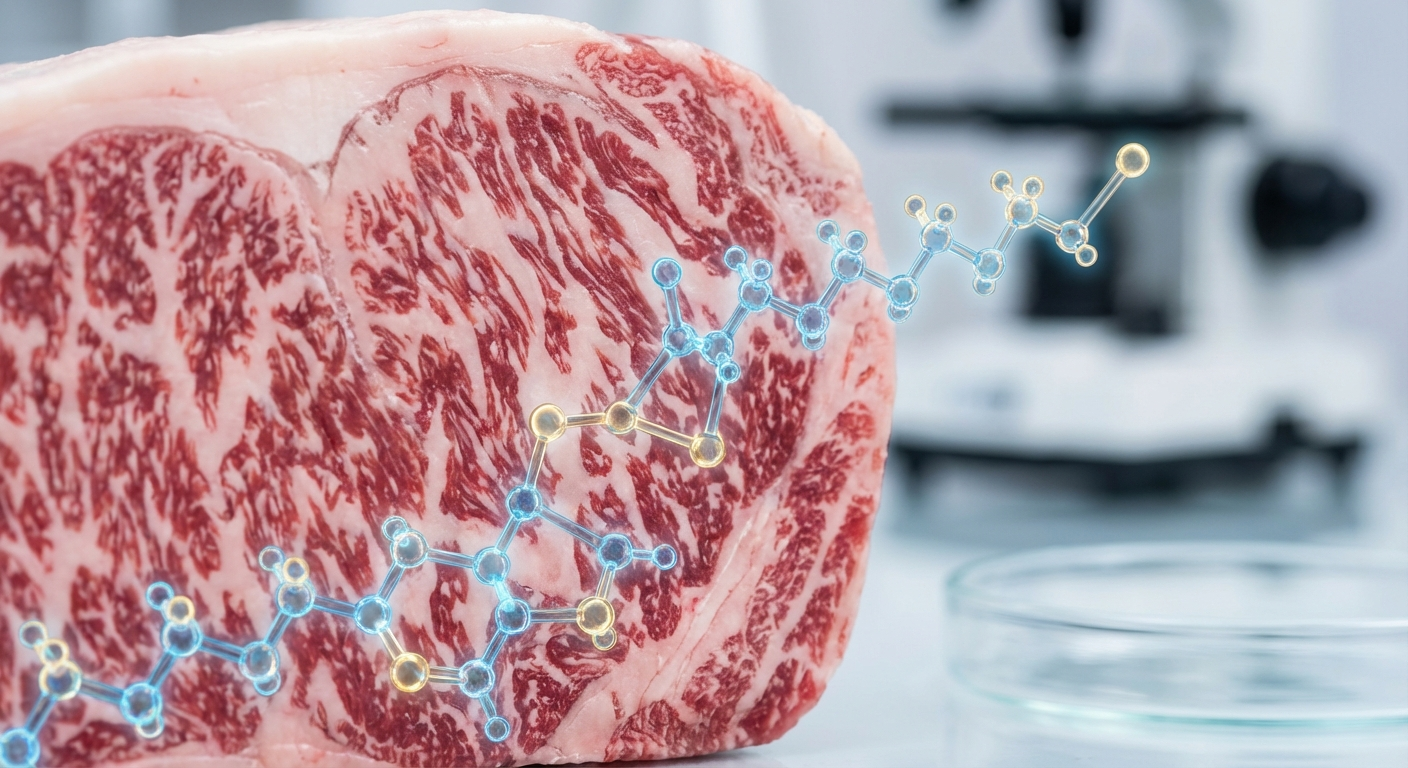
You'll see it in nearly every Wagyu marketing pitch: "Wagyu fat is healthier than regular beef!" Some go further: "Wagyu fat is similar to olive oil!" These claims are based on real science but stretched well beyond what the research supports. Let me give you the honest picture.
What's Actually Different About Wagyu Fat
The composition of Wagyu intramuscular fat is genuinely distinct from conventional beef fat. This isn't marketing — it's biochemistry.
Oleic acid content: Wagyu fat typically contains 45-55% oleic acid (a monounsaturated omega-9 fatty acid), compared to 30-40% in conventional beef. Oleic acid is the same predominant fatty acid in olive oil, which is where the comparison originates.
Monounsaturated vs. saturated ratio: Wagyu fat has a higher ratio of monounsaturated to saturated fatty acids than conventional beef. This is the core of the "healthier fat" claim.
Lower melting point: The higher oleic acid content gives Wagyu fat a melting point of approximately 77°F (25°C), compared to 100-110°F for conventional beef fat. This is why Wagyu fat melts on your tongue — and it also means the fat is softer and more liquid at body temperature.
What the Health Research Shows
The positive:
- Oleic acid has been associated with reduced LDL ("bad") cholesterol and increased HDL ("good") cholesterol in dietary studies
- Monounsaturated fats are generally considered more favorable for cardiovascular health than saturated fats
- Some animal studies have shown anti-inflammatory properties of oleic acid-rich diets
The reality check:
- Wagyu is still red meat with significant total fat content. A 4 oz serving of A5 Wagyu can contain 25-30g of total fat. The composition is better, but the quantity is higher.
- The oleic acid comparison to olive oil is technically accurate but misleading. You'd consume olive oil as a primary fat source (2-3 tablespoons daily in a Mediterranean diet). You're not eating 2-3 tablespoons of Wagyu fat daily — or you shouldn't be.
- The cardiovascular benefits of oleic acid in research come from studies where it replaces saturated fat in the diet. Adding Wagyu fat ON TOP of existing saturated fat intake doesn't produce the same benefit.
- No long-term clinical trials have specifically studied Wagyu beef consumption and health outcomes. The claims extrapolate from oleic acid research to Wagyu, which is a leap.
The Honest Assessment
Wagyu fat has a genuinely better fatty acid profile than conventional beef fat. If you're choosing between a Wagyu steak and a conventional steak, the Wagyu fat is compositionally more favorable. That's real.
But calling Wagyu "healthy" is a stretch. It's still a high-fat animal product. The appropriate framing is: Wagyu fat is less bad, not actively good. The healthiest diet includes a variety of protein sources, plenty of vegetables, and moderate amounts of any red meat — including Wagyu.
Don't buy A5 Wagyu because you think it's a health food. Buy it because it's one of the most extraordinary eating experiences on the planet. If the fat composition helps you feel slightly less guilty about the indulgence, that's a bonus — but it shouldn't be the selling point.
One Legitimate Health Advantage
There is one genuine health-related benefit of A5 Wagyu that marketing doesn't mention: portion control. Because A5 is so rich, a 3-4 oz serving is deeply satisfying. You eat less total meat per sitting than you would with a 12 oz conventional steak. Less total meat consumption, smaller portions, more satisfaction — that's actually a healthier eating pattern, even if it's not about the fat composition at all.
More from the Blog
The "Wagyu Burger" Scam: What You're Actually Eating
That $28 Wagyu burger at your local restaurant is almost certainly not what you think it is. Here is the uncomfortable truth about Wagyu ground beef.
Your First A5 Wagyu: What to Expect
Your first A5 Wagyu experience should be memorable for the right reasons. Here is how to set yourself up for success — from what to buy to how much to eat.