Your First A5 Wagyu: What to Expect
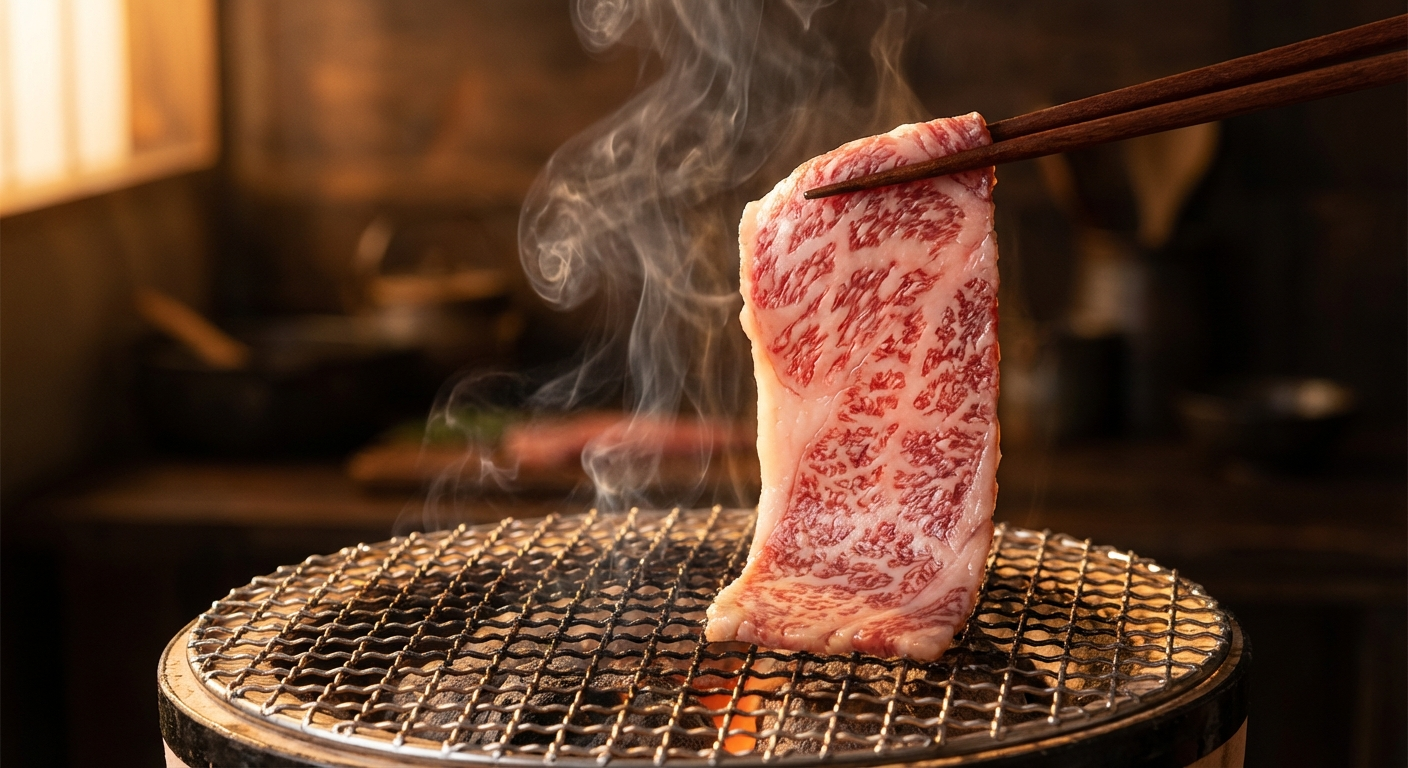
I remember my first time eating genuine A5 Wagyu. It was in a small yakiniku restaurant in Kobe, 2006, during my first month in Japan. The chef placed a thin slice of A5 ribeye on the grill, it sizzled for maybe twenty seconds, and he set it on my plate. One bite and I understood — this was not beef as I knew it. It was something else entirely.
I want your first time to have that same impact. Here's how to make it happen.
What to Buy
For your first A5 experience, I recommend:
Best option: Japanese A5 striploin, BMS 8-9. Striploin has excellent marbling with a firmer texture that provides more "steak" character than ribeye. BMS 8-9 delivers the full A5 experience without the extreme intensity of BMS 11-12 that can overwhelm first-timers. Price: approximately $100-$150/lb.
Budget option: Japanese A5 zabuton (chuck flap), BMS 8+. Heavily marbled, intensely flavorful, and roughly half the price of striploin. Less conventional in shape but equally impressive in flavor. Price: approximately $40-$60/lb.
Order 8-12 oz total. That's enough for 2-3 people to have a meaningful tasting experience. Don't order more — leftover A5 is a sad thing.
What It Looks Like
When you unwrap A5 Wagyu, the first thing you'll notice is that it doesn't look like regular beef. The cross-section is overwhelmingly white and pink — the shimofuri (marbling) is so dense that the lean meat appears as red threads in a matrix of intramuscular fat. It looks almost like a piece of marble, which is where the English term "marbling" comes from.
Touch it. It's soft — noticeably softer than any steak you've handled. Your finger leaves an indentation. The fat is already starting to soften at room temperature because its melting point (around 77°F) is barely above ambient temperature. This is the oleic acid at work.
What It Tastes Like
The first bite of properly prepared A5 Wagyu typically produces one of two reactions: either an involuntary sound (usually something like "oh my god") or complete silence as your brain processes what just happened.
The dominant sensations:
- Texture: It dissolves. Not "tender" in the way a good steak is tender — it literally melts on your tongue. The intramuscular fat renders at body temperature, so the beef seems to liquefy as you eat it.
- Flavor: Intensely buttery, with a sweetness that conventional beef doesn't have. Deep umami. A clean, almost floral quality to the fat. Some people detect notes of hazelnut or caramel.
- Richness: The richness hits about 3-4 bites in. This is why small portions matter. The first two bites are pure wonder. By bite five or six, you'll feel the fat accumulation. By bite ten, most people are satisfied. This is not a criticism — it's the nature of 50%+ fat content.
How to Prepare It
For your first time, keep it dead simple:
- Remove from fridge 30-40 minutes before cooking
- Pat dry with paper towels
- Season with flaky sea salt only
- Heat a cast iron pan over medium-high (not maximum) heat
- Place steak in the dry pan — no oil
- Sear 60-90 seconds per side
- Rest 2-3 minutes on a cutting board
- Slice against the grain into 1/4-inch pieces
- Serve immediately with more flaky salt on the side
That's it. No sauces, no sides competing for attention, no elaborate preparation. Let the beef be the entire experience for the first few bites.
Common First-Timer Mistakes
- Buying too much. 3-4 oz per person is enough. Don't order a pound per person — you'll waste money and meat.
- Overcooking. Pull at 115°F internal. A5 should be rare to medium-rare only. The fat won't render properly if you undercook it, and it renders OUT of the meat if you overcook it.
- Adding oil. The marbling IS the oil. A dry pan is correct.
- Expecting a "bigger, better steak." A5 is a different category of food. Expecting it to be "like steak but better" sets up the wrong expectation. It's more like steak meets foie gras — an intense, rich, small-portion luxury.
- Eating it alone. Share it. The experience is better — and more economical — with 2-3 people tasting and reacting together.
After Your First Experience
If you loved it: try different cuts next. Zabuton, karubi (short rib), and ribeye cap all offer different expressions of A5 quality. Try yakiniku-style thin slicing for a different experience. Explore different prefectures — Miyazaki vs. Kagoshima vs. Hyogo each have distinct characters.
If it was too rich: try BMS 7-8 next time (A4-low A5), or switch to American fullblood Wagyu, which is rich but less overwhelmingly fatty. Not everyone prefers extreme marbling, and that's perfectly legitimate.
Either way, you now have a reference point. You understand what "Wagyu" can mean at its highest expression. Everything else you eat will be measured against that experience — for better or worse.
More from the Blog
The "Wagyu Burger" Scam: What You're Actually Eating
That $28 Wagyu burger at your local restaurant is almost certainly not what you think it is. Here is the uncomfortable truth about Wagyu ground beef.
Is Wagyu Fat Actually Healthier? The Science
Wagyu fat has a genuinely different composition from conventional beef fat. But does "different" mean "healthy"? Here is what the science actually says.